

Illustrative patient and clinician discussing gentle brushing with a dental teaching model
Specialized Care

Bleeding Gums Treatment in Mississauga

One gap between two teeth that bleeds every single time, while the rest of your mouth seems fine, is worth investigating. We examine that spot and the gums around it, look for what keeps it irritated and plan care that targets it.

One stubborn spot, seen from Mississauga

The same gap, the same red floss, every night.

Most of the floss comes out clean, then you reach one particular space and it turns red. A single site like that tells a clinician something useful. Food may be wedging there, a filling margin may be rough, or the tissue in that pocket may be more inflamed than elsewhere. The answer comes from looking, not from guessing.

Plaque-driven inflammation is still the most familiar explanation, and it can be patchy. Even so, your examination also weighs your cleaning technique, nearby dental work, crowding, your health history and your medicines. A new rinse may calm the mouth overall and leave that one spot exactly as it was.

Show us the tooth when you arrive and describe how long it has bled, whether food catches there and whether it ever aches or swells. You do not have to have a perfect routine to ask for help. We explain what we see in plain terms, then talk through treatment and a sensible recheck.

Get that spot checked
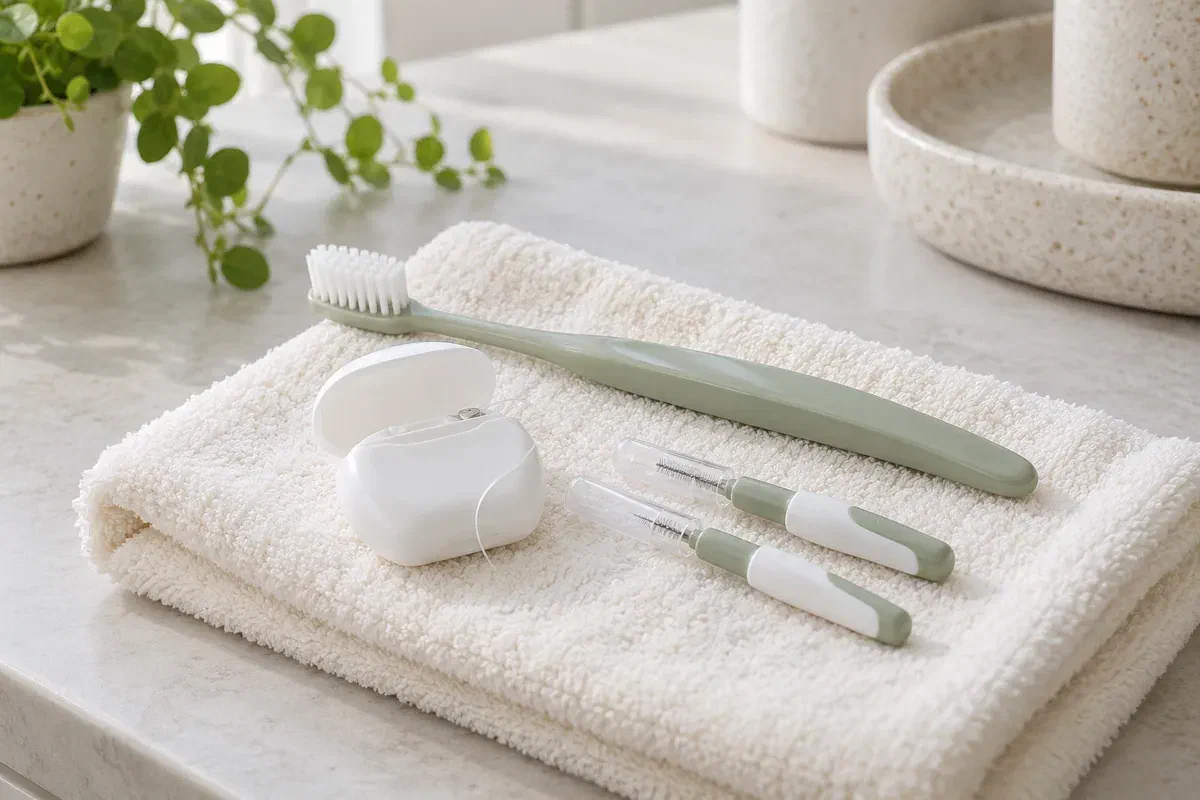
Illustrative soft toothbrush, interdental brushes, and floss container on a clean ivory towel
What helps us pinpoint it

Small clues around a single tooth.

Point out a bleeding area even if it never hurts. Let us know whether it is truly one site or a few, and whether it has been there since before your last checkup.

Food catching or floss shredding

Tell us if food packs into that gap after meals or floss frays as it passes through. Bring the tool you use there if you can. The team can examine the contact and the gum, then show you a way to clean that particular space that does not tear at the tissue.

A tender bump, swelling or odd taste nearby

Report these together with the bleeding, along with any looseness or discomfort when biting on that side. Combined, they can change how quickly you should come in and how much the clinician checks. A minor sign can matter more once it sits beside your history.

Bleeding after a change in medicines or health

Bring your up-to-date medicine list and mention any health conditions or easy bruising. Keep taking what you have been prescribed; a bleeding gum is not a reason to stop. The dental team can consider whether your physician should be involved and explain the next step.

A spot that bleeds with cleaning should be assessed. Ask for prompt advice if bleeding is heavy or does not settle, appears without any brushing, follows a knock or comes with other worrying symptoms.

What a targeted exam offers

Find the reason in that one place.

Looking closely at a single bleeding site lets your clinician judge whether the gum is inflamed at the surface or whether the attachment around the tooth needs a more detailed periodontal evaluation. Ask what was found there, and whether other areas showed anything similar. Once you understand the finding, the proposed cleaning or treatment has a clear reason behind it.

It also helps solve the practical problem. Perhaps floss snaps through the contact, a brush will not angle into the gap, or the spot is sore enough that you skip it. Say which. Guidance that works around the real obstacle is the kind you will keep using after you leave.

A cause, not a cupboard of rinses

Ask what explains the bleeding at that site and whether a local factor such as a food trap is involved. A product might be suggested for a specific purpose, and that purpose should be clear. Trial and error with toothpastes rarely reaches a single stubborn spot.

A method for one awkward space

Have the team show you exactly how to clean that gap, whether with floss, a small brush or another tool. Check the size and angle and how gently to work. Practise it in front of us before you go so you leave confident.

A recheck that compares the site directly

Find out when the area will be looked at again and what will be measured. Less blood on the floss is useful to report but does not replace an examination. Agree in advance which changes mean you should call sooner.

From the first look to the recheck

How we work through a single bleeding site

The findings shape how many appointments are needed, which is worth knowing early when you are planning visits from Mississauga. If you are nervous about soreness in that area, or a past cleaning was uncomfortable, tell us when booking so we can plan around it.

  1. Hear the history of the spot

    Tell us when it began, exactly where it is and whether there has been pain, swelling or bleeding on its own. We also review your routine, health conditions, medicines and past gum care. That conversation tells us where to focus and whether anything else should be gathered first.

  2. Examine the site and the rest of the gums

    The clinician checks the area, may measure around the tooth and looks at the other gums for comparison. Images are taken when they are indicated, for instance to look between teeth. Ask what the findings mean instead of judging severity from how much it bleeds.

  3. Treat the cause or plan the next step

    Care might mean a professional cleaning, deeper gum treatment, smoothing or replacing an irritating restoration, or further assessment. Ask what is involved and how comfort will be managed. Any rinse or medicine should arrive with instructions that fit your plan.

  4. Check how the spot has responded

    At follow-up, the site and your symptoms are compared with the first visit. Mention if the new tool was awkward or the schedule was difficult. If the area still bleeds, it may need further investigation or a referral rather than the same instructions once more.

Caring for the area at home

Clean it every day, gently, and keep notes.

Stick with the guidance for your diagnosis and treatment. If the site stays painful to clean or keeps bleeding, arrange a review instead of avoiding it or pressing harder.

Stay with the tool and angle you were shown

Use the demonstrated method on that gap each day, and tell us if the tool does not fit. Avoid forcing floss or a brush that is too large. Removing plaque reliably matters far more than how hard you push.

Use any product for its stated purpose

If a rinse or gel was recommended, confirm why, for how long and with what cautions. It supports brushing and professional care rather than replacing them. Continue prescribed medicines unless the prescriber changes them, and tell us when your list is updated.

Return so the spot can be compared

Let us know whether bleeding there is rarer, unchanged or has shown up elsewhere. Mention soreness, swelling or a tooth that feels different even if bleeding has improved. The review is how the plan gets confirmed or adjusted.

Matching care to the cause

Which plan fits depends on what the site shows.

Ask how the treatment deals with what is causing the bleeding and how you will tell whether it is working. The decision should follow a diagnosis, not the promise printed on a rinse bottle.

If plaque and inflammation explain it

Cleaning and a site-specific routine

A professional cleaning with focused advice for that space may be all that is needed to begin. Ask how to keep the area healthy going forward. The plan should include a recheck rather than a promise that one visit ends the bleeding permanently.

If the attachment around the tooth needs more care

Periodontal therapy and maintenance

Measurements and other findings may support further gum treatment. Go over the stages, comfort, fees and the maintenance afterward. Referral may be appropriate in some cases, and you should be told the reason.

If something else is keeping it irritated

Correcting a local or medical contributor

A contact that traps food, a rough filling or a medical factor can each need attention of their own. Ask which of these the dental team can address and whether medical input makes sense. Technique does not explain every case, and medicine-related bleeding is not automatically harmless.

Single-site bleeding questions

Why one area, and what can be done?

You do not need to name a cause to book. Bring what you have noticed and any questions about tools, medicines, treatment or follow-up.

(905) 876-4488
Why would just one spot in my mouth bleed?
A local factor such as trapped food, a rough filling edge or deeper inflammation in that pocket is often involved. An examination of the site and surrounding gum is the way to find out which applies to you.
Can food getting stuck between two teeth cause bleeding?
Food packing into a gap can keep the gum there irritated. Mention it at your visit. The clinician can look at the contact between the teeth and discuss whether it, or a nearby restoration, needs attention.
Is it all right to use a toothpick on the area?
A pointed pick can injure the gum if used forcefully. Ask the team which tool suits that space and how to use it gently. An interdental brush of the right size or floss is often recommended instead.
Do I need an X-ray for a bleeding spot?
Not always. Images are considered when the clinician needs to see what is happening between or around the teeth. Ask why an image is or is not being suggested in your case.
Is it worth the trip from Mississauga for one bleeding area?
If it keeps bleeding, yes, it deserves an examination. Mention it when booking so time is set aside, and ask whether it can be looked at alongside a regular checkup to keep the number of visits down.
What if the spot is still bleeding at my follow-up?
Tell the clinician, along with any soreness or food catching. A site that has not settled may need further investigation, a different approach or a referral rather than a repeat of the same instructions.
Gum care for Mississauga

Point to the tooth. We will take it from there.

Call our Bronte Street practice about a gum that bleeds in one place, or several, when you brush, floss or eat. We examine the area, tell you what is keeping it irritated and set up a cleaning routine that reaches it.

The cause, urgency, treatment stages, review timing and fees depend on assessment. A single symptom does not establish a diagnosis, and no one cleaning can be guaranteed to solve it.

Visit Milton Dental Clinic
Unit 1, 342 Bronte St. S, Milton, ON L9T 5B7
Get directions Clinic hours
Monday–Thursday
11am–7pm
Friday–Sunday
By appointment only

Areas we serve

  • Milton
  • Oakville
  • Mississauga
  • Georgetown
  • Halton Hills
  • Acton
  • Campbellville
  • Brampton
  • Burlington
  • Puslinch
  • Rockwood
  • Erin
  • Caledon
  • Etobicoke
  • Old Milton
  • Bronte Meadows
  • Timberlea
  • Dorset Park
  • Dempsey
  • Clarke
  • Beaty
  • Coates
  • Harrison
  • Scott
  • Willmott
  • Ford
  • Bowes
  • Cobden
  • Walker
  • Mountain View
  • Milton Heights
  • Hawthorne Village
  • Valley View
  • Fallingbrook
  • Nassagaweya
  • Trafalgar
  • Esquesing
  • Nelson
  • Brookville
  • Moffat
  • Glen Williams
  • Norval
  • Limehouse
  • Stewarttown
  • Ashgrove
  • Hornby
  • Silver Creek
  • Speyside
  • Scotch Block
  • North Oakville
  • River Oaks
  • Glen Abbey
  • West Oak Trails
  • Palermo
  • Bronte Creek
  • College Park
  • Joshua Creek
  • Uptown Core
  • Preserve
  • Iroquois Ridge
  • Lisgar
  • Meadowvale
  • Meadowvale Village
  • Churchill Meadows
  • Erin Mills
  • Central Erin Mills
  • Streetsville
  • East Credit
  • Creditview
  • Heartland
  • Sheridan
  • Mount Pleasant
  • Credit Valley
  • Huttonville
  • Churchville
  • Springbrook
  • Northwest Brampton
  • Bram West
  • Fletcher's Meadow
  • Fletcher's Creek South
  • Alton Village
  • Orchard
  • Millcroft
  • Headon Forest
  • Tansley
  • Brant Hills
  • Tyandaga
  • Kilbride
  • Lowville
  • Aberfoyle
  • Morriston
  • Arkell
  • Hillsburgh
  • Freelton
  • Carlisle
  • Waterdown
  • Flamborough
  • Mountsberg

How can we help?

Milton Dental Clinic

Have a question about your smile? Choose the option that works best for you.

For urgent dental concerns, please call.
Messages are reviewed during clinic hours.