

Illustrative patient and clinician discussing gentle brushing with a dental teaching model
Specialized Care

Bleeding Gums Treatment in Rockwood

Floss that shreds, a pick that will not fit, brushes in five sizes and gums that still bleed. Bring the whole kit. We examine the tissue, explain why it bleeds and fit you with tools and a technique that suit the spaces in your mouth.

Tools, technique and Rockwood gums

The right brush in the wrong gap still makes them bleed.

Spaces between teeth vary enormously from one mouth to the next, and from front to back in the same mouth. A floss that glides through one contact can snag at the next; an interdental brush that suits the molars may be too wide up front. Bleeding can come from the tool, from the tissue, or both.

Inflamed gums from plaque left between the teeth are the most familiar explanation, which is exactly why the tools matter. Even so, an examination considers more than equipment. Fillings, crowding, your health history and your medicines all play a part. Adding another gadget from the store will not tell you which factor applies.

Pack your brushes, floss and picks in a bag and bring them along. Tell us which gaps bleed, for how long and whether any area aches or swells. Your clinician will check the gums, explain the findings and size the tools with you, then plan any treatment and a review.

Book a gum and tool check
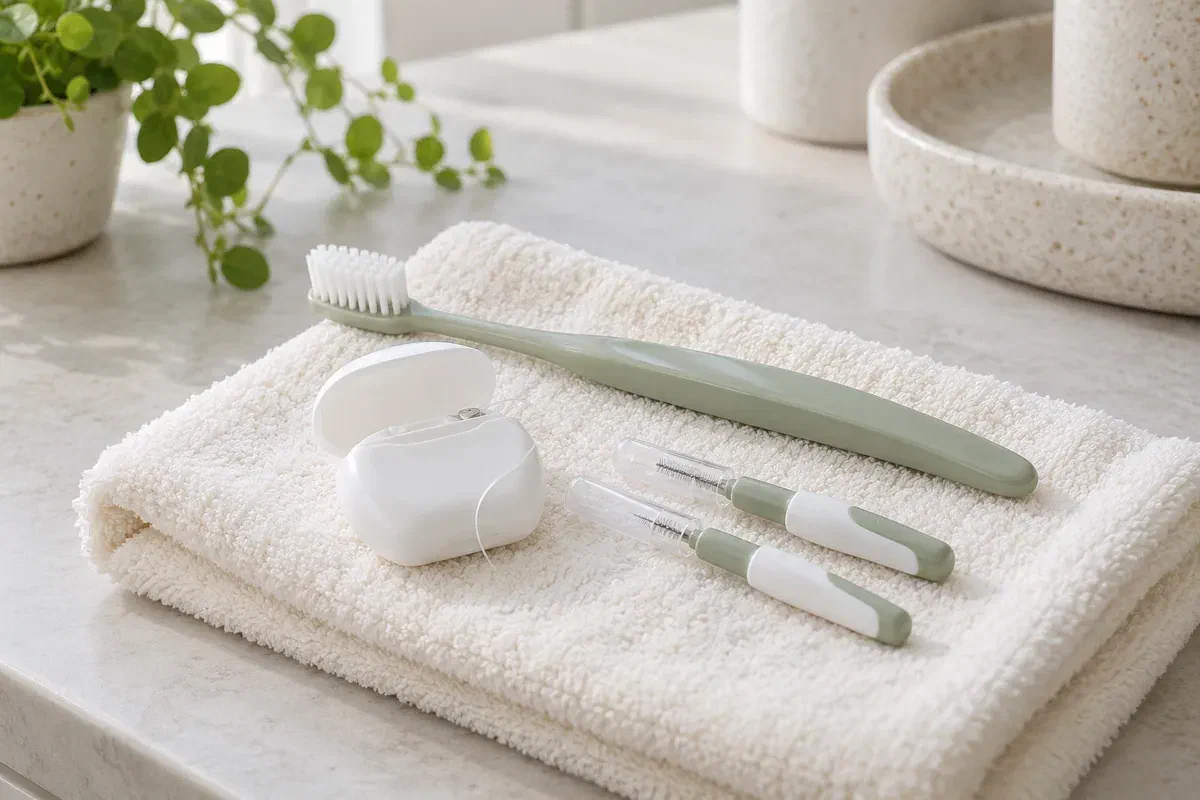
Illustrative soft toothbrush, interdental brushes, and floss container on a clean ivory towel
Clues in the toolkit

Which tool, which gap, how much blood.

Painless bleeding still matters. Note whether it shows up in one gap or many, and whether it started around the time you changed tools or habits.

Tools that snag, shred or will not fit

Describe where floss frays, where a brush will not pass and where a pick catches the gum. Bring each item. The team can check the spaces, look at the tissue there and match a tool and size to every gap so cleaning stops being a fight.

Soreness, swelling or a lingering taste

Tell us about these alongside the bleeding, including any tooth that has loosened or changed on biting. They can mean you should be seen sooner and may widen the examination. A small sign is often more meaningful next to the rest of your history.

Health and medicine changes

Bring your current medicine list and mention any condition or unusual bruising. Keep taking prescribed medicines; bleeding gums are no reason to stop them. The dental team can decide whether your physician should be involved and explain what follows.

Bleeding during cleaning is worth assessing, whichever tool you use. Ask promptly for advice if it is heavy or long-lasting, starts without cleaning, happens after an injury or arrives with other worrying symptoms.

Why a fitting session helps

Tissue first, then tools that suit it.

Before any tool is chosen, your clinician needs to see the gums. Examination separates inflammation along the gum edge from signs that the attachment of the teeth needs a more detailed periodontal look. Ask what was found in the gaps that bleed. That answer explains whether a routine cleaning, a different level of care or simply better-fitting tools come first.

A fitting session also makes daily cleaning less frustrating once you are back home in Rockwood. Many people own the right kind of tool in the wrong size, or use it at an angle that pokes the gum. Show us how you clean. Advice that corrects real habits, rather than ideal ones, is what lasts after the appointment.

Fewer gadgets, more understanding

Ask what explains the bleeding and whether a filling edge or crowded tooth is involved. A rinse or paste may play a defined role in some plans, and the reason should be stated. Buying tools and products at random rarely solves the underlying problem.

Sizes matched to each space

Have the team test interdental brush sizes or floss types in the areas that bleed, especially near crowns and overlaps. Note which size goes where, and how lightly to work. Clean a few gaps yourself while we watch, so the technique is clear before you leave.

A recheck that measures the response

Find out when you will be reviewed and what will be compared. Less blood on the brush is encouraging, yet it does not replace an examination. Agree on what should prompt a call before the review date.

How the session runs

From your toolkit to a tailored plan

The number and kind of appointments depend on what we find. If gum tenderness worries you or a past cleaning was uncomfortable, mention it when booking so we can talk the visit through.

  1. Review history, habits and health

    Explain when the bleeding started, which gaps are involved and whether there has been aching, swelling or bleeding without cleaning. We review your tools, technique, health conditions, medicines and earlier gum care. That conversation tells us where to look most closely.

  2. Examine the gums and check each space

    The clinician inspects the tissue, may take measurements around the teeth and checks the size of the spaces between them. Images are added when indicated. Ask what the findings mean instead of assuming bleeding alone reveals the severity.

  3. Treat and fit the right tools

    Care may include professional cleaning, deeper gum treatment, attention to a local irritant or further assessment, along with sizing the tools you will use at home. Ask what is involved and how your comfort will be handled. Any rinse or medicine should come with clear, individual instructions.

  4. Review the gums and the routine

    At follow-up, the tissue and your symptoms are compared with the first visit, and the tool sizes are rechecked. Tell us if any of them felt wrong. An area that still bleeds may need a closer investigation or a referral, not just the same advice again.

Using your tools at home

The right size, a light touch, every day.

Follow the advice you were given after your examination and treatment. If a space stays painful to clean or keeps bleeding, ask us to recheck it instead of skipping it or pushing harder.

Stick to the sizes you were fitted with

Use the brush or floss matched to each gap, and call if one starts to feel too tight or too loose. Never force a tool into a space where it does not belong. Steady, comfortable cleaning removes plaque better than pressure does.

Keep products in perspective

Should the team suggest a rinse, ask what it is meant to do, for how long and with what precautions. It works alongside the tools, not instead of them. Continue prescribed medicines unless your prescriber changes them, and let us know when your list changes.

Bring the tools to your review

Tell us whether bleeding has become rarer, stayed the same or moved to new gaps. Mention tenderness, swelling or any shift in how a tooth feels, even if bleeding is better. Bringing your tools lets the team check that the sizes still suit you.

After the fitting

When better tools are enough, and when they are not

Ask how the proposed care addresses the cause and how its effect will be measured. A diagnosis should decide the approach, not a new gadget or a stronger rinse.

When plaque between the teeth is the main cause

Cleaning plus a fitted home kit

A professional cleaning with properly sized tools and coaching is often the first step. Ask which gaps need the most attention and how to keep them healthy. Expect a review rather than a promise that one visit ends bleeding permanently.

When the supporting tissue needs more

Periodontal treatment and maintenance

Measurements and other findings may support further gum treatment. Discuss the stages, comfort, fees and maintenance schedule. A referral may be appropriate, with the reasons explained.

When a local or medical factor is involved

Dealing with another contributor

A food trap, a rough restoration or a health issue may need separate review. Ask what the dental team can address and whether medical input is helpful. Not every case comes down to tools or technique, and bleeding while on medicine still needs a proper look.

Tool and technique questions

Floss, brushes and picks: what to know.

Bring your tools and questions, even without knowing the cause. Ask about sizes, technique, medicines, treatment and review.

(905) 876-4488
How do I know which interdental brush size I need?
Each gap is different, and many people need more than one size. The team can test sizes in your mouth and note which goes where so you can restock with confidence.
Why does floss keep shredding between two particular teeth?
A rough filling edge, tartar or a very tight contact can cause it. Point out the spot so the clinician can examine it and suggest a different floss, a tool or treatment of the edge if needed.
Are wooden or plastic picks safe for my gums?
Used gently and in a suitable space, some picks can help, but forcing them can injure the gum. Ask the team whether a pick suits your gaps or whether another tool would work better.
How often should I replace my toothbrush and interdental brushes?
Replace them when bristles splay or wire bends, and follow the manufacturer’s guidance. Worn tools clean less effectively. Ask at your visit how quickly yours seem to wear.
If my gums do not hurt, can I skip the exam and just change tools?
New tools may help, but painless bleeding still deserves an examination. The clinician can check the tissue and the support around the teeth so you know whether more than a tool change is needed.
Can someone in Rockwood check my technique by video instead?
An in-person visit is needed to examine the gums. Once your tools are fitted, you can phone with questions between visits, and the team can advise whether something needs another look.
Rockwood gum and tool fitting

Bring the bag of brushes. Leave with a plan.

Call our Bronte Street practice if cleaning between your teeth or along the gumline keeps drawing blood. The team will examine the tissue, size your tools, explain the findings and help you build a routine that fits your mouth.

What is causing the bleeding, how soon it needs care, how many stages are involved, when to review and what it costs are all worked out at the assessment. Bleeding alone does not make a diagnosis, and a single cleaning comes with no guarantee of fixing it.

Visit Milton Dental Clinic
Unit 1, 342 Bronte St. S, Milton, ON L9T 5B7
Get directions Clinic hours
Monday–Thursday
11am–7pm
Friday–Sunday
By appointment only

Areas we serve

  • Milton
  • Oakville
  • Mississauga
  • Georgetown
  • Halton Hills
  • Acton
  • Campbellville
  • Brampton
  • Burlington
  • Puslinch
  • Rockwood
  • Erin
  • Caledon
  • Etobicoke
  • Old Milton
  • Bronte Meadows
  • Timberlea
  • Dorset Park
  • Dempsey
  • Clarke
  • Beaty
  • Coates
  • Harrison
  • Scott
  • Willmott
  • Ford
  • Bowes
  • Cobden
  • Walker
  • Mountain View
  • Milton Heights
  • Hawthorne Village
  • Valley View
  • Fallingbrook
  • Nassagaweya
  • Trafalgar
  • Esquesing
  • Nelson
  • Brookville
  • Moffat
  • Glen Williams
  • Norval
  • Limehouse
  • Stewarttown
  • Ashgrove
  • Hornby
  • Silver Creek
  • Speyside
  • Scotch Block
  • North Oakville
  • River Oaks
  • Glen Abbey
  • West Oak Trails
  • Palermo
  • Bronte Creek
  • College Park
  • Joshua Creek
  • Uptown Core
  • Preserve
  • Iroquois Ridge
  • Lisgar
  • Meadowvale
  • Meadowvale Village
  • Churchill Meadows
  • Erin Mills
  • Central Erin Mills
  • Streetsville
  • East Credit
  • Creditview
  • Heartland
  • Sheridan
  • Mount Pleasant
  • Credit Valley
  • Huttonville
  • Churchville
  • Springbrook
  • Northwest Brampton
  • Bram West
  • Fletcher's Meadow
  • Fletcher's Creek South
  • Alton Village
  • Orchard
  • Millcroft
  • Headon Forest
  • Tansley
  • Brant Hills
  • Tyandaga
  • Kilbride
  • Lowville
  • Aberfoyle
  • Morriston
  • Arkell
  • Hillsburgh
  • Freelton
  • Carlisle
  • Waterdown
  • Flamborough
  • Mountsberg

How can we help?

Milton Dental Clinic

Have a question about your smile? Choose the option that works best for you.

For urgent dental concerns, please call.
Messages are reviewed during clinic hours.