

Illustrative clinician discussing tooth support with a patient using a physical teaching model
Specialized Care

Bone-Loss Assessment in Halton Hills

Teeth that look longer than they used to, or small dark triangles opening between them, can prompt a closer look at the gum and bone underneath. For adults across Halton Hills, a bone-loss assessment examines that support, reviews suitable images and history, and explains what the change means.

What the mirror is telling you

Are your teeth getting longer, or are your gums moving?

A photo from a few years ago can be surprisingly revealing. The gumline sits a little higher on some teeth, a root surface shows near the edge, or spaces have appeared that floss now slips through easily. Gum recession has several causes, and it does not always mean the bone has changed. A bone-loss assessment is how we find out what is going on beneath the surface.

The appointment pairs a hands-on examination of the gums with suitable images and your history. Even if reduced bone support is found, the phrase leaves the key details open: which teeth, how much, why, and whether treatment or monitoring is the better choice. Recession at the front of the mouth, for example, may tell a different story from changes around the back teeth.

From Georgetown, Acton, Glen Williams or anywhere else in Halton Hills, it helps to bring older photos, X-rays or gum charts if you have them. Tell us what you have noticed and when. We will look at the areas involved, explain what more information could help, and discuss care that aims to hold on to teeth with a fair long-term outlook.

Have receding gums assessed
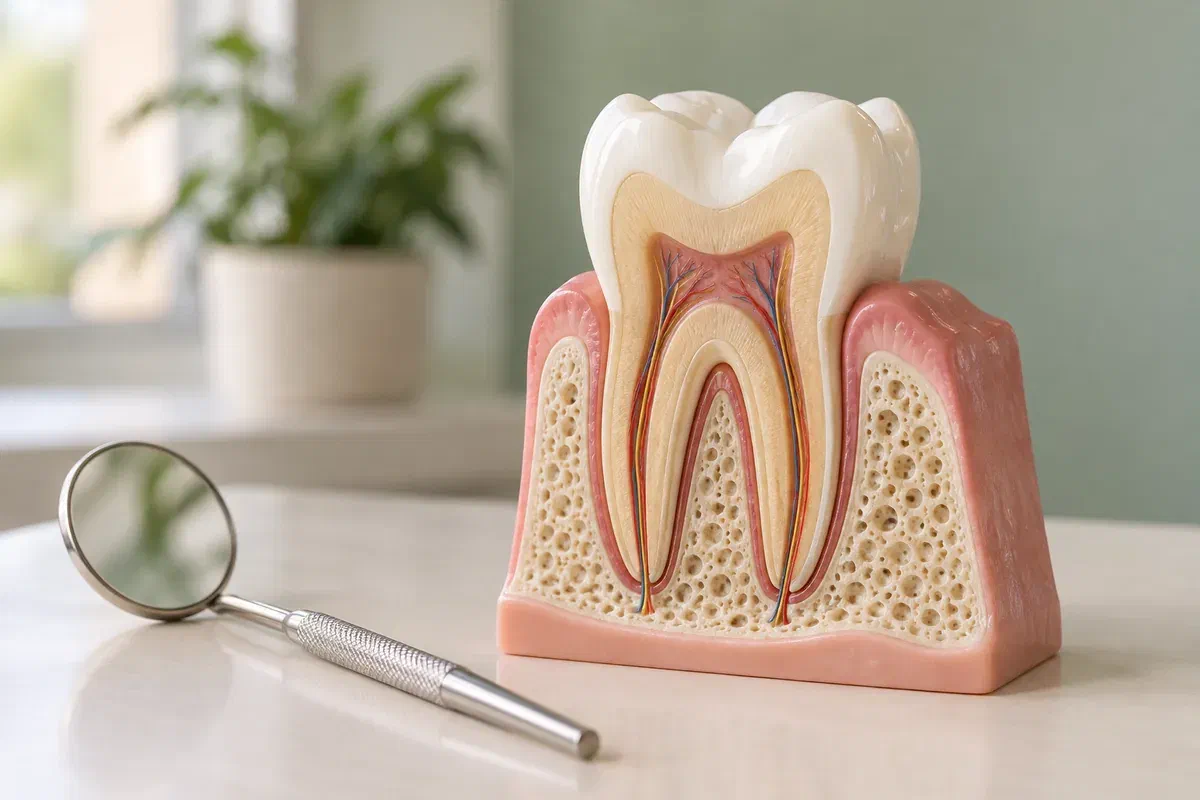
Illustrative cross-section tooth model showing roots within supporting gum and bone beside a dental mirror
What usually prompts the visit

A change you can see, feel or were told about.

Your concern may start with something visible, something physical or something on record. Let us know which, and the assessment will relate it to today’s findings.

An image that mentioned bone height

If a radiograph was described as showing bone loss, ask which areas were involved and how that fits with the gum examination. A summary on its own leaves gaps. Earlier images may help reveal change, but only if they are comparable, which the clinician can judge.

A sense that some teeth are less firm

Recession sometimes comes with a sense that a tooth is less firm. Note when you noticed this, whether there is any soreness and whether there was an injury. Rather than testing it at home, leave that to the examination, which can show whether prompt care is needed.

Old gum treatment, half remembered

Previous deep cleanings or gum procedures, even from years back, are part of the picture. Share what you can recall and any paperwork. If regular care stopped, tell us what got in the way. The aim is a plan that works for you now.

Images, gum measurements and what you notice all need to be considered together. Receding gums do not always mean bone loss, comfortable teeth do not guarantee healthy support, and one area’s outlook does not set the rest.

Why it helps to know

Separate cosmetic change from support that matters.

Some gum changes are mainly about appearance or sensitivity, while others affect how well a tooth is held. A thorough review helps tell them apart, showing which areas need treatment, which need watching and what is still unclear. Ask us to point out each finding on the images or a model so you can follow the reasoning.

The visit also creates a record to compare against later. If monitoring is recommended, ask what will be measured and why that interval suits you. Knowing what is being tracked makes return visits feel useful, even when your gums look the same to you from month to month.

Patient information: American Academy of Periodontology — combining clinical and radiographic findings

A clear view of each affected area

Ask whether recession or bone change is limited to a few teeth or seen more widely, and how that affects the options. If one tooth looks less secure, ask what sets it apart. Its outlook should not be assumed for neighbouring teeth.

A difference between now and later

Ask what the current records show and what only a future review can confirm. Older photos, images or charts are useful when they are comparable. A single visit should not be taken as an exact prediction of change.

Treatment in a sensible sequence

If gum grafting for appearance, restorations or orthodontics are on your mind, ask whether stabilizing the gums should come first. Ask how each proposal relates to the underlying condition. Staging makes the visits, responsibilities and fees easier to weigh.

Inside the assessment

We start with your story and end with a plan.

The records required depend on what we are trying to answer. If a particular image or measurement is suggested, ask how it will help guide the decision.

  1. Talk about what changed

    We discuss when you noticed recession or movement, past gum treatment, missing teeth and earlier advice. Health conditions, medications, tobacco use and brushing habits can all be relevant. If another office holds records, ask whether to request them first.

  2. Measure the gum attachment

    The clinician gently probes around each tooth, noting how far the gum has receded, how deep the pockets are, whether there is bleeding and how stable the tooth feels. Ask which readings matter most for the areas you noticed.

  3. Compare with the images

    Recession is visible; bone usually is not. Dental images fill that gap by showing how high the bone reaches between and around the teeth, and the clinician weighs them against what the probe found. Ask about the limits of each image; a 3D scan is not necessary for every bone question.

  4. Set priorities and a review point

    We explain the diagnosis, which areas need care and the suggested order. Ask whether a periodontist could add useful information and what to do in the meantime. Agree on how the response to early care will be checked before planning further stages.

Protecting what remains

Gentle, consistent and checked.

An assessment guides your care but cannot replace lost bone or gum. Follow the advice for your diagnosis, and say so if any of it is hard to manage.

Adjust brushing for exposed roots

Ask for a demonstration of a technique that cleans well without scrubbing at receding gums, along with aids for gaps and dental work. Confirm which brush and tools to use. If an area is sensitive or a tool keeps catching, tell us so we can adapt the routine.

Keep treatment and reviews connected

Ask which visits provide treatment and which check stability. If a specialist is involved, confirm who coordinates and where follow-up takes place. Bring any outside reports so the advice can be considered as one plan.

Report new changes promptly

Contact us about increasing looseness, swelling, discomfort or a change in your bite, and mention new health conditions or medicines. A scheduled maintenance visit should not delay a call about something new.

What the findings may lead to

Not every gum change needs the same answer.

Ask what each option is meant to achieve, why it fits your findings and what ongoing care it requires. Treatment should follow your examination rather than a single label.

When keeping the condition stable matters most

Periodontal treatment with planned recalls

This can include professional cleaning, gum therapy, help with home care and scheduled reviews. Ask what will show that things are stable and what remains uncertain. Healthier gums do not mean lost bone has been rebuilt.

When advanced periodontal care may be worth discussing

Specialist evaluation of a particular site

A periodontist can assess whether further treatment, sometimes a regenerative or grafting procedure in a suitable case, is reasonable. Ask about the specific site, the expected benefit, the limits and the upkeep. Grafting is not suited to every pattern of recession or bone change.

When one tooth’s prognosis influences the plan

Weighing the future of a weakened tooth

If maintaining a tooth is not realistic, ask why and compare the next steps available. The decision should consider your whole mouth. Reduced support does not on its own mean extraction or an implant.

Patient information: American Academy of Periodontology — selected regenerative and surgical procedures

Halton Hills gum questions

Recession, roots and bone, explained.

Visible gum changes raise practical questions. Bring older photos or records if you have them, and we will go through what the examination shows.

(905) 876-4488
Is gum recession the same thing as bone loss?
Not always. Recession describes the gum moving away from the crown of the tooth, while bone loss refers to reduced bone support around the root. They can occur together or separately, which is why the examination and images are considered side by side.
Can brushing too hard cause my gums to recede?
Aggressive brushing is one possible contributor to recession, along with other factors. The clinician can look at the pattern and show you a gentler technique and suitable brush if that seems relevant.
Why are my teeth more sensitive where the gums have moved?
When gums recede, part of the root surface can become exposed, and that area may react to cold or touch. Mention any sensitivity during the assessment so it can be checked and discussed.
Do dark triangles between my teeth mean I am losing bone?
They can reflect changes in the gum and bone between teeth, but other factors such as tooth shape also play a role. The examination and images help the clinician explain what is behind the spaces in your case.
If bone loss is confirmed, will my teeth need to come out?
Not necessarily. The amount and location of change, the health of each tooth and its response to treatment all matter. If a receding tooth looks shaky to you, ask what its readings and images show.
Is a gum graft always needed for receding gums?
No. Many situations are managed with gum care, technique changes and monitoring. A graft may be discussed for specific sites where it is suitable. If it is suggested, ask why that area qualifies and what realistic results look like.
Bone-loss assessment for Halton Hills

Show us what you noticed.

Contact our Bronte Street practice to arrange a look at receding gums, an X-ray finding about bone support, or earlier periodontal care. We can examine the concern and explain a sensible plan for care or further evaluation.

Diagnosis, the prognosis for each tooth, imaging, treatment options, referral and fees depend on assessment. Keeping a tooth or restoring lost support cannot be guaranteed in advance.

Visit Milton Dental Clinic
Unit 1, 342 Bronte St. S, Milton, ON L9T 5B7
Get directions Clinic hours
Monday–Thursday
11am–7pm
Friday–Sunday
By appointment only

Areas we serve

  • Milton
  • Oakville
  • Mississauga
  • Georgetown
  • Halton Hills
  • Acton
  • Campbellville
  • Brampton
  • Burlington
  • Puslinch
  • Rockwood
  • Erin
  • Caledon
  • Etobicoke
  • Old Milton
  • Bronte Meadows
  • Timberlea
  • Dorset Park
  • Dempsey
  • Clarke
  • Beaty
  • Coates
  • Harrison
  • Scott
  • Willmott
  • Ford
  • Bowes
  • Cobden
  • Walker
  • Mountain View
  • Milton Heights
  • Hawthorne Village
  • Valley View
  • Fallingbrook
  • Nassagaweya
  • Trafalgar
  • Esquesing
  • Nelson
  • Brookville
  • Moffat
  • Glen Williams
  • Norval
  • Limehouse
  • Stewarttown
  • Ashgrove
  • Hornby
  • Silver Creek
  • Speyside
  • Scotch Block
  • North Oakville
  • River Oaks
  • Glen Abbey
  • West Oak Trails
  • Palermo
  • Bronte Creek
  • College Park
  • Joshua Creek
  • Uptown Core
  • Preserve
  • Iroquois Ridge
  • Lisgar
  • Meadowvale
  • Meadowvale Village
  • Churchill Meadows
  • Erin Mills
  • Central Erin Mills
  • Streetsville
  • East Credit
  • Creditview
  • Heartland
  • Sheridan
  • Mount Pleasant
  • Credit Valley
  • Huttonville
  • Churchville
  • Springbrook
  • Northwest Brampton
  • Bram West
  • Fletcher's Meadow
  • Fletcher's Creek South
  • Alton Village
  • Orchard
  • Millcroft
  • Headon Forest
  • Tansley
  • Brant Hills
  • Tyandaga
  • Kilbride
  • Lowville
  • Aberfoyle
  • Morriston
  • Arkell
  • Hillsburgh
  • Freelton
  • Carlisle
  • Waterdown
  • Flamborough
  • Mountsberg

How can we help?

Milton Dental Clinic

Have a question about your smile? Choose the option that works best for you.

For urgent dental concerns, please call.
Messages are reviewed during clinic hours.