

Illustrative patient and clinician discussing tooth protection with a clear dental guard
Specialized Care

Bruxism Treatment in Acton

Aching temples, a sore spot near the ear, a tooth that twinges when you bite: these are sometimes blamed on grinding and sometimes have nothing to do with it. From Acton, an unhurried assessment can help separate bruxism from other causes and plan care that fits.

Sorting out jaw and tooth symptoms from Acton

Not every ache is grinding, and not all grinding aches.

Bruxism means clenching or grinding the teeth, whether during sleep or while you are awake. It can tire the chewing muscles, leave teeth tender, and wear or crack enamel and fillings. Yet plenty of people grind with no discomfort at all, and plenty of jaw or head pain comes from somewhere else entirely.

That is why the first job is careful sorting. Tension headaches, sinus pressure, a cracked tooth, gum problems, and jaw-joint conditions can all produce symptoms that feel similar. A thoughtful assessment looks for the signs that point toward grinding and the ones that do not, so that a guard is not offered as the answer to a question it cannot solve.

Tell our Bronte Street team where it hurts, when, and what makes it better or worse. Bring any guard you already have. We will examine your teeth, muscles, and bite, and explain plainly what we think is going on, what remains uncertain, and whether another clinician should take a look.

Get jaw and tooth symptoms checked
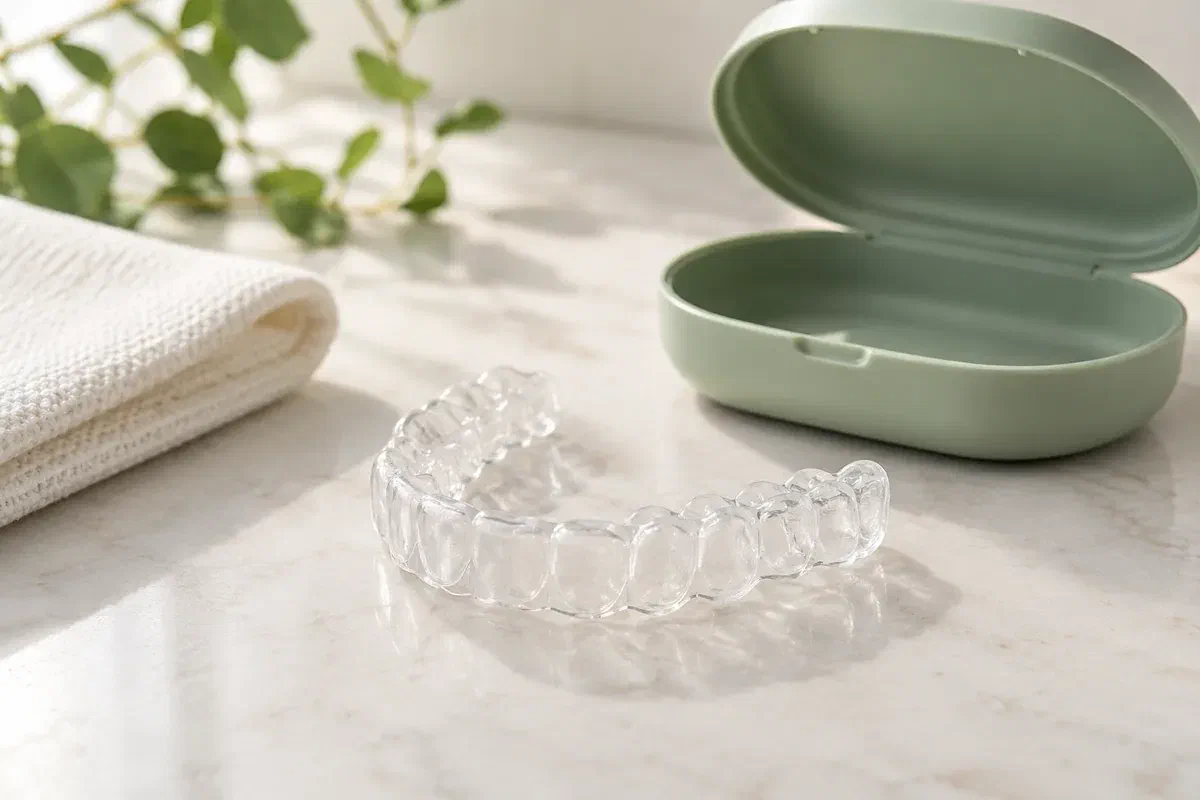
Illustrative clear dental nightguard beside an open pale sage case on a light stone surface
Where and when it hurts

Describe the symptom first; the label can come later.

The more precisely you can describe location, timing, and triggers, the easier it is to weigh bruxism against the other conditions that can cause similar complaints.

Tight cheeks and temples by evening

Muscle fatigue that builds through the day can point to awake clenching during work, driving, or screen time. Say when it peaks and what eases it. Stress may feed into it, but it is not assumed to account for every ache.

Morning headaches or a stiff jaw

Waking with discomfort can follow night grinding, though poor sleep and other conditions can do the same. Mention snoring, unrefreshing sleep, or any sleep diagnosis. Some morning symptoms warrant a conversation with your doctor as well as with us.

One tooth that hurts on biting

Pain focused on a single tooth may come from overload, but it can also signal a crack, decay, or a problem with the nerve. Point to the tooth and describe what sets it off. Diagnosing and treating that tooth is a separate question from managing clenching.

Grinding can be present without causing problems, and problems can be present without grinding. Assessment is about matching symptoms to the most likely cause before choosing any treatment.

Why careful sorting pays off

The right explanation leads to the right next step.

Your goal may be relief from a nagging ache, protection for a tooth that has started to crack, or simply knowing whether grinding is part of the picture at all. Say which matters most. Then ask how the team will tell whether a chosen approach is actually making a difference.

Clear thinking also stops two problems being merged into one. A tooth with a crack may need treatment of its own, whatever happens with clenching. A persistent headache may need a doctor, not a dental appliance. Separating these questions keeps the plan honest.

Advice tied to the pattern you describe

Ask whether a suggestion is aimed at daytime clenching, night grinding, or another cause. Strategies built on your real symptoms and routine are easier to keep up than a general instruction to relax your jaw.

A guard only when it has a purpose

If an appliance is suggested, ask exactly what it should protect or relieve, and what it will not change. Discuss fit, cleaning, hours of use, fees, and follow-up. Expect it to be reviewed rather than handed over and forgotten.

Follow-up when symptoms don’t settle

Tooth pain that lingers, reduced opening, or discomfort that spreads or changes should be re-examined. Ask what has been ruled out and whether a physician, jaw-pain clinician, or other provider should be involved.

Our approach in Acton visits

Listen, locate, rule out, then plan.

Every recommendation should come with a reason. Let us know about past guards, dental treatment, medicines, and any care you are receiving for headaches, sleep, or jaw pain.

  1. Pin down the symptom

    We ask where discomfort sits, when it starts, how long it lasts, and what triggers it, along with any clenching or grinding you or others have noticed. Mention recent health or medication changes. You do not need to have proved the grinding before you come.

  2. Examine teeth, muscles, and the jaw joint

    The clinician checks for wear, cracks, tender muscles, joint sounds, and how the jaw opens and closes. Tests or records may be suggested to clarify a particular tooth. Past wear is weighed with present symptoms rather than treated as proof of current grinding.

  3. Explain the likely cause and the options

    You will hear what the findings suggest and what is still uncertain. Options may include monitoring, daytime habit work, a protective appliance, treating a specific tooth, or referral. Each is discussed with its purpose.

  4. Check whether the plan is helping

    At follow-up, tell us whether the ache has changed, how any appliance feels, and whether new symptoms have appeared. If the response is poor, the cause is reconsidered rather than the plan being escalated by guesswork or permanent changes to your bite.

In the weeks after

Notice what changes, and tell us.

Your instructions depend on the plan: monitoring, daytime awareness, a new guard, or treatment for a particular tooth. Ask which apply and how to get in touch if symptoms shift.

Keep a short symptom note

A few lines about when aches occur and how strong they are can make the next review far more useful. If daytime clenching was found, ask about simple reminders and a relaxed jaw position. Resist repeatedly testing your bite.

Use the appliance as you were shown

Clean and store it as instructed and bring it to each review. Do not soften, cut, or reshape it. Contact us if it rocks, rubs, cracks, or seems to make symptoms worse rather than better.

Keep your doctor in the loop

If headaches, sleep problems, or medication questions are part of the picture, keep your physician informed. Do not stop a prescription because you suspect it is linked to clenching. Tell us about any new diagnosis at your next dental visit.

Patient information: NIH News in Health — daytime awareness, sleep-related questions, and conservative care

Acton bruxism options

Match the treatment to the cause you actually find.

Ask what each option is supposed to change, and how you will both know. When the findings are limited, a conservative approach is usually the sensible one.

When symptoms are mild or mainly daytime

Monitoring with practical habit work

Daytime awareness and a symptom record are paired with dental records that show change over time. Ask what should bring you back sooner. Persistent aches should be reassessed, not dismissed as a habit you need to control better.

When teeth or restorations need protecting

A protective appliance, carefully assessed

Review the design, fit, limits, and upkeep. Ask how it would work alongside a retainer or other device. A guard protects rather than cures, and if it seems to increase pain, it should be checked rather than worn through the discomfort.

When another cause is found or suspected

Treating the tooth or referring onward

A cracked or decayed tooth is treated according to its own condition. Headaches, joint problems, or sleep concerns may need a physician or another specialist. Ask why each step is suggested, and question permanent bite changes presented as a standard fix.

Questions about jaw and tooth symptoms

How do I know whether it’s grinding?

These answers address some of the most common questions about symptoms that may or may not be linked to bruxism.

(905) 876-4488
Can clenching cause pain that feels like an earache?
The jaw joint and chewing muscles sit close to the ear, so muscle or joint discomfort can feel ear-related. Ear infections and other conditions can cause similar pain. If the ear itself seems affected, or you have hearing changes or fever, see your doctor.
My tooth hurts when I bite. Is that from grinding?
It can be, but biting pain is also a common sign of a cracked tooth or other dental problem. The clinician may test the tooth to find the cause. Please do not wait for it to settle if it is getting worse.
Can a guard make my jaw pain worse?
A poorly fitting or unsuitable appliance can sometimes cause discomfort. If pain increases after you start wearing a guard, stop and call us so the fit and purpose can be reviewed.
Are headaches always linked to grinding?
No. Headaches have many causes, and grinding is only one possible contributor for some people. If headaches are frequent, severe, or changing, a physician should be involved.
Does grinding cause jaw-joint disorders?
The relationship is debated and varies between people. Clenching and grinding can tire the muscles, and joint problems can have several causes. We look at your joint and muscles and can suggest a jaw-pain assessment if symptoms point that way.
Could my sinus be causing my upper teeth to ache?
Sinus congestion can make upper back teeth feel sore, sometimes on both sides. Grinding and dental problems can do the same. Mention any cold or allergy symptoms so the clinician can consider all the possibilities.
Booking a visit from Acton

Describe the ache, and let’s find out where it comes from.

Contact the team at our Bronte Street practice about jaw tightness, tooth pain, suspected clenching, night grinding, or a guard that is not helping. We will look for the cause, explain what fits, and tell you if someone else should be involved.

Findings determine any advice, appliance, treatment, referral, and fee. No guard or dental treatment can promise that pain, grinding, or future damage will be fully resolved.

Visit Milton Dental Clinic
Unit 1, 342 Bronte St. S, Milton, ON L9T 5B7
Get directions Clinic hours
Monday–Thursday
11am–7pm
Friday–Sunday
By appointment only

Areas we serve

  • Milton
  • Oakville
  • Mississauga
  • Georgetown
  • Halton Hills
  • Acton
  • Campbellville
  • Brampton
  • Burlington
  • Puslinch
  • Rockwood
  • Erin
  • Caledon
  • Etobicoke
  • Old Milton
  • Bronte Meadows
  • Timberlea
  • Dorset Park
  • Dempsey
  • Clarke
  • Beaty
  • Coates
  • Harrison
  • Scott
  • Willmott
  • Ford
  • Bowes
  • Cobden
  • Walker
  • Mountain View
  • Milton Heights
  • Hawthorne Village
  • Valley View
  • Fallingbrook
  • Nassagaweya
  • Trafalgar
  • Esquesing
  • Nelson
  • Brookville
  • Moffat
  • Glen Williams
  • Norval
  • Limehouse
  • Stewarttown
  • Ashgrove
  • Hornby
  • Silver Creek
  • Speyside
  • Scotch Block
  • North Oakville
  • River Oaks
  • Glen Abbey
  • West Oak Trails
  • Palermo
  • Bronte Creek
  • College Park
  • Joshua Creek
  • Uptown Core
  • Preserve
  • Iroquois Ridge
  • Lisgar
  • Meadowvale
  • Meadowvale Village
  • Churchill Meadows
  • Erin Mills
  • Central Erin Mills
  • Streetsville
  • East Credit
  • Creditview
  • Heartland
  • Sheridan
  • Mount Pleasant
  • Credit Valley
  • Huttonville
  • Churchville
  • Springbrook
  • Northwest Brampton
  • Bram West
  • Fletcher's Meadow
  • Fletcher's Creek South
  • Alton Village
  • Orchard
  • Millcroft
  • Headon Forest
  • Tansley
  • Brant Hills
  • Tyandaga
  • Kilbride
  • Lowville
  • Aberfoyle
  • Morriston
  • Arkell
  • Hillsburgh
  • Freelton
  • Carlisle
  • Waterdown
  • Flamborough
  • Mountsberg

How can we help?

Milton Dental Clinic

Have a question about your smile? Choose the option that works best for you.

For urgent dental concerns, please call.
Messages are reviewed during clinic hours.