

Illustrative patient and clinician discussing tooth protection with a clear dental guard
Specialized Care

Bruxism Treatment in Brampton

New job, new medicine, new baby, or a stretch of poor sleep: clenching often shows up after something in life shifts. If you are travelling from Brampton, we can look at what the change is doing to your teeth and jaw, and plan sensible protection or follow-up.

Bruxism care for Brampton households

Something changed. Your jaw noticed.

Clenching and grinding, grouped under the name bruxism, do not always follow a steady pattern. Many people find the habit appears or worsens around a particular period: starting a medication, taking on longer shifts, or sleeping badly for weeks. It can happen during the day, overnight, or both, and you may only notice the after-effects.

Linking a new symptom to a recent change is a useful clue, not a final answer. A dental assessment looks at the teeth, restorations, and muscles to see whether there is wear or damage that needs protecting. When a medicine or sleep problem might be involved, the right next step may be a conversation with your physician rather than a change at the dental office alone.

Tell our Bronte Street team what changed and roughly when. Bring the names of any new medicines and any guard you already own. We will examine your mouth, explain what we see, and help you plan the steps that make sense, including who else might need to be involved.

Discuss a recent change in clenching
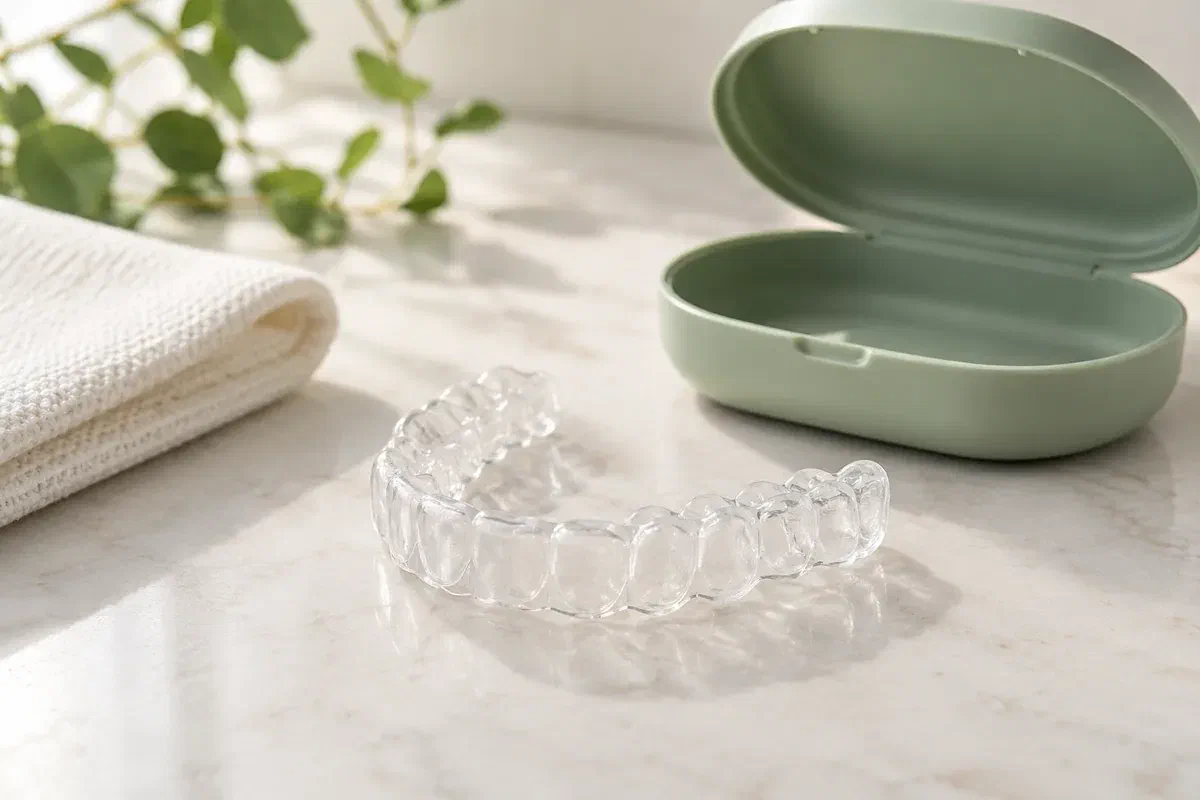
Illustrative clear dental nightguard beside an open pale sage case on a light stone surface
Clues linked to timing

When did it start, and what else was going on?

Timelines help. Share what changed around the time you noticed symptoms, so bruxism can be weighed against other causes that produce similar signs.

Jaw tension during a demanding season

Deadlines, night shifts, caregiving, or exams can coincide with clenching. Describe when you notice it and whether muscle fatigue follows. Pressure is often part of the story, but it is not used to explain away every symptom.

Grinding that started recently at night

Tell us if someone has begun hearing grinding, or if waking jaw stiffness is new. Mention any recent sleep changes, sleep diagnosis, or new appliance. Sleep-related concerns may need medical evaluation in addition to protecting your teeth.

Damage that seems sudden

A new chip, a cracked filling, or teeth that suddenly feel sore when biting are worth pointing out. Bring records of recent dental work if you have them. Repair of the damaged tooth and management of the forces behind it are handled as separate decisions.

A short-lived increase in clenching does not always need an appliance. Assessment helps show whether teeth are being damaged, whether there is a meaningful risk, or whether a symptom has another cause.

The value of a joined-up view

Protect the teeth while the bigger picture is sorted out.

When clenching appears after a life or health change, the most useful goal may be short-term protection while that change settles, or it may be a longer plan if the habit persists. Some people mainly want relief from tired muscles. Ask which goal is being targeted and how improvement will be judged.

Keeping consequences and causes apart avoids confusion. A fractured tooth needs its own care whatever else is happening. And recent symptoms do not justify extensive work on teeth before the situation has had time to be understood and, where relevant, discussed with a prescriber.

Advice that fits a changing routine

Ask whether the plan addresses daytime clenching, sleep grinding, or both, and how it adapts if your schedule changes again. Practical steps that work with shift patterns or family demands are more realistic than being told simply to stop.

A defined role for any appliance

If a guard is suggested, ask what it is expected to protect and its limitations. Cover fit, cleaning, wear time, fees, and review. It should be checked over time, particularly if the circumstances that triggered clenching change.

Room for symptoms beyond the teeth

Ongoing pain, reduced jaw movement, or symptoms that keep evolving deserve an explanation in their own right. Ask what has been assessed and whether your physician or another clinician should be involved. A grinding label should not end that conversation.

How we work through it

Timeline, examination, coordination, review

You should understand why each step is suggested. Tell us about earlier guards, dental work, medications, and any medical or sleep care already underway.

  1. Build a timeline of the change

    We ask when clenching or grinding began, what was happening at the time, and how symptoms have developed. Bring medicine names and dates if a prescription changed. Observations from someone at home are helpful, and recording every night is not necessary.

  2. Assess teeth, restorations, and muscles

    The clinician checks for wear, cracks, tenderness, and related findings, and may suggest records to compare later. Older wear is weighed against your new symptoms, since it cannot reveal precisely how much grinding is happening at present.

  3. Agree on protection and who else to involve

    Options such as monitoring, daytime strategies, or a protective appliance are explained with their purpose. If a medication or sleep concern may be relevant, we discuss raising it with your physician. Repairs are planned as their own step.

  4. Check progress as circumstances settle

    At review, share how your jaw feels, how the appliance is going, and whether the trigger has changed. We compare results with the original aims. If symptoms persist, the plan is revisited carefully rather than changed impulsively or by permanently reshaping teeth.

While things settle

Steady habits help through a busy stretch.

Your instructions depend on whether you are monitoring, building daytime awareness, wearing a new guard, or recovering from a repair. Confirm which ones apply and how to reach us.

Find reminders that survive a hectic week

If awake clenching is part of the picture, ask about reminders that fit your new routine, such as a check during breaks or before a commute, and where the jaw should rest. Avoid testing your bite repeatedly. Stress can be discussed openly without being called the whole cause.

Keep the appliance clean and checked

Follow the cleaning, storage, and wear advice, and bring the guard when you come in. Do not heat, trim, or alter it. Let us know if it becomes loose, sore, cracked, or fits differently after other dental treatment.

Talk to your prescriber, not just to us

If you suspect a medicine is linked to clenching, keep taking it as prescribed and raise the question with the doctor who prescribed it. Mention any changes at your dental review too, so both teams can consider what is happening.

Patient information: NIH News in Health — daytime awareness, sleep-related questions, and conservative care

Brampton bruxism options

Short-term protection, longer-term habits, or targeted repair

Ask what each option should achieve and how it will be reviewed. When findings are limited, a smaller step is often the wiser one.

Suited to recent, mild changes

Monitoring while circumstances settle

Daytime awareness is paired with records that track whether wear or symptoms progress. Ask what should prompt an earlier visit. Mild changes can be watched, but persistent symptoms should be reviewed rather than written off as stress.

Suited to teeth or restorations at risk

An assessed protective appliance

Review the design, fit, limits, and care before going ahead. If you already wear a retainer, ask how they will be coordinated. A guard is for protection and does not guarantee grinding will stop; if it causes pain, have it checked.

Suited to damage or a concern outside dentistry

Repair or medical input

A broken or worn tooth may need its own treatment. Symptoms linked to sleep or medication may need a physician’s input. Ask the reason for each recommendation, and be wary of any suggestion that permanent bite changes are a standard cure.

Common bruxism questions

Answers for when clenching appears out of nowhere

These cover questions people often ask when grinding is new, or newly noticeable, after a change in their lives.

(905) 876-4488
Can a new antidepressant be linked to jaw clenching?
Some medicines, including certain antidepressants, are reported to be associated with bruxism in some people. Do not stop or change the dose yourself. Mention the medicine at your visit and raise the question with your prescriber, who can review whether it is relevant.
Will clenching go away once a stressful period ends?
It may ease for some people and continue for others. That is why a review after a few months can be useful. If teeth are at risk in the meantime, protection may be discussed while you see how things develop.
Can poor sleep make grinding worse?
Sleep and grinding can be connected, though the relationship is not simple. If you are sleeping poorly, snoring, or very tired during the day, mention it. A physician is the right person to assess a sleep problem, while we focus on the dental effects.
Is it normal for teeth to ache when biting after a week of heavy clenching?
Overloaded teeth and muscles can feel tender, but biting pain can also signal a crack or another problem. If it persists, worsens, or affects one tooth in particular, book an assessment rather than waiting for it to pass.
Should I tell my doctor that I have started grinding?
It can be helpful, particularly if the change followed a new medicine or a health issue. We can provide a summary of the dental findings if you would like to share it.
Can I fit a visit around shift work?
Ask when booking. Weekday hours run into the evening, and other days are available by appointment. Planning a review alongside a routine visit can also reduce extra trips.
Booking from Brampton

Tell us what changed, and we will help with the rest.

Get in touch with our Bronte Street practice about new clenching, grinding, tooth damage, or a guard that needs review. We will assess the effects, explain suitable protection or care, and suggest when another professional should be involved.

Recommendations, appliance suitability, repairs, referral, and fees are based on your assessment. No guard or treatment can guarantee an end to grinding, discomfort, or future damage.

Visit Milton Dental Clinic
Unit 1, 342 Bronte St. S, Milton, ON L9T 5B7
Get directions Clinic hours
Monday–Thursday
11am–7pm
Friday–Sunday
By appointment only

Areas we serve

  • Milton
  • Oakville
  • Mississauga
  • Georgetown
  • Halton Hills
  • Acton
  • Campbellville
  • Brampton
  • Burlington
  • Puslinch
  • Rockwood
  • Erin
  • Caledon
  • Etobicoke
  • Old Milton
  • Bronte Meadows
  • Timberlea
  • Dorset Park
  • Dempsey
  • Clarke
  • Beaty
  • Coates
  • Harrison
  • Scott
  • Willmott
  • Ford
  • Bowes
  • Cobden
  • Walker
  • Mountain View
  • Milton Heights
  • Hawthorne Village
  • Valley View
  • Fallingbrook
  • Nassagaweya
  • Trafalgar
  • Esquesing
  • Nelson
  • Brookville
  • Moffat
  • Glen Williams
  • Norval
  • Limehouse
  • Stewarttown
  • Ashgrove
  • Hornby
  • Silver Creek
  • Speyside
  • Scotch Block
  • North Oakville
  • River Oaks
  • Glen Abbey
  • West Oak Trails
  • Palermo
  • Bronte Creek
  • College Park
  • Joshua Creek
  • Uptown Core
  • Preserve
  • Iroquois Ridge
  • Lisgar
  • Meadowvale
  • Meadowvale Village
  • Churchill Meadows
  • Erin Mills
  • Central Erin Mills
  • Streetsville
  • East Credit
  • Creditview
  • Heartland
  • Sheridan
  • Mount Pleasant
  • Credit Valley
  • Huttonville
  • Churchville
  • Springbrook
  • Northwest Brampton
  • Bram West
  • Fletcher's Meadow
  • Fletcher's Creek South
  • Alton Village
  • Orchard
  • Millcroft
  • Headon Forest
  • Tansley
  • Brant Hills
  • Tyandaga
  • Kilbride
  • Lowville
  • Aberfoyle
  • Morriston
  • Arkell
  • Hillsburgh
  • Freelton
  • Carlisle
  • Waterdown
  • Flamborough
  • Mountsberg

How can we help?

Milton Dental Clinic

Have a question about your smile? Choose the option that works best for you.

For urgent dental concerns, please call.
Messages are reviewed during clinic hours.