

Illustrative patient and clinician discussing tooth protection with a clear dental guard
Specialized Care

Bruxism Treatment in Burlington

Plenty of nightguards end up in a bathroom drawer because they felt bulky, stopped fitting, or seemed pointless. Bring yours from Burlington and we can look at why it fell out of use, what your teeth show now, and whether protection still has a role.

Rethinking grinding care from Burlington

Why did the old guard stop working for you?

An unused guard is not a failure. It is information. Maybe it pinched, maybe it rocked after a new crown, or maybe nobody explained what it was protecting. Clenching and grinding, called bruxism, can come and go over the years, so a device made long ago may no longer suit the mouth you have today.

Before deciding on a replacement, it is worth stepping back. The real question is what grinding is doing now. Some people need protection for fragile teeth; others are better served by daytime habit work, monitoring, or attention to a symptom that turns out to have a different cause. An appliance can help, but it will not necessarily make the activity stop.

Our Bronte Street team will want to hear the honest story of the old guard, including how often you wore it and what bothered you. Bring it in its case. After examining your teeth and jaw, we will explain the options and the reasoning behind each one.

Review your existing guard
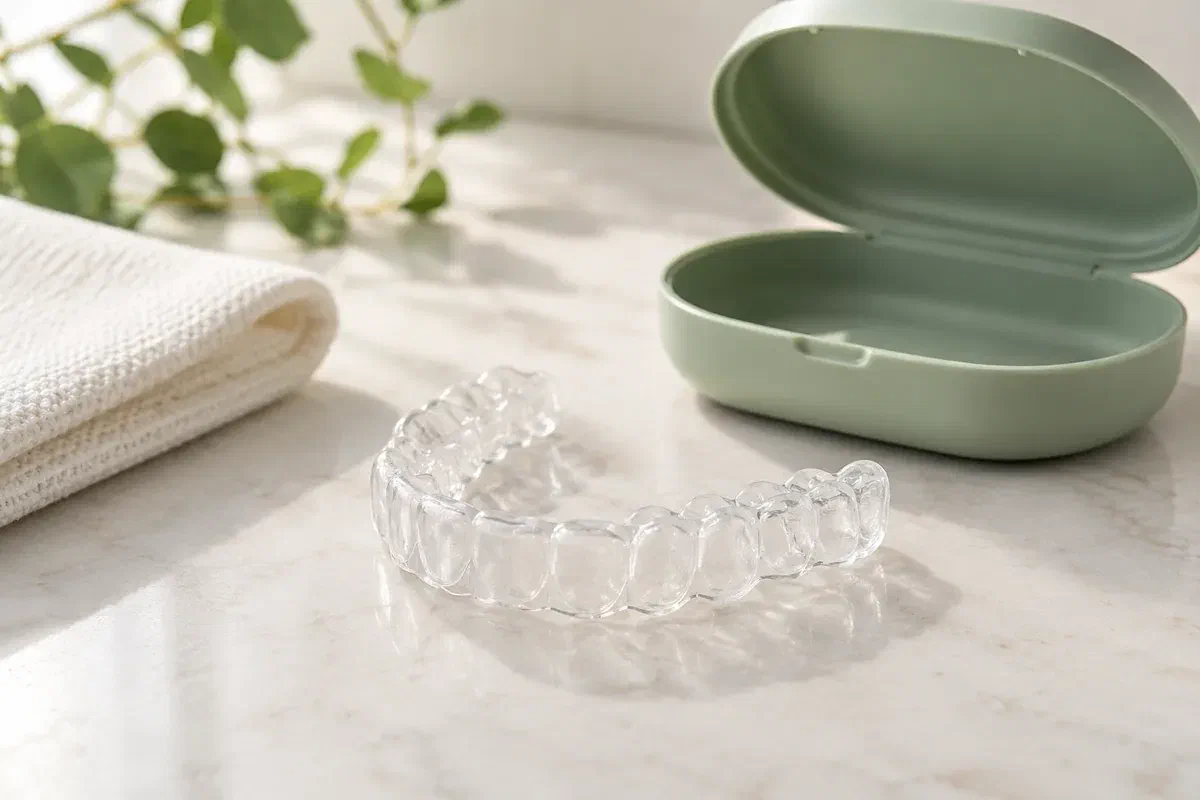
Illustrative clear dental nightguard beside an open pale sage case on a light stone surface
Clues we will ask about

What made you think about grinding again?

Describe the change that brought you back to the question. That lets the clinician weigh bruxism against other things that can cause similar signs.

A clenched jaw during busy stretches

Note whether your teeth press together during demanding tasks, long drives, or stressful conversations. Mention any facial muscle fatigue and what you have already tried. Pressure may be involved, but it is not treated as the explanation for every symptom.

Grinding that has returned or grown louder

If a bed partner reports more noise, or mornings bring a stiff jaw again, say so. Share any sleep diagnosis, CPAP machine, or other device. Night-time grinding may be linked with sleep concerns that deserve a doctor’s input.

Fresh chips or wear since the last guard

Point out teeth that look different from a few years ago and any repairs done in between. The pattern is studied before wear is put down to grinding. Fixing new damage and preventing more of it are worked out as two separate plans.

Not every grinder needs an appliance, and not every worn tooth needs restoring. Assessment shows whether there is active damage, a meaningful risk, or a problem that belongs elsewhere.

A fresh look at the goal

Decide what you are protecting before choosing how.

A second look gives you a chance to name the aim properly. It might be shielding a new crown, easing jaw tension, finding out why discomfort persists, or tracking whether wear is still moving. Ask which aim comes first and how you will both tell whether things are improving.

It also lets you keep the damage and the cause apart. A broken tooth may need treatment no matter what appliance is chosen. Equally, old wear does not mean a full rebuild is due before anyone knows whether it is still progressing.

Matching advice to when grinding happens

Ask whether a suggestion targets daytime clenching, sleep grinding, or another issue. Advice that reflects your real pattern is easier to live with than a broad instruction to quit grinding, especially if your routine has changed.

A guard with a stated job

If a new appliance is advised, ask what it is meant to protect and what it cannot do. Go through comfort, fit, cleaning, hours of wear, cost, and review dates. Knowing its purpose makes it far more likely to be worn.

Taking odd symptoms seriously

Lasting tooth pain, a jaw that will not open fully, or a symptom that keeps changing deserves a proper explanation. Ask what has been checked and whether another clinician should be consulted. Bruxism should never be the default answer.

The review visit

Look at the past device, the present mouth, and the next step

Each recommendation should come with clear reasons. Tell us about every guard you have had, earlier dental work, medications, and any sleep or medical care underway.

  1. Hear the history, including the old guard’s

    We ask about daytime clenching, reports of night grinding, and when soreness appears, plus what happened with the previous appliance. Mention health or medication changes. Anything a family member has noticed is helpful, and you do not need to document each episode.

  2. Examine your teeth and test the fit

    The clinician checks for wear, fractures, and tender muscles, and looks at how the old guard sits, if you bring it. Ask whether photos or records would help future comparisons. Past wear is read alongside present symptoms, not as a measure of current grinding.

  3. Compare the possible directions

    Monitoring, daytime strategies, adjusting or replacing a guard, and repair are explained with their reasons. If a new appliance is suggested, we outline fitting and review. A tooth that needs restoring or a referral elsewhere is discussed on its own.

  4. Review and refine

    At follow-up, tell us about comfort, how often the device is worn, and any changes in the habit or damage. We check progress against the goals you set. A poor result leads to reassessment, not a hasty swap or irreversible changes to your bite.

Keeping it on track

This time, make the guard part of your routine.

Instructions depend on the plan: monitoring, daytime habit work, a new or adjusted appliance, or care after a repair. Confirm which apply and how to reach us between visits.

Pair the guard with a nightly habit

Keeping the case next to your toothbrush, or putting the guard in as part of your bedtime routine, can make it easier to remember. If daytime clenching is also present, ask about simple reminders and the jaw’s relaxed position instead of tapping your teeth.

Clean, store, and inspect it

Follow the cleaning and storage advice and bring the guard to each review. Never warm, cut, or reshape it yourself. If it starts to rock, hurt, crack, or feel different after new dental work, contact us so the fit can be assessed.

Mention what has changed elsewhere

New prescriptions, different symptoms, or sleep problems are all relevant at review. Do not stop a medicine on your own because you think it may be linked to clenching. We can discuss with you whether medical input would help.

Patient information: NIH News in Health — daytime awareness, sleep-related questions, and conservative care

Paths after a guard review

Adjust, replace, or try a different approach

For each option, ask what result to expect and how it will be checked. When findings are modest, a smaller step is often the better one.

If wear is stable or clenching is mainly daytime

Monitoring and habit support

Daytime awareness is combined with records that show whether teeth are changing. Ask what would warrant coming back sooner. Mild wear can be watched, while persistent aches should be looked at again rather than blamed on a lack of effort.

If teeth or dental work still need protection

A newly assessed protective appliance

Review the design, fit, limits, and care, and say what bothered you about the last one. Ask how a new guard would work with any retainer. It protects rather than cures, and pain while wearing it should be reported, not pushed through.

If damage or a separate concern needs its own care

Repair or another opinion

A fractured or heavily worn tooth may need treatment of its own. Some symptoms point toward a medical, sleep, or jaw-joint assessment. Ask why each step is recommended, and question any claim that permanently altering your bite will cure grinding.

Burlington bruxism FAQ

Questions about old guards, new wear, and starting over

These cover the questions that tend to come up when someone returns to grinding care after a break.

(905) 876-4488
My old guard still goes in. Does that mean it fits properly?
Not always. Teeth can shift slightly over time, and crowns or fillings can change the surfaces a guard sits on. A guard that goes in but rocks, presses, or feels tight should be checked before you keep relying on it.
How long does a typical nightguard last?
It varies with the material, how heavily you grind, and how the guard is cared for. Signs it needs attention include cracks, thinning, a changed fit, or a lingering odour. Bring it to reviews so wear can be checked.
Why does my guard smell or look cloudy?
Appliances collect saliva and bacteria, so they need regular cleaning as instructed. Discolouration or odour can mean the routine needs adjusting, or that the guard is ageing. Avoid hot water and harsh products unless you were told they are safe for your appliance.
Is it a problem if I take the guard out halfway through the night?
It is common and worth mentioning rather than hiding. Removing it can be a sign of discomfort, a poor fit, or simply habit. We can look at why it happens and whether an adjustment or a different approach would help.
Could I be clenching even while wearing a guard?
Yes. The appliance is there to protect teeth and dental work, and the activity can continue while it is in. If soreness or new damage persists, describe it at review so the plan can be reconsidered.
Do I need a referral to have my grinding assessed?
No referral is needed to book a dental assessment for clenching or grinding. If you have been seen elsewhere, bringing notes or records can help, but it is not required.
Bruxism review for Burlington

Give protection another, better-informed try.

Contact our Bronte Street practice about grinding, clenching, worn teeth, or a guard you stopped wearing. We will assess what is happening now, explain what protection or treatment would fit, and say when another evaluation is a good idea.

Any recommendation, appliance, repair, referral, or fee is based on your assessment. No device or treatment can guarantee that grinding, discomfort, or future damage will be fully prevented.

Visit Milton Dental Clinic
Unit 1, 342 Bronte St. S, Milton, ON L9T 5B7
Get directions Clinic hours
Monday–Thursday
11am–7pm
Friday–Sunday
By appointment only

Areas we serve

  • Milton
  • Oakville
  • Mississauga
  • Georgetown
  • Halton Hills
  • Acton
  • Campbellville
  • Brampton
  • Burlington
  • Puslinch
  • Rockwood
  • Erin
  • Caledon
  • Etobicoke
  • Old Milton
  • Bronte Meadows
  • Timberlea
  • Dorset Park
  • Dempsey
  • Clarke
  • Beaty
  • Coates
  • Harrison
  • Scott
  • Willmott
  • Ford
  • Bowes
  • Cobden
  • Walker
  • Mountain View
  • Milton Heights
  • Hawthorne Village
  • Valley View
  • Fallingbrook
  • Nassagaweya
  • Trafalgar
  • Esquesing
  • Nelson
  • Brookville
  • Moffat
  • Glen Williams
  • Norval
  • Limehouse
  • Stewarttown
  • Ashgrove
  • Hornby
  • Silver Creek
  • Speyside
  • Scotch Block
  • North Oakville
  • River Oaks
  • Glen Abbey
  • West Oak Trails
  • Palermo
  • Bronte Creek
  • College Park
  • Joshua Creek
  • Uptown Core
  • Preserve
  • Iroquois Ridge
  • Lisgar
  • Meadowvale
  • Meadowvale Village
  • Churchill Meadows
  • Erin Mills
  • Central Erin Mills
  • Streetsville
  • East Credit
  • Creditview
  • Heartland
  • Sheridan
  • Mount Pleasant
  • Credit Valley
  • Huttonville
  • Churchville
  • Springbrook
  • Northwest Brampton
  • Bram West
  • Fletcher's Meadow
  • Fletcher's Creek South
  • Alton Village
  • Orchard
  • Millcroft
  • Headon Forest
  • Tansley
  • Brant Hills
  • Tyandaga
  • Kilbride
  • Lowville
  • Aberfoyle
  • Morriston
  • Arkell
  • Hillsburgh
  • Freelton
  • Carlisle
  • Waterdown
  • Flamborough
  • Mountsberg

How can we help?

Milton Dental Clinic

Have a question about your smile? Choose the option that works best for you.

For urgent dental concerns, please call.
Messages are reviewed during clinic hours.