

Illustrative patient and clinician discussing tooth protection with a clear dental guard
Specialized Care

Bruxism Treatment in Caledon

Months into wearing a guard, your jaw still aches, or a filling has chipped anyway. That is a reason to look again, not to give up. From Caledon, a bruxism review checks how the current plan is doing and what, if anything, should change.

Reviewing grinding care for Caledon

Is the plan actually working?

Bruxism care is rarely set-and-forget. Grinding during sleep and clenching while awake can shift over months and years, and so can your teeth, your dental work, and your health. A plan that made sense at the start deserves a check once you have lived with it for a while, especially if things are not going the way you hoped.

A poor result does not always mean the plan was wrong. A guard may need adjusting, a daytime habit may have crept back, or a new symptom may have a cause unrelated to grinding. Sometimes it is a sign that protection was never the main issue. Looking carefully before changing anything helps avoid swapping one device for another without learning why.

Bring your current appliance, any notes you have kept, and an honest account of how often you use it. Our Bronte Street team will examine your teeth and jaw, compare the findings with the original goals, and explain what we think should stay the same and what might change.

Book a bruxism plan review
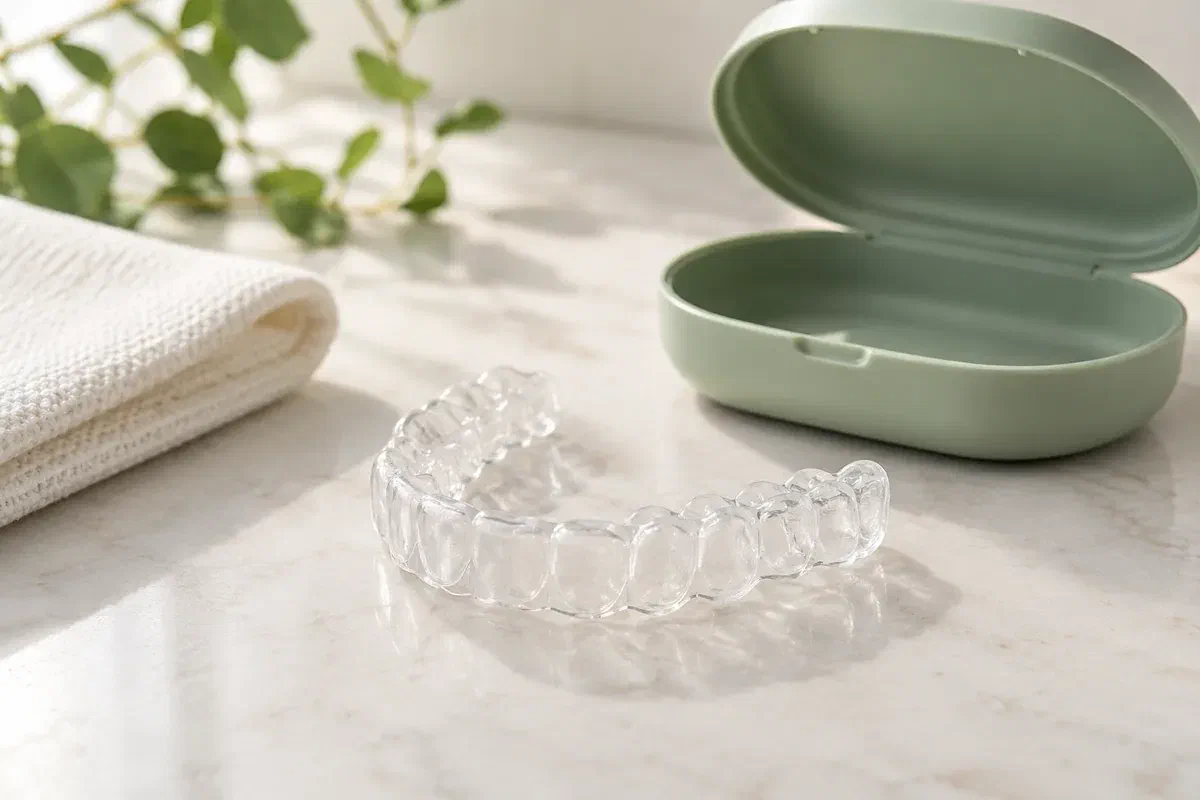
Illustrative clear dental nightguard beside an open pale sage case on a light stone surface
Signs the plan needs another look

Something isn’t right, even with a guard.

There is no need to work out the reason yourself. Describe what has changed since your plan started so the clinician can consider bruxism and other explanations afresh.

Daytime tension that has come back

Maybe the reminders worked for a while and then faded, or a new job brought the clenching back. Tell us when you notice it and how the muscles feel. Stress can play a role, though it is not presumed to explain every symptom.

Night symptoms despite the appliance

Morning jaw soreness, headaches, or grinding that someone still hears are all worth reporting. Mention any change in sleep, a new sleep diagnosis, or a CPAP device. Some night-time problems call for medical input rather than a different guard.

New chips, cracks, or a worn-through guard

Show us any tooth or filling that has broken since the plan started, and bring the guard so its wear can be seen. The pattern is examined before blame is assigned. A new repair and a revised protection plan are separate decisions.

Occasional symptoms do not always mean failure, and an appliance may still be doing its job. Review clarifies whether there is fresh damage, a growing risk, or a problem with a different cause.

What a review can tell you

Learn what is working before you change anything.

Start by returning to the original aim. Was the guard meant to protect a crown, ease muscle soreness, or just slow wear? If the aim has shifted, the plan may need to shift too. Ask how the team will measure progress from here, so the next review has something concrete to compare.

It also helps to separate the appliance from the activity and from the damage. A guard can be doing its protective job while grinding continues underneath it. A tooth that has cracked needs its own care either way. And worn teeth do not mean an extensive rebuild is due.

Advice updated to your current pattern

Your routine and stresses may have changed since the first plan. Ask whether the advice now targets daytime clenching, night grinding, or both, and whether it fits how you live today rather than how you lived when it was made.

An honest check on the appliance

Find out whether the guard still fits, whether it is wearing as expected, and what it can reasonably be asked to do. Talk through cleaning, hours of use, any fees for adjustment or replacement, and when the next check should be.

Fresh eyes on persistent symptoms

Pain that continues, limited opening, or complaints that have moved need a proper explanation. Ask what has been ruled out and whether a physician, sleep clinician, or jaw-pain specialist should be involved now.

How a plan review works

Compare then and now, examine, and adjust only where needed.

Every change should come with a reason. Bring the current appliance, mention new medicines or health changes, and tell us about any medical or sleep care that has started since your last visit.

  1. Revisit the original goals

    We go back over why the plan was made, what you were told to expect, and how things have actually gone. Mention any changes to medicines or health. Notes or observations from someone at home are welcome, but there is no need to track every night.

  2. Examine teeth, guard, and muscles

    The clinician checks for new wear, cracks, and muscle tenderness, and looks at how the appliance fits and how it has worn. Earlier records are used for comparison. Wear is read with your symptoms rather than as a direct measure of grinding now.

  3. Decide what stays and what changes

    Options might include adjusting the guard, refreshing daytime strategies, simple monitoring, repair of a damaged tooth, or referral. Each is explained with its purpose. If a new appliance is suggested, the reasons are made clear first.

  4. Set the next checkpoint

    We agree on when to look again and what would prompt an earlier visit. If the response remains poor, the cause is reconsidered rather than the plan being escalated by guesswork or by permanently altering your bite.

After the review

A refreshed plan, and a note to bring next time.

Your updated instructions may cover an adjusted guard, renewed daytime habits, monitoring, or care after a repair. Make sure you know which apply, and how to get in touch before the next checkpoint.

Restart daytime habits gently

If awake clenching has returned, ask for reminders that fit your current routine and a reminder of the jaw’s relaxed position. Linking cues to new parts of your day can help them stick. Avoid repeatedly testing your bite. Stress is part of the picture, not the whole of it.

Give an adjusted guard a fair trial

Wear it as agreed, clean and store it as instructed, and bring it back to the next review. Do not heat, file, or reshape it. If it rocks, rubs, cracks, or feels different again, call rather than waiting.

Keep a short record

A few notes on morning symptoms, missed nights, new medicines, or sleep changes make the next comparison far more useful. If you think a medicine is adding to the clenching, keep taking it and raise the question with your prescriber instead.

Patient information: NIH News in Health — daytime awareness, sleep-related questions, and conservative care

Caledon bruxism options

Keep, adjust, or change course

For each option, ask what it should improve and when you will look at the result again. More treatment is not automatically better, even when the first plan fell short.

When wear is stable but symptoms have crept back

Refreshed habit support and monitoring

Daytime strategies are updated and records are compared at the next visit. Ask what would warrant an earlier return. Stable findings can be watched, though persistent pain should be looked into rather than dismissed as a habit you should control better.

When the current guard no longer fits or protects

An adjusted or newly assessed appliance

Talk through whether an adjustment will do or a replacement is warranted, and how either would work with a retainer if you have one. Protection is still the purpose; ending the grinding is not promised. A guard that hurts needs attention.

When new damage or another cause is found

Repair or a different kind of assessment

A tooth that has cracked since the plan began is treated according to its own condition. Some symptoms point to medical, sleep, or jaw-joint assessment. Ask the reasoning for each step, and question any claim that permanently reshaping the bite is a routine cure.

Plan review questions

When your bruxism care isn’t going to plan

These answers cover common questions from people whose symptoms or damage have continued after starting treatment.

(905) 876-4488
My jaw still aches even though I wear my guard. What now?
It is worth a review. The fit may need adjusting, daytime clenching may be contributing, or the ache may have another cause. Bring the guard and describe when the ache is worst.
How often should a nightguard be checked?
Many people bring their guard to routine dental visits so its fit and wear can be checked. Your clinician may suggest a different schedule depending on how heavily you grind.
My guard has a hole worn in it. Is that a bad sign?
It shows the guard has been absorbing heavy forces, which is part of its purpose. A guard worn through may no longer protect well and should be checked, and the pattern of wear can be useful information.
Can a guard be adjusted instead of replaced?
Sometimes. It depends on the type of appliance, the reason it no longer feels right, and its condition. Bring it in so the options can be explained.
Should I stop wearing my guard if it seems to make things worse?
If pain increases or the guard feels wrong, stop and contact us rather than wearing through it. We can check the fit and talk about what might be going on.
Can my partner and I both have guard reviews on one trip from Caledon?
Ask when booking. Appointments close together can sometimes be arranged, which can save a separate drive. Bring both guards in their own cases.
Booking from Caledon

Bring the guard, and let’s see what it is telling us.

Contact our Bronte Street practice if grinding, clenching, chipping, or jaw soreness is continuing despite your current plan. We can assess what has changed, explain whether to adjust, replace, or try another approach, and suggest when someone else should take a look.

Adjustments, new appliances, repairs, referrals, and fees depend on assessment. Even a well-reviewed plan cannot promise to switch off grinding or rule out every future ache or chip.

Visit Milton Dental Clinic
Unit 1, 342 Bronte St. S, Milton, ON L9T 5B7
Get directions Clinic hours
Monday–Thursday
11am–7pm
Friday–Sunday
By appointment only

Areas we serve

  • Milton
  • Oakville
  • Mississauga
  • Georgetown
  • Halton Hills
  • Acton
  • Campbellville
  • Brampton
  • Burlington
  • Puslinch
  • Rockwood
  • Erin
  • Caledon
  • Etobicoke
  • Old Milton
  • Bronte Meadows
  • Timberlea
  • Dorset Park
  • Dempsey
  • Clarke
  • Beaty
  • Coates
  • Harrison
  • Scott
  • Willmott
  • Ford
  • Bowes
  • Cobden
  • Walker
  • Mountain View
  • Milton Heights
  • Hawthorne Village
  • Valley View
  • Fallingbrook
  • Nassagaweya
  • Trafalgar
  • Esquesing
  • Nelson
  • Brookville
  • Moffat
  • Glen Williams
  • Norval
  • Limehouse
  • Stewarttown
  • Ashgrove
  • Hornby
  • Silver Creek
  • Speyside
  • Scotch Block
  • North Oakville
  • River Oaks
  • Glen Abbey
  • West Oak Trails
  • Palermo
  • Bronte Creek
  • College Park
  • Joshua Creek
  • Uptown Core
  • Preserve
  • Iroquois Ridge
  • Lisgar
  • Meadowvale
  • Meadowvale Village
  • Churchill Meadows
  • Erin Mills
  • Central Erin Mills
  • Streetsville
  • East Credit
  • Creditview
  • Heartland
  • Sheridan
  • Mount Pleasant
  • Credit Valley
  • Huttonville
  • Churchville
  • Springbrook
  • Northwest Brampton
  • Bram West
  • Fletcher's Meadow
  • Fletcher's Creek South
  • Alton Village
  • Orchard
  • Millcroft
  • Headon Forest
  • Tansley
  • Brant Hills
  • Tyandaga
  • Kilbride
  • Lowville
  • Aberfoyle
  • Morriston
  • Arkell
  • Hillsburgh
  • Freelton
  • Carlisle
  • Waterdown
  • Flamborough
  • Mountsberg

How can we help?

Milton Dental Clinic

Have a question about your smile? Choose the option that works best for you.

For urgent dental concerns, please call.
Messages are reviewed during clinic hours.