

Illustrative patient and clinician discussing tooth protection with a clear dental guard
Specialized Care

Bruxism Treatment in Etobicoke

Grinding care usually means an assessment, possibly a fitting, and a later review. Coming from Etobicoke, it helps to plan those steps so each trip does real work, and to know which problems should be seen urgently closer to home instead of waiting.

Planning grinding care from Etobicoke

Make every appointment count.

Bruxism, the clenching or grinding of teeth, rarely calls for a single visit and nothing more. There is usually a conversation and examination first, then perhaps a protective appliance, and a check later to see whether the plan is helping. Knowing that sequence in advance lets you arrange the longer trip with fewer surprises.

Good preparation shapes the first visit. Bring any old guard, a list of medicines, the dates of recent dental repairs, and what you or someone at home has noticed. With that in hand, the clinician can often reach a clear picture of the wear, damage, and muscle symptoms in one sitting, and decide whether protection, habit support, or further evaluation is the right fit.

Our Bronte Street team will explain which steps truly need you in the chair and which can wait for a routine visit. We will also be clear about the problems that should not wait for any of it: a broken tooth with severe pain, swelling, or a jaw that will not open or close.

Plan your bruxism visits
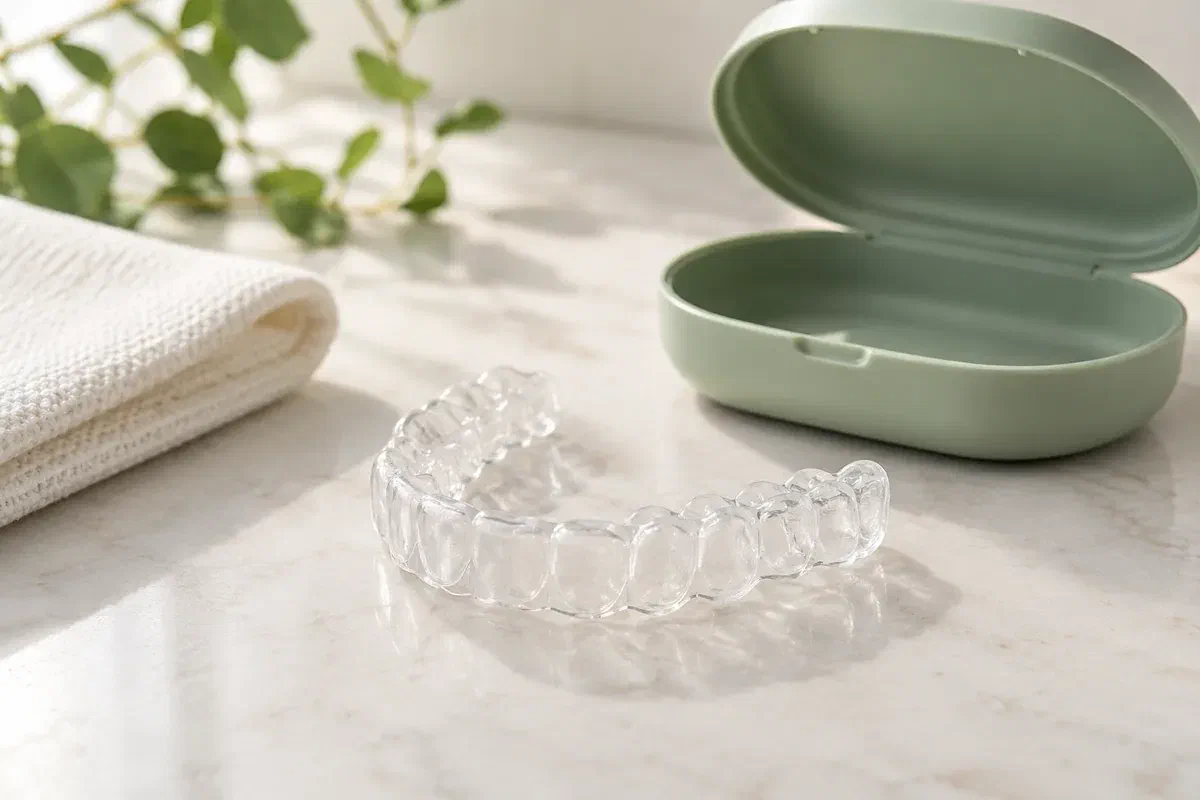
Illustrative clear dental nightguard beside an open pale sage case on a light stone surface
Information to bring the first time

Arrive with the full story and save a return trip.

A clear account up front helps the clinician consider bruxism and other possibilities in one appointment, rather than piecing details together over several.

When clenching shows up in your day

Note whether your teeth clamp together during work, long drives, or tense moments, and how your face feels afterward. Share what you have already tried. Stress can contribute, though it is not presumed to explain every ache.

What happens at night

Ask anyone at home whether they hear grinding, and note morning jaw stiffness or headaches. Bring details of any sleep diagnosis or device. Sleep-related grinding may overlap with medical sleep questions that a physician should address.

Damage and the repair history

List teeth that have chipped, cracked, or been repaired, with approximate dates. If another dentist has records, request copies beforehand. The pattern is examined before wear is blamed on grinding, and fixing damage is planned apart from managing the habit.

Mild grinding may only need monitoring, which can fit into routine visits. An assessment shows whether there is damage, real risk, or a symptom that points elsewhere.

Why planning matters for longer trips

A focused goal keeps the number of visits sensible.

When travel takes time, agreeing on the main goal early helps. Is it protecting a fragile restoration, easing daytime clenching, understanding a persistent ache, or monitoring wear? Each leads to a different number of appointments. Ask which aim comes first and how you will know it is working.

Separating repair from management also avoids unnecessary trips. A broken tooth may need treatment regardless of any guard, and that can sometimes be scheduled alongside the fitting. Meanwhile, worn teeth do not mean an extensive rebuild is due before the current situation is understood.

Guidance you can follow without frequent visits

Ask whether advice is aimed at daytime habits, sleep grinding, or something else. Strategies that suit your routine at home and work are practical to keep up between appointments, unlike a general instruction to stop.

A clear plan for any appliance

If a guard is suggested, ask what it protects, how many visits fitting involves, and when it should be reviewed. Discuss cleaning, wear time, and fees. Knowing the plan up front makes it easier to schedule.

Prompt attention to new or odd symptoms

Persistent pain, restricted opening, or a changing complaint should be explained, not filed under grinding. Ask what has been examined and whether a clinician nearer home should be involved for any part of the care.

The visit sequence

Assess thoroughly, fit if needed, then review.

We aim to explain each step and its timing so you can plan. Tell us about previous guards, repairs, medicines, and any medical or sleep care underway.

  1. A thorough first conversation

    We cover daytime clenching, night grinding reported by others, the timing of discomfort, and recent health or medication changes. Bring your existing appliance. A family member’s account is welcome, and you do not need to have recorded each night.

  2. A complete examination in one sitting

    The clinician checks wear, fractures, restorations, and muscle tenderness, and may take records for future comparison. Old wear is interpreted with your current symptoms rather than as a reading of how hard you grind today.

  3. Options matched to your travel

    Monitoring, daytime strategies, and protection are explained with their reasons. If a guard is appropriate, we outline the fitting and adjustment steps so you can schedule them. Any repair or outside referral is discussed separately.

  4. A review timed to be useful

    Follow-up is planned for when it will tell us the most. Share comfort, appliance use, and any new damage or habits. If the plan is not working, it is reassessed carefully rather than changed by guesswork or permanent alteration of the teeth.

Between trips

Know what to handle at home and what needs a call.

Instructions differ for monitoring, daytime awareness, a new appliance, or a repaired tooth. Ask which ones apply, and save our number for questions that come up.

Keep daytime cues simple

If awake clenching was found, ask for reminders that fit your day and the jaw’s relaxed resting position. Avoid repeatedly testing your bite. Discuss stress and concentration patterns without treating them as the full explanation.

Look after the guard between reviews

Clean and store it as advised and bring it to every appointment. Do not heat, cut, or reshape it. If it loosens, hurts, cracks, or changes after other dental work, call first; some problems can be triaged by phone before you make the trip.

Update us on health changes

Tell us about new medicines, shifting symptoms, or sleep concerns. Keep taking prescriptions as directed even if you suspect a link with clenching. Your physician and our team can consider whether more assessment is needed.

Patient information: NIH News in Health — daytime awareness, sleep-related questions, and conservative care

Etobicoke bruxism options

Each route has a different number of steps.

Ask what each option should change, how many visits it involves, and how it will be reviewed. When findings are limited, a lighter plan is often the right one.

Fewest extra trips, for mild findings

Monitoring alongside routine care

Daytime awareness is combined with records checked at regular visits. Ask what would justify coming in sooner. Mild findings can be observed, but persistent symptoms should be reassessed instead of dismissed as a habit.

Usually involves fitting and a later check

A protective appliance, individually fitted

Review the design, fit, limits, and upkeep, and how many visits are expected. Ask how it would work with any retainer you wear. It protects teeth without promising that grinding stops, and a painful guard needs review.

Planned around the specific problem

Repair or further evaluation

Teeth that have cracked or worn down badly are treated according to their own condition, and that work can sometimes be timed alongside other visits. Other symptoms may warrant medical, sleep, or jaw-pain assessment, possibly nearer home. Ask why each step is advised, and be cautious about permanent bite changes offered as a cure.

Planning questions

How many visits, and what if something goes wrong?

These answers focus on organizing bruxism care when the trip in takes time.

(905) 876-4488
How many appointments does getting a guard usually involve?
Often there is an assessment, a visit for impressions or scans, a fitting, and a review. The exact number depends on your situation and what else needs doing. Ask at the first appointment so you can plan, and mention any days that are easier for you to make the trip.
Can the assessment and a routine cleaning happen on the same day?
Sometimes. Ask when booking whether the visits can be combined. It depends on scheduling and what the assessment finds, but grouping appointments is worth requesting. If two family members need visits, ask whether they can be booked back to back.
What should I do if my guard breaks between visits?
Stop using a guard with sharp or broken edges and call us. Bring all the pieces to your next visit. We can advise whether to wait or come in sooner based on what happened and how your teeth feel.
When should I go somewhere closer instead of driving in?
Facial swelling, fever, difficulty breathing or swallowing, or a serious injury should be seen urgently wherever you can be seen fastest. For other problems, call us first so we can help judge urgency.
Is jaw clicking a reason to book a bruxism visit?
Clicking on its own is common and not always a problem. If it comes with pain, locking, or limited opening, mention it. The clinician can look at it alongside clenching and suggest a jaw-pain assessment if needed. Noting when the clicking happens, such as while chewing or yawning, is useful.
Can a guard be made from a scan instead of impressions?
Methods vary between practices and appliances. Ask what our team uses for your type of guard. Either way, fit is checked in person before you take it home, and you will be shown how to put it in, remove it, and clean it so you are comfortable managing it between trips.
Coming in from Etobicoke

One well-planned visit is a strong start.

Reach our Bronte Street practice about clenching, grinding, worn teeth, or a guard needing review. We will assess what is happening, outline the steps ahead, and explain when another evaluation, here or nearer home, makes sense.

The number of visits, appliance suitability, repairs, referrals, and fees depend on assessment. No guard or treatment can promise an end to grinding, discomfort, or future damage.

Visit Milton Dental Clinic
Unit 1, 342 Bronte St. S, Milton, ON L9T 5B7
Get directions Clinic hours
Monday–Thursday
11am–7pm
Friday–Sunday
By appointment only

Areas we serve

  • Milton
  • Oakville
  • Mississauga
  • Georgetown
  • Halton Hills
  • Acton
  • Campbellville
  • Brampton
  • Burlington
  • Puslinch
  • Rockwood
  • Erin
  • Caledon
  • Etobicoke
  • Old Milton
  • Bronte Meadows
  • Timberlea
  • Dorset Park
  • Dempsey
  • Clarke
  • Beaty
  • Coates
  • Harrison
  • Scott
  • Willmott
  • Ford
  • Bowes
  • Cobden
  • Walker
  • Mountain View
  • Milton Heights
  • Hawthorne Village
  • Valley View
  • Fallingbrook
  • Nassagaweya
  • Trafalgar
  • Esquesing
  • Nelson
  • Brookville
  • Moffat
  • Glen Williams
  • Norval
  • Limehouse
  • Stewarttown
  • Ashgrove
  • Hornby
  • Silver Creek
  • Speyside
  • Scotch Block
  • North Oakville
  • River Oaks
  • Glen Abbey
  • West Oak Trails
  • Palermo
  • Bronte Creek
  • College Park
  • Joshua Creek
  • Uptown Core
  • Preserve
  • Iroquois Ridge
  • Lisgar
  • Meadowvale
  • Meadowvale Village
  • Churchill Meadows
  • Erin Mills
  • Central Erin Mills
  • Streetsville
  • East Credit
  • Creditview
  • Heartland
  • Sheridan
  • Mount Pleasant
  • Credit Valley
  • Huttonville
  • Churchville
  • Springbrook
  • Northwest Brampton
  • Bram West
  • Fletcher's Meadow
  • Fletcher's Creek South
  • Alton Village
  • Orchard
  • Millcroft
  • Headon Forest
  • Tansley
  • Brant Hills
  • Tyandaga
  • Kilbride
  • Lowville
  • Aberfoyle
  • Morriston
  • Arkell
  • Hillsburgh
  • Freelton
  • Carlisle
  • Waterdown
  • Flamborough
  • Mountsberg

How can we help?

Milton Dental Clinic

Have a question about your smile? Choose the option that works best for you.

For urgent dental concerns, please call.
Messages are reviewed during clinic hours.