

Illustrative patient and clinician discussing tooth protection with a clear dental guard
Specialized Care

Bruxism Treatment in Milton

Sometimes the first sign of grinding comes from someone else: a partner who hears it at night, or a dentist who points out worn edges. Book a bruxism visit in Milton to sort out what is happening, what your teeth show, and whether protection makes sense for you.

Grinding care close to home in Milton

Someone heard you grinding. Now what?

It is common to learn about night grinding second-hand. A partner mentions a scraping sound, a child sharing a room says something, or you simply wake with a tired jaw and wonder why. Bruxism is the clinical word for clenching or grinding, and it can happen during sleep, while awake, or both, often without you noticing.

What matters most is what the habit is doing, not just that it has a name. One person may need nothing more than monitoring, while another has a cracked filling, sore muscles, or wear that is moving quickly. Care might include daytime awareness, a protective appliance, repair of damaged teeth, or a closer look at symptoms that do not fit.

Come to our Bronte Street practice with whatever you have heard or felt, even if it seems vague. If you already own a guard, bring it and tell us honestly whether you wear it. We will examine your teeth, listen to the pattern, and explain each recommendation so the plan makes sense to you.

Ask about night grinding
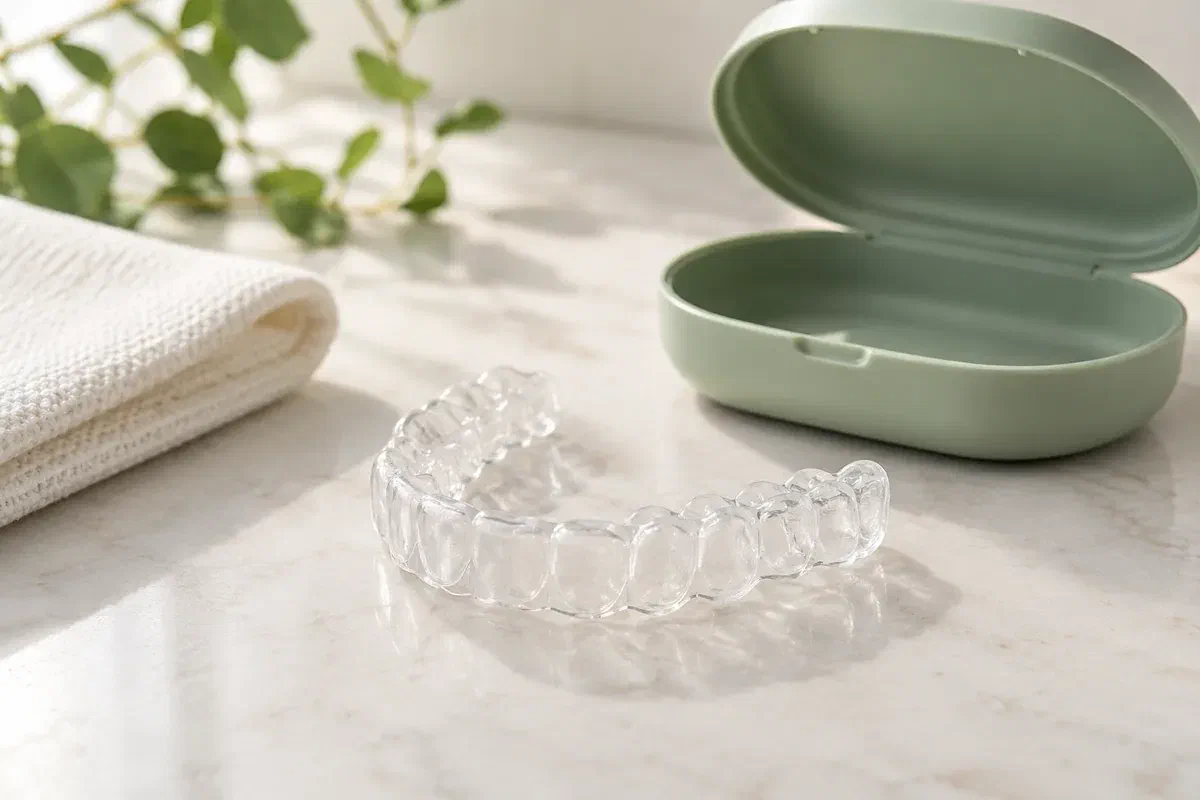
Illustrative clear dental nightguard beside an open pale sage case on a light stone surface
What brought the question up

Start with the observation, even if you are unsure what it means.

A firm diagnosis is not needed before booking. What helps is a plain account of what you, a family member, or a previous dentist noticed, so other explanations can be weighed alongside bruxism.

A tight jaw by mid-afternoon

Some people find their teeth pressed together during a long task, a tense phone call, or time behind the wheel. Tell us when it seems to happen and how the muscles feel afterward. Stress can play a part, though it is not assumed to explain every ache.

Sounds at night that someone else reports

Share what the other person heard and how often. Mention morning jaw stiffness, headaches, or poor sleep, along with any sleep study or device you already use. Overnight grinding can sit alongside other sleep concerns, and those may deserve their own medical assessment.

Edges that look flatter or keep chipping

Show us which teeth have changed and, if you can, list the repairs done over the years. Wear can come from more than one source, so the pattern is examined before conclusions are drawn. Fixing a chip and addressing what caused it are two separate decisions.

Plenty of people clench or grind a little without lasting harm. The visit is about finding out whether there is damage, a real risk of it, or a symptom that points somewhere else.

Why a clear goal helps

A guard is one tool, not the whole answer.

Before choosing anything, it helps to agree on what you are trying to achieve. That could be shielding a crown that has already cracked once, easing daytime tension, getting to the bottom of a recurring ache, or simply keeping an eye on wear. Ask which aim comes first and how progress will be judged.

It is also worth separating the effects of grinding from the grinding itself. A broken tooth may need treatment whether or not you wear an appliance. On the other hand, worn teeth do not automatically mean a large rebuild is needed before the current picture has been properly understood.

A plan that matches when it happens

Daytime clenching and sleep grinding call for different approaches. Ask which one the advice is aimed at. Suggestions that suit your actual pattern and your working day are far easier to stick with than a general instruction to stop.

Knowing what an appliance can and cannot do

If a guard is suggested, find out what it is meant to protect and where its limits are. Go over fit, cleaning, how many hours to wear it, fees, and follow-up. Treat it as something to be checked over time, not a one-off fix.

Room for symptoms that seem out of place

Ongoing tooth pain, a jaw that will not open fully, or a complaint that keeps changing should be explained on its own terms. Ask what has been checked and whether another professional should weigh in. Calling something bruxism should never close the door on further review.

How the visit unfolds

Listen first, examine second, then decide together.

You should leave understanding why a step was suggested. Mention earlier guards, dental work, current medicines, and any medical or sleep care you are already receiving.

  1. Talk through what has been noticed

    Explain daytime clenching, night sounds others have reported, and when soreness tends to appear. Note any recent health or medication changes and bring an existing appliance. A family member’s account is helpful on its own; you do not need recordings or a diary of every night.

  2. Look closely at teeth, fillings, and muscles

    The clinician checks for wear, cracks, tenderness, and anything else linked to your concern. You can ask whether photos or other records would make later comparison easier. Old wear is read together with present symptoms, since it cannot show precisely how much you grind now.

  3. Weigh watching, habit support, and protection

    Each option is discussed with a reason attached and a sense of what would make it worthwhile for you. If an appliance fits the findings, the fitting and review are explained. Any tooth repair or outside assessment is talked through as its own step.

  4. Check back in and adjust if needed

    At the follow-up, describe comfort, how often the appliance is worn, any new damage, and changes in the habit. Together you can see whether the first goals are being met. If things are not improving, the plan is reviewed rather than changed on guesswork or by permanently altering teeth.

Living with the plan

Small, steady habits and an honest report at review.

What you do at home depends on whether you are being monitored, working on daytime awareness, wearing a new appliance, or healing after a repair. Check which instructions apply and how to reach us if something changes.

Catch daytime clenching gently

When awake clenching is part of the picture, ask about easy reminders and where the jaw should rest when relaxed. Link cues to things you already do each day instead of testing your bite over and over. Stress and focus can be discussed without being treated as the full story.

Look after the appliance as directed

Clean and store it the way you were shown, wear it on the agreed schedule, and bring it to each review. Avoid heating, cutting, or bending it at home. Let us know if it loosens, hurts, cracks, or feels different after other dental work.

Keep us posted on health and sleep

Tell us about new medicines, symptoms that have shifted, or worries about how you sleep. Do not stop a prescription on your own because you suspect it is linked to clenching. Your dental and medical providers can decide together whether more assessment is needed.

Patient information: NIH News in Health — daytime awareness, sleep-related questions, and conservative care

Milton bruxism care options

Three directions, each with its own job.

For any option, ask what it is expected to change and how you will both know it is working. A smaller plan is often the right one when the findings are mild.

Suited to mild findings and awake clenching

Watching and simple habit changes

This route pairs practical daytime awareness with records that let changes be tracked. Ask what signs would prompt a return visit. Mild wear can reasonably be watched, but lasting symptoms deserve another look rather than being dismissed as a habit to try harder at.

Suited to protecting teeth or dental work

A custom-assessed protective appliance

Go over the design, fit, limits, and upkeep before agreeing. If you also wear a retainer or another prescribed device, ask how they work together. A guard protects but does not promise grinding will stop, and one that hurts should be checked, not endured.

Suited to damage or a separate concern

Repair or a wider assessment

A broken or heavily worn tooth may need treatment based on its own condition. Some symptoms point toward a medical, sleep, or jaw-joint evaluation. Ask why each step is advised, and be cautious of any suggestion that permanently reshaping your bite is a routine cure.

Common questions

Straight answers about grinding, guards, and what comes next.

Awake clenching, sleep grinding, and existing damage each raise different questions. Bring yours along, even if they feel unconnected.

(905) 876-4488
My partner hears grinding but I feel fine. Is it still worth an appointment?
It can be. Grinding sometimes causes wear or cracks before any discomfort appears. An examination shows whether your teeth or dental work are being affected, and if nothing concerning is found, you will at least have a starting point for comparison later.
Can grinding at night be the reason I wake up with a headache?
Morning headaches and jaw soreness are commonly reported with sleep grinding, but they can have other causes too. Mention how often they happen and anything else you notice. If the pattern points beyond the teeth, we may suggest speaking with your doctor.
Is a store-bought guard good enough to start with?
Over-the-counter guards vary in fit and may not suit everyone’s bite. Ask before relying on one, especially if you have crowns, a retainer, or jaw discomfort. We can look at what you have and discuss whether a different approach would protect your teeth better.
If I start wearing a guard, will the grinding go away?
Its main job is to protect teeth and restorations. It is not a reliable way to stop the activity itself. Ask what yours is meant to achieve and how its effect will be checked, and report ongoing symptoms rather than assuming they are expected.
Do coffee or alcohol have anything to do with clenching?
Caffeine, alcohol, and tobacco are among the factors sometimes linked with bruxism in public health information. It is reasonable to mention your habits at the visit. We can talk about whether any changes are worth trying, without suggesting that one factor explains everything.
I clench more since starting a new prescription. What should I do?
Mention it, along with the medicine’s name and when you began taking it. Please keep taking it as prescribed in the meantime. We can check your teeth and, if it seems relevant, suggest you raise a possible link with the doctor who prescribed it.
Booking in Milton

Tell us what you have noticed, and we will take it from there.

Reach our Bronte Street practice about clenching, night grinding, worn teeth, or a guard that needs a check. We can assess what is going on, explain protection or treatment that suits you, and say when another opinion is worthwhile.

Recommendations, appliance suitability, repairs, referrals, and fees all depend on your assessment. No guard or treatment can promise that grinding, discomfort, or future damage will stop entirely.

Visit Milton Dental Clinic
Unit 1, 342 Bronte St. S, Milton, ON L9T 5B7
Get directions Clinic hours
Monday–Thursday
11am–7pm
Friday–Sunday
By appointment only

Areas we serve

  • Milton
  • Oakville
  • Mississauga
  • Georgetown
  • Halton Hills
  • Acton
  • Campbellville
  • Brampton
  • Burlington
  • Puslinch
  • Rockwood
  • Erin
  • Caledon
  • Etobicoke
  • Old Milton
  • Bronte Meadows
  • Timberlea
  • Dorset Park
  • Dempsey
  • Clarke
  • Beaty
  • Coates
  • Harrison
  • Scott
  • Willmott
  • Ford
  • Bowes
  • Cobden
  • Walker
  • Mountain View
  • Milton Heights
  • Hawthorne Village
  • Valley View
  • Fallingbrook
  • Nassagaweya
  • Trafalgar
  • Esquesing
  • Nelson
  • Brookville
  • Moffat
  • Glen Williams
  • Norval
  • Limehouse
  • Stewarttown
  • Ashgrove
  • Hornby
  • Silver Creek
  • Speyside
  • Scotch Block
  • North Oakville
  • River Oaks
  • Glen Abbey
  • West Oak Trails
  • Palermo
  • Bronte Creek
  • College Park
  • Joshua Creek
  • Uptown Core
  • Preserve
  • Iroquois Ridge
  • Lisgar
  • Meadowvale
  • Meadowvale Village
  • Churchill Meadows
  • Erin Mills
  • Central Erin Mills
  • Streetsville
  • East Credit
  • Creditview
  • Heartland
  • Sheridan
  • Mount Pleasant
  • Credit Valley
  • Huttonville
  • Churchville
  • Springbrook
  • Northwest Brampton
  • Bram West
  • Fletcher's Meadow
  • Fletcher's Creek South
  • Alton Village
  • Orchard
  • Millcroft
  • Headon Forest
  • Tansley
  • Brant Hills
  • Tyandaga
  • Kilbride
  • Lowville
  • Aberfoyle
  • Morriston
  • Arkell
  • Hillsburgh
  • Freelton
  • Carlisle
  • Waterdown
  • Flamborough
  • Mountsberg

How can we help?

Milton Dental Clinic

Have a question about your smile? Choose the option that works best for you.

For urgent dental concerns, please call.
Messages are reviewed during clinic hours.