

Illustrative patient and clinician discussing tooth protection with a clear dental guard
Specialized Care

Bruxism Treatment in Oakville

You catch it in the middle of an email: back teeth locked together, shoulders up, jaw aching. Daytime clenching is easy to miss and easy to misread. Coming from Oakville, you can have the habit, your teeth, and any need for protection assessed in one considered visit.

Clenching care for Oakville commuters and desk workers

Teeth together, lips apart: the daytime habit

At rest, the upper and lower teeth normally do not touch. Many people discover theirs are pressed firmly together for long stretches while they focus, drive, or deal with pressure. That is awake bruxism. Its night-time counterpart, sleep bruxism, tends to involve grinding and is often noticed by someone else first.

Telling the two apart matters, because the approach is not the same. Awake clenching often responds to awareness and small changes in routine, while sleep grinding may call for protecting teeth and, at times, asking about sleep health. Either way, the decision rests on what is happening to your teeth and muscles rather than a label.

Book a visit with our Bronte Street team and describe when the clenching shows up. If you have tried a guard before, bring it and tell us how it went. We will examine your mouth and explain, in plain terms, which steps make sense and why.

Talk about daytime clenching
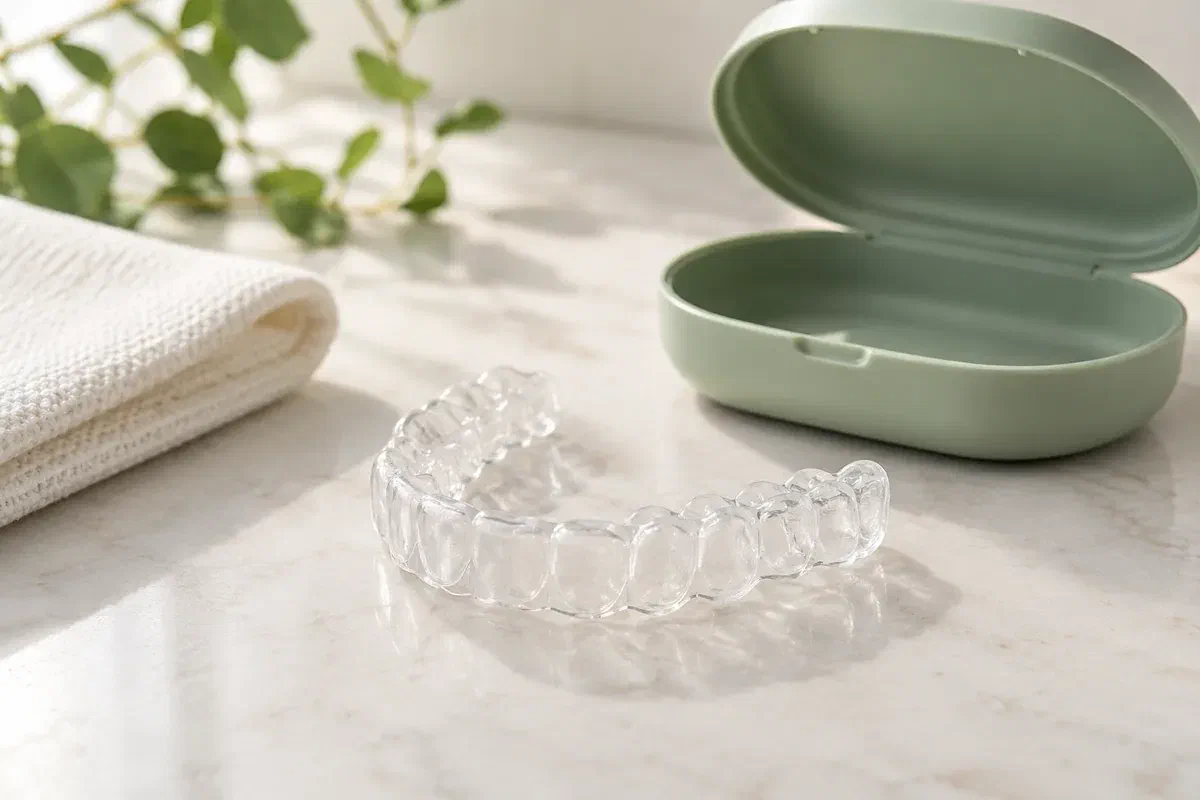
Illustrative clear dental nightguard beside an open pale sage case on a light stone surface
Notice the pattern

Day, night, or both?

Arrive with observations rather than conclusions. The more you can tell us about timing and symptoms, the easier it is to consider bruxism alongside anything else that could be involved.

Clamping down during focused work

Spreadsheets, deadlines, and heavy traffic are common moments to catch yourself. Note whether the jaw or temples feel worn out by evening and what has helped. Pressure at work can contribute, but it is not assumed to be behind every symptom.

Grinding while asleep

Tell us if a partner hears it, if mornings bring jaw stiffness, or if your sleep feels unrefreshing. Mention any sleep diagnosis or night-time device. Sleep grinding and broader sleep concerns are related questions that may need different professionals.

Changes you can see on the teeth

Flattened edges, small chips, or fillings that keep failing are all worth pointing out. Bring past dental records if you have them. Wear can have several contributors, and repairing a damaged tooth is planned separately from managing the forces on it.

Mild clenching does not always need treatment. An assessment clarifies whether there is damage, a genuine risk of it, or a symptom that belongs to another cause.

Why the details pay off

Targeted advice beats a one-size answer.

Once the timing is clear, the goal becomes clearer too. For a daytime clencher, it may be breaking the habit loop and easing tired muscles. For a night grinder with fragile fillings, protection may take priority. Ask what your plan is aiming for and how you will judge whether it is working.

It also helps to keep effects and cause in separate columns. A chipped tooth can need repair regardless of any appliance. And wear by itself does not justify rebuilding teeth before anyone knows whether it is still progressing.

Strategies built around your schedule

Ask whether the advice is meant for the workday, the night, or something else entirely. A plan that slots into how you actually spend your day is more likely to stick than being told to just stop clenching.

A clear brief for any guard

If an appliance is part of the plan, find out what it protects and what it will not do. Cover the fit, cleaning, wear schedule, cost, and follow-up visits. A guard is something to keep checking, not a device you can forget about.

Space to question symptoms that don’t fit

Persistent tooth pain, limited jaw opening, or symptoms that shift from week to week need their own explanation. Ask what has been looked at and whether another clinician should be involved. A bruxism diagnosis should not stop that conversation.

What happens at the appointment

History, examination, options, review

Expect to hear the reasoning behind every suggestion. Let us know about past appliances, dental repairs, medications, and any sleep or medical care you are receiving.

  1. Map out when and where it happens

    We talk through clenching at work or behind the wheel, grinding reported at night, and when soreness flares. Mention health or medication changes and bring any appliance. If someone has heard you grind, their account helps, and there is no need to log every episode.

  2. Check teeth, dental work, and muscles

    The clinician looks for wear, fractures, tender muscles, and related findings. You can ask whether photos or other records would help with future comparisons. Wear shows past activity, so it is considered together with your current symptoms.

  3. Choose between watching, coaching, and protection

    Each route is explained along with what would make it worthwhile for you. If a guard suits the findings, we outline how it is fitted and reviewed. Any needed repair or referral is discussed as a separate step.

  4. Return to see how it is going

    At follow-up, share how comfortable things feel, how often you use the appliance, and any change in the habit. We look at whether the original aims are being met. If not, the plan is revisited rather than replaced at random or settled by reshaping teeth for good.

Day to day

Make the habit visible, then make it easier.

Guidance varies for monitoring, daytime strategies, wearing a new guard, or healing after a repair. Ask which instructions are yours and how to contact us if anything changes.

Set cues for your working day

Ask about simple reminders, such as a note on your monitor or a check each time you stop at a light, and the jaw’s relaxed position. Avoid repeatedly clicking your teeth together to test things. Stress can be part of the conversation without being the whole explanation.

Treat the guard like a prescription item

Clean and store it as shown, follow the wear schedule, and bring it to reviews. Do not heat, trim, or bend it at home. Call if it becomes loose, painful, damaged, or fits differently after other dental treatment.

Keep your health updates flowing

Mention new medicines, changing symptoms, or sleep worries at each review. Keep taking prescribed medicines even if you suspect a connection with clenching. Your dental and medical teams can decide whether more assessment is warranted.

Patient information: NIH News in Health — daytime awareness, sleep-related questions, and conservative care

Options for Oakville clenchers and grinders

Pick the approach that matches the problem.

For any recommendation, ask what it should change and how it will be reassessed. More treatment is not better when a lighter approach fits the findings.

Often the starting point for daytime clenching

Awareness and monitoring

Practical habit support is paired with records that track wear over time. Ask what would prompt an earlier return. Mild findings can be watched, though ongoing pain should be reassessed rather than treated as a failure of willpower.

When teeth or restorations need shielding

A protective guard, individually assessed

Review the design, fit, limits, and upkeep. If you wear a retainer or other appliance, ask how to coordinate them. A guard can protect but will not necessarily stop the grinding, and a painful one should be checked rather than tolerated.

When damage or another concern needs attention

Repair or further evaluation

A cracked or worn tooth may need treatment based on its own condition. Some symptoms are better assessed by a physician, sleep specialist, or jaw-pain clinician. Ask why each step is advised, and be cautious of permanent bite changes offered as a routine cure.

Your questions, answered

Clenching, grinding, and what to do about each

Daytime habits, sleep grinding, and existing damage often get lumped together. These answers help separate them before your visit.

(905) 876-4488
How do I know if I clench during the day?
Try checking a few times a day whether your teeth are touching. Many people are surprised to find them pressed together. Jaw tiredness by late afternoon or tension around the temples can also be clues worth mentioning at your visit.
Is jaw soreness from clenching the same as a TMJ problem?
They can overlap, but they are not the same thing. Jaw-joint and muscle problems can have several causes. We look at your teeth and muscles and, if the symptoms suggest it, discuss whether a jaw-pain assessment elsewhere would be useful.
Can a night guard help with clenching that only happens at my desk?
Not necessarily. A night appliance is designed for sleep, while daytime clenching is often approached through awareness and routine changes. Ask what your specific pattern calls for before assuming a guard is the answer.
Does chewing gum make clenching worse?
Frequent gum chewing keeps the jaw muscles working, and some people find it adds to soreness. Mention how often you chew gum or other things like pens. We can talk about whether cutting back is worth trying in your case.
Could tooth wear be from something other than grinding?
Yes. Acidic foods and drinks, reflux, and brushing habits can also contribute, often alongside grinding. The clinician looks at the pattern and asks about your history before deciding what is most likely driving the change.
Can I fit bruxism follow-ups around a busy work schedule?
Usually, yes. Ask at booking about weekday evening times and appointments on other days by arrangement. Grouping a review with a routine check-up can sometimes reduce the number of separate trips.
From Oakville to our Bronte Street practice

Notice the clench, then let us take a look.

Contact our team about daytime clenching, night grinding, tooth wear, or a guard that no longer feels right. We can assess the effects, explain the protection or care that fits, and suggest when another evaluation would help.

Advice, appliance suitability, repairs, referrals, and fees depend on assessment. No guard or treatment can guarantee an end to grinding, discomfort, or future damage.

Visit Milton Dental Clinic
Unit 1, 342 Bronte St. S, Milton, ON L9T 5B7
Get directions Clinic hours
Monday–Thursday
11am–7pm
Friday–Sunday
By appointment only

Areas we serve

  • Milton
  • Oakville
  • Mississauga
  • Georgetown
  • Halton Hills
  • Acton
  • Campbellville
  • Brampton
  • Burlington
  • Puslinch
  • Rockwood
  • Erin
  • Caledon
  • Etobicoke
  • Old Milton
  • Bronte Meadows
  • Timberlea
  • Dorset Park
  • Dempsey
  • Clarke
  • Beaty
  • Coates
  • Harrison
  • Scott
  • Willmott
  • Ford
  • Bowes
  • Cobden
  • Walker
  • Mountain View
  • Milton Heights
  • Hawthorne Village
  • Valley View
  • Fallingbrook
  • Nassagaweya
  • Trafalgar
  • Esquesing
  • Nelson
  • Brookville
  • Moffat
  • Glen Williams
  • Norval
  • Limehouse
  • Stewarttown
  • Ashgrove
  • Hornby
  • Silver Creek
  • Speyside
  • Scotch Block
  • North Oakville
  • River Oaks
  • Glen Abbey
  • West Oak Trails
  • Palermo
  • Bronte Creek
  • College Park
  • Joshua Creek
  • Uptown Core
  • Preserve
  • Iroquois Ridge
  • Lisgar
  • Meadowvale
  • Meadowvale Village
  • Churchill Meadows
  • Erin Mills
  • Central Erin Mills
  • Streetsville
  • East Credit
  • Creditview
  • Heartland
  • Sheridan
  • Mount Pleasant
  • Credit Valley
  • Huttonville
  • Churchville
  • Springbrook
  • Northwest Brampton
  • Bram West
  • Fletcher's Meadow
  • Fletcher's Creek South
  • Alton Village
  • Orchard
  • Millcroft
  • Headon Forest
  • Tansley
  • Brant Hills
  • Tyandaga
  • Kilbride
  • Lowville
  • Aberfoyle
  • Morriston
  • Arkell
  • Hillsburgh
  • Freelton
  • Carlisle
  • Waterdown
  • Flamborough
  • Mountsberg

How can we help?

Milton Dental Clinic

Have a question about your smile? Choose the option that works best for you.

For urgent dental concerns, please call.
Messages are reviewed during clinic hours.