

Illustrative patient and clinician discussing tooth protection with a clear dental guard
Specialized Care

Bruxism Treatment in Old Milton

A filling that has been replaced twice, or a crown that chipped without an obvious reason, can point to forces you never think about. For households in Old Milton, a bruxism visit can help you understand clenching, grinding, and how to protect long-standing dental work.

Old Milton bruxism visits

When the same repair keeps failing

Many mouths carry decades of dental history: a crown from years ago, a few large fillings, perhaps a bridge. When one of those keeps cracking or coming loose, it is fair to ask why. Clenching and grinding, known together as bruxism, place repeated load on teeth and restorations, and the habit can go on during sleep or the working day without you being aware of it.

Bruxism is not always the explanation, and it is rarely the whole one. Decay under an old filling, the age of a restoration, or the way teeth meet can matter too. The examination aims to separate those threads so any repair is planned with the surrounding forces in mind.

Our Bronte Street practice is close to Milton’s historic downtown, and you are welcome to bring your dental records or a list of past repairs. Tell us which teeth have given trouble and whether you already have a guard. We will explain what we find and why each suggestion is made.

Ask about repeated breakage
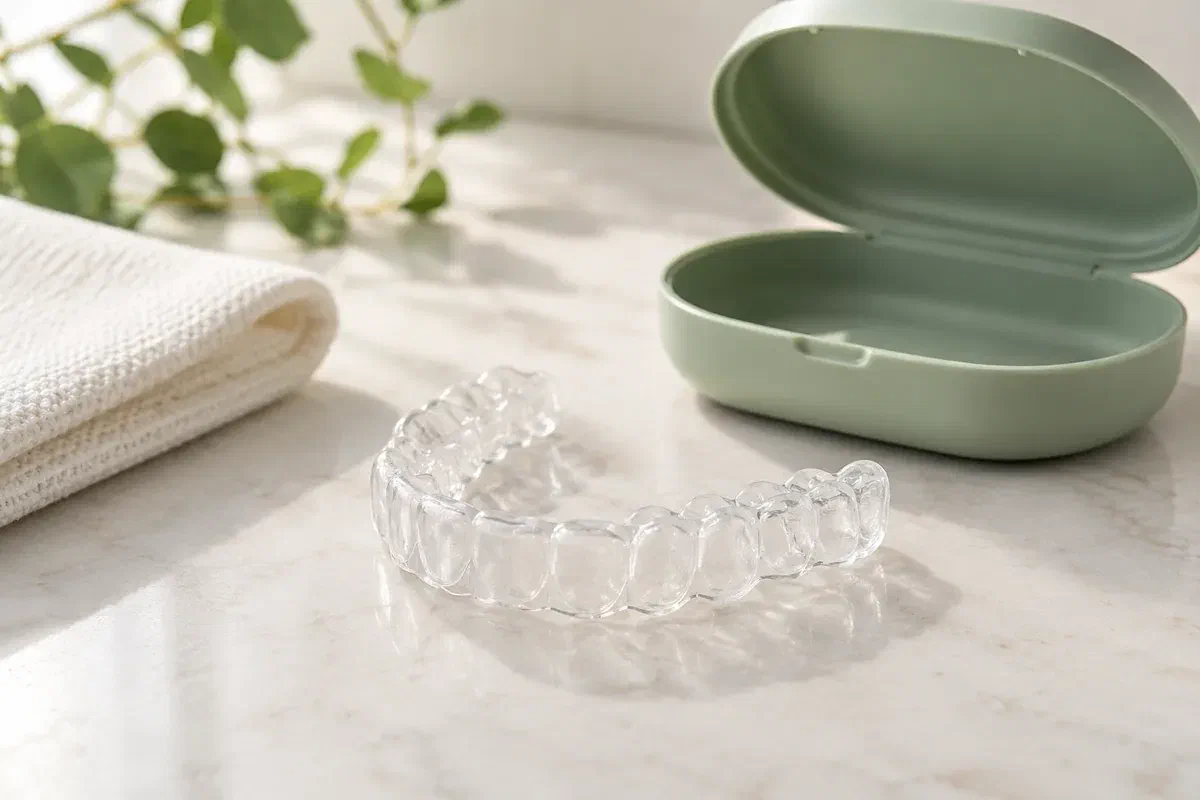
Illustrative clear dental nightguard beside an open pale sage case on a light stone surface
Signs worth describing

Which tooth, what happened, and when did it start?

Clear details help more than a self-diagnosis. Walk us through the changes you have seen so bruxism can be considered alongside other reasons for wear or breakage.

Pressing your teeth together without meaning to

You might notice it while reading, gardening, or concentrating on a screen. Say when it happens and whether the cheeks or temples feel tired afterward. Tension can be one factor, but it is not taken as the only reason for discomfort.

Overnight grinding or a sore jaw at breakfast

Let us know if a spouse hears grinding or if mornings start with stiffness. Mention any sleep apnea diagnosis, CPAP use, or appliance you already have. Sleep-related grinding can overlap with medical sleep questions that sit outside dentistry.

Dental work that cracks, loosens, or wears through

Point to the crowns, bridges, or fillings that have needed attention, and share dates if you remember them. We look at the wear pattern and other factors before linking it to grinding. Replacing a restoration and lowering the strain on it are planned as separate steps.

Some clenching is common and harmless. The point of an assessment is to judge whether teeth or dental work are being damaged, whether that risk is real, or whether a symptom needs a different explanation.

What you gain from a proper review

Protecting the work you have already invested in

For many people with older dental work, the clearest goal is keeping existing crowns and fillings in service for as long as is reasonable. Others want to ease a tired jaw or simply understand what a past dentist meant by wear. Agree on the priority first, then ask how success will be measured.

A careful review keeps two questions apart: what has been damaged, and what is causing the strain. A cracked restoration may need replacing whether or not a guard is made. Meanwhile, worn teeth on their own are not a reason to rebuild a whole arch before the present situation is understood.

Recommendations that fit your days and nights

Ask whether a suggestion targets daytime clenching, sleep grinding, or something else. Advice tied to your real routine is easier to follow. A general instruction to stop grinding is hard to act on and rarely helpful by itself.

Honesty about what a guard does

If an appliance is proposed, ask what it is shielding and where its benefits stop. Review how it will fit around crowns or bridges, how to clean it, how long to wear it, the fee, and when it will be checked. It needs periodic review like any other dental work.

Follow-through on unexplained symptoms

Lingering tooth pain, limited opening, or a change in how your jaw feels should be looked into separately. Ask what has been examined and whether a physician or specialist should be involved. Grinding is not a catch-all explanation.

An Old Milton visit, step by step

From your dental history to a plan you can follow

Every recommendation should come with its reasoning. Tell us about previous guards, repairs, medicines, and any sleep or medical care already in progress.

  1. Gather the history of your teeth and habits

    We ask about clenching during the day, grinding that others have heard, and when aches show up. Share recent changes in health or medication and bring any appliance you own. A partner’s description is useful; there is no need to prove each night’s grinding.

  2. Examine restorations, wear, and the jaw muscles

    The clinician checks your crowns, fillings, and natural teeth for cracks, wear facets, and tenderness. Ask whether photographs or models would help track change. Existing wear is read with your current symptoms rather than used alone to estimate how much grinding goes on now.

  3. Discuss monitoring, strategies, and protection

    You will hear why each option is suggested and what would make it worth doing. Should a guard suit you, the fitting and later checks are explained. Replacing a failed restoration, or seeking another opinion, is discussed as its own decision.

  4. Follow up and fine-tune

    At review, let us know how the appliance feels, how often you wear it, and whether any new damage has appeared. We compare the results with the goals set at the start. When progress stalls, the plan is reassessed instead of being swapped out on impulse or by grinding down teeth.

At home

Simple routines keep the plan working.

Your instructions depend on whether you are being monitored, practising daytime awareness, adjusting to a new guard, or recovering after a restoration. Confirm which apply and how to reach us between visits.

Build in gentle jaw checks

If daytime clenching was identified, ask for straightforward reminders and the jaw’s relaxed resting position. Tie them to moments already in your day, such as making tea. Avoid tapping your teeth together to test the bite. Tension can be talked about without being treated as the only cause.

Handle your guard with care

Rinse, clean, and store the appliance as instructed, wear it as agreed, and bring it to appointments. Never boil, file, or reshape it. Call if it feels loose, sore, cracked, or different after a new crown or filling so the fit can be checked.

Report changes in health or rest

New prescriptions, different symptoms, or concerns about sleep are all worth mentioning at review. Please keep taking any medicine as prescribed even if you suspect a link with clenching. We can coordinate with your physician if further assessment seems sensible.

Patient information: NIH News in Health — daytime awareness, sleep-related questions, and conservative care

Ways forward

Monitor, protect, or repair: which fits?

Whatever is suggested, ask what it should change and how its effect will be reviewed. When findings are modest, a lighter approach is often the sensible one.

For mild wear or daytime clenching

Observation with habit coaching

This combines practical awareness during the day with records that show whether wear is progressing. Ask which signs would bring you back sooner. Modest findings can be watched, though persistent symptoms should be reassessed rather than brushed off as a habit to control.

For safeguarding teeth and restorations

A protective appliance made for your mouth

Talk through the design, fit, limits, and care, particularly around crowns and bridges. If you wear a retainer or denture, ask how they fit together. Protection is the aim; stopping the grinding is not promised, and a guard that causes pain should be checked.

For damage or a different underlying issue

Restoration or referral

A fractured or badly worn tooth may need its own treatment. Certain symptoms call for medical, sleep, or jaw-joint evaluation. Ask the reason for each recommendation and be wary of permanent bite adjustment presented as a standard cure.

Questions from Old Milton

What to know before deciding on a guard or repair

Questions about older restorations, sleep, and daily habits often overlap. Bring them all, and we will sort through them together.

(905) 876-4488
Could grinding be why my old crown cracked?
It is possible, but the age of the crown, the tooth underneath, and your bite can also play a role. We examine the crown and surrounding teeth before drawing conclusions, and we explain what the findings suggest about protecting a replacement.
Will I need a new guard after getting a crown or filling replaced?
Sometimes an existing appliance no longer fits properly after dental work changes a tooth’s shape. Bring it along so the fit can be checked. It may need adjustment or replacement, or it may still be suitable.
Can I wear a guard if I have a partial denture or bridge?
Often an arrangement can be found, but it depends on your mouth and the type of prosthesis. Bring the denture to the visit. The clinician can discuss how protection would work around it rather than leaving you to guess.
Do worn-down teeth tell you how hard I grind today?
Not precisely. Wear builds up over years and can come from grinding, acidic foods or drinks, brushing habits, and other influences. Monitoring changes over time often gives a clearer picture than a single look.
Is clenching something that starts later in life?
Bruxism can appear at any age, and the pattern may change over time. What matters is how it is affecting you now. Mention when you first noticed symptoms and anything that changed around that time.
My spouse snores and I grind. Should either of us see a doctor?
Snoring and grinding are separate concerns, though sleep questions can come up in both. If you notice snoring, pauses in breathing, or daytime tiredness, a physician is the right person to ask. We can focus on what grinding is doing to your teeth.
Close to Milton’s downtown

Bring your repair history and your questions.

Get in touch with our Bronte Street practice about clenching, grinding, worn or broken dental work, or a guard that needs checking. We will assess the effects, explain protective options or repairs, and let you know when another evaluation makes sense.

Advice, appliance suitability, repair plans, referrals, and fees depend on your assessment. No appliance or treatment can guarantee that grinding, discomfort, or future breakage will stop.

Visit Milton Dental Clinic
Unit 1, 342 Bronte St. S, Milton, ON L9T 5B7
Get directions Clinic hours
Monday–Thursday
11am–7pm
Friday–Sunday
By appointment only

Areas we serve

  • Milton
  • Oakville
  • Mississauga
  • Georgetown
  • Halton Hills
  • Acton
  • Campbellville
  • Brampton
  • Burlington
  • Puslinch
  • Rockwood
  • Erin
  • Caledon
  • Etobicoke
  • Old Milton
  • Bronte Meadows
  • Timberlea
  • Dorset Park
  • Dempsey
  • Clarke
  • Beaty
  • Coates
  • Harrison
  • Scott
  • Willmott
  • Ford
  • Bowes
  • Cobden
  • Walker
  • Mountain View
  • Milton Heights
  • Hawthorne Village
  • Valley View
  • Fallingbrook
  • Nassagaweya
  • Trafalgar
  • Esquesing
  • Nelson
  • Brookville
  • Moffat
  • Glen Williams
  • Norval
  • Limehouse
  • Stewarttown
  • Ashgrove
  • Hornby
  • Silver Creek
  • Speyside
  • Scotch Block
  • North Oakville
  • River Oaks
  • Glen Abbey
  • West Oak Trails
  • Palermo
  • Bronte Creek
  • College Park
  • Joshua Creek
  • Uptown Core
  • Preserve
  • Iroquois Ridge
  • Lisgar
  • Meadowvale
  • Meadowvale Village
  • Churchill Meadows
  • Erin Mills
  • Central Erin Mills
  • Streetsville
  • East Credit
  • Creditview
  • Heartland
  • Sheridan
  • Mount Pleasant
  • Credit Valley
  • Huttonville
  • Churchville
  • Springbrook
  • Northwest Brampton
  • Bram West
  • Fletcher's Meadow
  • Fletcher's Creek South
  • Alton Village
  • Orchard
  • Millcroft
  • Headon Forest
  • Tansley
  • Brant Hills
  • Tyandaga
  • Kilbride
  • Lowville
  • Aberfoyle
  • Morriston
  • Arkell
  • Hillsburgh
  • Freelton
  • Carlisle
  • Waterdown
  • Flamborough
  • Mountsberg

How can we help?

Milton Dental Clinic

Have a question about your smile? Choose the option that works best for you.

For urgent dental concerns, please call.
Messages are reviewed during clinic hours.