Biting down hard during the day
Mention whether you notice clenching while working, driving, or concentrating, and whether the jaw tires. Say what you have tried. Pressure can contribute, though it is not assumed to explain every fracture or ache.


A tooth has chipped, and someone has mentioned grinding. Do you repair it first, protect it first, or both? From Rockwood, a bruxism assessment helps you put the decisions in a sensible order, so a new repair is not left exposed to the same forces that broke the old one.
When grinding or clenching, known as bruxism, has damaged a tooth, two questions arrive together: how to treat the tooth itself, and how to manage the forces around it. They are linked, but they are not the same decision. Treating them as one can lead either to repeated repairs or to more treatment than you need.
Often the tooth has to come first, especially if it is sharp, sensitive, or at risk of breaking further. Protection, habit support, or monitoring can then be planned around the repaired tooth. In other cases, the damage is minor and the main value of the visit is understanding the pattern so that small problems do not become bigger ones. Bruxism can occur during sleep, while you are awake, or both.
At our Bronte Street practice, bring any broken piece if you kept it, and any guard you already own. Tell us what happened and when. The clinician will examine the tooth and the rest of your mouth, explain the order that makes sense, and give clear reasons for each step.
Describe what happened and anything you have noticed since. That lets the clinician weigh bruxism against other causes and decide what needs attention first.
Mention whether you notice clenching while working, driving, or concentrating, and whether the jaw tires. Say what you have tried. Pressure can contribute, though it is not assumed to explain every fracture or ache.
If a tooth or filling seems to have broken overnight, or someone hears grinding, tell us. Mention morning stiffness, sleep problems, or a sleep diagnosis. Night-time grinding may overlap with medical sleep questions that need a doctor.
List earlier repairs to the same tooth and others nearby, with rough dates. The wear and fracture pattern are examined before blaming grinding. The tooth’s repair and the plan for the forces on it are made as related but separate decisions.
Not every chip is caused by bruxism, and not every person who grinds needs a guard after a repair. Assessment helps clarify the cause, the risk, and whether something else needs looking into.
Your aim may be fixing a broken tooth and keeping it fixed, stopping a cycle of chipped fillings, easing sore muscles, or just understanding why it happened. Agree on what matters most, then ask how progress will be checked after the repair and any protection are in place.
Keeping repair and management apart avoids two common mistakes: patching the tooth without asking why it broke, or rebuilding many teeth because some show wear. A damaged tooth may need care whatever happens with grinding, while other worn teeth might simply be monitored.
Ask whether the tooth should be treated first, whether protection should follow, and how long each step takes. Advice that matches your symptoms and daily life is easier to follow than a general instruction to stop grinding.
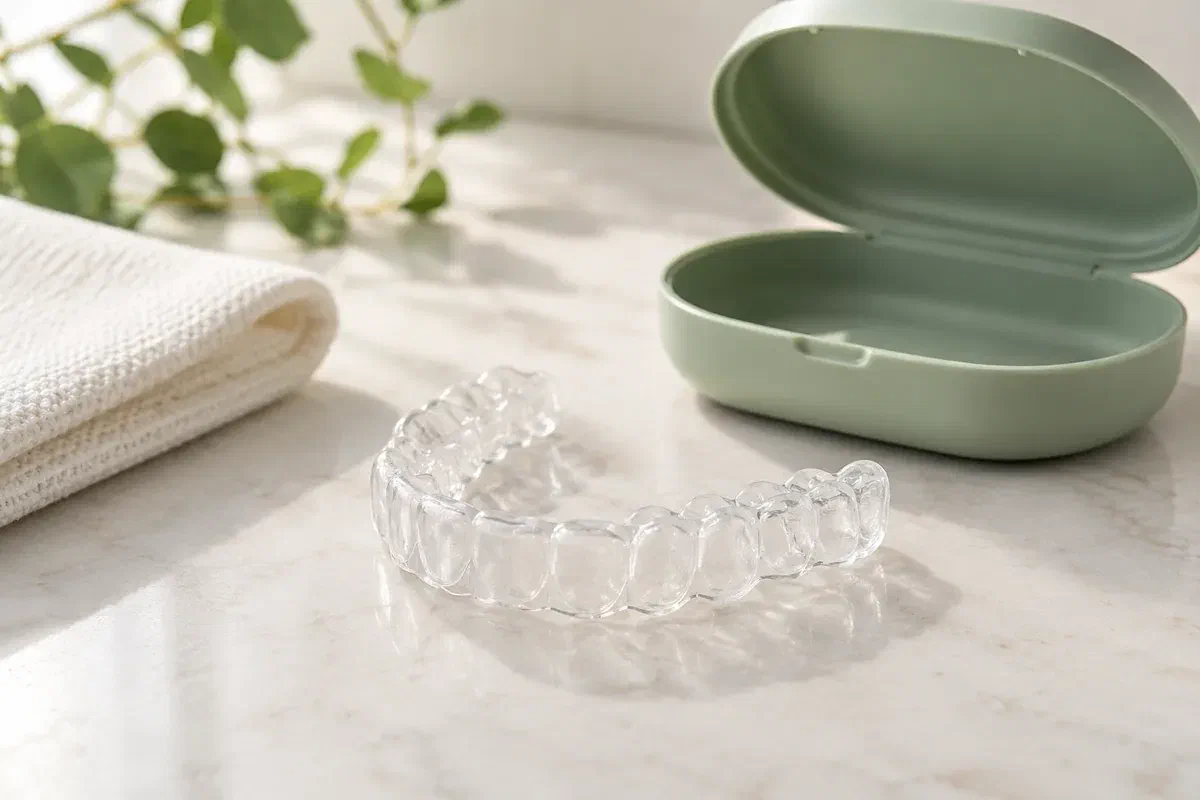
If an appliance is recommended after a repair, ask what it protects and what it cannot prevent. Discuss timing, fit, cleaning, wear, fees, and follow-up. A new crown or filling may change how a guard fits, so it needs review.
Lasting pain after a repair, trouble opening the mouth, or symptoms that move around should be examined in their own right. Ask what has been ruled out and whether another clinician should see you. Grinding should not be assumed to be the reason for everything.
Each step should come with an explanation. Let us know about earlier guards, past repairs on the tooth, medicines, and any doctor involved in your sleep or jaw care.
We ask when and how the tooth broke, whether you notice daytime clenching or night grinding, and how the area feels now. Mention recent health or medicine changes. Family observations of grinding help, but you do not need proof of what happens at night.
The clinician assesses the broken tooth, nearby teeth, existing restorations, wear, and the jaw muscles. Images or other records may be needed. Wear elsewhere is considered alongside your symptoms rather than used alone to judge how hard you grind now.
Repair options are explained first if the tooth needs treatment, followed by whether monitoring, daytime strategies, or protection make sense afterward. If another assessment is advised, it is discussed separately so you can plan.
At follow-up, tell us how the repaired tooth feels, how any appliance is going, and whether new damage has appeared. We compare that with the original goals. If problems continue, the cause is reassessed rather than the plan being changed on guesswork or by permanently grinding down teeth.
Instructions vary for a freshly repaired tooth, a new guard, daytime awareness, or monitoring. Check which apply to you and how to contact us if something feels wrong.
If awake clenching was noticed, ask for simple reminders and the jaw’s relaxed position, and link them to routine moments. Avoid biting on the repaired tooth to test it. Stress may be worth talking about, but it does not explain everything.
Follow cleaning and storage instructions, and wear the appliance on the agreed schedule. Do not heat or reshape it. If it fits differently after your repair, or becomes loose, sore, or damaged, call so it can be checked.
New medicines, sleep problems, or changing symptoms are worth mentioning. Do not stop a prescription because you think it might be linked to clenching. We can discuss whether your doctor should be involved.
Patient information: NIH News in Health — daytime awareness, sleep-related questions, and conservative care
These answers address common questions when a tooth has been damaged and grinding is suspected.
Reach our Bronte Street practice about a chipped or broken tooth, suspected grinding, clenching, or a guard that no longer fits after dental work. We will assess the damage, explain repair and protection options, and say when another evaluation would help.
Repairs, appliances, referrals, timing, and fees depend on assessment. No restoration or guard can guarantee that grinding will stop or that teeth will not break again.
