

Illustrative clinician explaining a tooth-and-gum model to a patient during a consultation
Specialized Care

Crown Lengthening in Burlington

You already have a treatment plan that includes crown lengthening, and you want to understand it before saying yes. From Burlington, you can bring that plan to us for a second look at the reasoning, the tissue involved and how healing affects what comes after.

A second opinion on a plan you have

Read the plan, then ask what each line is for.

Getting a written estimate with an unfamiliar surgical term on it is a common reason people seek another view. Crown lengthening adjusts the gum line, and sometimes the bone that supports it, to uncover more of a natural tooth. It is not a way of making an artificial crown taller.

Plans usually list it for one of two reasons. A restoration may need more sound tooth than is currently above the gum, or someone may want to change teeth that look short. Each reason leads to a separate discussion, yet both depend on what remains of the tooth, the root and the tissue around it.

When you travel from Burlington for a review, bring the plan, X-rays if you have them, and your list of questions. We can explain how the recommendation fits your dental picture, identify anything that needs further assessment, and talk about working with a periodontist where helpful. Understanding the reasoning is your right before any surgery.

Request a second look at your plan
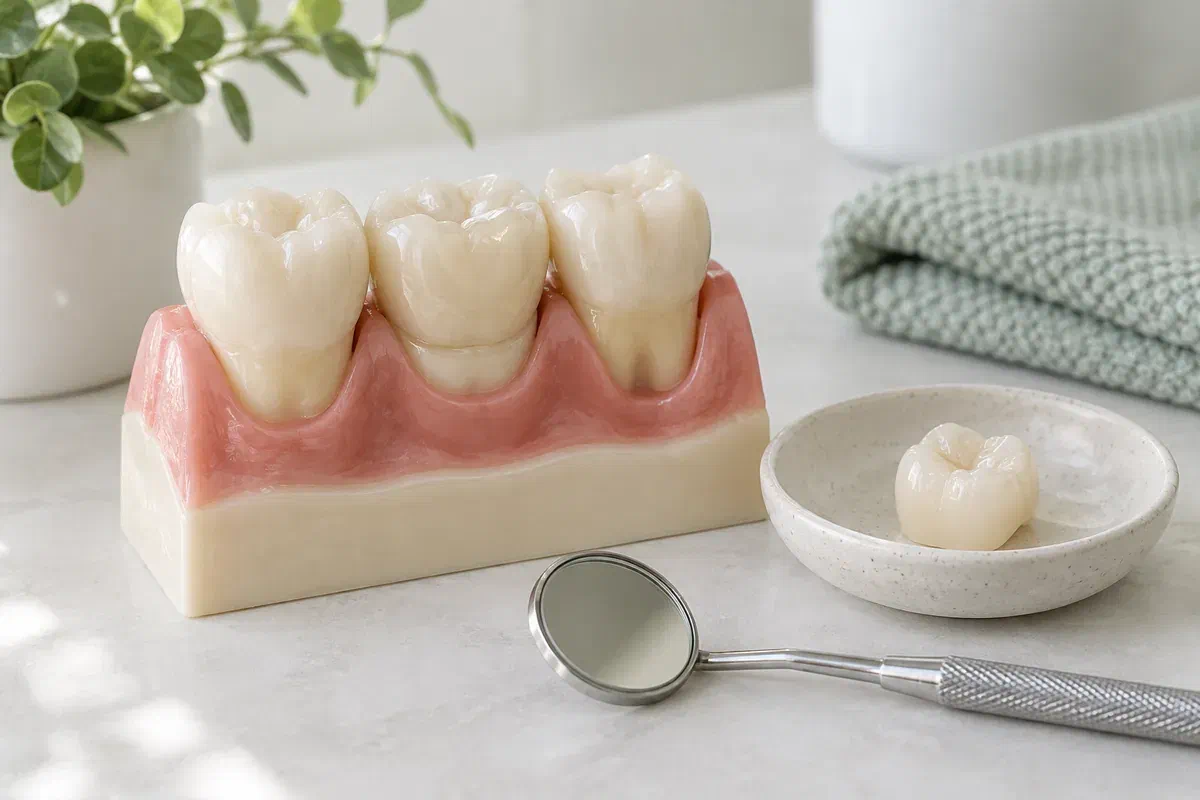
Illustrative tooth-and-gum teaching model beside a ceramic crown sample and dental mirror
Questions to bring with the plan

Which problem is the surgery meant to solve?

A plan should name the tooth and the specific reason. Preparing for a crown and reshaping a smile are distinct goals, and the right questions differ for each.

Damage that reaches below the gum

If a fracture, wear or decay runs under the gumline, a restoration may have little to grip. Ask whether more exposed structure would make repair reasonable and how the tooth is likely to do over time. A severely weakened root may not be a good candidate.

A planned crown edge close to the bone

Where a crown or filling ends relative to the gum and bone shapes how the tissue responds. Ask why the current situation needs changing and how the procedure would help. The restorative and gum stages should appear as one connected plan.

A cosmetic request for longer-looking teeth

Explain what you would like to change and what you want left alone. The reason for visible gum needs to be identified before surgery is weighed. Matching a photo of someone else does not show that removing tissue fits your own anatomy.

Crown lengthening can mean changes to gum, bone or both. Check which your plan includes, whether other teeth are affected, and what that means for support, appearance and the final restoration.

What a review can add

Clarity on purpose, sequence and responsibility

A review can confirm what the surgery is supposed to make possible and whether that justifies doing it. Ask how much tooth and supporting tissue would remain afterward. Gaining access to more structure helps the restoration, but it is not a guarantee that the tooth will last for life.

It can also lay out the order of visits and how long healing will be monitored. With more than one clinician involved, ask who is accountable for which stage. A coordinated plan makes sure the surgery, the temporary and the finished restoration share one goal.

An explanation in everyday words

Ask where the new gum level and restoration edge are expected to sit, and have it shown on an image or model. Find out whether nearby teeth would change. That matters most for a tooth visible in your smile.

A balanced look at gains and risks

Compare the intended benefit with healing, sensitivity, appearance changes and ongoing care. Ask which risks are relevant to you rather than a generic list. You are free to ask for more assessment before deciding.

A complete breakdown of costs and stages

Check whether the estimate covers assessment, surgery, reviews, a temporary and the final crown, or only part of that. Ask what could change the plan or fees. The full sequence is more meaningful than the surgical line alone.

The usual sequence

Assessment, agreement, surgery and healing checks

Method and timing depend on the tooth, the tissues and the purpose of treatment. The clinician who performs the procedure explains the specifics and asks for your consent.

  1. Confirm the tooth is worth treating this way

    Roots, gum health, bone and the teeth alongside are reviewed with your records. Ask directly whether the tooth can benefit. If questions remain, resolve them before accepting a sequence that assumes it can.

  2. Agree on the extent and compare alternatives

    Review the planned tissue change, comfort measures, risks, expected healing and other approaches. Confirm any referral and each person’s role. Ask how an unexpected finding would be managed and whether it could change the restorative plan.

  3. Proceed with the surgery

    Local anaesthetic is normally used. Tissue is recontoured around the tooth, bone included only if the plan calls for it, until the agreed amount of structure shows; stitches may follow. Written instructions should explain what was done, immediate care and how to get help.

  4. Check healing before the final restoration

    Keep each planned review and ask when stitches or a temporary need attention. The final work is timed to healing and the clinical aim. Comfort returning is not proof the site is ready, so ask what signs your clinician is waiting for.

After the procedure

Steady care at home, and reviews kept on time

Follow the written instructions of the clinician who treated you. Cleaning, eating, activity, medicines and follow-up should all match your treated area.

Stick to the cleaning and eating plan for the area

Ask how to keep the site clean while looking after the rest of your mouth, and on what day your regular toothbrush and floss can go back to that spot. Leave stitches untouched, avoid lifting your lip to inspect, and don’t try rinses that weren’t recommended.

Report anything unexpected

Some discomfort or sensitivity may come with healing, so ask what is normal and when to get in touch. Keep the aftercare contact close by. Worsening pain, ongoing bleeding, growing swelling or any other concerning change should be discussed rather than waited out.

Attend reviews before the crown is finalized

Gum position can change during healing, and that influences the final restoration. Ask who signs off on readiness and what the temporary needs from you in the meantime. A temporary that feels fine is not a reason to skip a review.

Patient information: Cambridge University Hospitals — crown-lengthening risks and healing before final restoration

Alternatives to ask about

Compare the routes before you sign.

Ask which alternatives apply to your tooth and goal. Their suitability depends on structure, support, appearance and the practical demands of the overall plan.

When the tooth and tissue make it reasonable

Crown lengthening, then a matched restoration

Review the exposure, tissue change and final restoration as one design. Ask how the plan balances reaching sound tooth with preserving support and appearance. Surgery serves the end result; it does not replace deciding whether that result is appropriate.

When a different path may preserve tissue you want

Another approach to the same problem

In selected cases, a different restorative design or orthodontic extrusion, which draws the tooth out to reveal more structure, may be worth discussing. These are not equivalent for everyone. Ask about suitability, timing and which clinicians are involved.

When the benefit doesn’t outweigh surgery

Waiting, or a different decision about the tooth

For an appearance concern, leaving healthy tissue alone can be reasonable. A tooth with a poor outlook may call for a discussion of keeping or replacing it. Ask what declining would mean and how any remaining health needs would be addressed.

Patient information: European Federation of Periodontology — selection of surgical and orthodontic approaches

Second-opinion questions

Things worth asking before you accept the plan

Knowing each stage makes a plan easier to evaluate. Bring it with you, and sort the choices into those you can settle today and those that hinge on further findings.

(905) 876-4488
Is it reasonable to get a second opinion on crown lengthening?
Yes. It is a surgical step, and wanting to understand it fully is sensible. A review can confirm the reasoning, raise alternatives or highlight what still needs assessment. Bring the plan and any X-rays so the discussion is grounded in your records.
What records should I bring from my previous dentist?
The written treatment plan, recent X-rays and any photos or notes you were given are most helpful. You can ask your previous office to send records directly. The more information available, the more specific the review can be.
Why does my plan list several teeth when only one is broken?
Sometimes neighbouring teeth are included so the gumline stays even or the tissue relationship works across the area. Ask why each tooth is listed and what would happen if only the damaged one were treated.
Can crown lengthening make an unsavable tooth savable?
It cannot. Whether a tooth is worth restoring depends on the remaining structure, the root, support and other findings. Ask about the tooth’s prognosis and the alternatives before treating surgery as a sure way to keep it.
Who should do the surgery: my dentist or a specialist?
It depends on the complexity of the case and the clinician’s experience. Some dentists perform it, and some cases go to a periodontist. Ask who would treat you and how they will coordinate with whoever places the final crown.
Can I review a Burlington treatment plan with you before booking surgery?
Yes. Bring the plan to our Bronte Street practice and we can go through the reasoning, the stages and the questions it raises. That gives you a clearer basis for deciding where and when to proceed.
Coming from Burlington

Make sense of the plan before the surgical stage.

Get in touch with our Bronte Street practice to review a crown-lengthening recommendation, a tooth that is hard to restore, or a gumline concern. We can clarify the goal, the assessment required, and appropriate care or coordination with a specialist.

An assessment is needed before anyone can confirm suitability, the tissue involved, who would treat you, how healing and the final restoration would be timed, or what it would cost. Crown lengthening cannot guarantee tooth retention or a specific cosmetic outcome.

Visit Milton Dental Clinic
Unit 1, 342 Bronte St. S, Milton, ON L9T 5B7
Get directions Clinic hours
Monday–Thursday
11am–7pm
Friday–Sunday
By appointment only

Areas we serve

  • Milton
  • Oakville
  • Mississauga
  • Georgetown
  • Halton Hills
  • Acton
  • Campbellville
  • Brampton
  • Burlington
  • Puslinch
  • Rockwood
  • Erin
  • Caledon
  • Etobicoke
  • Old Milton
  • Bronte Meadows
  • Timberlea
  • Dorset Park
  • Dempsey
  • Clarke
  • Beaty
  • Coates
  • Harrison
  • Scott
  • Willmott
  • Ford
  • Bowes
  • Cobden
  • Walker
  • Mountain View
  • Milton Heights
  • Hawthorne Village
  • Valley View
  • Fallingbrook
  • Nassagaweya
  • Trafalgar
  • Esquesing
  • Nelson
  • Brookville
  • Moffat
  • Glen Williams
  • Norval
  • Limehouse
  • Stewarttown
  • Ashgrove
  • Hornby
  • Silver Creek
  • Speyside
  • Scotch Block
  • North Oakville
  • River Oaks
  • Glen Abbey
  • West Oak Trails
  • Palermo
  • Bronte Creek
  • College Park
  • Joshua Creek
  • Uptown Core
  • Preserve
  • Iroquois Ridge
  • Lisgar
  • Meadowvale
  • Meadowvale Village
  • Churchill Meadows
  • Erin Mills
  • Central Erin Mills
  • Streetsville
  • East Credit
  • Creditview
  • Heartland
  • Sheridan
  • Mount Pleasant
  • Credit Valley
  • Huttonville
  • Churchville
  • Springbrook
  • Northwest Brampton
  • Bram West
  • Fletcher's Meadow
  • Fletcher's Creek South
  • Alton Village
  • Orchard
  • Millcroft
  • Headon Forest
  • Tansley
  • Brant Hills
  • Tyandaga
  • Kilbride
  • Lowville
  • Aberfoyle
  • Morriston
  • Arkell
  • Hillsburgh
  • Freelton
  • Carlisle
  • Waterdown
  • Flamborough
  • Mountsberg

How can we help?

Milton Dental Clinic

Have a question about your smile? Choose the option that works best for you.

For urgent dental concerns, please call.
Messages are reviewed during clinic hours.