

Illustrative clinician explaining a tooth-and-gum model to a patient during a consultation
Specialized Care

Crown Lengthening in Mississauga

Will this take two visits or six, and when can the final crown go on? For people in Mississauga weighing crown lengthening, we map out the whole timeline: why the gum may need to move, what tissue is involved, and how healing paces each stage.

Planning around a busy calendar

One tooth, several appointments, a clear order

Crown lengthening is rarely a single visit. The procedure lowers the gum, and in some cases reshapes bone, to bring more natural tooth into view; then the area heals before anything final is placed. Knowing that rhythm in advance makes it far easier to plan work and family time around it.

The term causes confusion, so it is worth saying plainly: your own tooth is being uncovered, not a crown being stretched. Usually the reason is restorative, giving a broken or decayed tooth enough sound surface for a crown. Occasionally it is about teeth that look short. Each path needs its own conversation.

Before your first appointment, jot down your schedule constraints along with the plan or X-rays you have. Coming in from Mississauga, it helps to cover the full sequence at once: how this relates to your dental care, what needs further checking, and whether a periodontist would join. You can then decide with a realistic calendar in hand.

Plan your crown-lengthening timeline
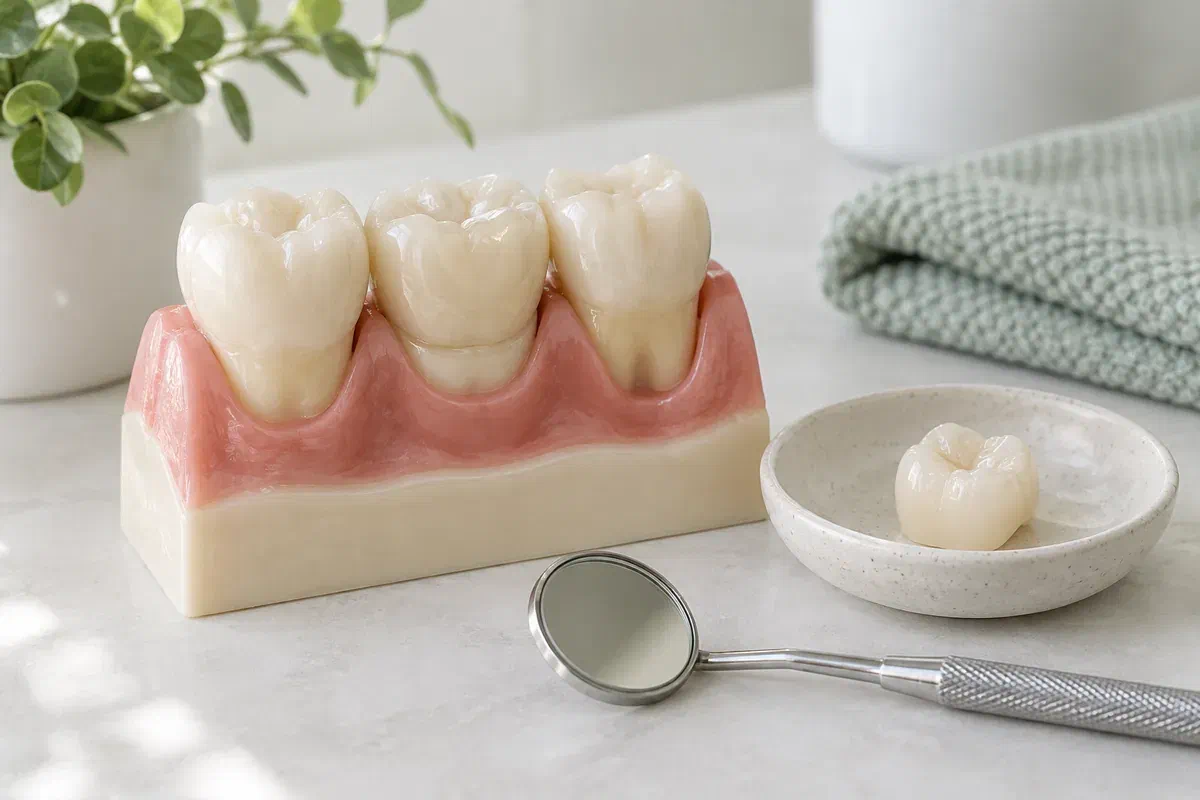
Illustrative tooth-and-gum teaching model beside a ceramic crown sample and dental mirror
What sets the timeline

The reason for treatment shapes how long it takes.

Ask which tooth is involved and the exact problem being solved. A restorative case moves toward a crown, while an appearance concern follows a different path with different checkpoints.

A tooth broken or decayed under the gumline

When damage extends below the gum, a crown may have nothing solid to seal against. Ask whether exposing more healthy tooth would make the restoration workable and how the tooth may do in the long run. Some roots are too compromised for this to be worthwhile.

A margin that needs room from the bone

Restoration edges placed too close to bone can make the tissue harder to keep healthy. Ask what is wrong with the current position and how changing it helps. Book the gum and crown stages as parts of one plan so nothing is left hanging between them.

A wish to show more tooth when smiling

Describe what you want to change and what you like as it is. Several things can make teeth look short, and each needs checking before surgery is considered. Another person’s smile cannot tell you whether gum removal suits yours.

Depending on the case, the gum, the bone or both may be adjusted. Ask what your treatment involves, whether neighbouring teeth are included, and how that influences support, look and the final crown.

Why mapping the stages pays off

Fewer surprises once the surgery is done

A clear consultation tells you what the procedure is meant to enable and whether the gain is worth surgery. Ask how much tooth and support would be left afterward. Better access to sound structure helps a crown seat, but no one can promise the tooth will last indefinitely.

Just as valuable is knowing the visit order and how long healing is followed before the final step. If your dentist and a periodontist divide the work, find out who looks after which stage. When the plan is shared, the surgery, the temporary and the crown all point to the same result.

Where the new gum and crown edge will be

Ask to see the intended gumline and restoration margin on an X-ray, photo or model. Check whether adjacent teeth would look different. This is especially important for teeth visible when you speak.

Costs in time as well as comfort

Set the intended benefit against healing time, sensitivity, visible change and maintenance. Ask which risks matter for your mouth in particular. Requesting more assessment before you decide is always acceptable.

Every appointment and fee laid out

Confirm whether the estimate includes assessment, surgery, reviews, a temporary and the final crown, or whether some are separate. Ask what might change the plan or the price. The full list of visits is more useful than a single surgical figure.

Stage by stage

What each visit is for

The approach and timing depend on the tissue, the tooth and the goal. Your treating clinician will explain the details and ask for your consent before the procedure.

  1. Visit one: assessment and records

    The tooth, roots, gum, bone and neighbouring teeth are reviewed with X-rays. Ask whether this tooth is likely to benefit. If something still needs clarifying, deal with it before booking a sequence that assumes the answer is yes.

  2. Planning: scope, options and roles

    Talk through what will change, how comfort is handled, the risks, normal healing and other possibilities. Confirm any referral and who is responsible for each step. Ask how a surprise during treatment would affect the plan for the crown.

  3. Surgery day

    Local anaesthetic is common. The clinician reshapes the gum and, if indicated, bone to reveal the planned tooth structure, and stitches may be placed. Leave with written instructions on early care and how to reach the team.

  4. Healing reviews, then the final crown

    Attend each check and ask when stitches or the temporary need attention. The final restoration is timed to tissue healing and the clinical goal. Feeling fine after a week does not mean the site is ready; ask what your clinician needs to see first.

Fitting recovery into the week

Protect the area now so the final stage stays on schedule.

Your written instructions from the treating clinician come first. They should give advice on cleaning, food, activity, medication and follow-up for the specific site.

Clean and eat around the healing site carefully

Find out how to keep the area clean without disturbing it, and when ordinary brushing and flossing can return there. Avoid fiddling with stitches, checking the gum repeatedly in the mirror, or using rinses that aren’t on your instructions.

Know when to call instead of waiting

Mild soreness or sensitivity can be expected, but ask what is typical and when to phone. Save the aftercare number in your phone. Pain that builds, bleeding that persists, swelling that grows or any other worrying change should prompt a call, not a wait for your next booking.

Hold on to your review dates

The gum can keep shifting during healing, which affects where the crown should end. Ask who decides the area is ready and how to care for the temporary in the meantime. A busy month is understandable, but skipping a review can push the final stage back.

Patient information: Cambridge University Hospitals — crown-lengthening risks and healing before final restoration

Options and their timelines

Each route has its own pace and tradeoffs.

Ask which choices genuinely fit your tooth and goal. The right one depends on structure, support, appearance and how much time the full plan demands.

When tooth and tissue support it

Crown lengthening and a planned crown

Consider exposure, tissue change and crown design together. Find out how the design trades extra access to sound tooth for any loss of support or change in appearance. The surgery is only worthwhile if the finished crown is the right answer for that tooth.

When a different method may save tissue

Orthodontic extrusion or another restorative idea

Some teeth can be gradually moved to expose more structure, a process called orthodontic extrusion, or restored another way. That usually takes longer and is not right for everyone. Ask about suitability, duration and which clinicians would be involved.

When surgery isn’t justified by the gain

Holding off or choosing differently

If the concern is cosmetic, leaving healthy gum unchanged may be sensible. A tooth with a poor outlook may need a separate talk about retention or replacement. Ask what saying no would mean and which options still meet your health needs.

Patient information: European Federation of Periodontology — selection of surgical and orthodontic approaches

Timing questions

How long, how many visits, and what happens in between?

Seeing the whole sequence helps you weigh a recommendation. Bring the original plan and ask which choices you can make now and which wait on further assessment.

(905) 876-4488
How long is the crown-lengthening appointment itself?
It varies with the number of teeth and whether bone is involved. Ask the treating clinician for an estimate when you book, and allow some time afterward in case you prefer to rest rather than rush back to work.
How many visits should I expect from start to finish?
Typically there is an assessment, the surgery, one or more healing reviews, and then the restorative appointments. The exact number depends on your case. Ask for a written outline so you can plan ahead.
Can I plan important events around the healing period?
It is sensible to ask. If the treated tooth is visible, you may want to time surgery away from a big occasion. Discuss your dates with the clinician so the schedule suits both healing and your plans.
What happens to the tooth between surgery and the final crown?
It may be protected with a temporary while the gum heals. Ask how to care for it, what to do if it loosens, and who will decide when the area is ready for the permanent restoration.
Does gum-only crown lengthening heal faster than when bone is involved?
Planning and healing can differ between the two, and your clinician will explain what applies. Ask what tissue is being changed in your case and how that affects the review schedule, rather than assuming a standard timeframe.
Can my Mississauga workdays and the reviews be booked together?
Ask at the start for a list of likely appointment points so you can request times that work. Our weekday hours run into the early evening, and weekend times are by appointment, which can help with planning.
Mississauga scheduling

Plan every stage before the first one begins.

Send a note or call our Bronte Street practice if crown lengthening has been suggested, a tooth keeps resisting repair, or your gumline raises a question. We’ll set out the purpose, the checks still needed, a realistic visit schedule, and whether a specialist should share the work.

Suitability, tissue changes, treating provider or referral, healing, crown timing and fees are confirmed after assessment. The procedure cannot guarantee keeping the tooth or achieving a particular appearance.

Visit Milton Dental Clinic
Unit 1, 342 Bronte St. S, Milton, ON L9T 5B7
Get directions Clinic hours
Monday–Thursday
11am–7pm
Friday–Sunday
By appointment only

Areas we serve

  • Milton
  • Oakville
  • Mississauga
  • Georgetown
  • Halton Hills
  • Acton
  • Campbellville
  • Brampton
  • Burlington
  • Puslinch
  • Rockwood
  • Erin
  • Caledon
  • Etobicoke
  • Old Milton
  • Bronte Meadows
  • Timberlea
  • Dorset Park
  • Dempsey
  • Clarke
  • Beaty
  • Coates
  • Harrison
  • Scott
  • Willmott
  • Ford
  • Bowes
  • Cobden
  • Walker
  • Mountain View
  • Milton Heights
  • Hawthorne Village
  • Valley View
  • Fallingbrook
  • Nassagaweya
  • Trafalgar
  • Esquesing
  • Nelson
  • Brookville
  • Moffat
  • Glen Williams
  • Norval
  • Limehouse
  • Stewarttown
  • Ashgrove
  • Hornby
  • Silver Creek
  • Speyside
  • Scotch Block
  • North Oakville
  • River Oaks
  • Glen Abbey
  • West Oak Trails
  • Palermo
  • Bronte Creek
  • College Park
  • Joshua Creek
  • Uptown Core
  • Preserve
  • Iroquois Ridge
  • Lisgar
  • Meadowvale
  • Meadowvale Village
  • Churchill Meadows
  • Erin Mills
  • Central Erin Mills
  • Streetsville
  • East Credit
  • Creditview
  • Heartland
  • Sheridan
  • Mount Pleasant
  • Credit Valley
  • Huttonville
  • Churchville
  • Springbrook
  • Northwest Brampton
  • Bram West
  • Fletcher's Meadow
  • Fletcher's Creek South
  • Alton Village
  • Orchard
  • Millcroft
  • Headon Forest
  • Tansley
  • Brant Hills
  • Tyandaga
  • Kilbride
  • Lowville
  • Aberfoyle
  • Morriston
  • Arkell
  • Hillsburgh
  • Freelton
  • Carlisle
  • Waterdown
  • Flamborough
  • Mountsberg

How can we help?

Milton Dental Clinic

Have a question about your smile? Choose the option that works best for you.

For urgent dental concerns, please call.
Messages are reviewed during clinic hours.