

Illustrative clinician explaining a tooth-and-gum model to a patient during a consultation
Specialized Care

Crown Lengthening in Rockwood

If the tooth that needs crown lengthening is one you show every time you smile, the neighbouring teeth matter too. From Rockwood, you can talk with us about why the gumline might change, which teeth could be included, and how healing affects the final look.

A visible tooth, and its neighbours

One gumline, shared across a row of teeth

In the front of the mouth, gums form a curve that runs from tooth to tooth. Change it around one and the others may suddenly look uneven. Crown lengthening moves the gum, and sometimes the underlying bone, so that more of a natural tooth is exposed, which is why visible teeth need especially careful planning.

The procedure doesn’t make an artificial crown longer; the word refers to your own tooth above the gum. A tooth may need it before a restoration, after a break or decay below the gumline. Others ask about it because their teeth seem short. The remaining tooth, root support and surrounding tissue shape every version.

Coming from Rockwood, bring photos of your smile as well as your treatment plan and any X-rays. We can explain how the recommendation relates to your care, which neighbouring teeth might be affected, what needs further assessment, and when a periodontist may be helpful. You should see the likely result before deciding.

Discuss a front-tooth crown-lengthening plan
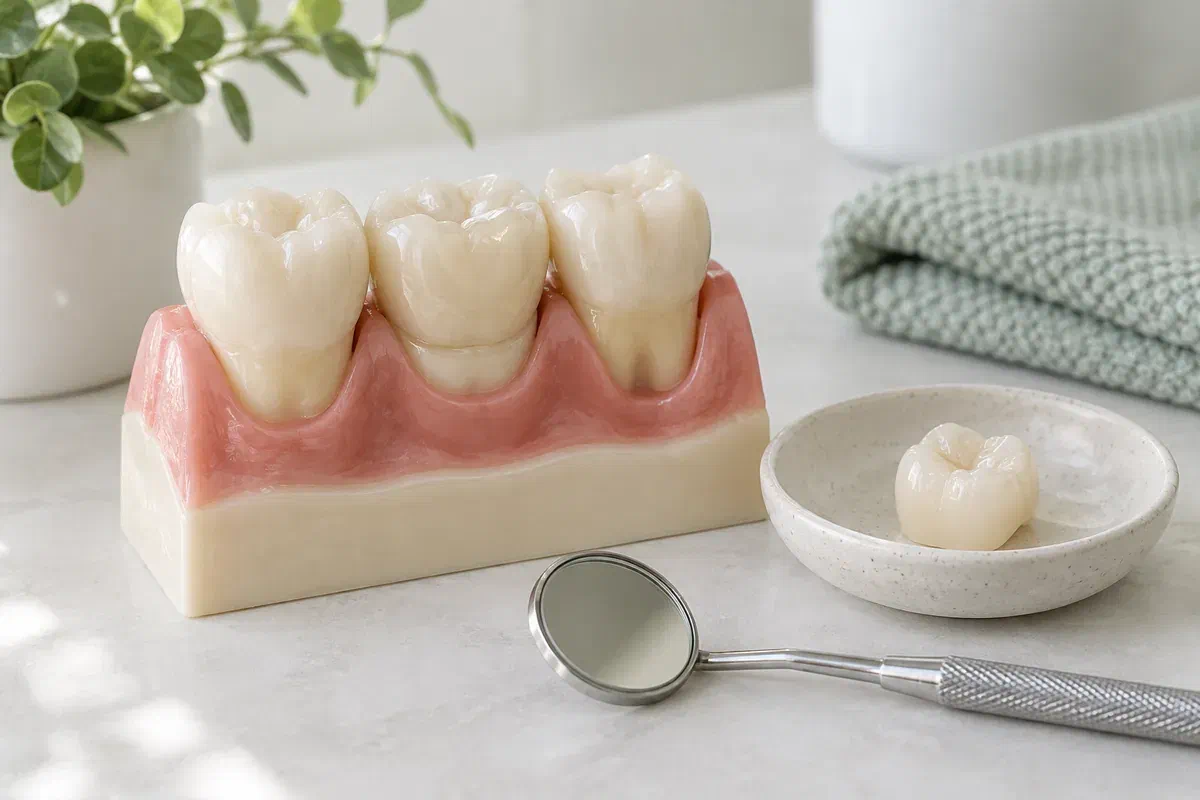
Illustrative tooth-and-gum teaching model beside a ceramic crown sample and dental mirror
Where the concern usually starts

Repair, edge position or the look of your smile?

Ask which tooth is the focus and what the procedure is meant to achieve. Restoring a damaged tooth and reshaping a smile both affect the gumline, but they begin from different needs.

A broken or decayed front tooth

If damage reaches below the gum, a crown may lack solid tooth to hold onto. Ask whether exposing more would make restoration realistic and what the tooth’s outlook is. Where the root is badly compromised, other options may be more sensible.

A crown edge that shows or irritates the gum

The relationship between a restoration margin and the surrounding gum and bone affects both health and appearance. Ask what is wrong with the current position and how changing it would help. The gum and restorative stages should be designed as one.

Uneven or short-looking front teeth

Point out what bothers you and what you like. Uneven gum levels or short teeth have several possible causes, and they need identifying before surgery is weighed. A photo of someone else’s smile cannot tell you whether tissue removal fits your teeth.

The change may involve gum, bone or both, and may extend to teeth beside the main one. Ask which teeth are included and how the plan affects support, appearance and the restoration that follows.

What careful design achieves

See the final gumline before the first incision.

For a tooth people see whenever you talk or laugh, the consultation should show what the procedure is expected to make possible and how the result would sit alongside the neighbouring teeth. Find out how much healthy tooth and bone support you would have left once the gum has moved. Better access helps the restoration, though no procedure can promise a tooth will last for life.

Ask about the order of visits and how long healing will be watched before the final restoration. If two clinicians share the work, confirm who designs the gumline and who places the crown. Coordinated planning keeps the surgery, temporary and finished tooth heading toward an agreed look.

A visual preview of the planned change

Photos, a model or a mock-up can show where the gum and restoration edge are intended to sit. Ask how symmetry with the teeth beside it will be handled. For front teeth, this conversation is worth taking time over.

Honest discussion of appearance risks

Weigh the hoped-for improvement against healing time, sensitivity, changes in tooth proportion and maintenance. Ask which risks apply to you, including how the gum may look during healing. You can request further assessment before deciding.

A full plan that includes neighbouring teeth

Check whether the estimate covers every tooth being treated, the reviews, any temporary and the final restorations. Ask what could change it. Knowing how many teeth are involved is as important as the overall cost.

Step by step

Plan the smile, treat the tissue, wait, then restore.

The exact technique and timing are shaped by the teeth involved, the tissue and your goal. The clinician who treats you will explain the specifics and seek your consent.

  1. Assess the tooth and the smile around it

    Roots, gum, bone and adjacent teeth are reviewed with X-rays and photos. Ask whether the tooth can benefit and how the gumline would look across the front. Resolve any uncertainty before committing to the sequence.

  2. Agree on which teeth will change

    Discuss the tissue involved, comfort, risks, healing and alternatives. Confirm whether neighbouring teeth are included, any referral, and who is responsible for each stage. Ask how unexpected findings would be handled.

  3. Carry out the planned reshaping

    Local anaesthetic is normally used. The clinician reshapes gum and, where needed, bone to reveal the planned structure, and may use stitches. Your written instructions should explain what was done and who to contact.

  4. Let the gumline settle before the final crown

    Healing in a visible area is reviewed carefully, because gum position affects both appearance and where the crown should end. Keep each check. Ask what the clinician needs to see before the final restoration is made.

While the front heals

Be patient with how it looks at first.

Follow the written instructions from your treating clinician. They should cover cleaning, food, activity, medicines and reviews for the teeth that were treated.

Care for the area as instructed

Ask how to clean the treated teeth while keeping up with the rest of your mouth, and how soon a brush and floss can be used right beside them again. Let stitches be. Lifting your lip to examine the healing, or trying unrecommended rinses, can disturb the site.

Call about symptoms that don’t fit

Tenderness and sensitivity can be part of healing. Ask what is expected and when to phone. If pain worsens, bleeding continues, swelling increases or something else seems wrong, get in touch rather than waiting for the next booking.

Wait for the review before judging the look

The gum can keep changing during healing, which affects appearance and final crown design. Ask who decides when the area is ready and how to care for a temporary. Early appearance isn’t the final result, so keep the reviews.

Patient information: Cambridge University Hospitals — crown-lengthening risks and healing before final restoration

Alternatives for a visible tooth

Sometimes the best gumline is the one you already have.

Ask which alternatives realistically fit your tooth and goal. The right choice depends on the remaining tooth, its support, how visible it is and what each plan involves.

When the tooth and tissue support it

Crown lengthening designed with the restoration

Plan the exposure, gumline and final restoration together, with the neighbouring teeth in view. Ask how the approach balances access to sound tooth with support and appearance. Surgery is worthwhile only if the finished smile is right.

When an alternative may keep the gumline even

Orthodontic extrusion or another restoration

Moving a tooth gradually to expose more structure can sometimes reduce the need to change neighbouring gum. A different restorative approach may also suit. Neither works for every case, so ask about suitability, time and who would be involved.

When the benefit doesn’t justify surgery

Leaving healthy gum alone

For a cosmetic concern, keeping your current gumline may be the wisest choice. A tooth with a poor outlook may instead need a discussion about replacement. Ask what declining would mean and how any health needs would still be addressed.

Patient information: European Federation of Periodontology — selection of surgical and orthodontic approaches

Front-tooth questions

Symmetry, healing and what people will notice

Understanding the full sequence helps you evaluate the recommendation. Bring the original plan and photos, and find out which choices are ready to make and which should wait for more assessment.

(905) 876-4488
Why would my dentist treat teeth that aren’t damaged?
In a visible area, neighbouring teeth may be included so the gumline stays balanced. Ask which teeth are part of the plan, why each is included, and what the result might look like if only one were treated.
Will people notice the gum while it’s healing?
The area may look different for a while as the tissue heals. How noticeable it is varies. Ask what to expect and consider timing the procedure away from important events if appearance matters to you.
Could the treated tooth end up looking longer than its neighbours?
It can if only one tooth is treated in a visible spot. Careful planning aims to avoid that. Ask to see the intended gumline and how it compares with the teeth either side.
Can small dark spaces appear between teeth after the gum changes?
Changes in gum level can sometimes alter the tissue between teeth. Ask whether this is a risk in your case and how the plan accounts for it, especially for front teeth.
Should I get a mock-up before agreeing to cosmetic crown lengthening?
Asking for a visual preview is reasonable for an appearance-driven procedure. It can help you and your clinician agree on the goal. Ask what options they use to show the planned result.
What should I bring from Rockwood to the first consultation?
Your treatment plan, recent X-rays and a few smile photos that show what concerns you. A list of questions about appearance and healing helps make the appointment productive.
Rockwood consultations

Plan the whole smile, not just one tooth.

Reach our Bronte Street practice about a crown-lengthening suggestion for a visible tooth, a front tooth that is hard to restore, or an uneven gumline. We can explain the goal, the assessment involved, and appropriate care or coordination with a specialist.

Whether it suits you, which teeth and tissues are changed, the treating provider, the pace of healing, when the crown goes on and the fee are all set once you have been assessed. A specific appearance or the long-term survival of the tooth cannot be guaranteed.

Visit Milton Dental Clinic
Unit 1, 342 Bronte St. S, Milton, ON L9T 5B7
Get directions Clinic hours
Monday–Thursday
11am–7pm
Friday–Sunday
By appointment only

Areas we serve

  • Milton
  • Oakville
  • Mississauga
  • Georgetown
  • Halton Hills
  • Acton
  • Campbellville
  • Brampton
  • Burlington
  • Puslinch
  • Rockwood
  • Erin
  • Caledon
  • Etobicoke
  • Old Milton
  • Bronte Meadows
  • Timberlea
  • Dorset Park
  • Dempsey
  • Clarke
  • Beaty
  • Coates
  • Harrison
  • Scott
  • Willmott
  • Ford
  • Bowes
  • Cobden
  • Walker
  • Mountain View
  • Milton Heights
  • Hawthorne Village
  • Valley View
  • Fallingbrook
  • Nassagaweya
  • Trafalgar
  • Esquesing
  • Nelson
  • Brookville
  • Moffat
  • Glen Williams
  • Norval
  • Limehouse
  • Stewarttown
  • Ashgrove
  • Hornby
  • Silver Creek
  • Speyside
  • Scotch Block
  • North Oakville
  • River Oaks
  • Glen Abbey
  • West Oak Trails
  • Palermo
  • Bronte Creek
  • College Park
  • Joshua Creek
  • Uptown Core
  • Preserve
  • Iroquois Ridge
  • Lisgar
  • Meadowvale
  • Meadowvale Village
  • Churchill Meadows
  • Erin Mills
  • Central Erin Mills
  • Streetsville
  • East Credit
  • Creditview
  • Heartland
  • Sheridan
  • Mount Pleasant
  • Credit Valley
  • Huttonville
  • Churchville
  • Springbrook
  • Northwest Brampton
  • Bram West
  • Fletcher's Meadow
  • Fletcher's Creek South
  • Alton Village
  • Orchard
  • Millcroft
  • Headon Forest
  • Tansley
  • Brant Hills
  • Tyandaga
  • Kilbride
  • Lowville
  • Aberfoyle
  • Morriston
  • Arkell
  • Hillsburgh
  • Freelton
  • Carlisle
  • Waterdown
  • Flamborough
  • Mountsberg

How can we help?

Milton Dental Clinic

Have a question about your smile? Choose the option that works best for you.

For urgent dental concerns, please call.
Messages are reviewed during clinic hours.