
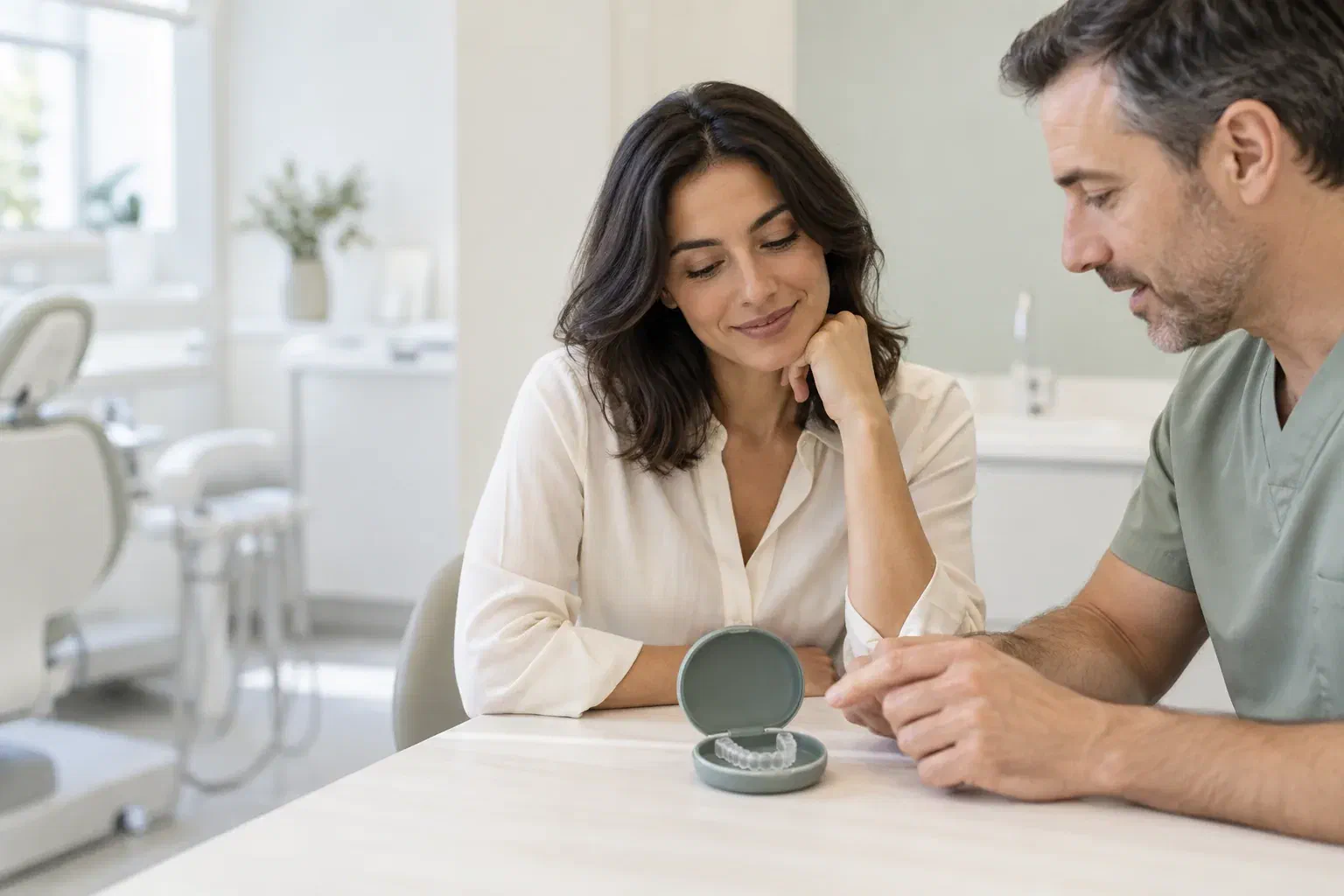
Illustrative patient and clinician reviewing a clear nightguard during a dental consultation
Specialized Care

Custom Nightguards

A nightguard should have a clear purpose and a fit that is checked for your teeth. Discuss custom nightguards in Milton to review wear or grinding concerns, compare suitable protection, and learn how the appliance should be worn, cleaned, and reassessed.

A closer look at custom nightguards

Protection starts with understanding what your teeth need.

A custom nightguard is an appliance made to fit an individual's teeth and considered when protection from clenching or grinding is appropriate. The discussion begins with your tooth condition and history, rather than choosing a material from appearance alone. A guard is intended to serve a defined purpose within a wider care plan.

You may have noticed wear, had repeated chips, or been told that you grind during sleep. These observations need assessment because existing damage and current activity are not identical questions. The clinician can explain what is known, what needs monitoring, and whether an appliance offers a reasonable benefit.

At Milton Dental Clinic, bring any guard you already use and describe how it feels. Tell us about retainers, recent restorations, or another prescribed dental appliance. We can review the practical requirements before a new guard is arranged and help you understand the fitting and follow-up involved.

Discuss a custom nightguard
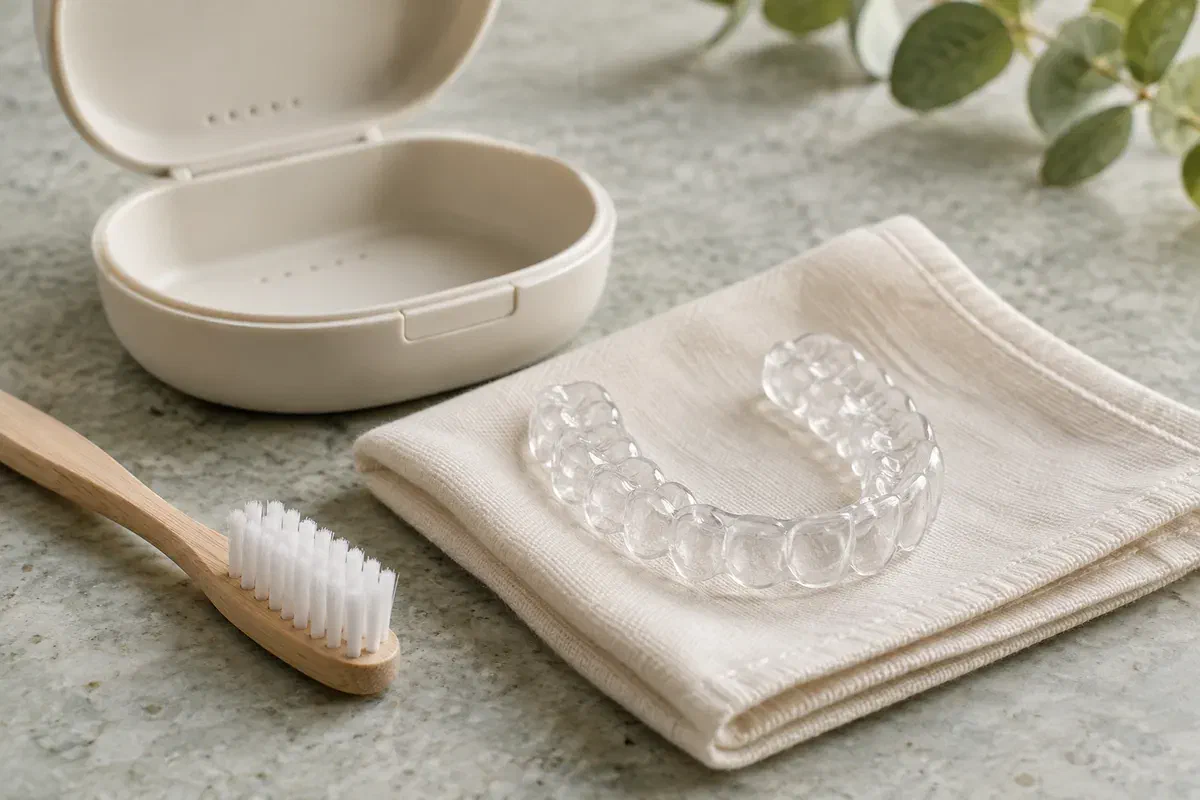
Illustrative clear upper nightguard beside a cream case and soft cleaning brush
Reasons to review tooth protection

Describe the wear, the symptoms, and any appliance you already have.

The right conversation depends on what prompted the recommendation. An old guard, a new restoration, and a report of grinding each provide useful information for the assessment.

Tooth wear or repeated chips

Point out the areas that have changed and explain any previous repairs. Ask whether the findings suggest a protection need and whether a tooth requires separate treatment. A guard does not rebuild a damaged tooth or establish why every worn surface developed.

A report of overnight grinding

Tell us what has been noticed and whether you wake with discomfort or have concerns about sleep. Grinding can occur without your awareness, but an appliance should follow assessment. Mention any sleep diagnosis so tooth protection is considered alongside the care already recommended.

An existing guard that is no longer comfortable

Bring it even if you stopped using it. Explain whether it feels tight, loose, bulky, or different after dental work. The clinician can assess its condition and fit before deciding whether adjustment, replacement, or a different approach is appropriate.

A nightguard may help protect teeth from the effects of grinding, but it cannot guarantee that grinding stops or that every jaw symptom improves. The proposed purpose should be clear before you agree to an appliance.

What a custom fitting can clarify

Know the design, the instructions, and the review plan.

A custom process allows the appliance to be considered in relation to your actual teeth, restorations, and contact pattern. Ask why the proposed design is suitable and which arch it will cover. The material and shape should have an explanation beyond simply calling the device a premium guard.

The fitting appointment also gives you a chance to learn how to insert, remove, and care for it. Those details matter because an appliance can only be evaluated properly when its use is understood. Report problems early rather than quietly keeping a new guard in its case.

A design connected to an identified need

Ask what is being protected and how the selected appliance fits that goal. If more than one material is suitable, compare comfort, durability, care requirements, and limitations. There is no reason to assume that the softest or thickest option is automatically the right one.

A fitting that includes more than retention

The clinician reviews how the appliance seats and how the teeth contact it, and you should describe any discomfort. Ask what sensations are expected initially and what warrants a call. Being able to push a device into place is not the only measure of a suitable fit.

A practical plan for continued use

Confirm when to wear the guard, how to clean and store it, and when it should be checked again. Discuss travel, shift work, or other circumstances that affect use. Clear instructions help the appliance become part of a manageable routine.

From assessment to fitting

Agree on the purpose before the guard is made.

The number of visits and type of records depend on the proposed appliance and your dental condition. Ask about fees, preparation, fitting, and what follow-up is included.

  1. Review the teeth and the reason for protection

    Discuss wear, repairs, symptoms, and previous guard experience. The clinician examines the relevant teeth and restorations and considers whether other care is needed first. Tell us about planned dental work that could affect the fit of a newly made device.

  2. Choose a suitable design and obtain records

    If a guard is appropriate, discuss its material, coverage, and intended use before records are taken. Ask whether impressions or another recording method will be used. The recommendation should be explained without assuming that a particular scanner or manufacturing system is necessary.

  3. Check the appliance and practise using it

    At fitting, the clinician reviews seating, contacts, and comfort and makes any appropriate professional adjustments. Practise insertion and removal and ask about cleaning. Explain gagging, pressure, or another difficulty at the appointment so it can be considered before you begin regular use.

  4. Reassess fit, condition, and continued suitability

    Bring the guard to the recommended reviews and describe your experience. The team can examine wear, damage, and changes in your teeth or symptoms. A device that once fitted well may need reassessment after new dental work or a change in the mouth.

Looking after your nightguard

Keep the appliance clean, protected, and available for review.

Follow the instructions for your particular material and design. Ask which cleaning products are suitable instead of assuming advice for another appliance applies to yours.

Clean it using the recommended method

Confirm how to rinse and brush the appliance and whether a cleaning product is appropriate. Avoid hot water or direct heat that could alter its shape. Ask before using abrasive pastes or household chemicals, and keep your own tooth-cleaning routine in place.

Store it safely and check for damage

Use the recommended case and keep the guard away from pets, children, and heat. Look for visible cracks or a changed shape when handling it. If it breaks or feels unstable, contact the clinic rather than gluing pieces together or trying to reshape it.

Report pain or a changed bite

If the appliance causes pain, stop using it and contact the dental team for advice. Mention a persistent change in how your teeth meet after removal. Do not assume that increasing wear time or forcing the appliance into place will resolve a fit problem.

Patient information: Dorset County Hospital — care and heat precautions for dental guards · NIDCR — advice about painful intraoral appliances

Choosing the appropriate protection

Match the appliance to the purpose, rather than using one device for everything.

Ask how the proposed guard differs from anything you already wear. Tooth protection, tooth retention, sports protection, and sleep-apnea treatment can involve different requirements.

When protection from grinding is appropriate

A custom nightguard with professional review

Discuss the selected design, expected use, and limits of protection. Ask about fitting and review before comparing price alone. A custom appliance still needs maintenance and cannot guarantee that every future chip or symptom will be prevented.

When the findings support another starting point

Monitoring and management without a new device

Some situations may call for observation, daytime habit support, or review of an existing appliance. Ask what would lead the clinician to reconsider a guard later. Not every report of clenching requires a new device at the first appointment.

When retention, breathing, or another need is involved

Another appliance or coordinated care

Bring retainers and prescribed sleep appliances so their roles can be reviewed. A nightguard should not be substituted for a different treatment without advice. Ask how the plans can be coordinated and whether another clinician needs to be involved.

Custom-nightguard questions

Ask how it should fit into your care and everyday routine.

The fitting visit should leave you knowing the purpose of the guard and how to use it. Bring questions about comfort, cleaning, repairs, and other appliances before starting.

(905) 876-4488
Does a custom nightguard have to be made for my upper teeth?
Not necessarily. The design and arch depend on the clinical findings and intended use. Ask why the proposed arrangement suits your teeth, restorations, and other appliances. The choice should be explained rather than treated as a universal rule.
Should I have planned fillings finished before a new nightguard is made?
Tell the clinician about any planned treatment. Changes to tooth shape can affect appliance fit, so the sequence should be discussed before records are taken. The team can explain whether to complete other work first or make another arrangement.
Can I clean my custom guard with boiling water to disinfect it?
Do not use boiling water or direct heat. Follow the cleaning instructions for the material and ask which products are suitable. Heat can alter the fit, and a distorted device should be reviewed rather than forced onto the teeth.
If my nightguard has a small crack, can I repair it with household glue?
Do not glue or modify it yourself. Contact the clinic and bring the appliance for inspection. The location and extent of damage determine whether it can be repaired, needs replacement, or should no longer be worn.
Does wearing a guard mean I no longer need my teeth checked for wear?
No. Reviews help assess the teeth, restorations, appliance condition, and your symptoms. Protection is one part of management. Bring the guard to the recommended appointments so its continued suitability can be considered alongside changes in the mouth.
Can my grinding nightguard replace a prescribed sleep-apnea appliance?
No. A grinding guard and an appliance prescribed for sleep apnea have different purposes. Do not substitute one for the other or stop your sleep treatment without advice. Ask the dental and sleep-care teams how any overlapping needs should be managed.
Custom nightguards in Milton

Discuss the protection you need and the fit you can maintain.

Contact our Bronte Street practice about tooth wear, grinding concerns, or an existing guard that needs attention. We can assess suitability, explain the appliance options, and plan fitting and review where appropriate.

Design, material, suitability, fitting visits, replacement needs, and fees depend on assessment. A guard cannot guarantee that grinding stops or that all future damage is prevented.

Visit Milton Dental Clinic
Unit 1, 342 Bronte St. S, Milton, ON L9T 5B7
Get directions Clinic hours
Monday–Thursday
11am–7pm
Friday–Sunday
By appointment only

How can we help?

Milton Dental Clinic

Have a question about your smile? Choose the option that works best for you.

For urgent dental concerns, please call.
Messages are reviewed during clinic hours.