
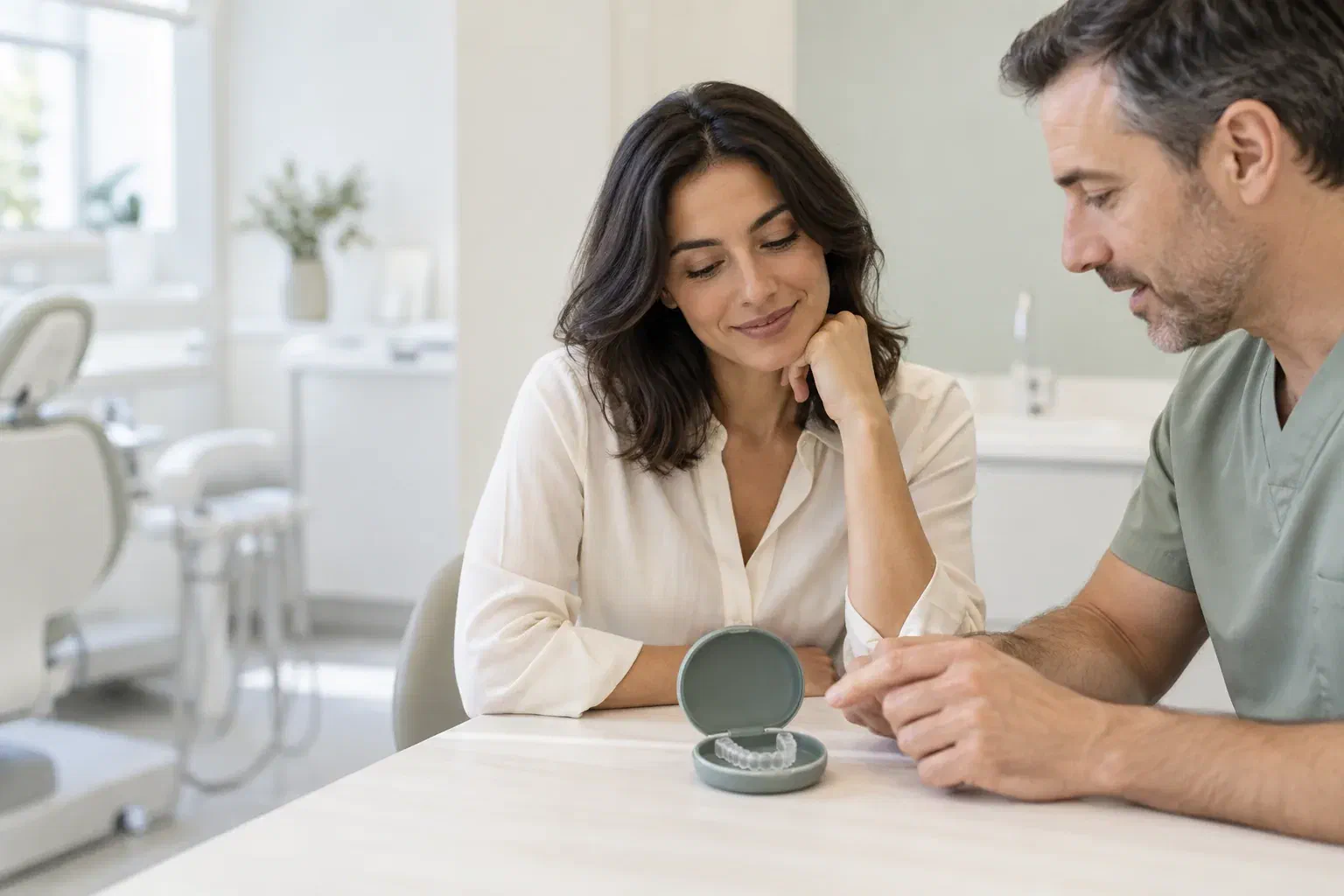
Illustrative patient and clinician reviewing a clear nightguard during a dental consultation
Specialized Care

Custom Nightguards in Acton

A split down the middle, a corner snapped off, a guard the dog found: damage is often what brings people in. Custom nightguards in Acton start with checking your teeth and the appliance, then deciding whether repair, a new guard or another plan is right.

When the appliance gives out

A broken guard raises two questions: what happened to it, and what is happening to your teeth?

Guards wear out. They crack along thin edges, lose their grip or warp after a warm afternoon on a car dashboard. A custom nightguard is made from records of your teeth to protect them from clenching or grinding, and when one fails, the damage can sometimes show the clinician something about the forces involved.

Before anything is replaced, the teeth come first. Wear, chips and repairs are examined, and the clinician separates old changes from signs of current grinding. You'll hear whether a new appliance is likely to help, whether an adjustment or monitoring would do, and whether a tooth needs attention of its own.

If you're coming from Acton with a damaged guard, bring every piece in its case, along with any retainer or sleep appliance. Mention when the damage appeared and any dental work done since the guard was made. That lets us explain the options and plan the visits in one go.

Get a damaged guard checked
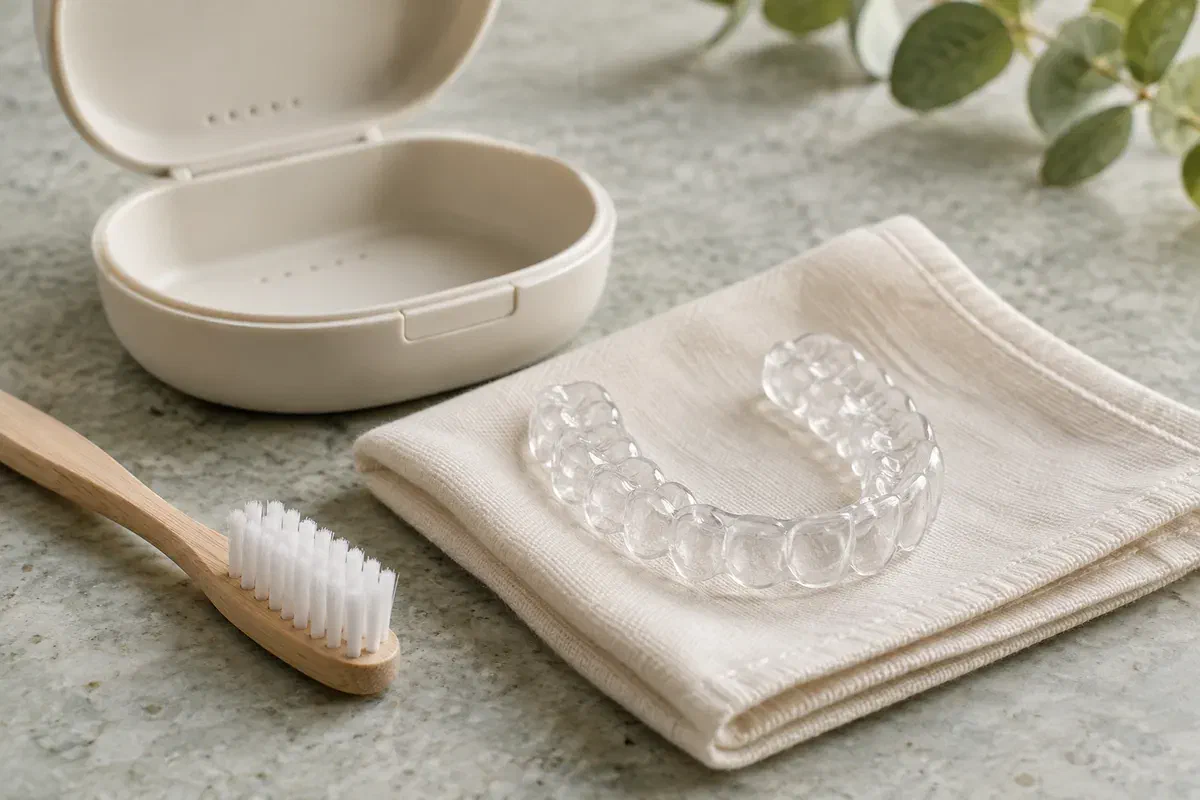
Illustrative clear upper nightguard beside a cream case and soft cleaning brush
What the damage might be telling you

Cracks, wear and fit problems each mean something different.

A guard worn through in one spot, a clean break and a slow loss of fit point to different things. Describing how it happened helps the assessment.

Teeth that have changed along with the guard

Mention any teeth that feel rough, look shorter or have chipped since the guard was made. Ask whether the pattern suggests grinding forces or a separate problem. A guard covers the surfaces it touches, but it doesn't rebuild teeth or explain every type of wear.

Signs the grinding is still going on

Wear holes, thinning or cracks in a guard may hint at continuing clenching. Tell us about jaw tightness, sleep quality and anything others have heard. A replacement should still follow an examination, and any sleep diagnosis should be part of the conversation.

A crack, a break or a guard that no longer fits

Bring the appliance whatever state it's in. Explain whether it cracked suddenly, wore through gradually or stopped fitting after dental work. The clinician can inspect it and recommend repair, replacement or another approach.

A new guard can protect teeth from further grinding damage, but it won't guarantee the habit stops or that jaw symptoms ease. Before replacing anything, ask what the appliance is expected to do.

If a new guard is needed

Fresh records, and a design informed by the old one.

A replacement custom guard is made from new records of your teeth, taking account of crowns, fillings and any changes since the last one. Ask whether the material or thickness should differ this time, and why. A clinical reason, not a stronger-sounding label, should guide the choice.

At the fitting you'll practise handling the new appliance and hear how to clean and store it. If your old guard broke while you were taking it out, mention it, since technique can matter. Report problems early so the new one doesn't follow the old into a drawer.

Learning from the last guard

Ask what the wear or break on the old appliance suggests and whether the new design should change. Compare comfort, durability, cleaning and limits for any suitable materials. Thicker isn't automatically tougher, and softer isn't automatically kinder.

A fitting that looks beyond grip

The clinician reviews how the guard sits and how your teeth meet it, and your comments on pressure matter. Ask which first-week sensations are normal and when to call. A guard that clicks firmly into place may still need adjusting.

Habits that help it last

Confirm when to wear it, how to care for it and when the next check falls. Mention pets, travel or anything that has caused damage before. Small changes to routine can help a guard last longer.

From damage to a new fit

Inspect, decide, remake if needed, review.

The visits and records depend on the appliance and on your dental condition. Ask what fees, preparation and follow-up apply, and whether the damaged guard is still safe to use in the meantime.

  1. Examine the teeth and the broken guard

    Describe what happened to the appliance, plus any wear, repairs or symptoms. The clinician looks at the guard and at the teeth and restorations beneath it, and checks whether something needs treating first. Planned dental work can affect fit, so mention it.

  2. Choose repair or replacement, then record

    If the old guard can't be safely repaired and protection is still appropriate, the new design, material and coverage are discussed first. Ask whether impressions or a scan are planned. The advice shouldn't hinge on a particular system.

  3. Fit the new appliance and practise

    Seating, tooth contacts and comfort are checked, with professional adjustments where suitable. Practise putting it in and taking it out gently, and confirm the cleaning steps. Speak up about gagging or pressure at the appointment.

  4. Keep an eye on both

    Bring the guard to reviews and describe how it's going. The team looks for cracks and thinning, and for any shift in your teeth or symptoms. New fillings or crowns can mean the fit needs another look.

Making the next one last

Many guard mishaps can be avoided. Here's how.

Care depends on the guard's material and design. Ask which products are safe rather than borrowing tips meant for a different appliance.

Clean it gently

Rinse and brush it the way you were shown and ask whether a cleaner suits the material. Skip hot water and other heat that could distort it. Check before using abrasive paste or bleach, and keep your own daily brushing and flossing going.

Store it where it can't be chewed or crushed

Keep the guard in a sturdy case, out of reach of dogs, young children and warm places, and never loose in a bag or pocket. Look it over for cracks each week. If it splits, call rather than gluing or filing it.

Don't wear it through pain

If the guard hurts, remove it and ring the clinic. Tell us about a bite that still feels unusual long after you take it out. Forcing it into place or wearing it longer won't solve a fit issue.

Patient information: Dorset County Hospital — care and heat precautions for dental guards · NIDCR — advice about painful intraoral appliances

What happens next

Repair, replace or rethink?

Ask how a new guard would compare with the one that broke and with anything else you wear. A grinding guard, an orthodontic retainer, a sports mouthguard and a sleep-apnea appliance each do a separate job.

When grinding protection is still needed

A new custom guard

Discuss whether the design should change, how often to wear the new one and its limits. Ask about fitting and review visits as well as price. Any custom guard needs upkeep and won't stop every future chip or symptom.

When the findings support a lighter option

Repairing, adjusting or monitoring

Sometimes a minor issue can be adjusted, or the teeth watched while daytime habits are addressed. Ask what would prompt a new guard later. A broken appliance doesn't always mean another one is the right next step.

When retention, breathing or another concern overlaps

A different appliance or another clinician

Bring retainers and any prescribed sleep device so their jobs are clear. A nightguard shouldn't take the place of other treatment without advice. Ask whether another clinician should be involved and how the plans can work side by side.

Acton nightguard questions

Damage, repair and replacement, explained.

Leave the fitting confident about what your guard is for and how to handle it. Bring questions about breakage, wear, cleaning and other appliances.

(905) 876-4488
Can a cracked nightguard be repaired, or does it need replacing?
It depends on where the crack is, how large it is and the material. Bring the guard in so the clinician can inspect it. Some damage can be addressed, while other damage means the guard should be retired.
Why did my guard wear a hole in one spot?
Concentrated wear may reflect where your teeth press hardest, but it needs checking. Bring the guard and mention any symptoms. The clinician can examine your teeth and the appliance and explain whether the design or plan should change.
Is it safe to keep wearing a guard with a sharp edge?
Stop wearing it if an edge feels sharp or rough against your cheek, tongue or gums. Don’t file or trim it at home. Bring it in so the team can decide whether it can be smoothed or should be replaced.
Where is the safest place to keep a guard at home?
In its closed case, somewhere pets and young children can’t reach, and away from heat such as radiators or sunny windows. Ask the team for advice if your case is cracked or doesn’t close properly.
Will my new guard be thicker if I wore through the old one?
Not necessarily. The design depends on your examination and what the old guard showed. Ask the clinician to explain whether the thickness or material should change, and why.
Does a new guard mean the wear on my teeth will stop being checked?
No. Reviews still look at your teeth, restorations and symptoms as well as the appliance. Protection is one part of care. Bring the guard to your appointments so everything can be assessed together.
From Acton, with a guard in hand

Bring the pieces. We'll take it from there.

Call our Bronte Street practice about a cracked, worn or ill-fitting guard, or about new grinding concerns. We'll examine your teeth and the appliance, explain your options and plan a replacement and reviews if that's what you need.

Repair, replacement, design, material, visits and fees depend on assessment. A nightguard can't guarantee an end to grinding or prevent all future damage.

Visit Milton Dental Clinic
Unit 1, 342 Bronte St. S, Milton, ON L9T 5B7
Get directions Clinic hours
Monday–Thursday
11am–7pm
Friday–Sunday
By appointment only

Areas we serve

  • Milton
  • Oakville
  • Mississauga
  • Georgetown
  • Halton Hills
  • Acton
  • Campbellville
  • Brampton
  • Burlington
  • Puslinch
  • Rockwood
  • Erin
  • Caledon
  • Etobicoke
  • Old Milton
  • Bronte Meadows
  • Timberlea
  • Dorset Park
  • Dempsey
  • Clarke
  • Beaty
  • Coates
  • Harrison
  • Scott
  • Willmott
  • Ford
  • Bowes
  • Cobden
  • Walker
  • Mountain View
  • Milton Heights
  • Hawthorne Village
  • Valley View
  • Fallingbrook
  • Nassagaweya
  • Trafalgar
  • Esquesing
  • Nelson
  • Brookville
  • Moffat
  • Glen Williams
  • Norval
  • Limehouse
  • Stewarttown
  • Ashgrove
  • Hornby
  • Silver Creek
  • Speyside
  • Scotch Block
  • North Oakville
  • River Oaks
  • Glen Abbey
  • West Oak Trails
  • Palermo
  • Bronte Creek
  • College Park
  • Joshua Creek
  • Uptown Core
  • Preserve
  • Iroquois Ridge
  • Lisgar
  • Meadowvale
  • Meadowvale Village
  • Churchill Meadows
  • Erin Mills
  • Central Erin Mills
  • Streetsville
  • East Credit
  • Creditview
  • Heartland
  • Sheridan
  • Mount Pleasant
  • Credit Valley
  • Huttonville
  • Churchville
  • Springbrook
  • Northwest Brampton
  • Bram West
  • Fletcher's Meadow
  • Fletcher's Creek South
  • Alton Village
  • Orchard
  • Millcroft
  • Headon Forest
  • Tansley
  • Brant Hills
  • Tyandaga
  • Kilbride
  • Lowville
  • Aberfoyle
  • Morriston
  • Arkell
  • Hillsburgh
  • Freelton
  • Carlisle
  • Waterdown
  • Flamborough
  • Mountsberg

How can we help?

Milton Dental Clinic

Have a question about your smile? Choose the option that works best for you.

For urgent dental concerns, please call.
Messages are reviewed during clinic hours.