
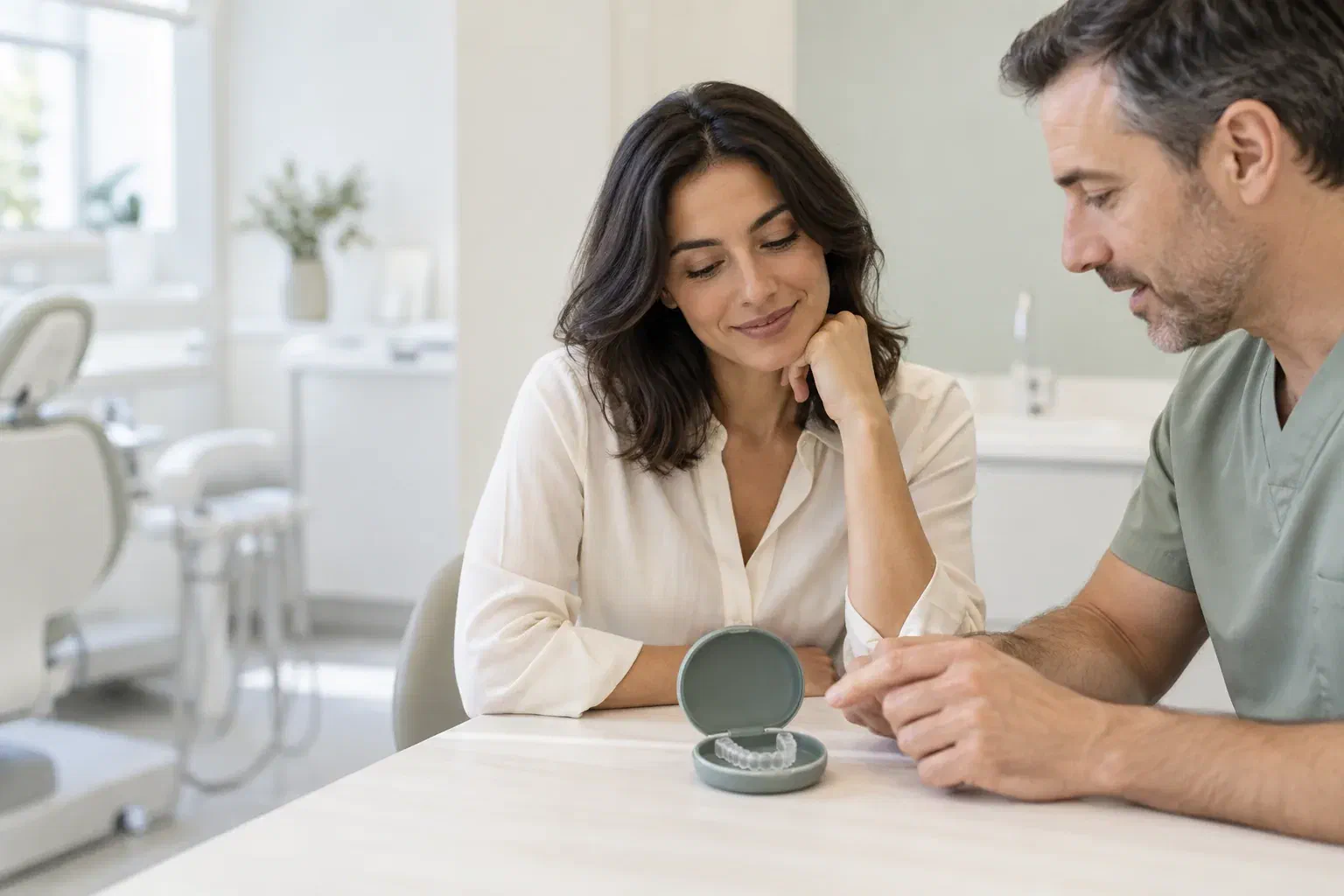
Illustrative patient and clinician reviewing a clear nightguard during a dental consultation
Specialized Care

Custom Nightguards in Caledon

A nightguard is less a one-time purchase than part of ongoing care. For custom nightguards in Caledon, we look at whether you need protection, then explain how the guard, your teeth and your symptoms will be reviewed as the years go by.

Thinking beyond the fitting

The guard changes. Your teeth change. Reviews keep up with both.

Fitting day tends to get the attention, but most of a nightguard's working life happens afterward. Surfaces wear, restorations are added, and habits shift with work and stress. A custom guard, built from a scan or impressions of your teeth, protects against clenching or grinding only while it still fits and still suits your mouth.

Before any of that, the question is whether you need one. The clinician examines wear, chips and past repairs, tells older damage apart from signs of current grinding, and asks about jaw comfort and sleep. You'll hear whether a guard is likely to help, or whether monitoring or another treatment should come first.

From Bolton and the villages across Caledon, it's worth knowing which changes justify a call before you drive in, and which can wait for a scheduled review. Bring any guard or retainer you own and mention dental work you're planning, and we'll lay out the fitting and long-term follow-up.

Talk about long-term protection
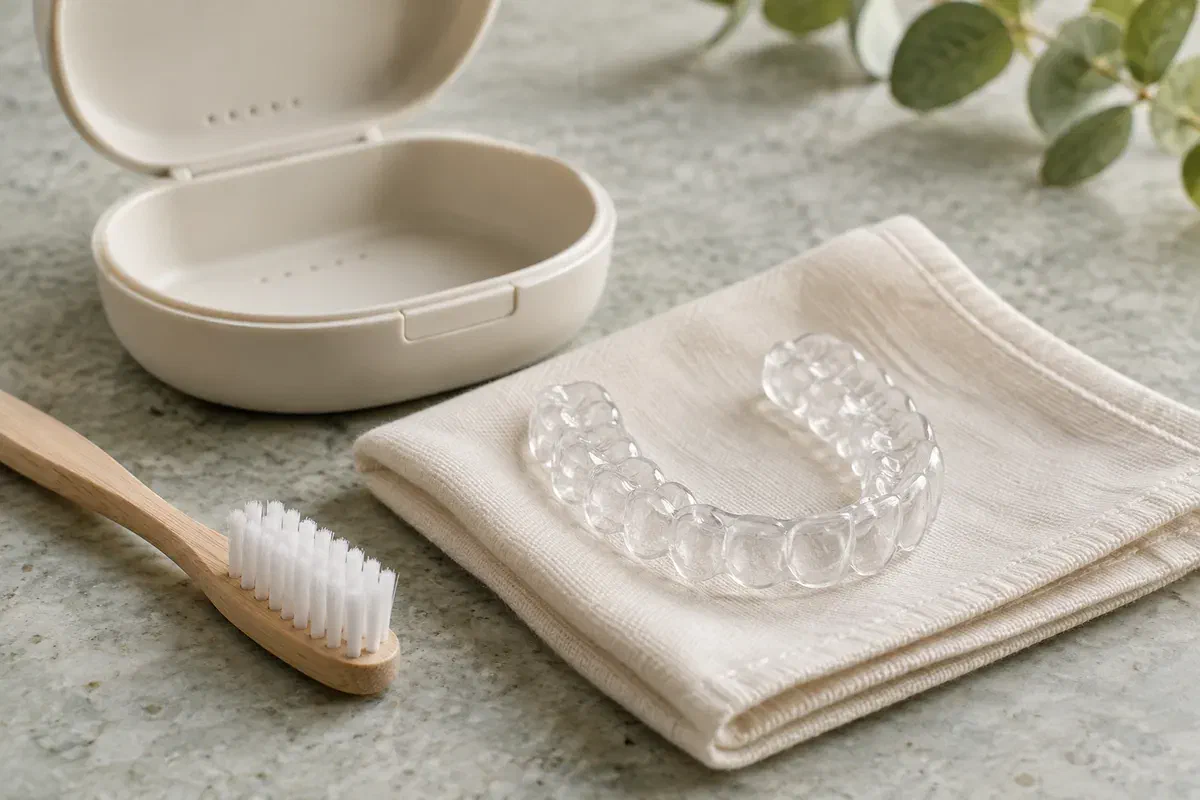
Illustrative clear upper nightguard beside a cream case and soft cleaning brush
Why people come in

New wear, an ageing guard or a habit that won't quit.

Each starting point raises different questions, and some only show up over time. Tell us what has changed recently as well as what has been going on for years.

Wear that seems to be progressing

Show us teeth that look shorter, sharper or more chipped than before, and describe past repairs. Ask whether the change fits a grinding pattern or a separate tooth problem. Protection may limit further contact wear, but a guard can't restore lost structure or explain every cause.

Grinding that hasn't eased

Describe what a partner has noticed, whether your jaw feels tired in the morning and how you've been sleeping. Grinding in sleep usually goes unnoticed by the sleeper, and a new or replacement guard should still follow assessment. Share any sleep diagnosis.

A guard that's showing its age

Bring it along, worn spots and all. Explain whether it has started to feel loose, tight, rough or different after dental work. The clinician can examine it and suggest whether to adjust, replace or try another approach.

Over any length of time, a nightguard is protection rather than a cure. It can't ensure grinding stops or that jaw discomfort settles, so be clear on the guard's purpose and how its success will be judged.

What custom-made adds over time

A guard that can be checked, adjusted and remade.

Because a custom appliance is based on your own records, it can be compared against your teeth at each review and adjusted or remade when things change. Ask which arch it covers, why that material was chosen and how long it might reasonably serve. Any answer should be framed around your mouth, not a product tier.

At the fitting you'll practise seating and removing it and hear how it should be cleaned. Ask what signs would mean it needs attention between reviews. Report problems early instead of letting the guard sit unused until your next appointment.

A design tied to what it protects

Find out which teeth and restorations it shields and how its design achieves that. If several materials could work, weigh how each feels, holds up and is cleaned, along with its limits. Neither the thickest nor the softest option is automatically right.

Fit reviewed at every visit

Seating and tooth contacts are checked at the fitting and again at reviews, and your sense of pressure matters each time. Ask which early sensations are normal and when to call. A guard that stays in place may still need fine-tuning.

A routine that lasts

Agree on the nights to wear the guard, the care it needs and how often it will be reviewed. Mention long commutes, seasonal work or other things that shape your nights. A sustainable routine matters more than a perfect one.

The long view

Fit it well, then keep checking.

How many visits you'll need, and which records, depends on the appliance and your mouth. Ask about fees and preparation, and how often reviews are recommended for you.

  1. Start with a thorough look

    Talk through wear, repairs, symptoms and any past guard. Your teeth and fillings are examined, and the clinician considers whether something else should be treated first. Upcoming dental work can change the fit, so mention it.

  2. Agree on a design and take records

    If a guard is suitable, material, coverage and use are discussed before impressions or a scan. Ask which method is planned and why. The advice shouldn't depend on one brand of equipment.

  3. Fit, adjust and learn the care

    When it's ready, the clinician checks the seat, the contacts and your comfort, adjusting where appropriate. Practise placing and removing the guard and ask about cleaning. Raise gagging or pressure before you go home.

  4. Review the guard and the teeth beneath it

    Bring the guard to each review and describe how things have been. Its surface is examined for wear patterns and cracks, and your teeth, restorations and jaw comfort are checked too. New dental work may mean the fit is revisited.

Keeping it in service

Good care makes reviews more useful.

Cleaning advice depends on your guard's material. Ask which products are suitable instead of relying on instructions meant for another appliance.

Clean it gently every day

Rinse and brush the guard as you were shown and ask whether a cleaning product is appropriate. Keep it clear of hot water and other heat that could distort it. Ask before reaching for abrasive pastes or chemicals, and keep up your own daily brushing and flossing.

Store it safely and notice changes

Keep it cased between uses, out of reach of pets and children and away from heat. Over time, look for thinning, cracks or warping. If it breaks or rocks, call the clinic rather than gluing or reshaping it.

Report pain or a changing bite

If the guard hurts, stop using it and phone us. Tell us about a bite that feels different long after removal. More hours of wear or pushing it into place won't fix a fit problem.

Patient information: Dorset County Hospital — care and heat precautions for dental guards · NIDCR — advice about painful intraoral appliances

When things change

Adjust, replace or try a different approach?

At each stage, ask how a proposed guard relates to what you already wear. Grinding guards, orthodontic retainers, sports mouthguards and sleep-apnea devices aren't interchangeable.

When protection is still the goal

A new or adjusted custom guard

Talk through the design, the wear schedule and what the guard can't prevent. Ask about fitting and review alongside fees. A custom guard needs ongoing care and can't stop every chip or symptom.

When the findings are stable

Monitoring for a while

If wear isn't progressing, observation, daytime habit support or minor adjustment of your current guard may be enough. Ask what would prompt a replacement. An older guard doesn't always need to be remade right away.

When retention, breathing or another need comes into play

A different device or more than one clinician

Your retainer and any prescribed sleep appliance should come to the visit too, so their roles stay clear. A nightguard shouldn't take over from another treatment without advice. Ask whether an orthodontist, physician or other clinician should be involved.

Caledon nightguard questions

Living with a guard over the long term.

You should leave each visit knowing the guard's purpose and how it's holding up. Bring questions about reviews, replacement, comfort and other appliances.

(905) 876-4488
How often should my nightguard be reviewed?
It depends on your teeth, the guard and your symptoms. Ask the team what interval suits you, and bring the guard to regular checkups. Call sooner if it cracks, loosens or becomes uncomfortable.
What does the team look for when checking a guard?
Cracks, thinning, wear patterns, changes in fit and how your teeth meet it. Your teeth, restorations and symptoms are reviewed too, so the decision about adjusting, replacing or continuing reflects the whole picture.
Can wear marks on my guard show that I'm still grinding?
They can offer clues, but they need to be interpreted alongside your teeth and symptoms. Bring the guard to your review so the clinician can look at it and explain what the marks may mean.
Is it worth keeping my old guard as a spare?
Ask first. An old guard may no longer fit your teeth or may be worn, and wearing a poorly fitting appliance isn’t advisable. The clinician can tell you whether it’s suitable as a backup.
My jaw has started clicking since I began wearing a guard. What should I do?
Mention it at your next visit, or call sooner if it’s painful, locks or makes opening and closing difficult. The clinician can check the guard and your bite and advise on next steps.
If I need a crown later, will my guard still work?
Possibly not as well. A crown changes the shape of a tooth, which can affect fit. Tell us about the work, and bring the guard so the team can decide whether to adjust or remake it.
Planning from Caledon

Protection now, and a plan for the years ahead.

Contact our Bronte Street practice about progressing wear, ongoing grinding or a guard that's showing its age. We'll assess your teeth and the appliance, explain your options and set up fitting and a review schedule if a guard is suitable.

Whether a guard suits you, its design and material, the visits involved, replacement and fees are all confirmed after assessment. No nightguard can guarantee an end to grinding or prevent all future damage.

Visit Milton Dental Clinic
Unit 1, 342 Bronte St. S, Milton, ON L9T 5B7
Get directions Clinic hours
Monday–Thursday
11am–7pm
Friday–Sunday
By appointment only

Areas we serve

  • Milton
  • Oakville
  • Mississauga
  • Georgetown
  • Halton Hills
  • Acton
  • Campbellville
  • Brampton
  • Burlington
  • Puslinch
  • Rockwood
  • Erin
  • Caledon
  • Etobicoke
  • Old Milton
  • Bronte Meadows
  • Timberlea
  • Dorset Park
  • Dempsey
  • Clarke
  • Beaty
  • Coates
  • Harrison
  • Scott
  • Willmott
  • Ford
  • Bowes
  • Cobden
  • Walker
  • Mountain View
  • Milton Heights
  • Hawthorne Village
  • Valley View
  • Fallingbrook
  • Nassagaweya
  • Trafalgar
  • Esquesing
  • Nelson
  • Brookville
  • Moffat
  • Glen Williams
  • Norval
  • Limehouse
  • Stewarttown
  • Ashgrove
  • Hornby
  • Silver Creek
  • Speyside
  • Scotch Block
  • North Oakville
  • River Oaks
  • Glen Abbey
  • West Oak Trails
  • Palermo
  • Bronte Creek
  • College Park
  • Joshua Creek
  • Uptown Core
  • Preserve
  • Iroquois Ridge
  • Lisgar
  • Meadowvale
  • Meadowvale Village
  • Churchill Meadows
  • Erin Mills
  • Central Erin Mills
  • Streetsville
  • East Credit
  • Creditview
  • Heartland
  • Sheridan
  • Mount Pleasant
  • Credit Valley
  • Huttonville
  • Churchville
  • Springbrook
  • Northwest Brampton
  • Bram West
  • Fletcher's Meadow
  • Fletcher's Creek South
  • Alton Village
  • Orchard
  • Millcroft
  • Headon Forest
  • Tansley
  • Brant Hills
  • Tyandaga
  • Kilbride
  • Lowville
  • Aberfoyle
  • Morriston
  • Arkell
  • Hillsburgh
  • Freelton
  • Carlisle
  • Waterdown
  • Flamborough
  • Mountsberg

How can we help?

Milton Dental Clinic

Have a question about your smile? Choose the option that works best for you.

For urgent dental concerns, please call.
Messages are reviewed during clinic hours.