
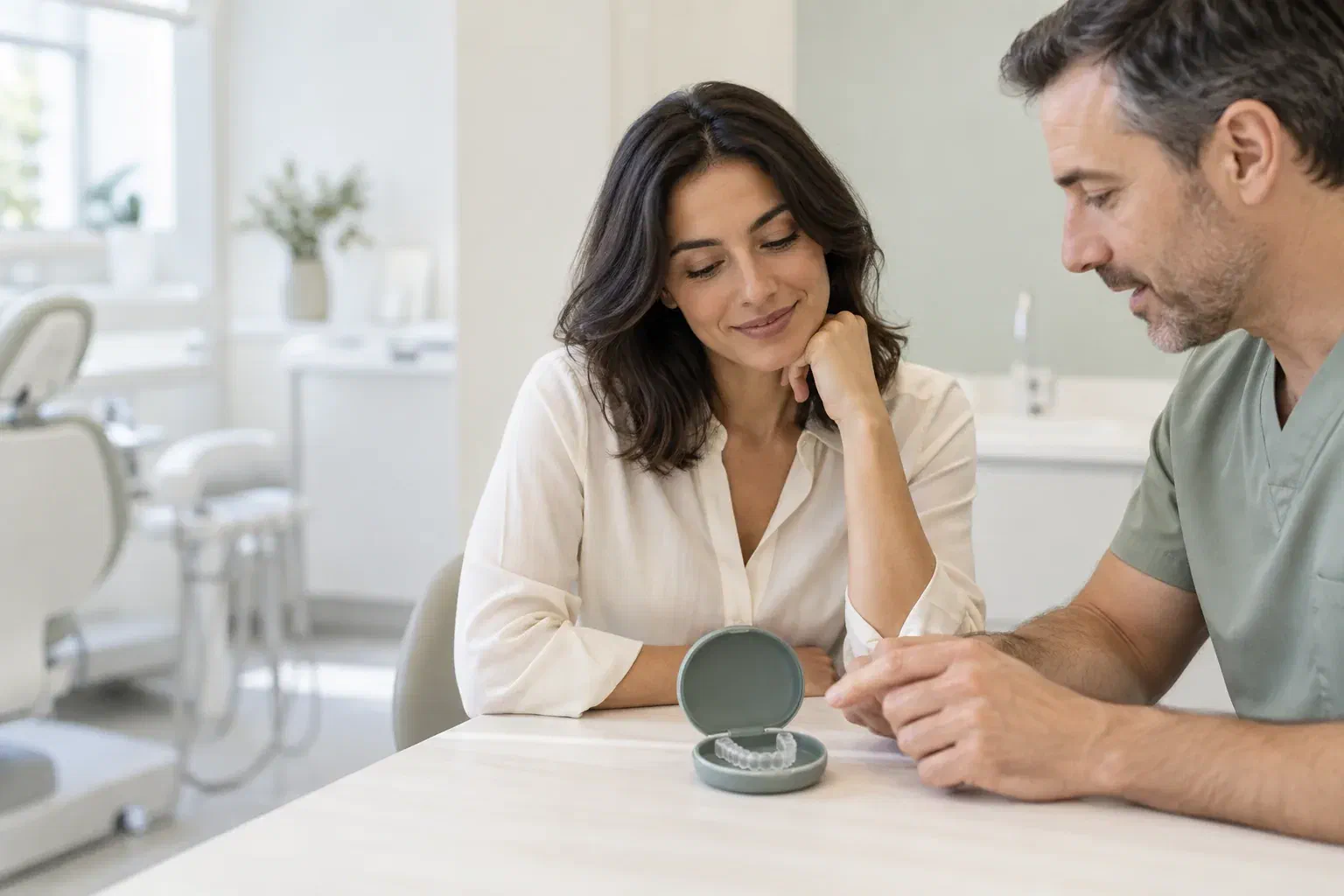
Illustrative patient and clinician reviewing a clear nightguard during a dental consultation
Specialized Care

Custom Nightguards in Erin

Weekends away, work trips and long stretches between dental visits all test a nightguard routine. For custom nightguards in Erin, we start with whether protection is needed, then plan a fit, a cleaning habit and a travel routine you can keep.

A guard that goes where you go

Protection only helps on the nights it's actually worn.

A nightguard left on the bathroom counter during a week at the cottage does nothing for your teeth. A custom guard is shaped from impressions or a scan of your mouth to cushion the effects of clenching or grinding, and part of planning one is making sure it fits into your real routine, travel included.

The first step, though, is deciding whether you need one. The clinician looks at wear, chips and earlier repairs, distinguishes old damage from signs of grinding now, and asks about jaw discomfort and sleep. Sometimes monitoring or treating a single tooth is the better start; sometimes a guard is clearly worthwhile.

If you're coming in from Erin village, Hillsburgh or the surrounding countryside, it can help to plan the assessment, fitting and reviews together. Bring any guard or retainer you already have, mention dental work on the horizon, and let us know if regular travel affects when you can visit.

Plan a nightguard routine
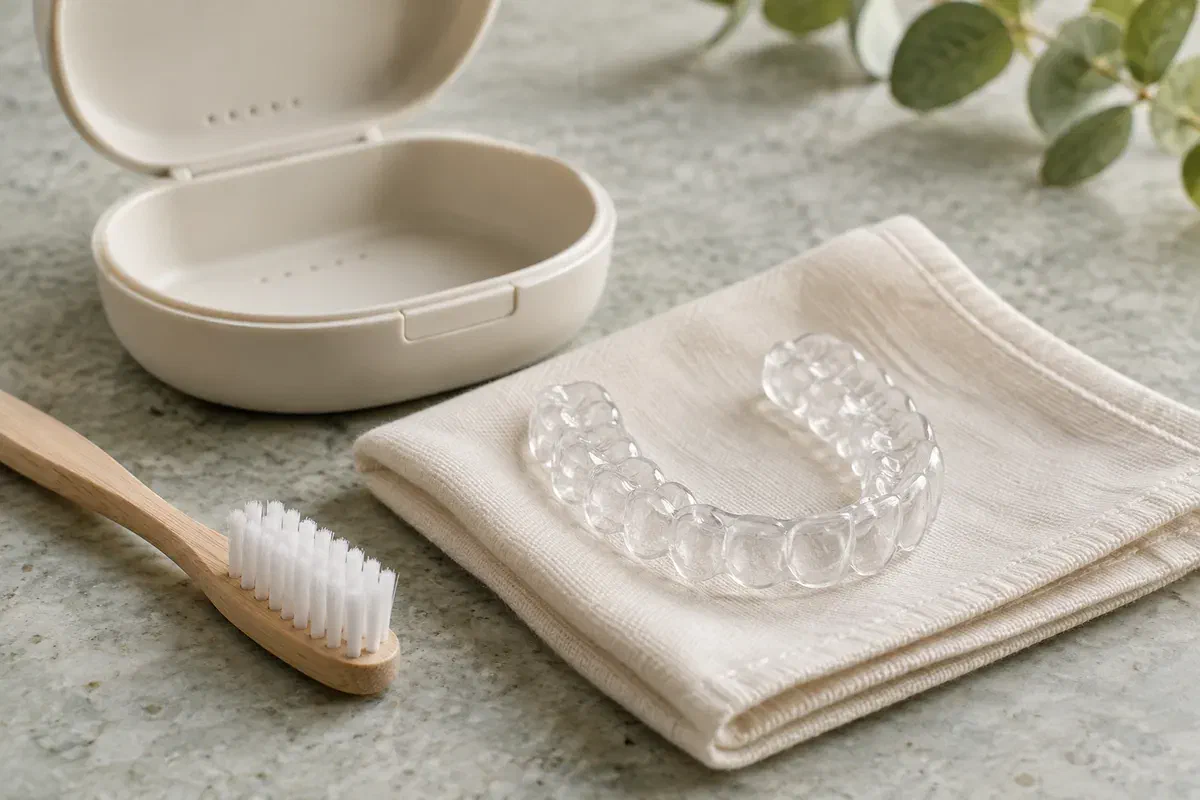
Illustrative clear upper nightguard beside a cream case and soft cleaning brush
Starting points

What's prompting the question?

The reason for a guard shapes the plan. Wear on the teeth, reports of grinding and a guard that never made it into your routine each lead somewhere different.

Teeth that look shorter or have chipped

Point to the areas that have changed and describe previous repairs. Ask whether the findings suggest protection is needed or whether one tooth needs separate treatment. A guard can protect surfaces but can't rebuild lost structure or explain every cause of wear.

Grinding, especially when you're away or stressed

Tell us if grinding seems worse on trips, in unfamiliar beds or during busy periods, and whether you wake with a sore jaw. Sleep grinding is easy to miss in yourself, yet an appliance should follow an examination. Mention any sleep diagnosis.

The guard that keeps getting left behind

Bring it, however rarely you've worn it. Tell us whether it was uncomfortable, awkward to pack or easy to forget, and whether dental work changed its fit. The clinician can check it and suggest adjustment, replacement or a different approach.

A guard can help protect teeth from grinding, but it can't guarantee the habit stops or that jaw symptoms ease. Ask what the appliance is meant to do before you commit to one.

Why a custom guard

Fitted to you, and simple enough to pack.

A custom appliance is shaped around your teeth, crowns and fillings, and the way they meet. Ask which arch it will be made for and why, and how the material affects durability and care. You should get reasons tied to your mouth rather than a list of premium features.

At the fitting, you'll practise putting the guard in and removing it and learn the cleaning steps. Ask how to manage it when you're away from home, too. If it feels wrong in the first weeks, call before it ends up permanently in the travel bag.

A design with a clear job

Find out which teeth the guard is meant to protect and how its design does that. Where more than one material is suitable, compare comfort, durability, cleaning and limits. The bulkiest or softest guard isn't automatically the best choice.

A fit that's checked properly

The clinician reviews how the guard seats and how your teeth contact it, and your sense of pressure or rubbing counts. Ask which early sensations are normal and when to get in touch. Gripping well is just one sign of fit.

A routine that travels

Agree on when to wear it, how to clean it at home and away, and when it will be reviewed. Mention cottage weekends, camping, flights or work trips. A plan that covers those nights makes regular use more likely.

Step by step

Decide, design, fit and keep it under review.

The number of appointments and the records needed vary with the appliance and your teeth. Ask about fees and preparation, and plan reviews around any regular travel.

  1. Examine and talk through your routine

    Describe wear, repairs, symptoms, past guards and your usual travel. Your teeth and fillings are examined, and the clinician considers whether any other treatment should come first. Mention upcoming dental work, since it can alter the fit.

  2. Choose the design and take records

    If a guard is appropriate, its material, coverage and intended use are discussed first. You'll hear whether impressions or a digital scan are planned. The recommendation should be based on your needs, not a particular brand of equipment.

  3. Fit it and practise

    Seating, contacts and comfort are reviewed at the fitting, and professional adjustments are made where appropriate. Practise handling the guard and confirm how to clean it at home and on the road. Mention gagging or pressure before you leave.

  4. Review it on a schedule that works

    Bring the guard to follow-ups, perhaps alongside routine checkups, and describe how it's been. The team looks for wear, cracks and any change in your teeth or jaw comfort. New dental work may mean the guard needs another check.

At home and away

Clean it, case it, pack it.

Follow the cleaning instructions for your guard's material. Ask which products are safe instead of relying on travel-size products made for something else.

Keep cleaning simple and consistent

Rinse and brush the guard each morning as shown, and ask whether a cleaning product suits the material. Heat can warp it, so avoid hot water. Check before using abrasive paste or household chemicals, and keep up your own oral care while you're away.

Pack it in a sturdy case

Keep the guard in its case at home and in your bag, away from pets, children and heat such as a closed car. Check it for cracks or warping. If it breaks while you're away, set it aside and call us rather than gluing or reshaping it.

Don't push through pain

If the guard hurts, remove it and call for advice. Let us know if your bite feels different well after taking it out. Forcing it in or wearing it longer won't fix a fit problem.

Patient information: Dorset County Hospital — care and heat precautions for dental guards · NIDCR — advice about painful intraoral appliances

Choosing what fits

The right appliance, or none for now.

Check how any proposed guard compares with the devices already in your drawer. Protecting teeth from grinding, keeping teeth straight after braces, sports protection and sleep-apnea treatment each need their own device.

When grinding protection is warranted

A custom guard with check-ins

Go over the design, when to wear it and its limits. Ask about fitting and review as well as cost. A custom guard still needs looking after and can't stop every future chip or symptom.

When findings don't yet support a device

Wait and watch

Observation, daytime habit support or adjusting a guard you already have may be enough to begin with. Ask what would change that. Reported grinding doesn't automatically mean an appliance at the first visit.

When retention, breathing or another concern overlaps

Other appliances, other clinicians

Bring retainers and any prescribed sleep appliance so each one's purpose is clear. Don't swap a nightguard in for another treatment unless a clinician suggests it. Ask who else, if anyone, should be involved in your care.

Erin nightguard questions

Travel, routine and everyday wear.

You should leave the fitting clear on what your guard is for and how to manage it anywhere. Bring questions about packing, cleaning, comfort and damage.

(905) 876-4488
Can I take my nightguard on a plane?
Generally, yes. Pack it clean and dry in its case in your carry-on so it isn’t crushed or exposed to heat. Ask the team if you have any concerns about cleaning or storage while travelling.
What should I do if I forget my guard on a trip?
Mention it at your next review, especially if you notice jaw discomfort. Don’t use an unfitted guard as a stand-in without advice. When you’re back, check that your own guard still seats the way it usually does.
How do I clean my guard when I'm camping or at the cottage?
Rinse it with clean water and brush it gently as you would at home, then let it dry before casing it. Avoid hot water and harsh products. Ask the team about suitable cleaning options for your material before you go.
Does a travel case need to be ventilated?
Ask what suits your guard. Many cases allow some airflow, which helps the guard dry. Whatever case you use, keep it clean, closed and away from heat.
Will my guard still fit after a long gap without wearing it?
It may feel tighter or different if your teeth have shifted slightly or dental work has changed them. Don’t force it. If it doesn’t seat comfortably, bring it in so the fit can be checked.
Is it all right to glue a broken guard until I'm home?
No. Household glue isn’t meant for the mouth and can change the fit. Stop wearing the guard, keep the pieces in the case, and call the clinic. The team will assess whether it can be repaired or should be replaced.
From Erin and Hillsburgh

A guard you'll remember to pack.

Let our Bronte Street practice know about grinding, tooth wear or a guard that hasn't fitted your routine. We'll look at your teeth, tell you whether an appliance makes sense and set up fitting and reviews around your schedule if it does.

Suitability, design, material, visits, replacement and fees are set after assessment. A nightguard can't guarantee that grinding stops or prevent all future damage.

Visit Milton Dental Clinic
Unit 1, 342 Bronte St. S, Milton, ON L9T 5B7
Get directions Clinic hours
Monday–Thursday
11am–7pm
Friday–Sunday
By appointment only

Areas we serve

  • Milton
  • Oakville
  • Mississauga
  • Georgetown
  • Halton Hills
  • Acton
  • Campbellville
  • Brampton
  • Burlington
  • Puslinch
  • Rockwood
  • Erin
  • Caledon
  • Etobicoke
  • Old Milton
  • Bronte Meadows
  • Timberlea
  • Dorset Park
  • Dempsey
  • Clarke
  • Beaty
  • Coates
  • Harrison
  • Scott
  • Willmott
  • Ford
  • Bowes
  • Cobden
  • Walker
  • Mountain View
  • Milton Heights
  • Hawthorne Village
  • Valley View
  • Fallingbrook
  • Nassagaweya
  • Trafalgar
  • Esquesing
  • Nelson
  • Brookville
  • Moffat
  • Glen Williams
  • Norval
  • Limehouse
  • Stewarttown
  • Ashgrove
  • Hornby
  • Silver Creek
  • Speyside
  • Scotch Block
  • North Oakville
  • River Oaks
  • Glen Abbey
  • West Oak Trails
  • Palermo
  • Bronte Creek
  • College Park
  • Joshua Creek
  • Uptown Core
  • Preserve
  • Iroquois Ridge
  • Lisgar
  • Meadowvale
  • Meadowvale Village
  • Churchill Meadows
  • Erin Mills
  • Central Erin Mills
  • Streetsville
  • East Credit
  • Creditview
  • Heartland
  • Sheridan
  • Mount Pleasant
  • Credit Valley
  • Huttonville
  • Churchville
  • Springbrook
  • Northwest Brampton
  • Bram West
  • Fletcher's Meadow
  • Fletcher's Creek South
  • Alton Village
  • Orchard
  • Millcroft
  • Headon Forest
  • Tansley
  • Brant Hills
  • Tyandaga
  • Kilbride
  • Lowville
  • Aberfoyle
  • Morriston
  • Arkell
  • Hillsburgh
  • Freelton
  • Carlisle
  • Waterdown
  • Flamborough
  • Mountsberg

How can we help?

Milton Dental Clinic

Have a question about your smile? Choose the option that works best for you.

For urgent dental concerns, please call.
Messages are reviewed during clinic hours.