
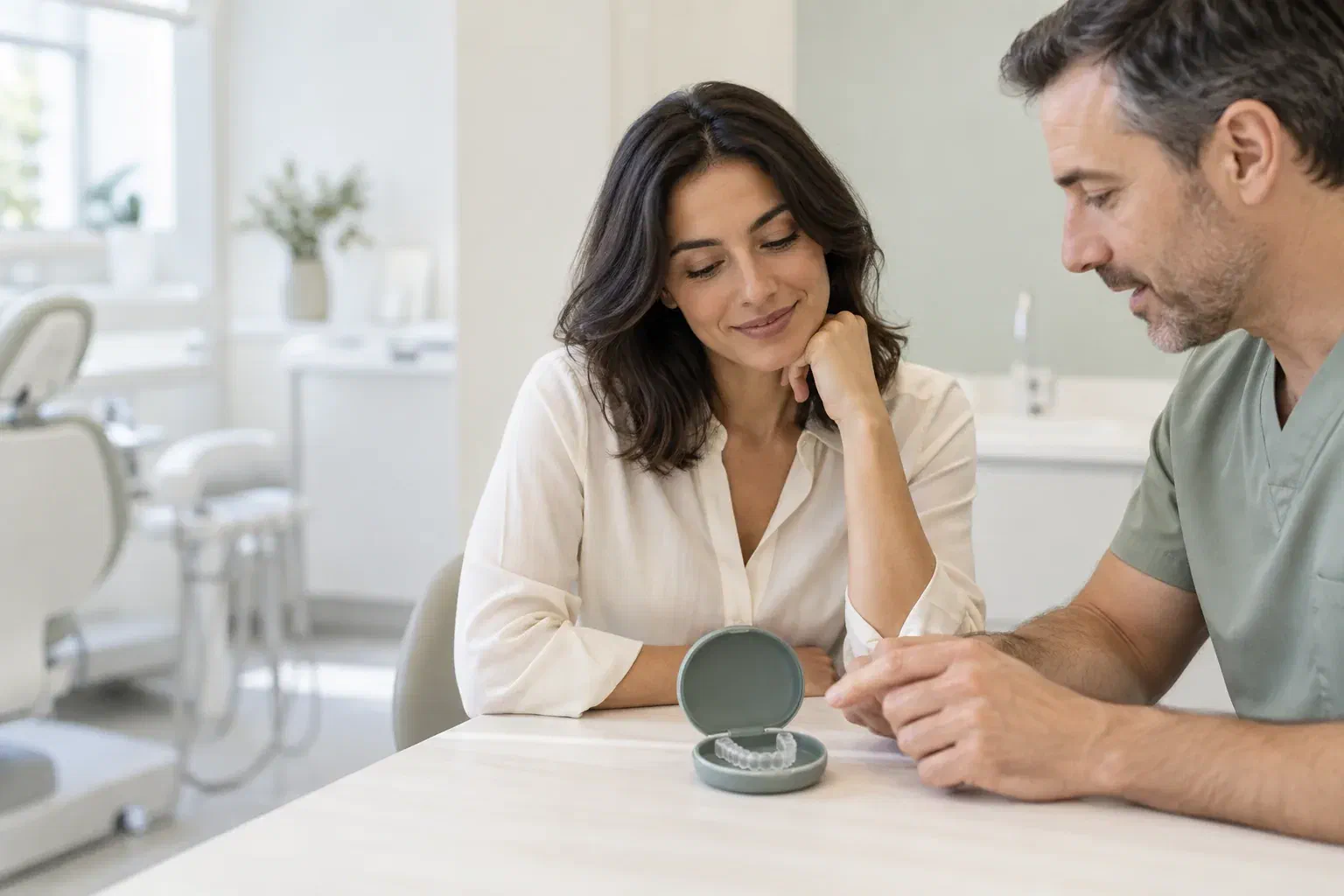
Illustrative patient and clinician reviewing a clear nightguard during a dental consultation
Specialized Care

Custom Nightguards in Old Milton

A guard made years ago may not match the teeth you have today. For custom nightguards in Old Milton, we look at your current crowns and fillings, the wear that raised the question, and whether a new appliance, an adjustment or monitoring suits you best.

An appliance that has aged with you

Teeth change over the years. A guard should keep up.

Long-standing dental work tells a story. A crown placed a decade ago, a filling replaced last spring or a tooth that has slowly shortened can all affect how a nightguard sits. A custom guard is made for one mouth at one point in time, and it is chosen when shielding the teeth from clenching or grinding is a reasonable goal.

That is why the first visit looks at the present rather than an old prescription. The clinician compares your teeth now with what you remember, separates historic wear from signs of current grinding, and explains which findings are worth watching. A new appliance is suggested only when it is likely to serve a purpose.

For people in Old Milton, Milton's historic downtown, bringing a tired guard to our Bronte Street practice for a look is simple to arrange. Bring the old appliance, any retainer and a list of recent or planned dental work, and we can go over fitting and follow-up before deciding anything.

Have your guard reviewed
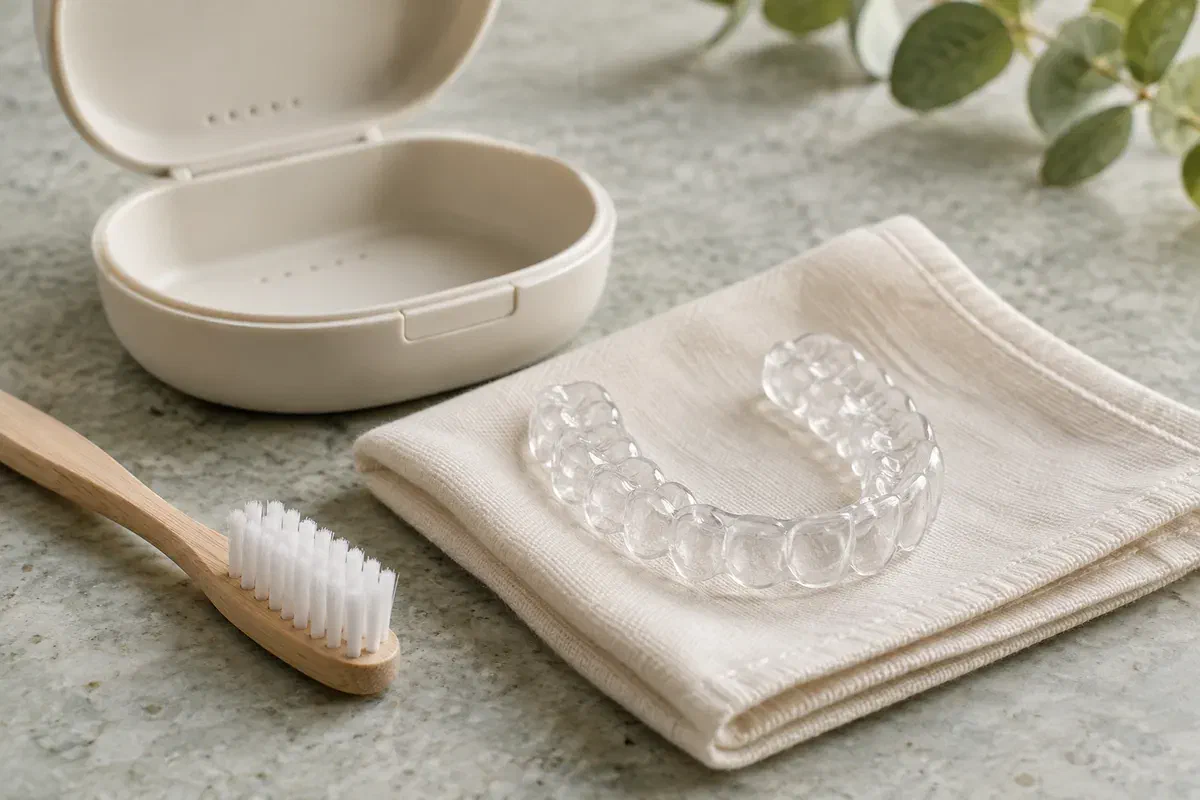
Illustrative clear upper nightguard beside a cream case and soft cleaning brush
Signs it is time for a second look

What has changed since your last guard?

New restorations, a cracked tooth and a guard that now rocks or pinches each tell the clinician something different. Mention all of them, even the ones that seem minor.

Older restorations and worn surfaces

Point to crowns, fillings or edges that have chipped or shortened over time, and say roughly when the work was done. Ask whether the pattern suggests ongoing grinding or whether one tooth simply needs its own repair. No appliance can restore lost tooth structure or account for every worn spot.

Grinding that has continued for years

If you have clenched or ground for a long time, describe whether it has changed, whether mornings bring jaw ache and how you sleep. People rarely catch themselves grinding in their sleep, but a new device still follows an examination. Share any sleep-study results so care can be coordinated.

A guard that pinches, rocks or sits unused

Bring the appliance, even if you stopped wearing it long ago. Explain when it began to feel tight, loose or awkward, and whether that started after dental work. The team can check its condition before recommending an adjustment, a replacement or a different direction.

A guard may help protect teeth from grinding, but it is not a promise that the habit ends or that jaw symptoms ease. Be sure the reason for a new appliance has been explained before you go ahead.

Fitting the mouth you have now

Records of today's teeth, not last decade's.

Since a custom appliance is built from fresh records, it can reflect the crowns, bridges and fillings in your mouth today. Ask which arch the new guard will cover and why, and how the chosen material compares with the one you wore before. A good explanation goes beyond calling one option stronger or more premium.

At the fitting you will practise seating and removing the guard and go over cleaning. If your previous appliance was handled differently, say so, because old habits tend to carry over. Raise any discomfort early instead of slipping back into not wearing it.

Design tied to the reason for wearing it

Ask what the new guard should protect and how its shape supports that. Where several materials would be suitable, weigh comfort, durability, cleaning needs and limits. The thickest or softest version is not automatically the best one for your teeth.

A fit that is checked, not assumed

The clinician looks at how the appliance settles over your teeth and where they meet it, and your sense of pressure matters too. Ask which feelings are normal early on and which deserve a phone call. A guard that clicks in firmly may still need adjustment.

Instructions that suit your nights

Confirm when to wear the guard, how to clean and store it, and how often it should be reviewed. Mention anything that affects your routine, such as minding a grandchild overnight or regular travel. A simple plan is easier to stick with.

Step by step

Why first, then how.

The visits and records involved vary with the appliance and the condition of your teeth. Ask what fees, preparation, fitting and follow-up the plan includes.

  1. Compare the old guard with your current teeth

    Talk about wear, past repairs, symptoms and how your previous guard worked for you. The clinician examines the teeth and restorations involved and checks whether anything should be treated before a new appliance is made. Tell us about crowns or fillings you are planning.

  2. Agree on the design, then record the teeth

    If a guard suits the findings, its material, coverage and expected use are discussed first. Ask whether impressions or a digital scan will be used. The recommendation should stand on its reasons, not on a particular machine or laboratory.

  3. Fit it, adjust it, practise with it

    When the appliance is ready, seating, contact points and comfort are reviewed, with professional adjustments as needed. Practise putting it in and taking it out, and confirm how to clean it. Mention gagging, soreness or pressure before you leave the chair.

  4. Keep it under review

    Bring the guard to follow-up visits and say how it has been going. The team checks its surface for wear or cracks and looks for changes in your teeth or symptoms. New dental work in particular can mean a once-comfortable guard needs attention.

Caring for it between visits

Gentle cleaning, safe storage, early reporting.

Care depends on the material your guard is made from. Check which cleaners are safe rather than following advice written for a denture or retainer.

Use the cleaning method you were given

Ask about the right rinsing and brushing method and whether a soaking product is appropriate. Keep it away from hot water, dishwashers and heaters that can change its shape. Check before using abrasive pastes or bleach, and carry on caring for your own teeth as before.

Case it, and inspect it now and then

Keep the appliance in its case, away from pets, small visitors and warm spots. Look for cracks, thin areas or a warped outline as you handle it. If it breaks or no longer sits steadily, call the clinic instead of repairing or reshaping it at home.

Tell us about pain or bite changes

Stop wearing the guard if it causes pain, and call for advice. Let us know if your teeth meet differently for a long while after you take it out. Wearing it longer or pushing it harder into place won't fix a fit problem.

Patient information: Dorset County Hospital — care and heat precautions for dental guards · NIDCR — advice about painful intraoral appliances

Weighing the choices

New guard, old guard, or no guard yet?

Ask how a proposed guard differs from the one you already have. Grinding protection, holding teeth in place after orthodontics, sports protection and sleep-apnea care call for different appliances.

When the old one no longer protects as it should

A replacement custom guard with reviews

Discuss the new design, how often to wear it and what it can't prevent. Ask about the fitting and follow-up before focusing on price. A custom appliance still needs upkeep and won't stop every chip or symptom in the future.

When the findings favour a lighter start

Adjusting or observing instead

An existing guard can sometimes be adjusted, or the teeth simply watched while daytime clenching is addressed. Ask what would change the plan later. A long history of grinding does not always mean a new device is needed today.

When retention, breathing or another concern overlaps

A different appliance or another clinician

Bring retainers and any prescribed sleep appliance so each one's job is clear. A nightguard shouldn't replace another treatment without advice. Ask how the plans can work together and whether someone else should be involved.

Old Milton nightguard questions

Replacing, adjusting and keeping a guard.

You should leave the fitting clear on what the guard is for and how to look after it. Bring questions about the old appliance as well as the new one.

(905) 876-4488
How do I know if my old nightguard is worn out?
Look for holes, thin spots, cracks, a rough surface, or a fit that has loosened or tightened. Some wear may not be visible to you, so bring it in. The clinician can judge whether it still protects your teeth or should be replaced.
Will my new crown change how my guard fits?
It can. Changing the shape of a tooth may affect how an appliance seats. Tell the team about any crown or filling you have had since the guard was made, and they can decide whether an adjustment or new records are needed.
Can a guard be made if I have a bridge or implants?
Often, yes, but the design has to account for them. Tell the clinician about bridges, implants and other restorations so they are considered during records and fitting. Ask how the guard should be cleaned and checked around that work.
Is it all right to keep wearing a guard that feels loose?
Ask us before you continue. A loose appliance may not protect as intended and could irritate the gums or shift during sleep. Bring it to an appointment so the fit can be assessed and you can hear whether adjustment or replacement makes sense.
What is the safest way to sanitise my guard without warping it?
Use only the method recommended for your material, and skip boiling water, the dishwasher and microwave steaming. Heat can change the shape and spoil the fit. If the guard already looks warped, bring it in rather than pressing it back onto your teeth.
If I use a CPAP or an oral sleep appliance, do I still need a separate grinding guard?
That depends on the findings and on what your sleep care requires. Grinding guards and sleep-apnea appliances do different jobs, so don’t swap or stop either on your own. Ask the dental team and your sleep clinician to plan together.
Nightguard care for Old Milton

Bring the old guard. We'll talk about what comes next.

Reach our Bronte Street practice about worn teeth, ongoing grinding or an appliance that no longer feels right. We can examine your teeth, review the guard you have, and plan a fitting and follow-up if a new one is suitable.

Design, material, suitability, the number of visits, replacement needs and fees are decided after assessment. A nightguard cannot guarantee that grinding stops or that future damage is prevented.

Visit Milton Dental Clinic
Unit 1, 342 Bronte St. S, Milton, ON L9T 5B7
Get directions Clinic hours
Monday–Thursday
11am–7pm
Friday–Sunday
By appointment only

Areas we serve

  • Milton
  • Oakville
  • Mississauga
  • Georgetown
  • Halton Hills
  • Acton
  • Campbellville
  • Brampton
  • Burlington
  • Puslinch
  • Rockwood
  • Erin
  • Caledon
  • Etobicoke
  • Old Milton
  • Bronte Meadows
  • Timberlea
  • Dorset Park
  • Dempsey
  • Clarke
  • Beaty
  • Coates
  • Harrison
  • Scott
  • Willmott
  • Ford
  • Bowes
  • Cobden
  • Walker
  • Mountain View
  • Milton Heights
  • Hawthorne Village
  • Valley View
  • Fallingbrook
  • Nassagaweya
  • Trafalgar
  • Esquesing
  • Nelson
  • Brookville
  • Moffat
  • Glen Williams
  • Norval
  • Limehouse
  • Stewarttown
  • Ashgrove
  • Hornby
  • Silver Creek
  • Speyside
  • Scotch Block
  • North Oakville
  • River Oaks
  • Glen Abbey
  • West Oak Trails
  • Palermo
  • Bronte Creek
  • College Park
  • Joshua Creek
  • Uptown Core
  • Preserve
  • Iroquois Ridge
  • Lisgar
  • Meadowvale
  • Meadowvale Village
  • Churchill Meadows
  • Erin Mills
  • Central Erin Mills
  • Streetsville
  • East Credit
  • Creditview
  • Heartland
  • Sheridan
  • Mount Pleasant
  • Credit Valley
  • Huttonville
  • Churchville
  • Springbrook
  • Northwest Brampton
  • Bram West
  • Fletcher's Meadow
  • Fletcher's Creek South
  • Alton Village
  • Orchard
  • Millcroft
  • Headon Forest
  • Tansley
  • Brant Hills
  • Tyandaga
  • Kilbride
  • Lowville
  • Aberfoyle
  • Morriston
  • Arkell
  • Hillsburgh
  • Freelton
  • Carlisle
  • Waterdown
  • Flamborough
  • Mountsberg

How can we help?

Milton Dental Clinic

Have a question about your smile? Choose the option that works best for you.

For urgent dental concerns, please call.
Messages are reviewed during clinic hours.