
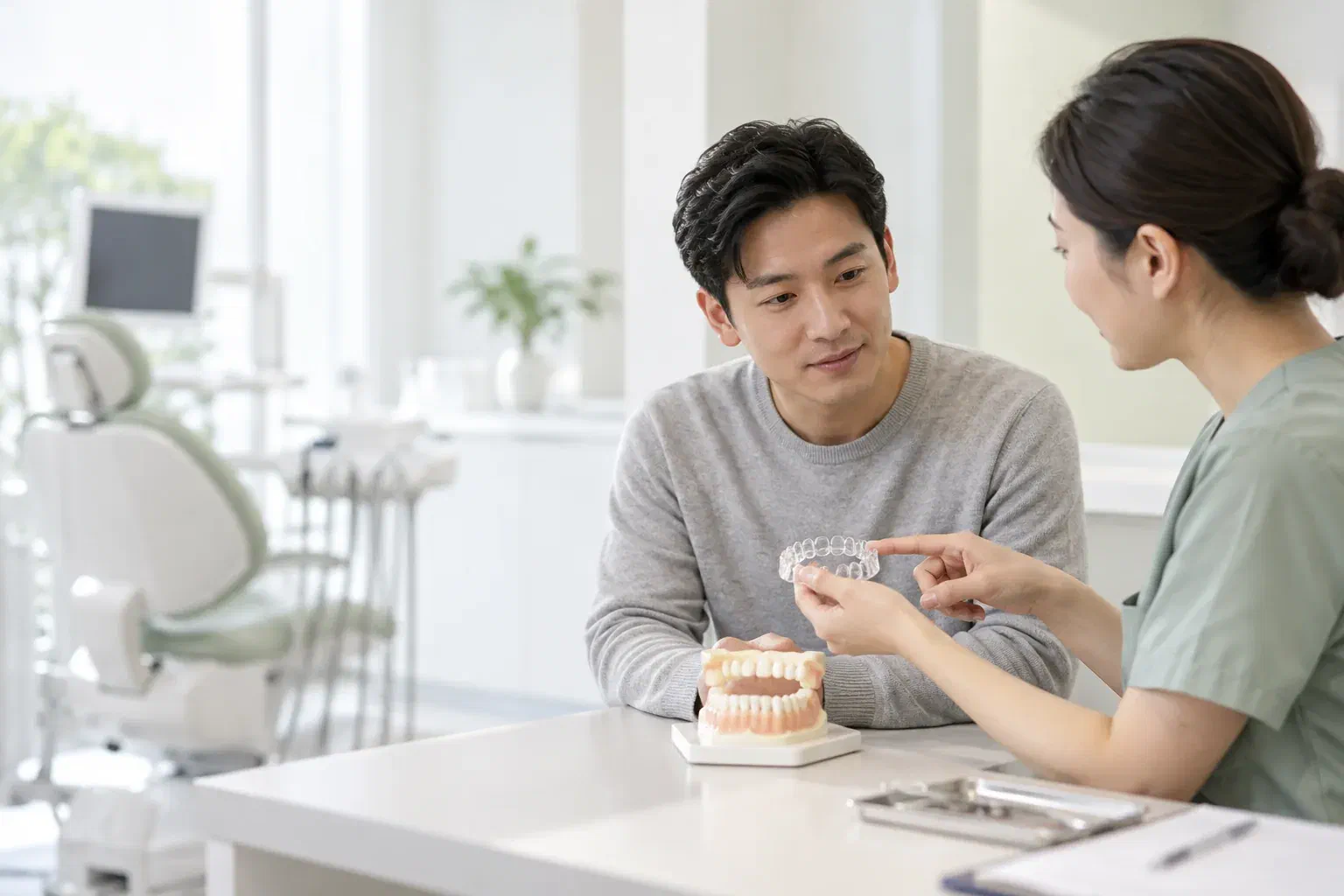
Illustrative patient and clinician discussing a fitted splint on a dental model
Specialized Care

Custom Occlusal Splints in Campbellville

Agreeing to a splint is a decision, and so is waiting. From Campbellville, we can help you weigh both by explaining what the proposed appliance would do, how it would be made and fitted, and what review would follow if you go ahead.

Making the splint decision in Campbellville

Yes, no, or not yet.

You have heard the recommendation, and now there is a choice to make. A custom occlusal splint is a removable, made-to-fit cover for some or all of your teeth, built to serve a clinical purpose that should be stated clearly. It goes by other names, nightguard and bite splint among them, which is why the label is a poor guide to the decision.

Ask first what the appliance is for. Protecting teeth and dental work is one aim; being part of a broader plan for jaw symptoms is another, and in that case the diagnosis and the alternatives need as much attention as the device. A splint is not evidence that your bite is the culprit, and relief cannot be promised.

For a consultation from Campbellville, bring the plan you were given, any appliance you already own, and the questions that are holding you back. We can go through the findings, explain the design we would suggest, the instructions, the limits, and the review that would follow, so that yes, no or not yet is an informed answer.

Talk through the splint decision
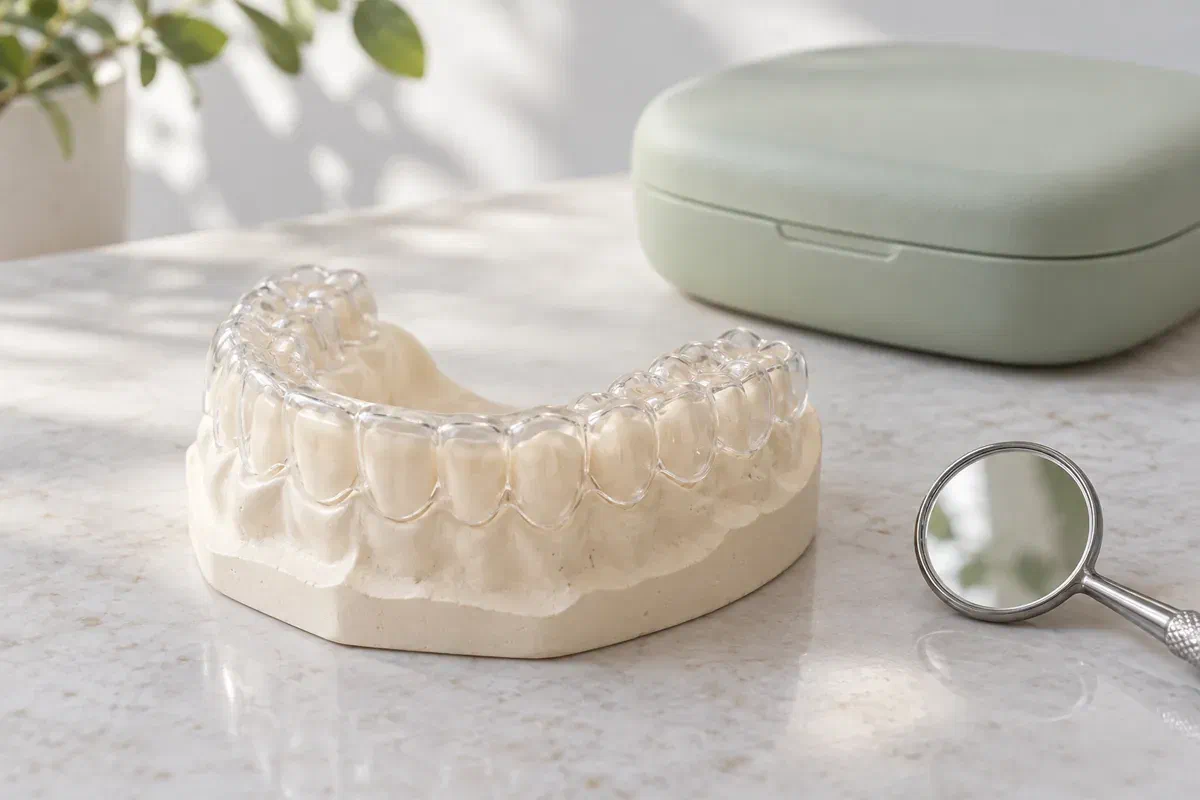
Illustrative transparent occlusal splint seated on a supported dental cast beside a mirror
What to weigh before saying yes

The reasons for and against usually live in three places.

Tell us what prompted the suggestion and what you were told the appliance would achieve. With that, it becomes easier to see whether a device suits your concern or whether another path makes more sense.

A suggestion that came without reasons

Before deciding, ask which finding led to the proposal and whether the goal is protection, easing symptoms, or another specific purpose. You should be able to say what a good outcome would look like and when it will be judged before you agree to have anything made.

Jaw pain, tiredness or stiffness

Explain when the jaw aches, tires, locks or will not open comfortably. Several conditions can feel alike, so the examination may consider more than your teeth. Saying yes to a device is not a reason to stop asking why a symptom is still there.

Doubts from a past appliance

If a previous splint did not seem worth it, bring it and tell us how you wore it, how it felt and why you stopped. That history matters to the decision, though a different material does not by itself make a second attempt more likely to succeed.

Evidence that intraoral appliances help temporomandibular pain is limited. That is a good reason to ask about simpler approaches, and to confirm that no proposed device is intended to permanently change your bite as routine jaw-pain treatment.

If you decide to go ahead

What a well-structured splint plan includes.

Being custom made, the appliance can be assessed against your teeth, any restorations and the contact pattern its design intends. On fitting day, ask what is being checked and what could need adjusting. Report how it feels honestly; that feedback is part of how the fit is judged.

The plan should also explain how a decision to continue will be reached, perhaps by examining the appliance and teeth, comparing your symptoms over time, or choosing a different route. A review point means a yes today is not a commitment forever; it gets revisited with real information.

A purpose you understand

Ask the clinician to explain briefly why the splint is proposed and what it does not prove. If the answer is hazy, keep asking. The appliance’s name does not explain its expected benefit or its limits.

Wear hours with a reason

Confirm when to wear the splint and whether review might change that. Ask how it fits with meals, cleaning and other appliances. More time in the mouth is not a route to more benefit.

A plan for hiccups

Ask ahead of time what to do if insertion is difficult, it rubs, symptoms get worse, or your teeth feel different after removal. Knowing whom to call helps you deal with problems early, without guessing on your own what discomfort is acceptable.

If the answer is yes

What follows a decision to proceed.

The records and visits depend on the appliance’s purpose and design. Ask about the appointments, fees and any referral before fabrication; rural households often find it helps to plan the sequence early.

  1. Confirm the diagnosis and history

    Go over your symptoms, their timing and any previous treatment or appliance. The clinician examines your teeth, jaw and related tissues and considers whether further investigation is warranted. Ask which findings support going ahead and what remains uncertain.

  2. Settle on a design

    Discuss coverage, material and the intended contacts. Records of your bite are gathered to suit the plan. Mention any planned dental work or other appliances that could change the design before it is made.

  3. Fitting and first instructions

    Seating, retention, contacts and comfort are checked, with adjustments made where appropriate. You practise inserting and removing the splint, confirm the schedule and cleaning method, and raise any difficulty before you go.

  4. Review the decision

    At follow-up, describe how often you wore it, how your symptoms behaved, and any change in fit or bite. The clinician can suggest continuing, adjusting, another approach or further evaluation. A disappointing response is a cue to revisit the plan rather than escalate it.

Once it is in use

Your instructions, your appliance, no home repairs.

Follow the care advice given for your particular splint. Materials and designs vary, so a routine that suits a neighbour’s guard may not be right for yours.

Keeping it clean

Ask which cleaning approach is right for your appliance’s material and which products could harm it. Keep up your recommended oral hygiene and store the splint in its case. Avoid heat and harsh products, and bring it in if deposits or damage get hard to manage.

Wearing it as prescribed

Do not extend wear or combine appliances without advice. If the schedule is impractical, tell us at review instead of quietly changing it. How you actually use the device shapes how your results are read.

Stopping when it hurts

An appliance that causes pain needs a check. Call and explain the location, when it started, and any change in how your teeth come together. Do not file, bend or heat the splint, and never force it on if it stops seating.

Patient information: Dorset County Hospital — care precautions for removable dental guards

The other answers

Not every concern needs a splint first.

Ask which alternatives are reasonable for you and how each would be checked. A more elaborate appliance does not, on its own, offer a better outcome.

When the examination supports a clear aim

Going ahead with a reviewed custom splint

Discuss the expected benefit, the limits, the instructions and the reassessment plan. Ask what would prompt an adjustment or a decision to stop. A custom fit still calls for ongoing checks of comfort, contacts, and whether the original reason applies.

When simpler measures suit the diagnosis

Not yet: conservative care first

For some concerns, education, everyday habit changes or other conservative care may come first. Ask how that addresses your situation and when you will reassess. Waiting on an appliance is a legitimate choice, but it should still come with a plan.

When the explanation is still uncertain

Neither yet: more assessment

A referral for a dental, medical or facial-pain opinion may help clarify a problem before any appliance is made. Ask what the referral should find out. Irreversible changes to teeth or bite should not be assumed to be the next step if a splint later falls short.

Patient information: FDA — temporomandibular disorders and nonsurgical care options

Deciding about a splint

Questions to ask before you commit.

You can request a clear explanation before you accept any device. Bring concerns about comfort, practicality and earlier advice, along with anything that makes you hesitate.

(905) 876-4488
Is it reasonable to say “not yet” to a splint?
Yes. Depending on the diagnosis, conservative care or further assessment may be a sensible first step. Ask what waiting would mean for your concern and when you should check in again, so the decision is part of a plan.
What should I ask before agreeing to fabrication?
Ask what the appliance is for, which findings support it, how it should be worn, what it cannot do, and when it will be reviewed. Ask about fees and the number of visits too. Clear answers make the decision easier.
Can a splint visit be combined with my regular checkup from Campbellville?
Sometimes parts of the process can be scheduled alongside other appointments, depending on the plan and availability. Ask when booking. Grouping visits can help rural households, but the review appointment should still happen when it is due.
Could my jaw get worse while I decide?
That depends on the cause, which is why an assessment comes first. If symptoms change, such as increasing pain or difficulty opening, call and describe what is happening so the urgency can be discussed.
Does a splint help everyone who clenches their teeth?
No appliance helps everyone, and a splint is not expected to stop clenching itself. Depending on its purpose, it may be meant to protect teeth or support a wider plan. Ask what this appliance is expected to do for you.
Is a changed bite after removing the splint something to report?
Yes. Note how long it lasts, where the teeth feel different and whether there is pain, and contact the clinician. Do not adjust the appliance yourself. A persistent change needs assessment and should not be accepted as intended without explanation.
Splint consultations for Campbellville

Make the decision with the facts in front of you.

Contact our Bronte Street practice to talk over a suggested splint, an appliance you already have, or the questions keeping you from deciding. We will look at the concern and explain suitable assessment, fitting or further evaluation.

Design, suitability, how and when to wear it, adjustment, referral and fees depend on assessment. A splint cannot guarantee relief or show what caused jaw pain.

Visit Milton Dental Clinic
Unit 1, 342 Bronte St. S, Milton, ON L9T 5B7
Get directions Clinic hours
Monday–Thursday
11am–7pm
Friday–Sunday
By appointment only

Areas we serve

  • Milton
  • Oakville
  • Mississauga
  • Georgetown
  • Halton Hills
  • Acton
  • Campbellville
  • Brampton
  • Burlington
  • Puslinch
  • Rockwood
  • Erin
  • Caledon
  • Etobicoke
  • Old Milton
  • Bronte Meadows
  • Timberlea
  • Dorset Park
  • Dempsey
  • Clarke
  • Beaty
  • Coates
  • Harrison
  • Scott
  • Willmott
  • Ford
  • Bowes
  • Cobden
  • Walker
  • Mountain View
  • Milton Heights
  • Hawthorne Village
  • Valley View
  • Fallingbrook
  • Nassagaweya
  • Trafalgar
  • Esquesing
  • Nelson
  • Brookville
  • Moffat
  • Glen Williams
  • Norval
  • Limehouse
  • Stewarttown
  • Ashgrove
  • Hornby
  • Silver Creek
  • Speyside
  • Scotch Block
  • North Oakville
  • River Oaks
  • Glen Abbey
  • West Oak Trails
  • Palermo
  • Bronte Creek
  • College Park
  • Joshua Creek
  • Uptown Core
  • Preserve
  • Iroquois Ridge
  • Lisgar
  • Meadowvale
  • Meadowvale Village
  • Churchill Meadows
  • Erin Mills
  • Central Erin Mills
  • Streetsville
  • East Credit
  • Creditview
  • Heartland
  • Sheridan
  • Mount Pleasant
  • Credit Valley
  • Huttonville
  • Churchville
  • Springbrook
  • Northwest Brampton
  • Bram West
  • Fletcher's Meadow
  • Fletcher's Creek South
  • Alton Village
  • Orchard
  • Millcroft
  • Headon Forest
  • Tansley
  • Brant Hills
  • Tyandaga
  • Kilbride
  • Lowville
  • Aberfoyle
  • Morriston
  • Arkell
  • Hillsburgh
  • Freelton
  • Carlisle
  • Waterdown
  • Flamborough
  • Mountsberg

How can we help?

Milton Dental Clinic

Have a question about your smile? Choose the option that works best for you.

For urgent dental concerns, please call.
Messages are reviewed during clinic hours.