
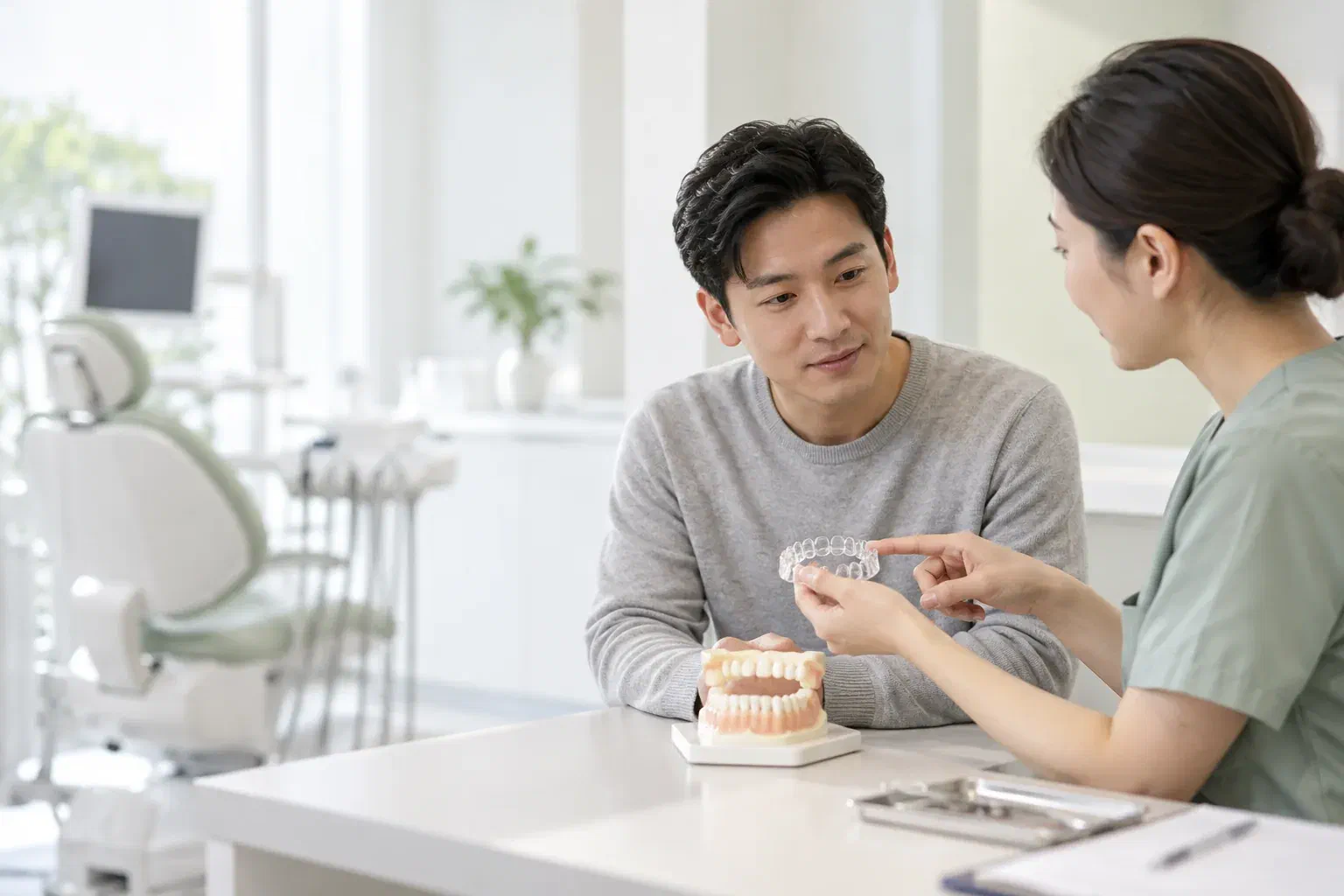
Illustrative patient and clinician discussing a fitted splint on a dental model
Specialized Care

Custom Occlusal Splints in Milton

A splint recommendation is easier to weigh once you know what the appliance is meant to do. In Milton, we can talk through the proposed device, how it is fitted and worn, and which findings will decide whether you keep using it.

Splints, nightguards and Milton checkups

Your treatment plan says “splint.” What does that actually mean?

The word on your plan might be splint, nightguard, bite appliance or stabilization device, and those names overlap. Each describes a removable piece that sits over the teeth, but the design depends on the job it has been chosen for. Asking what this particular appliance should accomplish is more revealing than comparing labels.

Sometimes the job is protecting teeth or restorations. Sometimes the appliance is one part of a wider plan for jaw discomfort, and in that case the diagnosis and the other options matter as much as the device. Being fitted for a splint does not show that your bite caused a symptom, and no appliance comes with a promise of a cure.

For an appointment in Milton, bring the written recommendation if you have one, any appliance already in your possession, and a short note on what is bothering you. We can go over the findings, then explain the design we would propose, how to wear it, what it cannot do, and how the decision will be checked later.

Ask about a splint recommendation
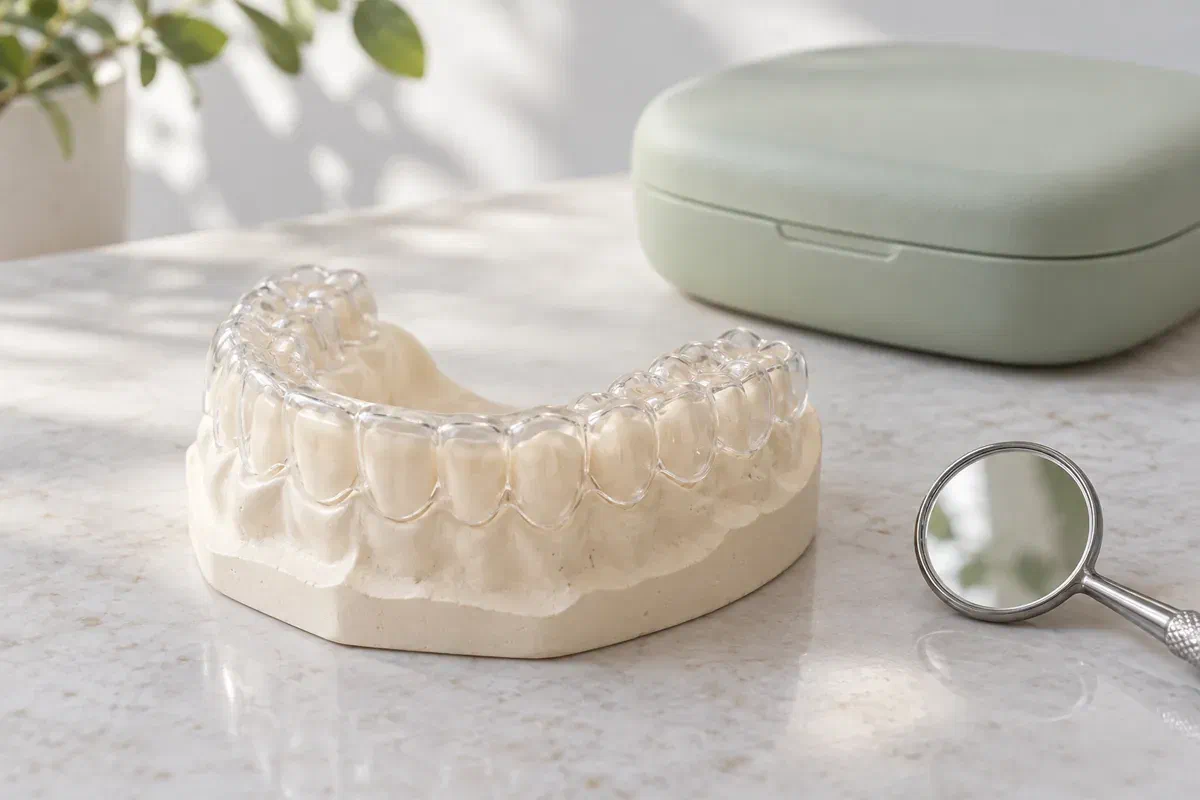
Illustrative transparent occlusal splint seated on a supported dental cast beside a mirror
Sorting out the recommendation

Three things to keep apart: what you feel, what was found, and what the device is for.

Let us know what led to the suggestion and what you were told it would do. That history shows whether the planned appliance lines up with the problem you actually have.

A splint suggested at a checkup without much explanation

It is reasonable to ask which finding prompted the suggestion and whether the goal is protecting teeth, easing a symptom, or something else that can be named. Before agreeing to have one made, you should know what a good result looks like and when it will be reassessed.

Aching, tiredness or catching in the jaw

Tell us whether the jaw hurts, tires, locks or opens less than it used to, and at what times of day. Several sources can produce those complaints, so the examination may need to look beyond the teeth. An appliance should not stand in for finding out why a symptom persists.

An earlier appliance that never felt right

Bring it along and describe how often you wore it, how it felt, and what, if anything, changed. If you gave up on it, tell us why. That history is useful, though a replacement in another material will not automatically succeed where the first did not.

Research support for intraoral appliances in temporomandibular pain is limited. Ask whether simpler measures could come first, and confirm that the appliance is not designed to alter your bite permanently as a routine treatment for jaw pain.

Why the plan matters as much as the appliance

Fitting goes better when everyone knows the goal and the next check.

Because the appliance is made for your mouth, the clinician can judge it against your teeth, any fillings or crowns, and the contacts the design is aiming for. At the fitting, ask what is being checked and which adjustments might be needed. Your sense of comfort counts as part of that judgement.

A good plan also sets out how continued wear will be evaluated, whether by looking at the appliance and teeth, going back over your symptoms, or considering a different approach. A set review date keeps you from wearing a device for years without anyone asking whether the original reason still holds.

A reason you could explain to someone else

Ask for a short summary of why the splint is being proposed and what it will not prove. If any part is fuzzy, ask again. Knowing only the appliance’s name tells you little about the benefit it is meant to offer or where its limits lie.

Hours of wear that make sense

Find out when to wear it and whether that might change after review. Ask how it works around meals, brushing, and any other appliance you use. Longer wear is not a shortcut to a better result, so stay with what was advised.

Knowing what to do when something feels wrong

Ask in advance what to do if the appliance is hard to insert, rubs a cheek, seems to make symptoms worse, or leaves your teeth meeting oddly afterward. Deciding alone whether discomfort is acceptable should not fall to you.

Steps from the first conversation onward

Understand the problem, make the appliance, then judge them side by side.

Which records and visits are needed depends on the design and its purpose. Ask about appointments, fees and any possible referral before anything is made.

  1. Go over your history and examine

    Describe your symptoms, when they appear, and what treatment or appliances you have tried. The clinician looks at the teeth and tissues involved and decides whether anything needs further investigation. It is fair to ask which findings support the recommendation and what is still unclear.

  2. Choose the design and take records

    Talk through how much of the arch the splint will cover, the material, and the contacts it is meant to create. Impressions or scans of your teeth and bite are taken as the plan requires. Mention any planned fillings, crowns or other appliances that might change the design.

  3. Fitting day

    The splint is checked for how it seats, how well it stays in, where the teeth touch it, and how it feels, with adjustments made in the chair when appropriate. You practise putting it in and taking it out, and you leave knowing the schedule and cleaning routine.

  4. Check the outcome against the purpose

    At the review, explain how often you really wore it, how your symptoms behaved, and whether the fit or your bite has changed. From there the clinician can suggest carrying on, adjusting, trying something else, or looking further. A disappointing response leads to reconsidering the plan, not to stepping it up automatically.

Day-to-day use at home

Stick to your own instructions, and call rather than tinker.

Follow the care advice given for your appliance. Designs and materials vary, so a routine that suits a friend’s nightguard may be wrong for yours.

Clean the appliance and your teeth

Ask how to clean the splint and which products are safe for its material, and keep up the brushing and flossing routine you were given. Keep it away from heat and unapproved chemicals, and bring it in if buildup or damage gets hard to handle.

Wear it when you were told to

Avoid adding daytime hours or pairing it with another appliance unless you have been advised to. If the schedule does not fit your life, say so at the review. The team needs to know how you really use the device to read your results.

Pain means pause and call

If the splint hurts, it needs to be looked at. Get in touch and describe where it hurts, when it began, and whether your teeth now meet differently. Never grind, bend or heat it yourself, and do not push it onto your teeth once it stops seating properly.

Patient information: Dorset County Hospital — care precautions for removable dental guards

Where a splint fits among your options

Let the diagnosis and the agreed aim choose the device.

Ask which alternatives make sense for your concern and how each one would be checked. A more complex appliance is not, on its own, evidence of a better result.

When the exam points to a clear purpose

A custom appliance with planned reviews

Talk through the expected benefit, the limits, how to wear it and when it will be reassessed. Ask what would lead to adjustment or stopping. A custom fit still needs checks on comfort, tooth contacts, and whether the reason for wearing it still applies.

When simpler measures make sense to try first

Conservative steps before any new appliance

Depending on the diagnosis, information about the condition, changes to everyday habits, or other conservative care may come first. Ask how that approach targets your specific concern and when it will be reviewed. Even watchful waiting needs a clear plan.

When the cause or the response is unclear

A closer look at symptoms that persist

Another dental, medical or orofacial-pain opinion can help clarify a problem that has not settled. Ask what the referral is meant to answer. An appliance that has not delivered the hoped-for result is not, in itself, a reason to make permanent changes to your teeth or bite.

Patient information: FDA — temporomandibular disorders and nonsurgical care options

Questions we hear about splints

Ask what you are getting and how it will be judged.

You are entitled to a plain explanation before you accept an appliance. Bring the concerns that matter to you, from comfort and daily practicality to doubts about advice you received before.

(905) 876-4488
Is a splint the same thing my dentist called a nightguard?
Often the two names describe similar appliances, but not always. Rather than relying on the label, ask about the design and what it is for. What matters is why it has been recommended, when to wear it, and what the follow-up will look at.
Will I be able to sleep and speak normally with it in?
Many people need a short period to get used to an appliance, and one worn at night is rarely worn during long conversations. If sleep, speech or comfort stays a problem, tell the clinician instead of quietly stopping. Fit and design can be reviewed.
How do I know whether the splint is doing its job?
That depends on the purpose agreed at the start. At review, the clinician compares your symptoms, the appliance and your teeth with that aim. Unclear results are a reason to talk, not to keep wearing it indefinitely.
Can I file down a spot that presses on my gum?
No. Filing, heating or bending the appliance at home can spoil its fit and contacts. Book a check instead and describe where it presses and since when. Adjustments, where appropriate, are made by the clinician so the effect on your bite can be assessed.
If my jaw feels better with the splint, was my bite the problem?
Not necessarily. Feeling better while using an appliance does not reveal what caused the discomfort in the first place. Ask how the diagnosis was made and which other explanations were considered, and keep the planned review so the decision rests on findings rather than assumption.
What happens to my splint if I need a new crown?
Tell the clinician before the dental work begins. Changes to a tooth’s shape can affect how an appliance seats and where it makes contact. The splint may need to be checked, adjusted or reconsidered afterward, and those decisions depend on the findings at that stage.
Occlusal splint care in Milton

Decide with the purpose and the follow-up in view.

Reach our Bronte Street practice to talk over a suggested splint, an appliance you already wear, or questions about where it fits in your care. We can look at the concern and explain the assessment, fitting or further evaluation that suits it.

Design, suitability, wear schedule, adjustments, referral and fees are confirmed after assessment. A splint cannot promise symptom relief or show what caused jaw pain.

Visit Milton Dental Clinic
Unit 1, 342 Bronte St. S, Milton, ON L9T 5B7
Get directions Clinic hours
Monday–Thursday
11am–7pm
Friday–Sunday
By appointment only

Areas we serve

  • Milton
  • Oakville
  • Mississauga
  • Georgetown
  • Halton Hills
  • Acton
  • Campbellville
  • Brampton
  • Burlington
  • Puslinch
  • Rockwood
  • Erin
  • Caledon
  • Etobicoke
  • Old Milton
  • Bronte Meadows
  • Timberlea
  • Dorset Park
  • Dempsey
  • Clarke
  • Beaty
  • Coates
  • Harrison
  • Scott
  • Willmott
  • Ford
  • Bowes
  • Cobden
  • Walker
  • Mountain View
  • Milton Heights
  • Hawthorne Village
  • Valley View
  • Fallingbrook
  • Nassagaweya
  • Trafalgar
  • Esquesing
  • Nelson
  • Brookville
  • Moffat
  • Glen Williams
  • Norval
  • Limehouse
  • Stewarttown
  • Ashgrove
  • Hornby
  • Silver Creek
  • Speyside
  • Scotch Block
  • North Oakville
  • River Oaks
  • Glen Abbey
  • West Oak Trails
  • Palermo
  • Bronte Creek
  • College Park
  • Joshua Creek
  • Uptown Core
  • Preserve
  • Iroquois Ridge
  • Lisgar
  • Meadowvale
  • Meadowvale Village
  • Churchill Meadows
  • Erin Mills
  • Central Erin Mills
  • Streetsville
  • East Credit
  • Creditview
  • Heartland
  • Sheridan
  • Mount Pleasant
  • Credit Valley
  • Huttonville
  • Churchville
  • Springbrook
  • Northwest Brampton
  • Bram West
  • Fletcher's Meadow
  • Fletcher's Creek South
  • Alton Village
  • Orchard
  • Millcroft
  • Headon Forest
  • Tansley
  • Brant Hills
  • Tyandaga
  • Kilbride
  • Lowville
  • Aberfoyle
  • Morriston
  • Arkell
  • Hillsburgh
  • Freelton
  • Carlisle
  • Waterdown
  • Flamborough
  • Mountsberg

How can we help?

Milton Dental Clinic

Have a question about your smile? Choose the option that works best for you.

For urgent dental concerns, please call.
Messages are reviewed during clinic hours.