
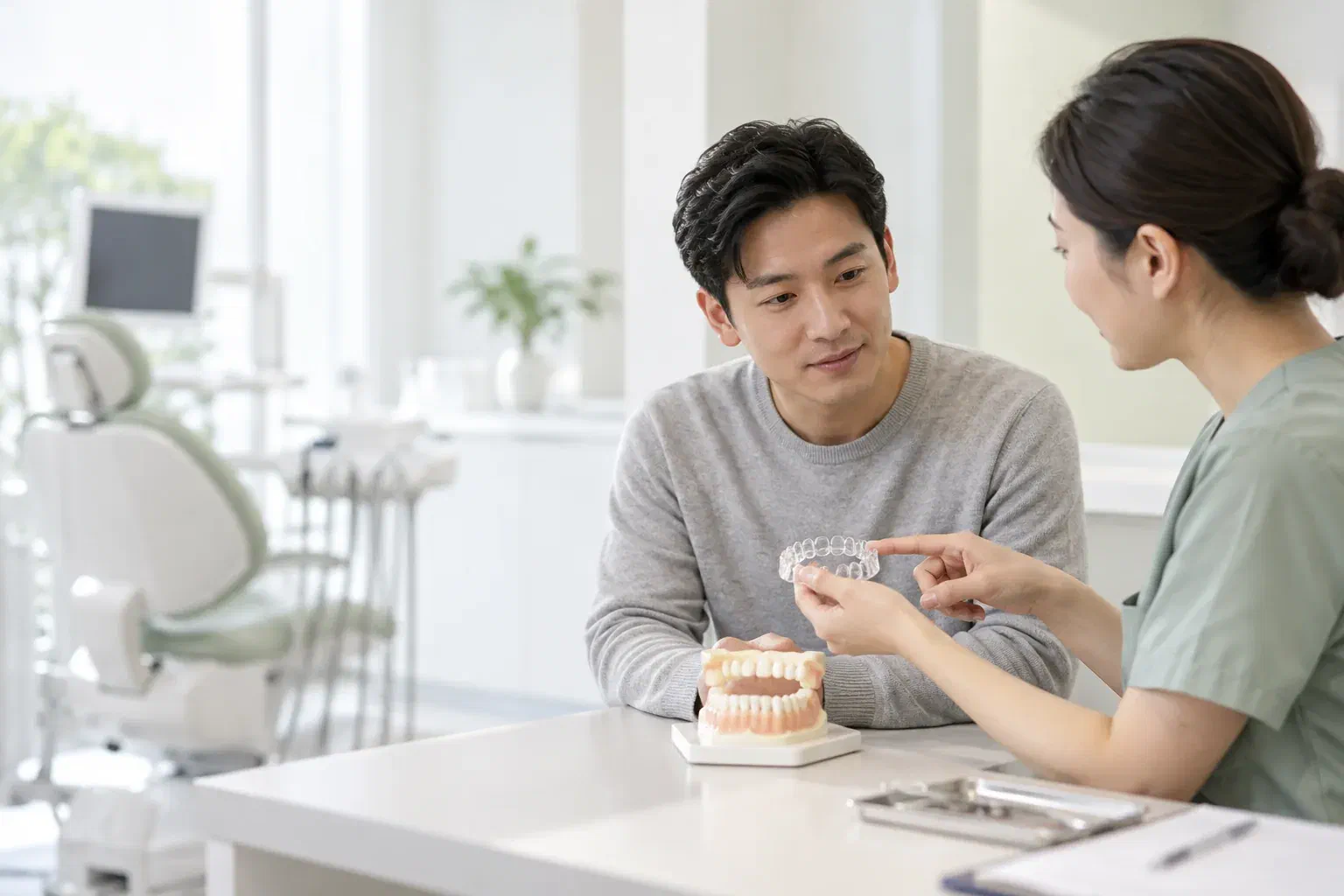
Illustrative patient and clinician discussing a fitted splint on a dental model
Specialized Care

Custom Occlusal Splints in Oakville

Waking with a tight jaw often leads people to ask about a splint. If you are coming from Oakville, we can start with the cause of the discomfort, then explain whether an appliance has a role, how it would fit, and how it would be reviewed.

Morning jaw ache, Oakville edition

Is a splint the answer to that stiff jaw, or is it the wrong first question?

You notice it while brushing your teeth: a dull ache near the ear, or a jaw that feels as though it worked overnight. A friend mentions their nightguard, and the idea of a splint takes hold. Before any appliance is made, though, it helps to understand what is behind the discomfort, because several different problems can feel much the same.

An occlusal splint is a removable device that fits over the teeth, built for a particular clinical purpose. That purpose might be guarding teeth and restorations, or the splint might be one part of a broader plan for jaw symptoms. Either way, a well-made appliance is not evidence that your bite caused the pain, and it carries no guarantee of relief.

For a visit from Oakville, jot down when the ache shows up, what eases or worsens it, and any advice you have already received. Bring an existing appliance too. We can review what we find and, if a splint makes sense, explain the design, how to use it, what it will not do, and when we would reassess.

Talk through jaw discomfort and splints
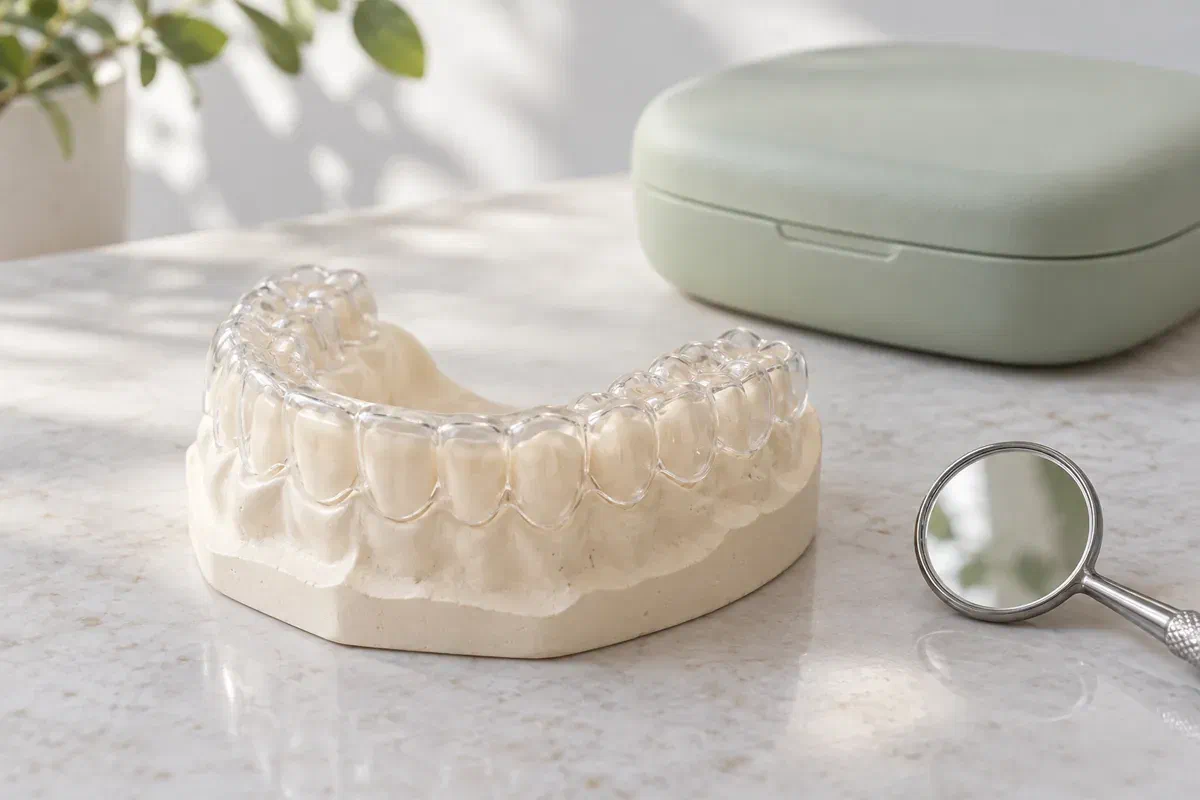
Illustrative transparent occlusal splint seated on a supported dental cast beside a mirror
What to sort out at the start

Symptom, diagnosis, device: three conversations, not one.

Describe what is bothering you and anything you have been told to expect from an appliance. The more we know, the easier it is to judge whether a splint actually suits the concern.

Advice to get a splint, but no stated reason

Ask what was found and what the appliance is supposed to accomplish, whether protection, symptom management, or something else specific. A written plan is worth bringing. Agree on what a good outcome would look like, and on a review date, before you consent to fabrication.

Pain, clicking, catching or a limited opening

Note when the jaw aches, tires, locks or resists opening wide. The source may not be the teeth, so the assessment can look more widely. Persistent symptoms deserve an explanation, and fitting a device should never take the place of working out what is going on.

A guard that let you down before

If a previous appliance did not help, bring it and describe how you wore it and how it felt. Tell us if and why you stopped. That history matters, but switching materials or designs will not necessarily change the result.

Support for intraoral appliances as a treatment for temporomandibular pain is limited. Ask what simpler approaches are available, and confirm that any proposed device is not meant to permanently alter your bite as routine jaw-pain care.

What a considered approach gives you

Clarity about the goal makes the fitting worthwhile.

A custom appliance can be checked in relation to your own teeth, crowns or fillings, and the contact pattern the design is meant to produce. Ask what the clinician will look at during delivery and what adjustments are possible. Mentioning that something pinches or feels high is useful, not fussy.

Just as important is a plan for deciding whether to carry on. That could mean re-examining the appliance and your teeth, going over how your symptoms have behaved, or considering a different route. Without a review, a splint can end up worn indefinitely with nobody checking whether it still serves its purpose.

An aim you can put into words

Ask the clinician to summarize why a splint is suggested and what it cannot tell you. Request a clearer answer if needed. The name on the plan does not explain the benefit being sought or where the appliance’s usefulness stops.

A wear routine that is explained

Find out when the splint should be in your mouth and whether that might change after the first review. Ask how it fits around eating, cleaning and other appliances. Extra hours of wear do not translate into extra benefit.

Clear steps if something goes wrong

Ask what to do if the appliance is hard to seat, rubs, coincides with worsening symptoms, or leaves your teeth meeting oddly afterward. Knowing whom to contact lets problems be handled early. You should not have to judge alone what discomfort is acceptable.

How the appointments unfold

Understand the ache, then design around it.

The number of visits and records depends on the appliance’s purpose and design. Ask about appointments, fees and the possibility of referral before anything is fabricated.

  1. Talk and examine

    Share your symptoms, when they occur, and any earlier treatment or appliances. The clinician examines the relevant teeth and tissues and considers whether other investigation is needed. Ask which findings back the recommendation and what remains open.

  2. Decide on design and take records

    Discuss how much of the arch is covered, the material, and the intended contacts. Records of your teeth and bite are gathered as the plan requires. Let us know about planned dental work or other appliances that might influence the design.

  3. Fit and instruction

    Seating, retention, contacts and comfort are assessed, and professional adjustments are made where appropriate. You practise taking the splint in and out, confirm the schedule and cleaning routine, and mention any difficulty before leaving.

  4. Follow-up against the goal

    Describe how often you really wore it, how your jaw has felt, and any change in fit or bite. The clinician can then weigh continuing, adjusting, changing course, or evaluating further. If the response is disappointing, the plan is reviewed rather than automatically intensified.

Wearing the splint well

Follow your own instructions, and leave adjustments to the clinic.

Use the care advice written for your particular appliance. Designs and materials differ, so tips for someone else’s guard may not apply.

Clean it, clean your teeth

Ask how to clean the splint and which products its material tolerates. Keep up the oral hygiene routine recommended for you and store the appliance as shown. Avoid hot water and unapproved chemicals, and bring it in if buildup or damage becomes hard to manage.

Keep to the prescribed hours

Do not add daytime wear or combine appliances unless advised. If the routine is hard to keep, tell us at the review. Accurate information about how you really use the device helps the team make sense of your results.

Pain is a reason to call

An appliance that hurts needs to be looked at. Contact the clinician and describe where, since when, and whether your teeth now meet differently. Do not grind, bend or heat the splint at home, and do not force it on if it no longer seats.

Patient information: Dorset County Hospital — care precautions for removable dental guards

Splint or something else?

Match the plan to what the examination shows.

Ask which alternatives are reasonable for your concern and how each would be reviewed. An elaborate appliance does not, by that fact alone, produce a better outcome.

When findings support a defined aim

A custom splint with scheduled reviews

Go over the expected benefit, the limitations, the instructions and the reassessment date. Ask what would lead to adjusting or stopping. Even with a custom fit, comfort, contacts and the continuing reason for use all need to be checked.

When an appliance is not the first step

Starting with simpler, conservative care

For some diagnoses, learning about the condition, adjusting daily habits or other conservative measures come first. Ask how that approach relates to your specific concern and when it will be reviewed. Choosing not to start with a splint should still involve a plan.

When the cause or the response is uncertain

Another opinion on lingering symptoms

A dental, medical or orofacial-pain assessment may shed light on a problem that has not resolved. Ask what the referral should clarify. Irreversible changes to teeth or bite should not be assumed just because an appliance has fallen short.

Patient information: FDA — temporomandibular disorders and nonsurgical care options

Jaw and splint questions

What people ask before saying yes to an appliance.

An explanation should come before any device. Raise whatever matters to you, from comfort and routine to uncertainty about past advice.

(905) 876-4488
I wake up with a sore jaw most mornings. Do I need a splint?
Not necessarily. Morning jaw discomfort can have more than one explanation, and an examination comes first. If an appliance is suggested, ask what it is for and how its effect will be judged. Simpler measures may be considered before or instead of a device.
Could my jaw pain be coming from somewhere other than my teeth?
It can. Jaw muscles, the joint, and other conditions can all produce discomfort in the area. The clinician considers these during the assessment and may suggest a dental, medical or orofacial-pain opinion when the explanation is unclear.
Are there things to try before an appliance is made?
Depending on the diagnosis, conservative care such as education and changes to everyday habits may be discussed. Ask how any suggestion addresses your concern and when it will be reviewed, so you know what happens if it does not help.
Does the splint go on the top teeth or the bottom?
Either can be used, and the choice depends on the purpose, your teeth and existing dental work. Ask why a particular arch was chosen and how that affects the contacts. The design should follow the plan, not habit.
Is a bite splint just a fancier name for a nightguard?
The names overlap and can refer to similar appliances. Focus on the specific design and its purpose rather than the label. Ask why it is recommended, how it should be worn, and what the review will assess.
My teeth touch differently each morning after wearing it. Is that expected?
Tell the clinician how long the feeling lasts, which teeth are involved, and whether anything hurts. Do not adjust the splint yourself. A bite change that persists needs assessment, and it should not be treated as an intended effect without explanation.
Occlusal splints for Oakville

Start with the cause, then decide on the device.

Get in touch with our Bronte Street practice about a recommended splint, an appliance you already use, or jaw discomfort you want explained. We can review the concern and outline suitable assessment, fitting or further evaluation.

Design, suitability, wear schedule, adjustments, referral and fees are determined after assessment. A splint does not guarantee relief and cannot establish what caused jaw pain.

Visit Milton Dental Clinic
Unit 1, 342 Bronte St. S, Milton, ON L9T 5B7
Get directions Clinic hours
Monday–Thursday
11am–7pm
Friday–Sunday
By appointment only

Areas we serve

  • Milton
  • Oakville
  • Mississauga
  • Georgetown
  • Halton Hills
  • Acton
  • Campbellville
  • Brampton
  • Burlington
  • Puslinch
  • Rockwood
  • Erin
  • Caledon
  • Etobicoke
  • Old Milton
  • Bronte Meadows
  • Timberlea
  • Dorset Park
  • Dempsey
  • Clarke
  • Beaty
  • Coates
  • Harrison
  • Scott
  • Willmott
  • Ford
  • Bowes
  • Cobden
  • Walker
  • Mountain View
  • Milton Heights
  • Hawthorne Village
  • Valley View
  • Fallingbrook
  • Nassagaweya
  • Trafalgar
  • Esquesing
  • Nelson
  • Brookville
  • Moffat
  • Glen Williams
  • Norval
  • Limehouse
  • Stewarttown
  • Ashgrove
  • Hornby
  • Silver Creek
  • Speyside
  • Scotch Block
  • North Oakville
  • River Oaks
  • Glen Abbey
  • West Oak Trails
  • Palermo
  • Bronte Creek
  • College Park
  • Joshua Creek
  • Uptown Core
  • Preserve
  • Iroquois Ridge
  • Lisgar
  • Meadowvale
  • Meadowvale Village
  • Churchill Meadows
  • Erin Mills
  • Central Erin Mills
  • Streetsville
  • East Credit
  • Creditview
  • Heartland
  • Sheridan
  • Mount Pleasant
  • Credit Valley
  • Huttonville
  • Churchville
  • Springbrook
  • Northwest Brampton
  • Bram West
  • Fletcher's Meadow
  • Fletcher's Creek South
  • Alton Village
  • Orchard
  • Millcroft
  • Headon Forest
  • Tansley
  • Brant Hills
  • Tyandaga
  • Kilbride
  • Lowville
  • Aberfoyle
  • Morriston
  • Arkell
  • Hillsburgh
  • Freelton
  • Carlisle
  • Waterdown
  • Flamborough
  • Mountsberg

How can we help?

Milton Dental Clinic

Have a question about your smile? Choose the option that works best for you.

For urgent dental concerns, please call.
Messages are reviewed during clinic hours.