
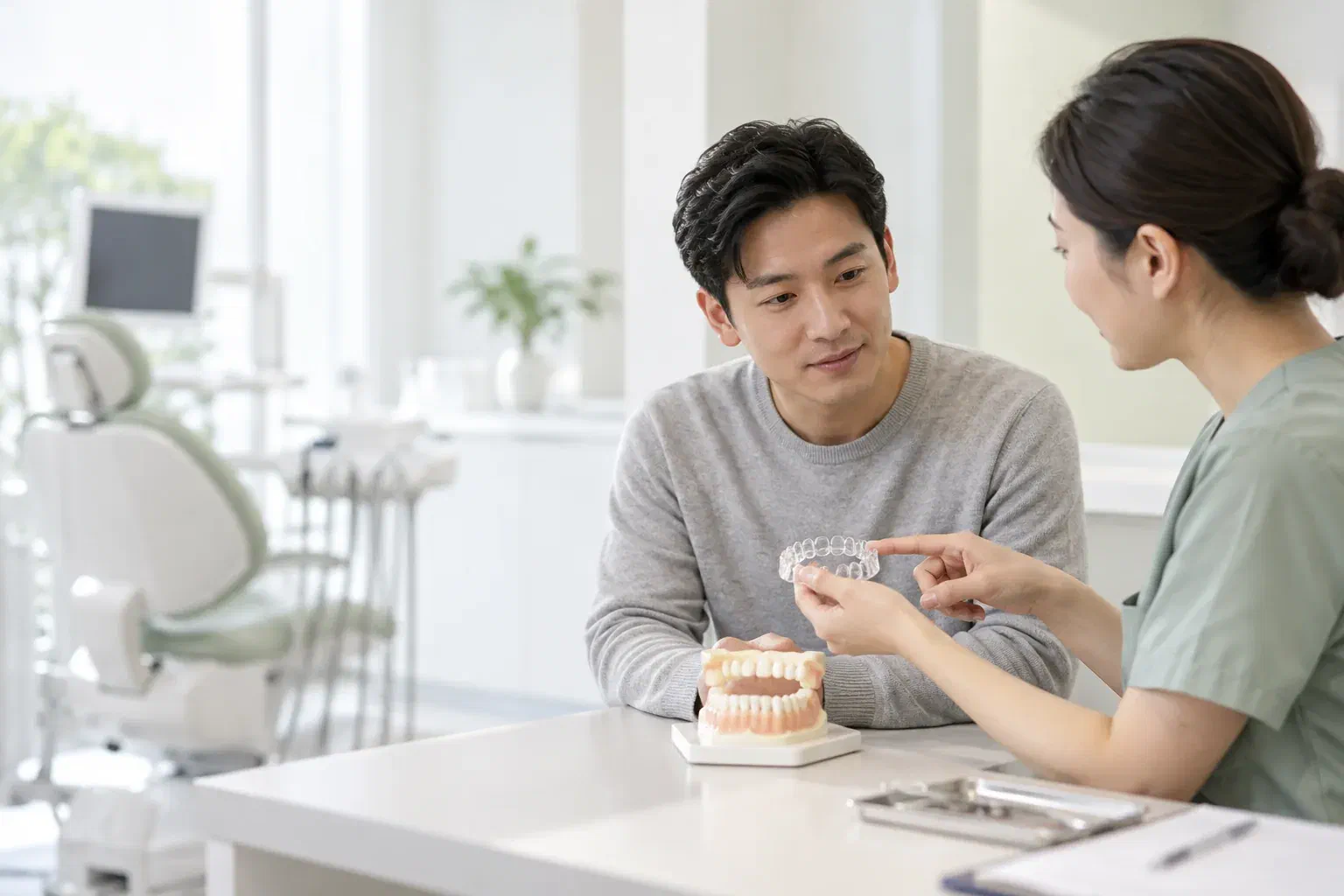
Illustrative patient and clinician discussing a fitted splint on a dental model
Specialized Care

Custom Occlusal Splints in Puslinch

Teeth that feel slightly off after the splint comes out are worth understanding, not ignoring. From Puslinch, you can ask us what a proposed appliance is meant to do, how its contacts are checked, and which changes in your bite should prompt a call.

Bite changes and splints, for Puslinch

Splint out. Bite feels off.

It happens over morning coffee: your back teeth do not quite meet the way they did yesterday. That small moment is one of the reasons a splint needs a plan around it. A custom occlusal splint is a removable, fitted appliance that rests on your teeth, designed for a defined clinical job, and how your teeth meet it is part of that design.

The job could be protecting teeth or restorations, or it could be one element of managing jaw symptoms, where diagnosis and other options need discussing before anything is made. Whatever the label on the plan, nightguard or bite splint, the appliance does not prove your bite caused discomfort and cannot promise relief.

If you are travelling in from Puslinch, bring the appliance, any recommendation you received, and a note of what you notice when it comes out. We will review the findings, explain the design and contacts we would suggest, how it should be worn, its limits, and which changes mean you should call.

Ask about splint and bite changes
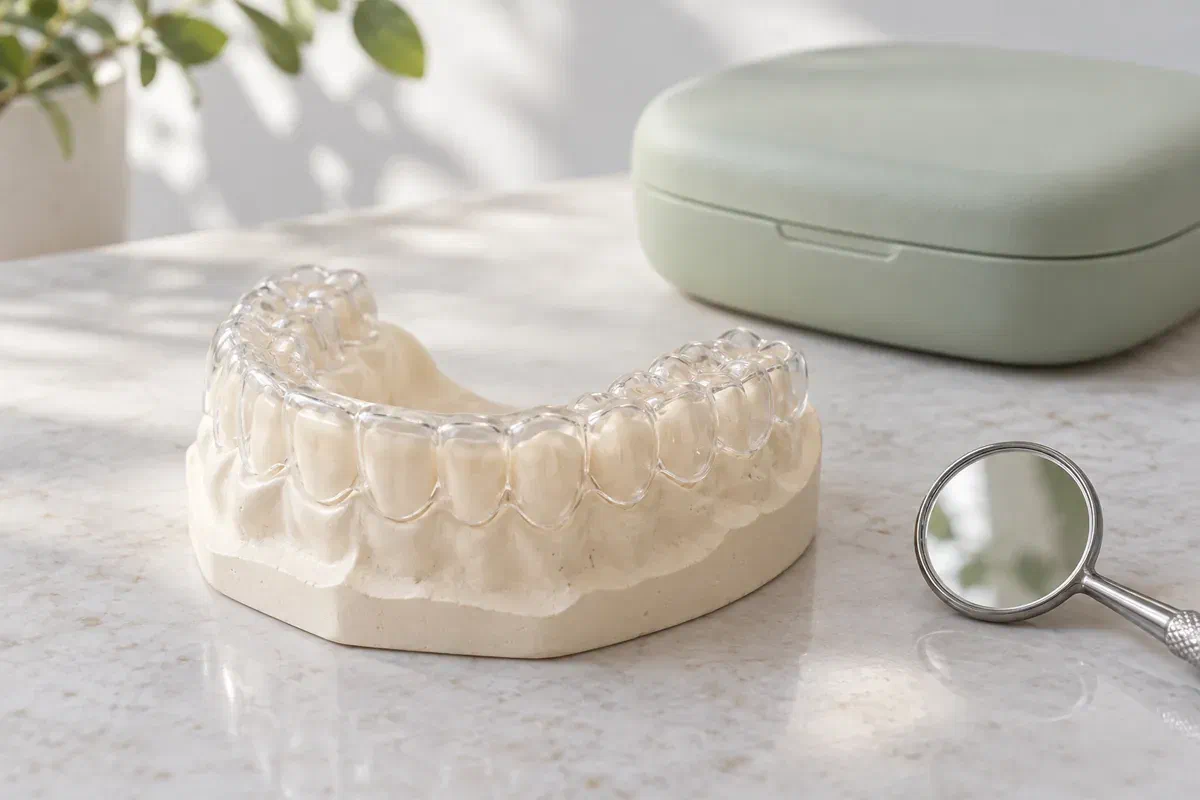
Illustrative transparent occlusal splint seated on a supported dental cast beside a mirror
Sort this out before it is made

Feelings, findings and the device are not the same thing.

Tell us what led to the recommendation and what you were told to expect. With that history, it is easier to check whether the planned appliance matches what you are dealing with.

No clear reason given for the appliance

Ask what observation supports the recommendation and what it should accomplish, such as protection or symptom management. Bring any paperwork. Agree on what a good outcome would be and when it gets reviewed before you consent to fabrication.

Jaw aching, locking or limited movement

Describe the discomfort, fatigue, catching or restricted opening and when it occurs. These can arise from more than one source, so the examination may extend past the teeth. Fitting an appliance should not replace finding out why a symptom continues.

A previous splint that changed how teeth met

If an earlier appliance left your bite feeling different, bring it and explain how long you wore it, how it felt and what you noticed. That is important history, but a new splint in a different material will not automatically avoid the same issue.

Evidence behind intraoral appliances for temporomandibular pain is limited. Ask about simpler options, and confirm that a proposed splint is not designed to change your bite permanently as routine treatment for jaw pain.

Why careful contact checks matter

The fit is checked so that changes can be spotted.

When a splint is made from records of your own mouth, the clinician has something precise to compare: where each tooth should touch the appliance, how it sits over fillings or crowns, and whether the pattern matches the plan. On fitting day, ask which of those points are being measured. A spot that feels high or uneven is exactly the kind of detail worth mentioning.

Your plan should also describe how anyone will know whether to carry on. That might mean another look at the splint and your teeth, a conversation about symptoms, or a decision to try something else. A booked review is a natural moment to raise bite changes, so they do not drift along unnoticed for months.

A purpose stated plainly

Ask for a short explanation of why the splint is proposed and what it will not establish. If anything is unclear, ask again. The appliance’s name does not tell you what benefit is expected or what its limits are.

A schedule with a reason

Find out exactly when the splint should be in, and whether the first review might change that. Talk about how it works around breakfast, brushing and any retainer or other device. Extra hours beyond the advice are not a path to a better result.

A plan for anything unusual

Before you leave the fitting, learn who to phone if the appliance resists going in, chafes, seems tied to a flare of symptoms, or leaves your teeth feeling unfamiliar once it is out. Having that name ready means a problem gets handled early, and you are not left wondering whether it is normal.

From exam to follow-up

Check the bite before, during and after.

How many visits and which records you need will depend on what the appliance is for and how it is built. Before anything is fabricated, ask what the appointments, fees and any possible referral would look like, which makes planning trips simpler.

  1. Assess your bite and history

    Start by telling us what you notice, when, and what has been tried before. The clinician looks at how your teeth come together, along with the jaw and nearby tissues, and decides whether anything else should be investigated. It is fair to ask which conclusions are firm and which are provisional.

  2. Plan the design and contacts

    Agree on how many teeth the splint covers, what it is made from, and where your teeth should touch it. Impressions or a scan follow if the plan calls for them. Let us know about crowns, fillings or other appliances on the way, since they can alter the design.

  3. Fit and adjust

    On delivery, the clinician checks that the splint seats fully, stays put, meets your teeth as planned and feels tolerable, refining it in the chair when that is appropriate. You try removing and replacing it yourself and go over the wear times and cleaning. Point out anything uneven while you are still there.

  4. Review contacts and symptoms

    At the follow-up, be candid about how often it was really worn, what your symptoms did, and whether the fit or your bite has shifted. That conversation decides whether to keep going, refine the splint, change course or look further. A weak response sends everyone back to the plan rather than toward something more involved.

Day-to-day observations

Follow the instructions and note what your bite tells you.

Use the care advice for your specific splint. Materials and designs differ, so another person’s routine may not suit your appliance.

Clean appliance, clean teeth

Every material has its own care needs, so check which cleaners are safe for yours and which could cloud or weaken it. Brush and floss as advised, and give the splint a home in its case rather than a shelf or pocket. Keep it out of hot water, and let us see it if deposits or wear become hard to handle.

Wear only as directed

Stick to the hours you were given, and leave combinations with other appliances to the clinician’s advice. If farm hours, shifts or sleep make the schedule unrealistic, say so at review. Changes you report only make sense alongside an honest account of how the splint was used.

Pain or a lasting bite change

Pain from the splint, or a bite that stays different well after removal, is a reason to get in touch. Say which teeth feel changed, where any pain sits and when it started. Leave reshaping, bending and warming to the clinic, and do not press the appliance into place if it no longer seats.

Patient information: Dorset County Hospital — care precautions for removable dental guards

Choosing a path

Let the findings, not the habit, pick the next step.

There is usually more than one reasonable route, and each should come with a way of judging it. A more intricate appliance is no promise of a better outcome.

When the findings point to a defined job

A monitored custom splint

Talk through what the splint should achieve, where it falls short, how to wear it and when it will be looked at again. Ask what would make the clinician adjust it or suggest stopping. Even a precise fit needs repeat checks of comfort, contacts and the reason it was made.

When gentler steps belong first

Conservative management

With some diagnoses, understanding the condition better, changing a few daily habits or other conservative care may be offered before any appliance. Ask what that approach is aiming at and how you will tell whether it helps. Putting a splint on hold still needs a plan.

When the picture is still unclear

Further assessment

A colleague in dentistry, your physician or a facial-pain clinic may be able to explain a problem that keeps lingering. Ask what question the referral is meant to settle. A splint that disappointed is no reason, on its own, to start permanent work on teeth or bite.

Patient information: FDA — temporomandibular disorders and nonsurgical care options

Bite-change questions

What to watch for and when to call.

Nothing needs to be accepted until it has been explained. Bring up comfort, practicality and any earlier advice that worried you.

(905) 876-4488
Why do my back teeth feel like they don’t meet after I remove the splint?
Some people notice a temporary change in how the teeth feel after taking an appliance out. Note how long it lasts, which teeth are involved, and whether there is pain, and tell the clinician. Do not adjust the splint yourself.
Should I call or wait if my bite still feels off at lunchtime?
Call if the change lasts, keeps returning, or comes with pain. Describe what you notice so the clinician can advise whether to keep wearing the appliance and when it should be checked.
Can a splint move my teeth?
Changes in tooth position or bite are possible with some appliances, which is one reason reviews matter. A routine splint for jaw pain should not be intended to change your bite permanently. Report any lasting change so it can be assessed.
What details help the clinician understand a bite change?
Note which teeth feel different, when you first noticed it, how long it lasts after removal, and whether anything hurts. Mention recent dental work. Bring the splint to the appointment so its fit and contacts can be checked.
How can I avoid an unnecessary trip in from Puslinch?
Call before driving in and describe what has changed. Some concerns can be discussed first to decide how soon a visit is needed. Severe pain, swelling or trouble opening your mouth should be seen promptly.
Should my teeth be adjusted to match the splint?
Not as a routine step. Irreversible changes to teeth or bite should not be assumed, particularly if the appliance has not helped. Ask how the diagnosis was made and what conservative options or further opinions are available.
Splint checks for Puslinch

Notice the change, then let us look at it.

Call our Bronte Street practice about a proposed splint, a bite that feels different with your current appliance, or questions about its role. We can review the concern and explain which assessment, adjustment or further evaluation fits.

Design, suitability, schedule, adjustment, referral and fees are decided after assessment. A splint cannot guarantee relief or prove what caused jaw pain.

Visit Milton Dental Clinic
Unit 1, 342 Bronte St. S, Milton, ON L9T 5B7
Get directions Clinic hours
Monday–Thursday
11am–7pm
Friday–Sunday
By appointment only

Areas we serve

  • Milton
  • Oakville
  • Mississauga
  • Georgetown
  • Halton Hills
  • Acton
  • Campbellville
  • Brampton
  • Burlington
  • Puslinch
  • Rockwood
  • Erin
  • Caledon
  • Etobicoke
  • Old Milton
  • Bronte Meadows
  • Timberlea
  • Dorset Park
  • Dempsey
  • Clarke
  • Beaty
  • Coates
  • Harrison
  • Scott
  • Willmott
  • Ford
  • Bowes
  • Cobden
  • Walker
  • Mountain View
  • Milton Heights
  • Hawthorne Village
  • Valley View
  • Fallingbrook
  • Nassagaweya
  • Trafalgar
  • Esquesing
  • Nelson
  • Brookville
  • Moffat
  • Glen Williams
  • Norval
  • Limehouse
  • Stewarttown
  • Ashgrove
  • Hornby
  • Silver Creek
  • Speyside
  • Scotch Block
  • North Oakville
  • River Oaks
  • Glen Abbey
  • West Oak Trails
  • Palermo
  • Bronte Creek
  • College Park
  • Joshua Creek
  • Uptown Core
  • Preserve
  • Iroquois Ridge
  • Lisgar
  • Meadowvale
  • Meadowvale Village
  • Churchill Meadows
  • Erin Mills
  • Central Erin Mills
  • Streetsville
  • East Credit
  • Creditview
  • Heartland
  • Sheridan
  • Mount Pleasant
  • Credit Valley
  • Huttonville
  • Churchville
  • Springbrook
  • Northwest Brampton
  • Bram West
  • Fletcher's Meadow
  • Fletcher's Creek South
  • Alton Village
  • Orchard
  • Millcroft
  • Headon Forest
  • Tansley
  • Brant Hills
  • Tyandaga
  • Kilbride
  • Lowville
  • Aberfoyle
  • Morriston
  • Arkell
  • Hillsburgh
  • Freelton
  • Carlisle
  • Waterdown
  • Flamborough
  • Mountsberg

How can we help?

Milton Dental Clinic

Have a question about your smile? Choose the option that works best for you.

For urgent dental concerns, please call.
Messages are reviewed during clinic hours.