
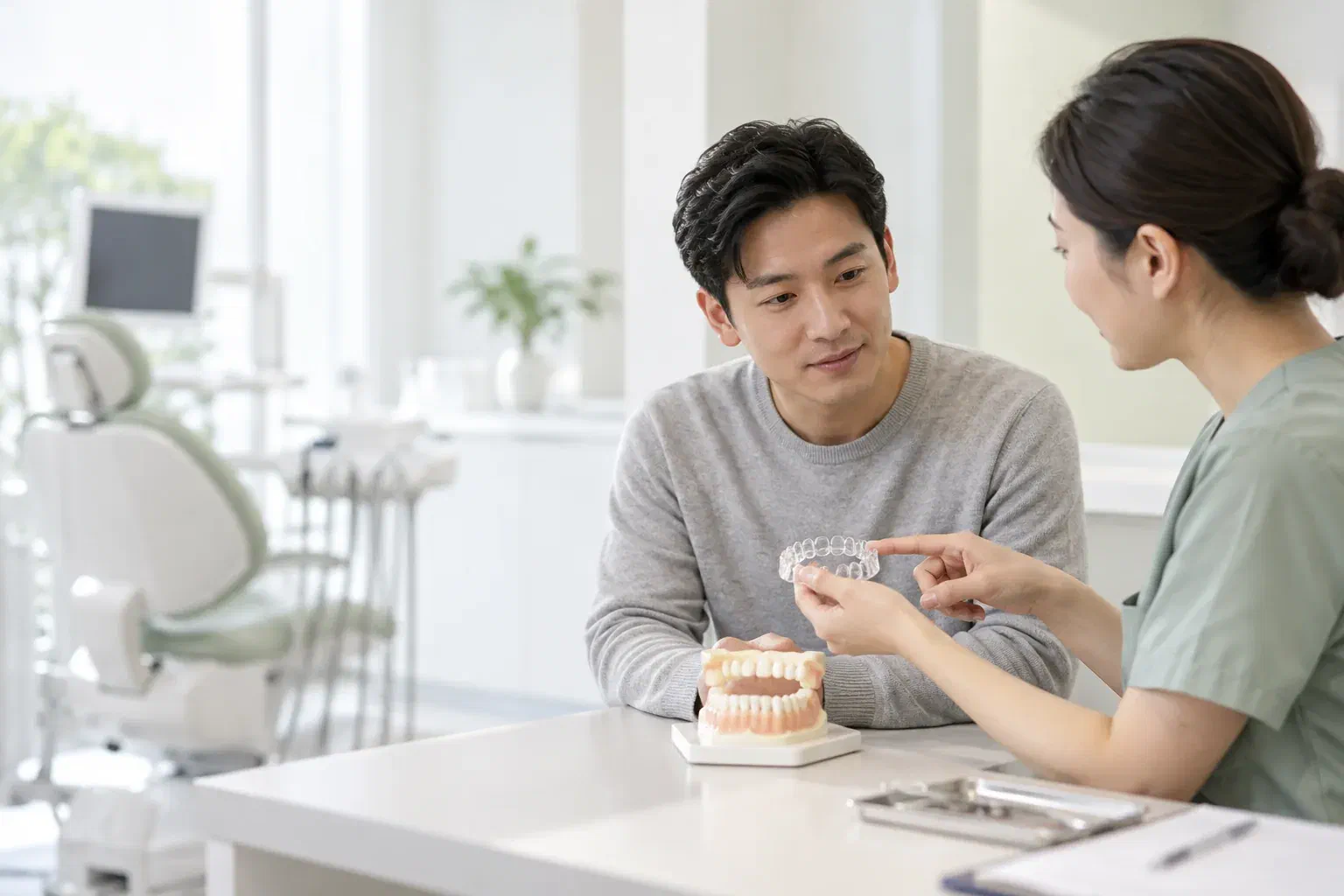
Illustrative patient and clinician discussing a fitted splint on a dental model
Specialized Care

Custom Occlusal Splints in Rockwood

Having a splint made is one option, and it sits beside simpler care and further assessment. From Rockwood, you can talk with us about which of those suits your concern, and, if an appliance makes sense, how it is fitted, worn and reviewed.

Weighing a splint from Rockwood

An appliance is a tool. Make sure it is the right one.

Picture three paths from the same starting point: a custom appliance, a period of simpler care, or a closer look by someone with a different specialty. Which one makes sense depends on what is actually going on. The splint on that first path is a removable, individually made cover for the teeth, and it should be chosen for a reason you can name.

That reason might be shielding teeth and restorations from wear. It might be support within a larger plan for jaw symptoms, where diagnosis and alternatives need careful thought before any lab work. The appliance cannot confirm that your bite produced the problem, and nobody can honestly promise it will make discomfort disappear.

Coming in from Rockwood, bring whatever recommendation you have, any appliance already in use, and a description of what you would most like to change. We will review the findings with you, compare the paths that fit, and, if a splint is one of them, explain its design, use, limits and the point at which it gets reassessed.

Compare splints with other options
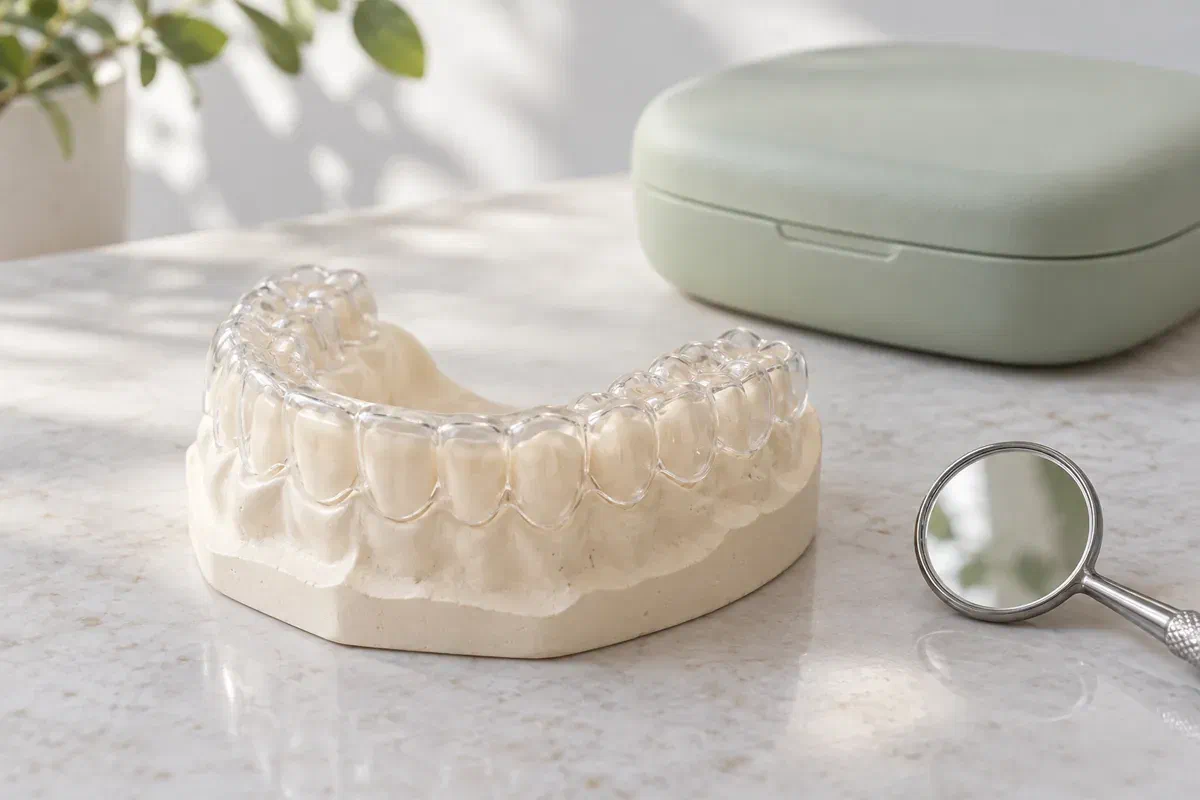
Illustrative transparent occlusal splint seated on a supported dental cast beside a mirror
Questions that shape the choice

Which path fits depends on what you feel and what is found.

Share the reason a splint came up and what you hoped it would do. Those details help us see whether an appliance, simpler care or further assessment best fits the concern.

A splint mentioned as the only option

If an appliance was the only thing offered, ask which finding pointed there and what it is supposed to achieve, from protection to symptom relief. Ask what else was considered. Agree on what a good result would be, and the review date, before anything is fabricated.

Jaw discomfort that colours everyday life

Tell us when the jaw aches, tires, catches or will not open far, and what you were doing at the time. More than one source can cause this, so the assessment may look beyond your teeth. A device should never become the reason the underlying question goes unanswered.

An appliance that has already been tried

If a splint has been part of your care before, bring it and describe how it was worn and what happened. Explain why you stopped, if you did. That experience helps decide among the paths, though a newer material is not a guaranteed improvement.

The research supporting mouth appliances for temporomandibular pain is limited. That makes it sensible to ask about simpler approaches first, and to confirm that no device is meant to permanently change your bite as routine jaw-pain care.

When a splint is the chosen path

Make it count with a defined goal and a planned check.

A splint built from your own records gives the clinician a reference point: how it rests on your teeth, how it sits over existing dental work, and whether the contacts match what was planned. On delivery, ask which of these is being confirmed and what might be refined. Mentioning anything that pinches or feels uneven is part of getting it right.

Just as useful is an agreed way to decide about the future, through re-examining the appliance and teeth, talking through symptoms, or switching to one of the other paths. A fixed review keeps the splint from becoming a permanent fixture simply because no one stopped to ask.

A reason you can say aloud

Ask for a plain account of why the splint is preferred over the alternatives and what it will not show. If it does not add up, ask again. The word on the plan tells you nothing about the benefit expected or where its usefulness ends.

Wear times tied to the purpose

Check when the appliance should be in and whether a review could change that. Ask how it fits with eating, cleaning and any other appliance. More hours do not automatically bring more help.

A plan for setbacks

Know beforehand who to contact if the splint is stubborn to insert, rubs, seems to stir up symptoms, or leaves your teeth feeling unfamiliar afterward. Early help is easier with a name and number ready, and you are spared judging discomfort by yourself.

If you choose an appliance

From exam to fitting to an honest review.

The visits and records depend on why the appliance is being made and how it is designed. Ask about the sequence, the fees and any referral before fabrication, especially if you are also weighing other paths.

  1. Look at the whole picture

    Explain what you have noticed, when, and what care you have already tried. The clinician examines your teeth, jaw muscles and joint area and decides whether something else should be investigated. Ask which findings favour a splint over the alternatives.

  2. Agree on the build

    Decide together on coverage, material and the contacts the appliance should produce. Impressions or a scan are taken when the plan needs them. Mention dental work or other appliances on the horizon that could affect the design.

  3. Fit, refine and rehearse

    The clinician checks that the splint seats, holds, meets your teeth as intended and is tolerable, refining it where suitable. You rehearse taking it out and putting it back, and go over wear times and cleaning before you head home.

  4. Decide whether to stay on this path

    At follow-up, describe real wear, how symptoms behaved and any change in fit or bite. Together you can continue, refine, switch to another path or seek more assessment. A poor response is a prompt to revisit the choice, not to escalate by default.

While the splint is in use

Care for it as directed, and let the clinic make the changes.

Use the instructions written for your own appliance. Designs and materials differ, so a routine borrowed from someone else may not suit it.

Looking after the material

Ask which cleaning approach and products suit your splint, and which could damage it. Keep brushing and flossing as recommended, and keep the appliance in its case when it is out. Hot water and harsh cleaners are best avoided; have it checked if deposits or wear build up.

Staying with the schedule

Wear it only as advised, and check before adding hours or another appliance. If the routine is impractical, raise it at your review. Your results can only be read properly against an accurate account of how it was used.

Pain changes the plan

A splint that hurts needs to be seen. Call, and describe the location, when it began and any change in how your teeth meet. Do not shave, bend or warm the appliance, and stop rather than forcing it on if it will not seat.

Patient information: Dorset County Hospital — care precautions for removable dental guards

The three paths, side by side

Splint, simpler care, or a second set of eyes.

Ask which of these is reasonable for you and how each would be judged over time. A more sophisticated appliance does not, in itself, deliver a better result.

When the exam supports a specific aim

A custom splint with follow-up

Go through what it should do, its limits, its instructions and when it will be looked at again. Ask what would lead to refining it or setting it aside. A precise fit still needs ongoing attention to comfort, contacts and the reason it was made.

When conservative steps suit the diagnosis

Simpler care first

Depending on what is found, learning about the condition, adjusting everyday habits or other conservative measures may be the opening move. Ask what this approach is aiming for and how you will tell if it is enough. Starting here still needs a clear plan.

When the explanation or response is uncertain

Another specialist’s view

A referral to a dental colleague, a physician or a facial-pain clinic may help with a problem that has not resolved. Ask what the referral should settle. Irreversible work on teeth or bite should not be assumed simply because an appliance disappointed.

Patient information: FDA — temporomandibular disorders and nonsurgical care options

Comparing the options

Questions about splints and the alternatives.

It is reasonable to want every option explained before accepting one. Bring questions about comfort, daily life and any earlier advice that left you uncertain.

(905) 876-4488
What does conservative care for jaw discomfort usually involve?
It depends on the diagnosis. It may include learning about the condition, being mindful of habits such as clenching during the day, and other simple self-care measures. Ask what is suggested for you, why, and when it will be reviewed.
If I try simpler steps first, can I still have a splint made later?
Yes, if the review suggests an appliance would help with a defined aim. Starting with conservative care does not close that door. It simply means the decision is made with more information.
How will we know whether the simpler approach is enough?
Agree on what you are hoping to change and when you will check in. At that point, the clinician can compare your symptoms with the starting point and discuss whether to continue, add something or look further.
Does a referral mean my problem is serious?
Not necessarily. A referral may simply help clarify a problem that has not settled or that involves more than the teeth. Ask what the referral is meant to answer and what you should expect from it.
My plan says “bite appliance.” Is that a splint?
Probably something similar. The names overlap, so ask what the design is and what it is intended to do. The reason it is recommended and how it should be worn matter more than the term on the plan.
Should a splint be worn during the day as well as at night?
Only if that is what your clinician prescribes. Wearing it for more hours is not automatically better. Follow your schedule, mention what seems to help, and discuss any change at review.
Splint options for Rockwood

Pick the path that matches what is really going on.

Contact our Bronte Street practice about a proposed splint, an appliance you already wear, or whether simpler care might come first. We will look at the concern with you and explain which assessment, fitting or further evaluation fits.

Design, suitability, wear schedule, adjustment, referral and fees depend on what the assessment finds. A splint cannot promise relief or show the cause of jaw pain.

Visit Milton Dental Clinic
Unit 1, 342 Bronte St. S, Milton, ON L9T 5B7
Get directions Clinic hours
Monday–Thursday
11am–7pm
Friday–Sunday
By appointment only

Areas we serve

  • Milton
  • Oakville
  • Mississauga
  • Georgetown
  • Halton Hills
  • Acton
  • Campbellville
  • Brampton
  • Burlington
  • Puslinch
  • Rockwood
  • Erin
  • Caledon
  • Etobicoke
  • Old Milton
  • Bronte Meadows
  • Timberlea
  • Dorset Park
  • Dempsey
  • Clarke
  • Beaty
  • Coates
  • Harrison
  • Scott
  • Willmott
  • Ford
  • Bowes
  • Cobden
  • Walker
  • Mountain View
  • Milton Heights
  • Hawthorne Village
  • Valley View
  • Fallingbrook
  • Nassagaweya
  • Trafalgar
  • Esquesing
  • Nelson
  • Brookville
  • Moffat
  • Glen Williams
  • Norval
  • Limehouse
  • Stewarttown
  • Ashgrove
  • Hornby
  • Silver Creek
  • Speyside
  • Scotch Block
  • North Oakville
  • River Oaks
  • Glen Abbey
  • West Oak Trails
  • Palermo
  • Bronte Creek
  • College Park
  • Joshua Creek
  • Uptown Core
  • Preserve
  • Iroquois Ridge
  • Lisgar
  • Meadowvale
  • Meadowvale Village
  • Churchill Meadows
  • Erin Mills
  • Central Erin Mills
  • Streetsville
  • East Credit
  • Creditview
  • Heartland
  • Sheridan
  • Mount Pleasant
  • Credit Valley
  • Huttonville
  • Churchville
  • Springbrook
  • Northwest Brampton
  • Bram West
  • Fletcher's Meadow
  • Fletcher's Creek South
  • Alton Village
  • Orchard
  • Millcroft
  • Headon Forest
  • Tansley
  • Brant Hills
  • Tyandaga
  • Kilbride
  • Lowville
  • Aberfoyle
  • Morriston
  • Arkell
  • Hillsburgh
  • Freelton
  • Carlisle
  • Waterdown
  • Flamborough
  • Mountsberg

How can we help?

Milton Dental Clinic

Have a question about your smile? Choose the option that works best for you.

For urgent dental concerns, please call.
Messages are reviewed during clinic hours.