

Illustrative patient discussing an oral appliance and care coordination with a dental clinician
Specialized Care

Custom Sleep Apnea Appliances

An oral appliance for obstructive sleep apnea belongs within a coordinated medical and dental plan. Discuss custom sleep apnea appliances in Milton to review an established diagnosis, dental suitability, fitting, and the follow-up needed to assess effectiveness.

A closer look at custom sleep apnea appliances

Start with the sleep diagnosis, then consider the dental option.

A custom oral appliance may be considered for selected adults with obstructive sleep apnea. A commonly used design holds the lower jaw forward during sleep to help maintain an open airway. This is a prescribed treatment with medical and dental follow-up, not a general mouthguard chosen only because someone snores.

The medical assessment establishes whether sleep apnea is present and how it should be managed. Dental assessment then considers whether the teeth, gums, jaw, and other factors can support an appropriate appliance. Both parts matter before treatment begins, and the response needs to be checked rather than assumed from comfort or quieter sleep alone.

At Milton Dental Clinic, bring your sleep-care recommendations and explain any treatment you currently use. We can discuss dental suitability, the information needed, and coordination or referral arrangements. The first conversation should clarify whether an appliance belongs in your plan without interrupting the care already prescribed.

Discuss a sleep-apnea appliance
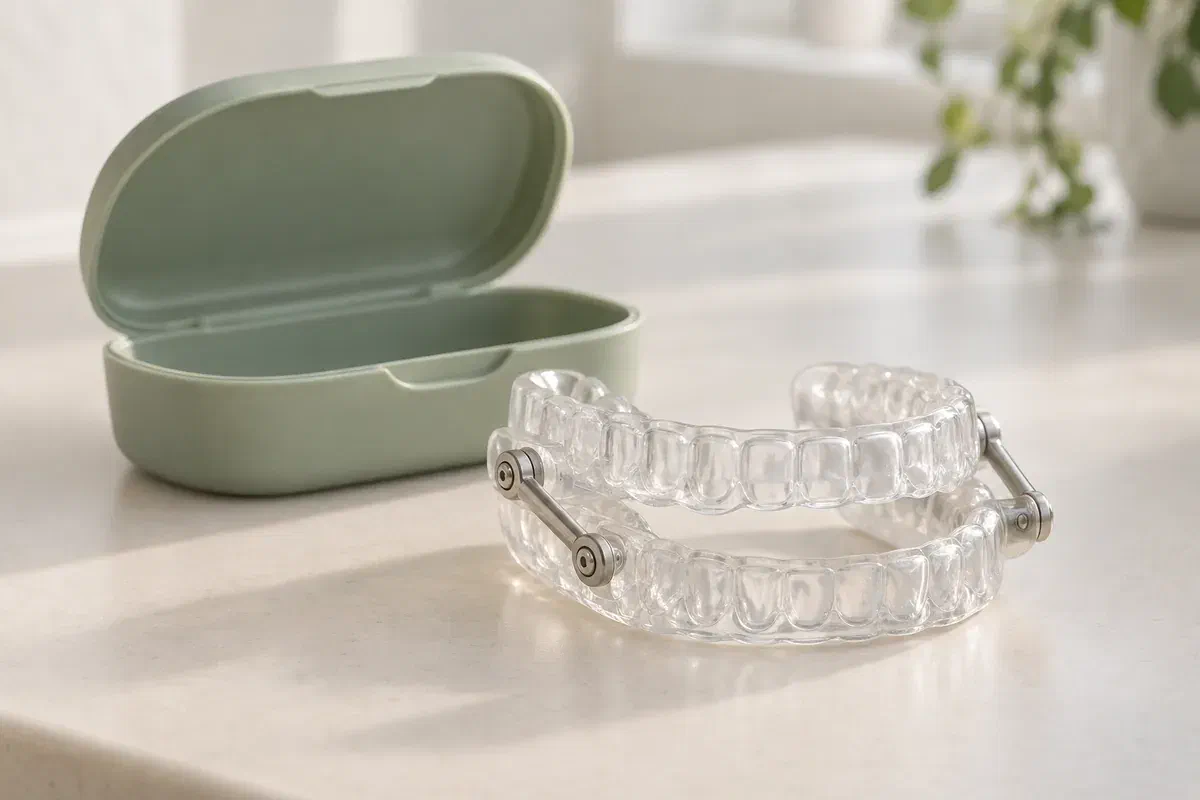
Illustrative connected upper and lower oral-appliance trays beside a pale sage storage case
What to clarify before considering an appliance

Snoring, a diagnosis, and treatment difficulties need different next steps.

Tell us whether you have had a medical sleep assessment and what treatment was recommended. A dental consultation can support the discussion but does not replace a medical diagnosis.

Snoring without an established diagnosis

Mention witnessed breathing pauses, unrefreshing sleep, or daytime sleepiness to a medical clinician. Snoring may accompany obstructive sleep apnea, so the cause and severity need assessment before a device is arranged. Do not use reduced noise as proof that a breathing problem has been excluded.

Difficulty with a prescribed sleep treatment

Explain what you currently use and what makes it difficult. Contact your sleep-care team about the problem and ask whether an oral appliance is a suitable alternative or part of a coordinated plan. Do not stop CPAP or another prescribed treatment on your own while exploring options.

Questions about teeth, gums, or jaw comfort

Bring details of loose teeth, gum treatment, dentures, restorations, or jaw symptoms. These can affect dental suitability and appliance planning. Ask whether dental care is needed first and how any proposed device would be monitored for effects on the teeth and bite.

The Canadian Dental Association recommends medical assessment for suspected snoring or obstructive sleep apnea and collaboration with the attending physician before oral appliance therapy is offered.

What a coordinated appliance discussion can offer

Make the treatment decision with both effectiveness and dental fit in view.

An appliance discussion can help you understand a treatment option when your sleep-care provider considers it appropriate. Ask why it fits your diagnosis and circumstances and how it compares with the existing plan. Convenience is worth discussing, but it does not replace evidence that the treatment controls the condition.

The consultation should also make responsibilities clear. You need to know who fits and adjusts the device, who reviews dental effects, and who arranges testing of the sleep response. A coordinated plan is easier to follow when those roles are explained before the appliance is made.

Patient information: AASM and AADSM — custom appliances, dental oversight, and follow-up sleep testing

An option considered against your medical findings

Bring the available sleep report and recommendations, and ask what additional information is needed. The decision should account for the diagnosis and treatment history rather than a general preference for a smaller device. Confirm that the sleep-care clinician is involved in the choice.

A dental assessment before fabrication

Ask how the appliance would be retained and whether the teeth, gums, and jaw can tolerate the proposed design. Discuss planned dental work and any other appliances. Problems identified at this stage can affect timing, suitability, or the need for another provider.

A plan to check whether treatment is working

Ask when the medical response will be evaluated and what follow-up testing is planned. Report symptoms, but understand that feeling better or snoring less is not enough to confirm control. The plan should explain what happens if the response is incomplete.

From diagnosis to a reviewed appliance plan

Coordinate the decision, check the fit, and confirm the response.

The sequence depends on your medical recommendations and dental findings. Ask about all stages and fees, including assessment, fabrication, adjustment, dental reviews, and the separate sleep-care follow-up.

  1. Review the diagnosis and current treatment

    Share the sleep assessment, relevant health information, and treatment recommendations. Explain any difficulty with the current plan. Confirm communication with the sleep-care provider and what treatment to continue while dental suitability is being assessed.

  2. Assess suitability and obtain dental records

    The clinician reviews the teeth, gums, restorations, jaw function, and other relevant findings. If an appliance is appropriate, discuss the design and records needed. Ask whether a suitably trained dental provider or another referral is required for the proposed care.

  3. Fit the appliance and guide any adjustments

    At delivery, fit and comfort are checked and insertion, removal, cleaning, and use are explained. Follow only the adjustment plan provided by the treating clinician. Do not advance the device beyond instructions in an attempt to stop snoring faster.

  4. Arrange objective review and continuing follow-up

    The sleep-care provider assesses treatment effectiveness, including follow-up testing as appropriate. Dental reviews monitor the appliance and its effects on teeth and bite. Ask how findings from both reviews will be shared and how the plan changes if treatment is inadequate.

Using an appliance within ongoing sleep care

Follow the prescription and keep both review pathways active.

Instructions depend on the device and coordinated treatment plan. Keep the dental and sleep-care contact details available so comfort problems and treatment concerns reach the appropriate clinician.

Use and clean the device as instructed

Follow the prescribed wear, adjustment, cleaning, and storage advice. Keep the appliance protected when travelling and bring it to dental reviews. If it breaks or no longer fits, contact the treating team for a safe interim plan rather than repairing it with household materials.

Report dental and jaw effects early

Describe tooth soreness, gum irritation, persistent jaw discomfort, or changes in how the teeth meet. Ask which symptoms require stopping use and prompt review. Do not force an uncomfortable device into place or continue making adjustments when the fit or bite feels wrong.

Keep the sleep-care team informed

Report returning symptoms, difficulty using treatment, and relevant health changes. Attend recommended testing even if the device feels comfortable. If you cannot use the appliance, ask promptly what to do so sleep apnea is not left without an agreed treatment plan.

Patient information: American Academy of Dental Sleep Medicine — appliance discomfort and dental effects · NHLBI — sleep deficiency and its effects on driving and daily function

Comparing sleep-apnea treatment options

Choose with your sleep-care provider, then coordinate the dental role.

The appropriate plan depends on the type and severity of sleep apnea, your health, treatment response, and dental suitability. An oral appliance is one option within that assessment.

When prescribed as the appropriate medical treatment

Positive airway pressure treatment and support

Discuss mask, comfort, or use problems with the sleep-care team before abandoning treatment. Ask what support or adjustment is available and whether an alternative is suitable. A dental consultation should not independently override the medical treatment recommendation.

When medical and dental assessment support its use

A custom oral appliance with coordinated follow-up

Review the selected device, its limitations, adjustment plan, and testing of effectiveness. Ask how dental effects will be monitored over time. A custom fit is important, but it does not guarantee that the appliance controls sleep apnea in every person.

When another approach is needed or complements treatment

Other medically directed measures or specialist care

Your sleep-care provider may discuss other measures based on the diagnosis and response. Ask how they fit with the prescribed therapy and which outcomes require reassessment. Lifestyle changes, position strategies, or another intervention should not be assumed to replace effective treatment without review.

Patient information: NHLBI — sleep-apnea treatment options and individualized medical care

Sleep-apnea appliance questions

Ask about diagnosis, dental suitability, and confirmation of effectiveness.

Bring the sleep-care information you have and the practical problems you want to solve. The discussion should connect the dental device with the medical plan.

(905) 876-4488
Can I order a custom sleep-apnea appliance before having a medical sleep assessment?
A medical assessment is needed to establish whether obstructive sleep apnea is present and how it should be managed. Snoring alone is not enough to choose treatment. Ask your medical clinician about assessment and bring the resulting recommendations to the dental discussion.
Is a sleep-apnea appliance the same as a guard made for tooth grinding?
No. A grinding guard protects teeth, while a prescribed sleep-apnea appliance has a different treatment purpose and design. Do not substitute one for the other. If both concerns apply, ask the treating teams how they should be addressed together.
If my partner says the snoring has stopped, do I still need follow-up testing?
Yes, the medical team needs to assess whether the treatment adequately controls sleep apnea. Quieter sleep and improved comfort do not establish that breathing events are resolved. Follow the recommended testing and review plan rather than judging effectiveness by sound alone.
Should I stop using CPAP while waiting for the dental appliance to be made?
Do not stop prescribed treatment without advice from your sleep-care provider. Ask what to continue during assessment, fabrication, and adjustment, and when a transition would be appropriate. The new device’s effectiveness needs review before assumptions are made about replacement therapy.
Can gum problems or loose teeth affect whether an oral appliance is suitable?
Yes. The dental assessment considers support, retention, restorations, and jaw function among other findings. Some concerns may need care first or make a particular design unsuitable. Ask what the findings mean before records are taken for fabrication.
What should happen if I cannot tolerate my prescribed sleep-apnea appliance?
Contact the treating dental and sleep-care teams promptly. Explain the fit problem, discomfort, or other difficulty and ask for an interim treatment plan. Do not continue forceful adjustments or leave the diagnosed condition untreated while waiting for a routine review.
Custom sleep apnea appliances in Milton

Bring your sleep-care plan and discuss the dental part of treatment.

Contact our Bronte Street practice with your diagnosis and recommendations to discuss dental suitability, required records, and appropriate coordination or referral for oral-appliance care.

Medical diagnosis, dental suitability, provider arrangements, follow-up testing, and fees require individual review. An appliance cannot guarantee control of sleep apnea or replace prescribed care without coordinated advice.

Visit Milton Dental Clinic
Unit 1, 342 Bronte St. S, Milton, ON L9T 5B7
Get directions Clinic hours
Monday–Thursday
11am–7pm
Friday–Sunday
By appointment only

How can we help?

Milton Dental Clinic

Have a question about your smile? Choose the option that works best for you.

For urgent dental concerns, please call.
Messages are reviewed during clinic hours.