

Illustrative patient discussing an oral appliance and care coordination with a dental clinician
Specialized Care

Custom Sleep Apnea Appliances in Burlington

Your sleep physician has mentioned an oral appliance, and now the question is whether your teeth can carry one. For adults coming from Burlington, we examine gums, bite and existing dental work, then plan fitting and shared follow-up.

The dental half of the decision

Your teeth do the holding.

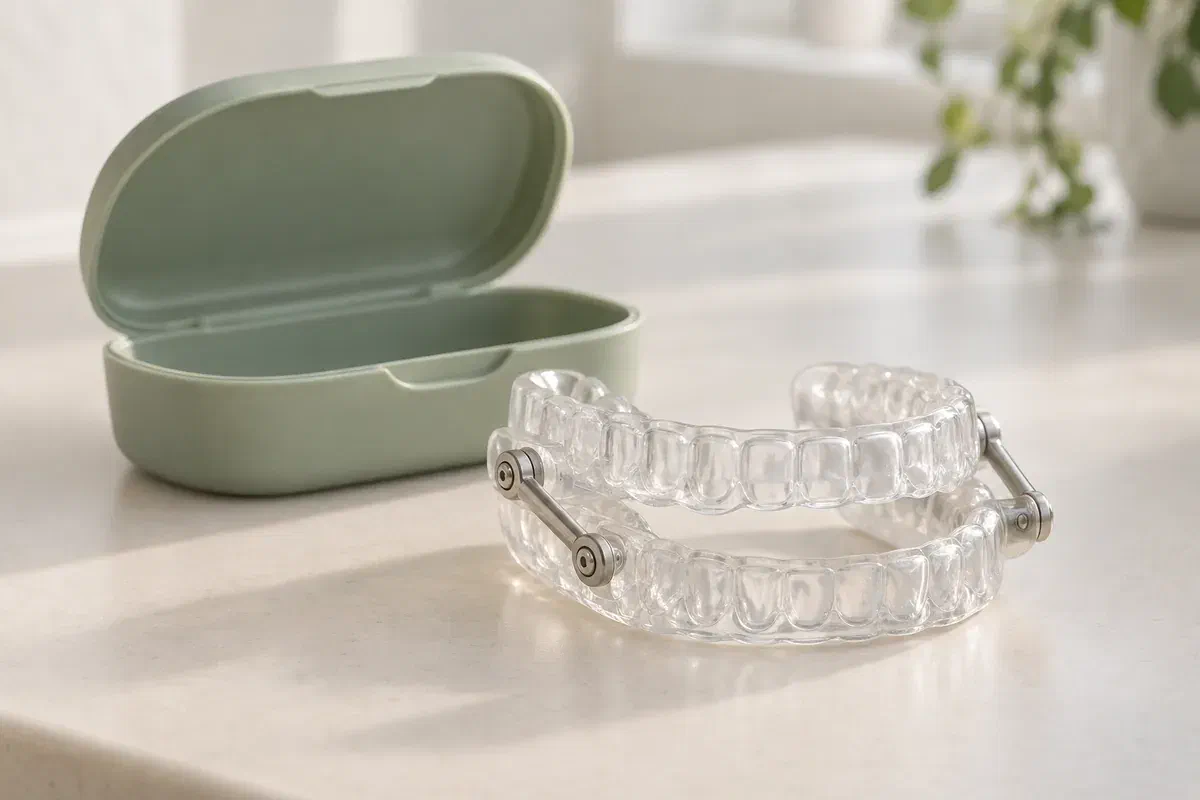
An oral appliance for obstructive sleep apnea relies on your teeth for support. The usual design clips over both arches and keeps the lower jaw slightly forward overnight, helping the airway stay open. That means the health of your gums, the stability of each tooth and the state of your fillings and crowns all matter before one is made.

This is a prescribed treatment. Your sleep physician decides whether an appliance is a sensible option for your diagnosis, and the dental assessment decides whether your mouth is ready for it. Later, the medical team checks whether breathing during sleep is controlled. Feeling better is welcome, but it is not the measure.

When you book from Burlington, bring your sleep report, your physician's recommendations and any recent dental records you have. Tell us what treatment you use at the moment. We can then discuss suitability, the records needed and how coordination or referral would work, without disrupting the care you already have.

Have your teeth assessed for an appliance
Illustrative connected upper and lower oral-appliance trays beside a pale sage storage case
Questions that change the plan

What brought you here shapes the first step.

Share whether you have had a medical sleep assessment and the outcome. We look after the dental questions; diagnosing sleep apnea belongs to your physician.

Snoring that nobody has investigated

Breathing pauses noticed by others, sleep that leaves you foggy, or nodding off in the day are reasons to see a physician. Snoring can accompany sleep apnea, and its cause needs assessment before an appliance is discussed. Silence in the bedroom is not the same as healthy breathing.

A prescribed treatment you find hard

Explain what you were given and what makes it difficult. Your sleep-care team can work on those problems and advise whether an appliance might replace or support it. Do not set aside your current treatment while the options are being explored.

Gum treatment, loose teeth or heavy restorations

Recent periodontal care, mobile teeth, bridges, implants, dentures or a jaw that tires easily can all affect suitability. Ask whether anything should be treated first, and how teeth and bite would be followed once you start wearing a device.

The Canadian Dental Association's position is that a physician should assess snoring or suspected sleep apnea, and that the dentist should work with that physician before offering an oral appliance.

Getting the foundations right

Why a careful dental assessment pays off

Checking your mouth before fabrication avoids building an appliance on teeth or gums that cannot support it. The consultation is also your chance to understand why your physician is suggesting this route, how it compares with what you use now, and what an appliance cannot do. Comfort and portability matter, though control of the condition matters more.

You will also know who does what. The dental team fits the device, adjusts it and watches your teeth; the sleep-care team decides when breathing is retested. Agreeing on those roles at the start helps the plan run smoothly.

Patient information: AASM and AADSM — custom appliances, dental oversight, and follow-up sleep testing

A decision that starts with medicine

Bring your sleep report and recommendations, and ask what other information would help. Your diagnosis and treatment history should drive the choice, not just a preference for a smaller device. Your sleep physician should be involved throughout.

Support checked tooth by tooth

Ask how the appliance would be retained, and whether your gums, bone support and jaw could manage it. Mention planned crowns, implants or extractions and any other appliance you wear. These findings may alter timing, design or the provider involved.

A defined way to measure success

Ask when the response will be checked and what testing is planned. Report how you feel, while remembering that better sleep or less snoring alone cannot confirm control. The plan should cover what happens if results are incomplete.

Step by step from Burlington

What each appointment is for

The sequence depends on your physician's recommendations and our findings. Ask about all stages and their fees, including assessment, fabrication, adjustments, dental reviews and the sleep-care follow-up arranged separately.

  1. Medical background and current care

    We review your sleep assessment, health history and the treatment you have been advised to use, along with any struggles. We agree how to share information with your sleep-care provider and what you continue using during assessment.

  2. Gums, teeth and jaw examined

    The clinician looks at periodontal health, tooth stability, restorations and jaw movement. If an appliance is appropriate, design options and the records needed are explained. Ask whether care from a suitably trained dentist or a referral is part of the plan.

  3. Fitting day

    Fit and comfort are checked, and you are shown how to put the appliance in, take it out, clean it and store it. Follow the adjustment schedule provided. Turning it further than directed in the hope of quicker results can cause harm.

  4. Results and ongoing dental care

    The sleep-care provider evaluates effectiveness, possibly with a follow-up sleep test. Dental reviews track the appliance, your teeth and your bite. Ask how the two sets of findings will be shared and what changes if treatment proves inadequate.

Protecting teeth while you treat sleep

Look after the appliance, and it helps look after you.

Your instructions will reflect the device and the agreed plan. Keep contact details for both teams nearby so questions about comfort and questions about treatment each reach the right clinician.

Keep it clean and stored safely

Follow your wear, cleaning and storage instructions. Use the case away from home and bring the appliance to reviews. If it cracks or no longer seats properly, call for advice on an interim plan rather than repairing it with household materials.

Notice what your teeth tell you

Report soreness in particular teeth, gum irritation, lingering jaw ache or a sense that your back teeth meet differently. Ask which signs mean stopping use and arranging a prompt visit. Do not force the device on or keep adjusting it if the bite feels wrong.

Keep your physician updated

Let your sleep-care team know about returning symptoms, difficulty with the device or health changes. Go to follow-up testing even when it feels comfortable. If you cannot wear it, ask promptly what to do so your sleep apnea is still treated.

Patient information: American Academy of Dental Sleep Medicine — appliance discomfort and dental effects · NHLBI — sleep deficiency and its effects on driving and daily function

Where an appliance fits among treatments

Several roads, one shared decision

What suits you rests on the kind of sleep apnea you have and how severe it is, plus your health, treatment response and dental condition. An oral appliance is only one possibility.

When your physician prescribes it

Positive airway pressure, supported

If the mask or routine is troublesome, talk to your sleep-care team before stopping. They may adjust equipment, offer support or consider alternatives. A dental consultation should not override their medical advice by itself.

When medical and dental findings support it

A custom appliance with regular checks

Review the design, what it can and cannot do, how it is adjusted and how its effect will be tested. Ask how changes to teeth and bite will be monitored. A good fit is essential, yet it does not ensure the appliance controls sleep apnea for everyone.

When another approach is needed or adds value

Other medical measures or a specialist

Based on your diagnosis and progress, your physician may discuss other measures or refer you. Ask how they fit with your prescribed therapy and when reassessment is due. Weight, position or lifestyle changes should not be assumed to replace effective treatment without review.

Patient information: NHLBI — sleep-apnea treatment options and individualized medical care

Dental suitability questions

What your teeth and gums have to do with sleep treatment

Come with your sleep-care information and a note of your dental history. We will connect the appliance question to the plan your physician has made.

(905) 876-4488
Do I need a certain number of healthy teeth to wear a sleep appliance?
An appliance needs enough stable teeth to hold onto, but there is no single rule for everyone. The clinician looks at how many teeth you have, where they are and how healthy the supporting gums are, then explains whether a design is workable.
I am in the middle of gum treatment. Should I wait before getting an appliance?
Often it makes sense to stabilise gum health first, since inflamed or loose teeth may not support a device well. Ask the dental team about timing, and keep your sleep physician informed so your current treatment continues meanwhile.
Will a new crown or filling change how my appliance fits?
It can. Changes to the shape of a tooth may affect retention or comfort. Tell the dental team before any new restoration is placed, and bring the appliance to the appointment if you already have one.
Is jaw clicking a reason I cannot have an oral appliance?
Not always, but jaw symptoms need to be assessed before an appliance is planned and watched afterwards. Describe any clicking, pain or limited opening. The clinician can explain how these findings affect suitability.
Can I wear my old grinding guard instead of a sleep appliance?
No. A guard for grinding protects teeth and is not designed to treat sleep apnea. If you grind and also have sleep apnea, ask both your dental and sleep-care teams how to manage the two together.
Who confirms the appliance is treating my sleep apnea, the dentist or the physician?
The medical side evaluates effectiveness, which may include follow-up testing. The dental team handles fit, adjustment and the effects on your teeth. Ask how results will be shared between offices.
Appliance consultations for Burlington

Let's see whether your mouth is ready.

Get in touch with our Bronte Street practice and bring your diagnosis and recommendations. We will review dental suitability, the records that might be required, and how coordination or referral for appliance care would be arranged.

Your diagnosis, oral health, the providers involved, follow-up testing and fees all require individual assessment. An appliance is not guaranteed to control sleep apnea and should not replace prescribed treatment without coordinated advice.

Visit Milton Dental Clinic
Unit 1, 342 Bronte St. S, Milton, ON L9T 5B7
Get directions Clinic hours
Monday–Thursday
11am–7pm
Friday–Sunday
By appointment only

Areas we serve

  • Milton
  • Oakville
  • Mississauga
  • Georgetown
  • Halton Hills
  • Acton
  • Campbellville
  • Brampton
  • Burlington
  • Puslinch
  • Rockwood
  • Erin
  • Caledon
  • Etobicoke
  • Old Milton
  • Bronte Meadows
  • Timberlea
  • Dorset Park
  • Dempsey
  • Clarke
  • Beaty
  • Coates
  • Harrison
  • Scott
  • Willmott
  • Ford
  • Bowes
  • Cobden
  • Walker
  • Mountain View
  • Milton Heights
  • Hawthorne Village
  • Valley View
  • Fallingbrook
  • Nassagaweya
  • Trafalgar
  • Esquesing
  • Nelson
  • Brookville
  • Moffat
  • Glen Williams
  • Norval
  • Limehouse
  • Stewarttown
  • Ashgrove
  • Hornby
  • Silver Creek
  • Speyside
  • Scotch Block
  • North Oakville
  • River Oaks
  • Glen Abbey
  • West Oak Trails
  • Palermo
  • Bronte Creek
  • College Park
  • Joshua Creek
  • Uptown Core
  • Preserve
  • Iroquois Ridge
  • Lisgar
  • Meadowvale
  • Meadowvale Village
  • Churchill Meadows
  • Erin Mills
  • Central Erin Mills
  • Streetsville
  • East Credit
  • Creditview
  • Heartland
  • Sheridan
  • Mount Pleasant
  • Credit Valley
  • Huttonville
  • Churchville
  • Springbrook
  • Northwest Brampton
  • Bram West
  • Fletcher's Meadow
  • Fletcher's Creek South
  • Alton Village
  • Orchard
  • Millcroft
  • Headon Forest
  • Tansley
  • Brant Hills
  • Tyandaga
  • Kilbride
  • Lowville
  • Aberfoyle
  • Morriston
  • Arkell
  • Hillsburgh
  • Freelton
  • Carlisle
  • Waterdown
  • Flamborough
  • Mountsberg

How can we help?

Milton Dental Clinic

Have a question about your smile? Choose the option that works best for you.

For urgent dental concerns, please call.
Messages are reviewed during clinic hours.