

Illustrative patient discussing an oral appliance and care coordination with a dental clinician
Specialized Care

Custom Sleep Apnea Appliances in Halton Hills

Feeling more rested is a good start, but it is not the finish line. From Halton Hills, learn how a custom sleep apnea appliance is assessed, fitted and then tested, so you know whether it is really controlling the condition.

How do you know it is working?

Comfort tells you one thing. Testing tells you another.

Many people expect an oral appliance to be judged the way a pillow is: by how it feels. With obstructive sleep apnea, that is not enough. An appliance can feel comfortable and reduce snoring while breathing interruptions continue, which is why the plan always includes a way to measure the result.

For selected adults, a custom appliance is one prescribed treatment option. The common design keeps the lower jaw slightly forward overnight to help prevent the airway from narrowing. Your sleep physician decides whether it suits your diagnosis; a dental examination decides if your mouth is able to carry it. After fitting and adjustment, your physician checks the effect.

Across Halton Hills, from Georgetown and Acton to Glen Williams, people often juggle work, family and longer drives to appointments. Bring your sleep report and current recommendations, and tell us what you use now. We will talk through suitability, records and how we share information with your sleep-care provider.

Understand appliance follow-up
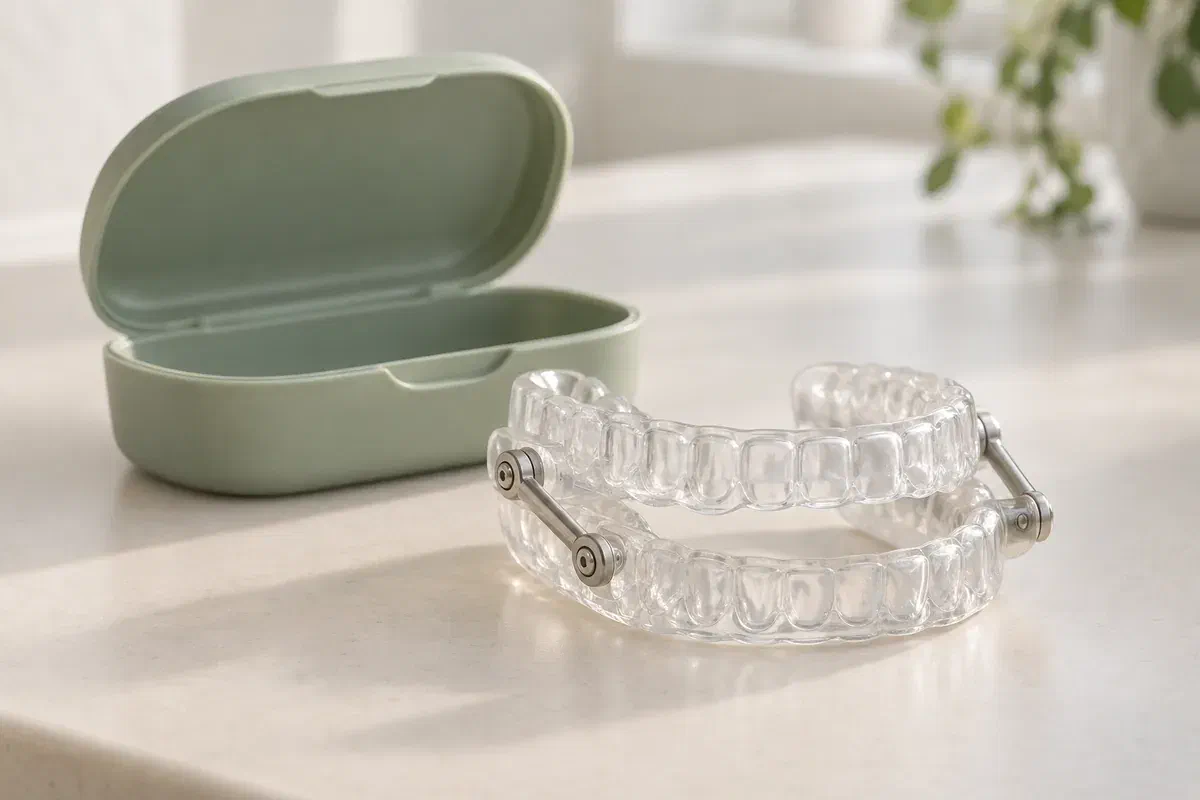
Illustrative connected upper and lower oral-appliance trays beside a pale sage storage case
Questions to settle first

Not every sleep concern starts at the dental office.

Let us know whether a physician has assessed your sleep and what they recommended. We can help with the dental questions, but diagnosis and treatment decisions start with medical care.

Snoring with no diagnosis behind it

Breathing pauses someone has witnessed, mornings that feel unrested, or daytime sleepiness should go to your family doctor. Snoring might be harmless or might be linked to sleep apnea, and a medical assessment decides which. Reduced noise proves nothing about breathing.

Prescribed treatment you can't keep up

Tell us what you were given and where it fails you. Bring the same details to your sleep-care team, who can troubleshoot and say whether an appliance might be an alternative or addition. Keep using what you have until they recommend a change.

Teeth, gums or jaw that need attention

Loose teeth, gum treatment, implants, dentures, bridges or jaw discomfort can all affect suitability. Mention them early, and ask whether dental care should come first and how changes to your teeth would be watched during appliance use.

As the Canadian Dental Association sets out, a physician should assess snoring or possible obstructive sleep apnea, and the dentist and physician should collaborate, before an oral appliance is started.

What a measured approach gives you

Evidence that your treatment is doing its job

The real benefit of a coordinated appliance plan is confidence. Before anything is made, you and your physician can discuss why this option might fit your diagnosis, how it compares with what you already use, and where it falls short. Later, testing replaces guesswork. A device that is easy to wear only helps if it also controls the condition.

A good plan names who does each job. The dental team fits the appliance, guides adjustments and keeps watch on your teeth and bite. Your sleep-care provider decides when breathing is retested and what the results mean. Settle that before fabrication and the follow-up is far easier to manage.

Patient information: AASM and AADSM — custom appliances, dental oversight, and follow-up sleep testing

A recommendation tied to your results

Bring the sleep report and recommendations, and ask whether any further information would help. The choice should rest on your diagnosis and history, with the sleep physician involved, rather than on wanting something less obtrusive.

A mouth that can support the device

Ask how the appliance would be retained and whether your gums and jaw can tolerate the design. Mention upcoming dental work and any other appliance. These findings may affect timing, design or the need for another provider.

A testing step built into the plan

Ask when your response will be evaluated and what kind of testing your physician intends. Report symptoms honestly, knowing that feeling better is not confirmation on its own. Ask what happens next if results show only partial control.

The path to a confirmed result

Each stage leads to the test that matters.

Timing depends on medical advice and what we find at the dental assessment. Ask about every stage and fee, including the assessment, fabrication, adjustment, dental reviews and the separate sleep-care follow-up.

  1. Starting point: your diagnosis

    We review the sleep assessment, your health background and treatment recommendations, and you describe any difficulty with current therapy. Together we settle how information reaches your physician and which therapy stays in use for now.

  2. Assessment and records

    The clinician examines teeth, gums, restorations and jaw function. When an appliance looks appropriate, you hear which design is proposed and which impressions or scans it needs. It is fair to ask about the treating dentist's training in dental sleep care, or whether referral makes sense.

  3. Fitting and guided adjustment

    Once the appliance is ready, the clinician checks how it sits and teaches you to insert, remove, clean and store it. Adjustments happen gradually and only as instructed. Advancing it yourself to stop snoring faster can cause jaw or bite problems.

  4. Objective testing and ongoing reviews

    Effectiveness is assessed on the medical side, sometimes with a sleep study done while you wear the appliance. Dental visits continue to monitor fit and changes in your teeth. Ask how the results are shared and what changes if control is not adequate.

Keeping the result on track

Good habits, honest reports and testing when it is due

Your instructions depend on the device and the agreed plan. Keep both teams' contact details handy so a comfort issue goes to the dental office and a symptom question goes to your sleep-care provider.

Wear and clean it as prescribed

Follow the wear schedule, adjustment steps, cleaning routine and storage advice. Use the case when you travel and bring the appliance to every dental review. A broken or loose device calls for a phone call and an interim plan, not a home repair.

Notice early changes in your mouth

Report sore teeth, irritated gums, jaw discomfort that lingers or a bite that feels different. Ask which signs mean stopping use and being seen promptly. Do not force an uncomfortable appliance into place or keep adjusting it.

Treat retesting as part of treatment

Tell your sleep-care team if symptoms return, if wearing it becomes difficult or if your health changes. Keep testing appointments even when the appliance feels fine. If you stop using it, ask right away what should replace it in the meantime.

Patient information: American Academy of Dental Sleep Medicine — appliance discomfort and dental effects · NHLBI — sleep deficiency and its effects on driving and daily function

Halton Hills treatment options

What are the alternatives, and who decides?

The right approach reflects your type and severity of sleep apnea, general health, how well treatment has worked and your dental suitability. An oral appliance is one option within that review.

When it is the medically recommended therapy

Positive airway pressure, with adjustments

If you struggle with it, ask your sleep-care team about mask, setting or support changes before you stop. They can also discuss alternatives. A dental consultation should not overrule a medical recommendation by itself.

When both medical and dental findings support it

A custom appliance, retested and reviewed

Discuss the design, its limitations, the adjustment plan and how effectiveness will be measured. Ask how your teeth will be monitored over the long term. Precision helps, but no appliance can guarantee control of sleep apnea in everyone.

When your physician recommends another approach

Additional or different measures

Depending on your findings and response, your physician may discuss further measures or a specialist referral. Ask how they fit with current therapy and when reassessment is planned. Lifestyle or sleeping-position strategies should not be treated as replacements without medical review.

Patient information: NHLBI — sleep-apnea treatment options and individualized medical care

Questions about results

Testing, adjustments and what happens if it falls short

Bring your sleep-care records and any questions about your test results. We will help you see where the dental side fits into your physician's plan.

(905) 876-4488
Why would I need another sleep test if I already feel better?
Feeling rested is encouraging, but breathing interruptions can continue without obvious symptoms. Your sleep-care provider uses testing to see whether the appliance is controlling sleep apnea adequately. Follow their recommendations on when and how that happens.
Who arranges the follow-up sleep study?
Your physician or sleep-care provider arranges and interprets it. The dental team can share information about the appliance and its adjustment so the results are understood in context.
What happens if testing shows the appliance is only partly working?
Your sleep-care provider will discuss next steps, which might include further dental adjustment, combining treatments or a different approach. The dental team can explain what changes to the device are possible and safe.
Do I wear the appliance during the follow-up test?
Usually the point is to see how you breathe with it in place, but follow the specific instructions your sleep-care provider gives you for the test.
Should I keep adjusting the appliance until I stop snoring?
No. Adjust only as your treating clinician directs. Snoring is not a reliable guide to whether sleep apnea is controlled, and moving the jaw too far can cause discomfort or bite changes.
Can my results change over the years?
They can, for example with changes in weight, health or the appliance itself. Report returning symptoms, keep dental reviews, and ask your physician whether periodic reassessment is recommended for you.
Appliance care for Halton Hills adults

Plan the appliance, and plan how it will be checked.

Get in touch with our Bronte Street practice and bring your diagnosis and recommendations. We will cover dental suitability, the records you may need, and how coordination or referral would be arranged for appliance care.

Each plan, including oral health, provider roles, retesting and fees, needs individual review. An appliance is not a guaranteed way to control sleep apnea and should only replace prescribed care on coordinated advice.

Visit Milton Dental Clinic
Unit 1, 342 Bronte St. S, Milton, ON L9T 5B7
Get directions Clinic hours
Monday–Thursday
11am–7pm
Friday–Sunday
By appointment only

Areas we serve

  • Milton
  • Oakville
  • Mississauga
  • Georgetown
  • Halton Hills
  • Acton
  • Campbellville
  • Brampton
  • Burlington
  • Puslinch
  • Rockwood
  • Erin
  • Caledon
  • Etobicoke
  • Old Milton
  • Bronte Meadows
  • Timberlea
  • Dorset Park
  • Dempsey
  • Clarke
  • Beaty
  • Coates
  • Harrison
  • Scott
  • Willmott
  • Ford
  • Bowes
  • Cobden
  • Walker
  • Mountain View
  • Milton Heights
  • Hawthorne Village
  • Valley View
  • Fallingbrook
  • Nassagaweya
  • Trafalgar
  • Esquesing
  • Nelson
  • Brookville
  • Moffat
  • Glen Williams
  • Norval
  • Limehouse
  • Stewarttown
  • Ashgrove
  • Hornby
  • Silver Creek
  • Speyside
  • Scotch Block
  • North Oakville
  • River Oaks
  • Glen Abbey
  • West Oak Trails
  • Palermo
  • Bronte Creek
  • College Park
  • Joshua Creek
  • Uptown Core
  • Preserve
  • Iroquois Ridge
  • Lisgar
  • Meadowvale
  • Meadowvale Village
  • Churchill Meadows
  • Erin Mills
  • Central Erin Mills
  • Streetsville
  • East Credit
  • Creditview
  • Heartland
  • Sheridan
  • Mount Pleasant
  • Credit Valley
  • Huttonville
  • Churchville
  • Springbrook
  • Northwest Brampton
  • Bram West
  • Fletcher's Meadow
  • Fletcher's Creek South
  • Alton Village
  • Orchard
  • Millcroft
  • Headon Forest
  • Tansley
  • Brant Hills
  • Tyandaga
  • Kilbride
  • Lowville
  • Aberfoyle
  • Morriston
  • Arkell
  • Hillsburgh
  • Freelton
  • Carlisle
  • Waterdown
  • Flamborough
  • Mountsberg

How can we help?

Milton Dental Clinic

Have a question about your smile? Choose the option that works best for you.

For urgent dental concerns, please call.
Messages are reviewed during clinic hours.