

Illustrative clinician explaining a tooth-and-gum model to a patient before a cleaning appointment
Specialized Care

Deep Dental Cleaning in Erin

A treatment plan is easier to accept when you know exactly what you are agreeing to. For households in Erin and Hillsburgh, we go through the gum findings, the estimate, the comfort plan and the review before any periodontal cleaning is booked.

Before you say yes, from Erin

A short list of questions worth asking

Which treatment is this, exactly? Which teeth does it involve? What did the exam show? How will it feel, how many visits will it take, what will it cost and how will we know it worked? Those questions cover most of what you need to make an informed decision, and none of them is awkward to ask.

Deep cleaning is the everyday name for nonsurgical periodontal treatment, usually written on a plan as scaling and root planing. It removes plaque and calculus from root surfaces beneath the gum, where gum disease is active. The goal is healthier tissue, which is a different purpose from polishing visible enamel.

Write your questions down and bring them. Mention past cleanings that hurt, sensitive teeth and any health conditions or medicines. If you are planning trips from a rural property, tell us which days work best so the sequence can be arranged sensibly.

Get my questions answered
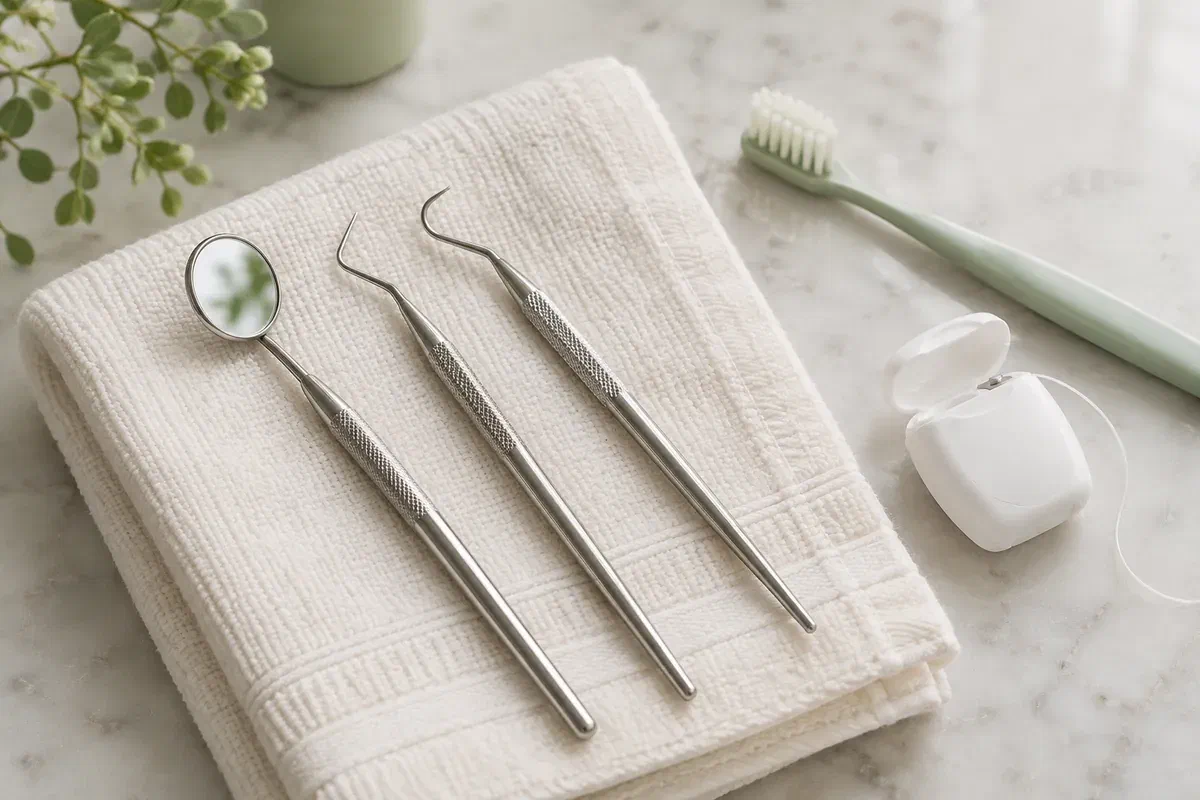
Illustrative periodontal cleaning instruments and a dental mirror beside everyday oral-care tools
Question one: why?

Ask to see the reasons behind the plan

Every site in the plan should have an explanation. Feeling fine is worth mentioning, but it does not by itself show that the gums are free of disease.

What do the measurements show?

Probe readings indicate where the gum has separated from the tooth. Your clinician reads them alongside bleeding, inflammation, bone levels on images and your history. Ask for a plain explanation of how your readings support the recommendation.

Which symptoms matter?

Bleeding, tenderness, swelling and food trapping all add information. Describe where they happen and what tools you use. The answers shape both the treatment and the home routine you will be asked to follow.

Does my history change anything?

Previous gum treatment is relevant, so bring dates or notes if you have them. Ask whether this plan treats new sites, persistent ones or maintenance. Earlier care is useful context but does not commit you to repeating it every time.

Gum readings, tooth findings, health history and any indicated images come together in a periodontal assessment. Deeper cleaning should be justified by those findings, not offered because more thorough simply sounds better.

Question two: what will it achieve?

A fair description of the expected benefit

Calculus on root surfaces below the gum keeps tissue inflamed, and home care cannot remove it. Professional treatment does, giving the gums a chance to heal. The result is assessed at a review appointment, through new measurements and examination, so ask what improvement is realistic for your sites rather than expecting a promise.

You also play a part. A good plan leaves you knowing which areas to clean carefully, with which tools and how often, and when to come back. If the routine sounds unmanageable on a farm or shift schedule, say so; a practical, simpler method is more useful than a long list.

Patient information: American Academy of Periodontology — scaling, root planing, and continuing maintenance

Which sites are included?

Your plan might cover a few teeth or several sections. The scope explains session length and whether visits are split. It should be individual, not a standard package offered to everyone.

How will comfort be handled?

Describe sensitivity, anxiety or an earlier painful cleaning. Ask whether local anaesthetic is recommended and how to request a pause. Knowing this beforehand helps the day feel more predictable.

When will it be reviewed?

Ask when the reassessment is planned and what would lead to more treatment. Sites respond at different rates. The review shows whether maintenance, further cleaning or a periodontist's opinion is the next step.

Question three: what happens?

The appointments, one by one

The number and length of visits depend on how much needs treating and on your comfort. Ask for the full sequence, review included, so you can plan travel and time away from work or the farm.

  1. Findings and estimate

    This is where your list comes out. The clinician explains the gum chart and any X-rays, checks your health history and previous care, and names each site that needs work beneath the gum. Request a written estimate and confirm whether the review is included.

  2. Comfort and health review

    Share sensitivity, anxiety, health conditions and medicines. Local anaesthetic may be suggested for the treated areas. Keep taking prescribed treatment unless your physician advises otherwise, and agree on a signal for a break.

  3. Treatment

    Deposits are removed from the identified root surfaces with appropriate instruments, with technique and staging guided by access and findings. You are shown how to clean the treated sites before leaving, and can ask for any step to be repeated.

  4. Reassessment

    After the healing interval, symptoms and measurements are checked. You discuss what improved and which areas need more attention, which guides maintenance or further care. Completing treatment does not by itself secure long-term stability.

Question four: what about afterward?

Aftercare you can follow at home

Instructions depend on the treatment and whether freezing was used. Ask what discomfort is expected and when to call before the review, especially if you live a fair way out.

Protect numb areas

Wait until feeling returns before eating, and avoid hot drinks that could burn a lip or cheek you cannot feel. Report sensitivity that is severe, persistent or different from what was described. A sore tooth later may have another explanation.

Follow the demonstrated routine

Keep to the routine the hygienist or dentist practised with you, including the interdental step. When a gap feels different or a tool stops fitting, call for advice. Do not scrub hard, and do not avoid tender spots; ask how to clean them gently.

Attend the review

Tell the clinician how bleeding, comfort and cleaning have changed. As inflammation settles, gums may look different, so raise any concern about gaps or recession. The review checks tissue health, not just how things appear.

Patient information: University Dental Hospital of Manchester — periodontal treatment, sensitivity, and gum changes

Question five: are there alternatives?

The options that may apply to your gums

Ask which option your findings support and how that was decided. Knowing the purpose of each appointment type helps you weigh the plan.

When the findings support prevention

Routine cleaning and advice

If periodontal treatment is not indicated, a regular cleaning may be enough. Ask what is being maintained and what to focus on at home. A gap since your last visit does not, alone, decide that deeper cleaning is needed.

When certain sites need treatment under the gum

Scaling and root planing

Discuss the areas, comfort, staging and reassessment. The treatment aims to manage gum disease with support from daily care. It should not be described as restoring bone or removing the need for maintenance.

When some sites need more than the first step

Further treatment or a specialist

Persistent areas or more complex disease may need extra care or referral. Ask what remains unclear and what the next exam will answer. More care does not mean every site needs surgery or that earlier treatment failed.

Asked in Erin and Hillsburgh

Money, time and comfort

Practical questions deserve straight answers. Ask about the estimate, scheduling, comfort and how this treatment differs from routine cleanings.

(905) 876-4488
Can I get a written estimate before deciding?
Certainly. Ask for an estimate based on the proposed treatment and read it before you book. Check whether it includes the review appointment and any anaesthetic, and whether the sessions are itemized. Fees depend on the assessment, so the figure reflects your specific plan rather than a set price, and it may change if the plan does.
Will my dental plan cover scaling and root planing?
Coverage varies a great deal between plans, and we cannot promise what yours includes. Ask the team for the treatment details and codes your provider may request, then confirm coverage with the provider directly before booking if that is going to weigh on your decision.
Is it reasonable to take time to think about the recommendation?
It is. Take the findings and estimate home, talk them over with family, phone with follow-up questions and decide when you are ready. If the clinician has concerns about waiting too long, ask them to describe those concerns plainly so your decision is an informed one rather than a rushed one.
Could I get a second opinion on a deep-cleaning recommendation?
You are always free to seek another opinion, and doing so is a normal part of making health decisions. Asking for copies of your records, such as gum measurements and images, can help the next clinician review the same information instead of starting over from nothing.
Why can deep cleaning take more than one appointment?
Treating several areas below the gum takes time, and splitting the work can make each session shorter and more comfortable, with fewer parts of the mouth frozen at once. The number of visits depends on the sites involved, your comfort and your preferences, including how often the trip in is practical for you.
What happens if I miss my review appointment?
Contact the clinic to rebook as soon as you can. The review is how the clinician sees whether the gums responded and decides on a maintenance interval, so leaving it out means nobody knows how the treated sites are doing. A slightly later date is far better than no review at all.
From Erin to Milton

Every answer before the first appointment

Contact our Bronte Street practice to go over a deep-cleaning recommendation or concerns about your gums. We will walk you through the findings, the estimate, comfort and staging, and the review that follows, and leave room for every question on your list, however small it seems.

Diagnosis, treatment scope, comfort options, visit numbers, maintenance timing and fees depend on assessment. A single course of cleaning cannot guarantee permanent gum stability.

Visit Milton Dental Clinic
Unit 1, 342 Bronte St. S, Milton, ON L9T 5B7
Get directions Clinic hours
Monday–Thursday
11am–7pm
Friday–Sunday
By appointment only

Areas we serve

  • Milton
  • Oakville
  • Mississauga
  • Georgetown
  • Halton Hills
  • Acton
  • Campbellville
  • Brampton
  • Burlington
  • Puslinch
  • Rockwood
  • Erin
  • Caledon
  • Etobicoke
  • Old Milton
  • Bronte Meadows
  • Timberlea
  • Dorset Park
  • Dempsey
  • Clarke
  • Beaty
  • Coates
  • Harrison
  • Scott
  • Willmott
  • Ford
  • Bowes
  • Cobden
  • Walker
  • Mountain View
  • Milton Heights
  • Hawthorne Village
  • Valley View
  • Fallingbrook
  • Nassagaweya
  • Trafalgar
  • Esquesing
  • Nelson
  • Brookville
  • Moffat
  • Glen Williams
  • Norval
  • Limehouse
  • Stewarttown
  • Ashgrove
  • Hornby
  • Silver Creek
  • Speyside
  • Scotch Block
  • North Oakville
  • River Oaks
  • Glen Abbey
  • West Oak Trails
  • Palermo
  • Bronte Creek
  • College Park
  • Joshua Creek
  • Uptown Core
  • Preserve
  • Iroquois Ridge
  • Lisgar
  • Meadowvale
  • Meadowvale Village
  • Churchill Meadows
  • Erin Mills
  • Central Erin Mills
  • Streetsville
  • East Credit
  • Creditview
  • Heartland
  • Sheridan
  • Mount Pleasant
  • Credit Valley
  • Huttonville
  • Churchville
  • Springbrook
  • Northwest Brampton
  • Bram West
  • Fletcher's Meadow
  • Fletcher's Creek South
  • Alton Village
  • Orchard
  • Millcroft
  • Headon Forest
  • Tansley
  • Brant Hills
  • Tyandaga
  • Kilbride
  • Lowville
  • Aberfoyle
  • Morriston
  • Arkell
  • Hillsburgh
  • Freelton
  • Carlisle
  • Waterdown
  • Flamborough
  • Mountsberg

How can we help?

Milton Dental Clinic

Have a question about your smile? Choose the option that works best for you.

For urgent dental concerns, please call.
Messages are reviewed during clinic hours.