

Illustrative patient discussing an urgent dental concern with a clinician
Specialized Care

Dental Abscess Treatment

Tooth pain with swelling or a suspected infection needs prompt attention. Call about dental abscess treatment in Milton so we can discuss your symptoms, current availability, and the assessment needed to plan appropriate care.

A closer look at dental abscess treatment

Find the source of the infection. Understand the next step.

A dental abscess is a collection of pus associated with an infection in a tooth or the surrounding tissues. It needs dental assessment and treatment. Pain, swelling, or drainage can prompt concern, but an examination is needed to identify the source and distinguish it from other problems that may feel similar.

The immediate question is how urgently you need care and where it should take place. The treatment question is how to address the underlying problem. A plan may involve drainage, care inside a tooth, removal of a tooth that cannot be predictably retained, or treatment of the surrounding tissues, depending on the findings.

Call Milton Dental Clinic and describe what has changed, when it began, and whether you feel unwell. We can discuss availability and the appropriate next step. Do not wait for a callback form or email response when symptoms are urgent; if we cannot be reached, seek another available emergency dental provider.

Request an assessment of your tooth
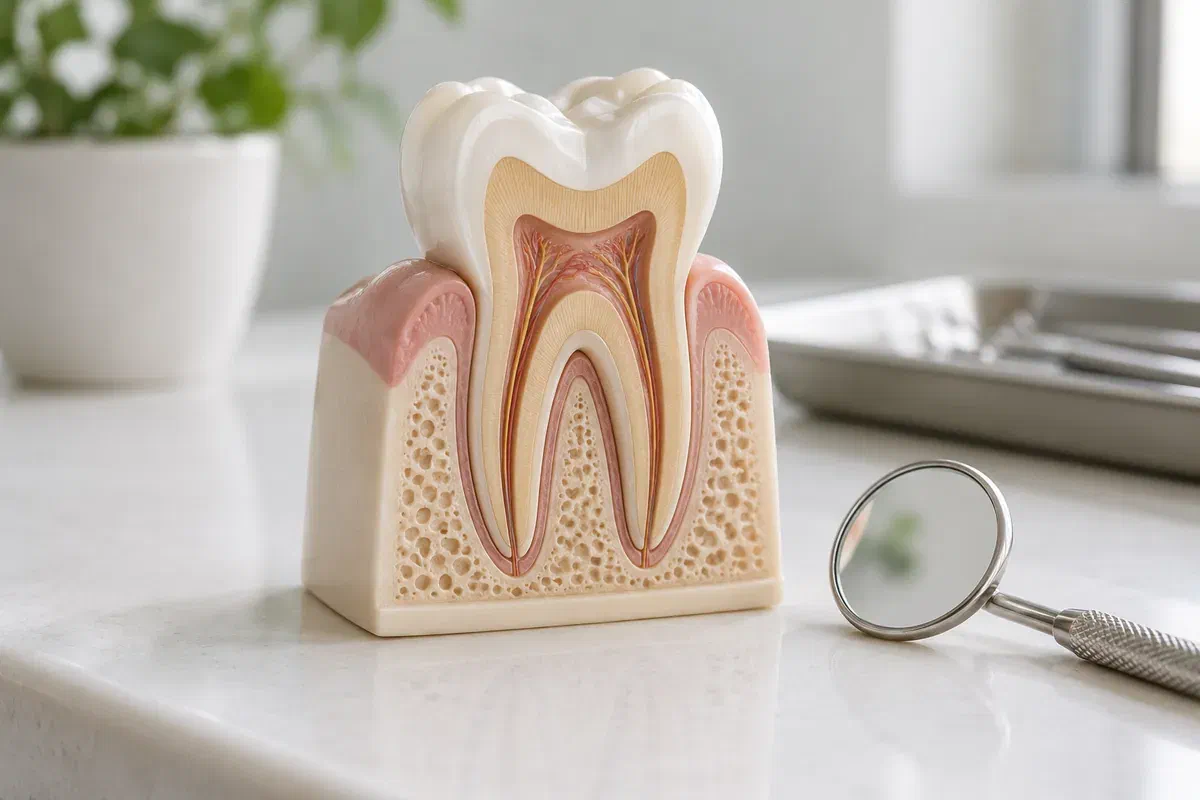
Illustrative physical model showing the inside of a tooth beside a dental mirror
What to explain when you call

Describe the changes, including anything beyond the painful tooth.

A clear account helps the team understand your concern before you arrive. You do not need to decide whether the problem is definitely an abscess or know the treatment you will need.

Where the pain or swelling started

Explain which part of your mouth is affected and whether the area has changed since you first noticed it. Mention difficulty biting, an unusual taste, or a nearby gum bump. Describe your observations rather than repeatedly pressing the area to test it.

How you feel more generally

Tell the team about fever, feeling unwell, or swelling extending beyond the gum. Mention relevant medical conditions, medicines, and any recent treatment. These details can affect the urgency and setting of care, so include them even if they seem separate from the tooth.

What has already been tried

Explain any dental advice or medication you have received and when it started. Bring the names of prescribed medicines and information about allergies. If symptoms improved and then returned, say so; that history is more useful than assuming the earlier problem has completely resolved.

Call 911 or seek immediate hospital emergency care for trouble breathing or swallowing, eye swelling or vision changes, or substantial or rapidly spreading facial or mouth swelling. Do not wait for a dental form response.

What an assessment should clarify

Relief matters. So does a plan for the cause.

An urgent visit should help you understand what has been found and what can be done next. Ask whether the proposed care addresses the source or is an initial stage that needs completion. Feeling better after an appointment is useful, but it should not leave you uncertain about outstanding treatment.

The recommendation also needs to account for the tooth's condition and your wider health. You should be able to ask about the reasons for retaining or removing a tooth, the limits of each option, and the likely sequence. Urgency does not remove the value of a clear explanation.

Patient information: American Dental Association — antibiotics and definitive dental treatment

A diagnosis linked to the affected area

The clinician considers the history, examination, and indicated images or tests. Ask which findings identify the likely source. Pain can be difficult to locate, and the tooth you suspect is not always the whole explanation for what you are feeling.

An explained role for medication

Antibiotics are not a substitute for necessary dental treatment. Whether they are appropriate depends on the diagnosis, signs of spread or systemic illness, medical circumstances, and access to definitive care. Ask what any prescribed medicine is intended to do and what treatment still needs arranging.

A practical plan after the urgent visit

Clarify the next appointment, who will provide it, and what to do if symptoms change beforehand. Ask for the estimate and any referral information. A written sequence can be especially helpful when discomfort or worry makes it hard to remember a conversation.

From your first call to the treatment plan

Assess urgency, identify the source, and agree on the care required.

What happens at the first appointment depends on the findings and available care. Ask which parts can be addressed during that visit and which will need another appointment or referral.

  1. Share the timeline and relevant health information

    Describe the onset, changes, previous dental work, and any medication already taken. Tell us about allergies and conditions that may affect treatment. If your symptoms worsen while waiting, contact an appropriate provider again rather than relying on the original appointment arrangement.

  2. Examine the area and explain the findings

    The dentist checks the affected teeth and tissues and considers any indicated imaging or tests. Ask what is known and whether any uncertainty remains. The assessment should connect your symptoms to a working diagnosis before a treatment decision is made.

  3. Discuss suitable treatment and obtain consent

    Review the proposed procedure, comfort measures, alternatives, limitations, and fees. Depending on the source, care may involve drainage and treatment of the responsible tooth or tissues. Ask whether this is definitive care or the beginning of a longer plan.

  4. Confirm instructions and the follow-up arrangement

    Before leaving, clarify expected changes and the signs that require further help. Confirm how any unfinished treatment will be completed. If a referral is recommended, ask what information will be sent and whom to contact about the appointment.

Between the urgent visit and recovery

Follow the instructions for the treatment you actually received.

Aftercare differs following drainage, root canal care, an extraction, or treatment of the gums. Ask for guidance specific to your procedure rather than applying advice from a previous, unrelated appointment.

Keep the planned completion or review visit

Write down the next step and arrange it before it is forgotten. If the appointment becomes difficult to attend, call to discuss an alternative. Symptom improvement does not tell you that every stage of the dental plan has been completed.

Use medicines only as directed

Follow the prescriber's instructions and ask a pharmacist or clinician about uncertainty, interactions, or adverse effects. Do not use another person's antibiotics or leftover medication. If you cannot take a prescribed medicine, contact the prescriber so the plan can be reviewed.

Report a changing pattern promptly

Contact the team if discomfort, swelling, or general illness is worsening or differs from what was discussed. Explain the treatment date and what has changed since then. Do not try to puncture, squeeze, or drain a swollen area at home.

Choosing treatment for the source

The right approach depends on the diagnosis and the tooth's prospects.

Ask what each option is expected to achieve, what care follows it, and what the consequences of delaying would be. No single procedure is suitable for every suspected abscess.

When the tooth can reasonably be restored

Treatment intended to retain the tooth

If the source is inside a restorable tooth, root canal care may be discussed. Ask about the treatment stages and the restoration needed afterward. The decision considers the whole tooth, including its remaining structure and support, rather than the infection alone.

When retaining the tooth is unsuitable

Removal and a separate replacement discussion

Extraction may be recommended if the tooth cannot be predictably treated or restored. Ask why retention is not advised and what the immediate appointment involves. Replacement choices, timing, and costs can then be discussed as a separate part of the plan.

When the source or complexity calls for another approach

Care for the surrounding tissues or referral

An infection related to the gums or a more complex presentation may need different treatment or specialist care. Ask what the referral will clarify. The goal is an appropriate route to treatment, not fitting every swollen area into the same diagnosis.

Dental abscess questions

Understand urgency, medication, and what happens after the pain changes.

Use the phone for an urgent concern. These answers explain common planning questions, but the examination determines the diagnosis and care for your particular symptoms.

(905) 876-4488
If a suspected abscess starts draining, should I still keep my appointment?
Yes. Tell the dentist when the drainage began and whether other symptoms changed. A reduction in pressure or pain does not establish that the source has been treated. Keep the assessment so the area and the need for further care can be reviewed.
Does every dental abscess require an antibiotic prescription?
No. The decision depends on the clinical findings and your circumstances. Dental treatment often has the central role in addressing the source. Ask why a medicine is or is not recommended and what the definitive treatment plan involves.
Can an abscessed tooth always be saved with root canal treatment?
No guarantee can be made before assessment. The dentist considers the source of infection, remaining tooth structure, support, and whether a suitable restoration is possible. Ask for the reasons behind the recommendation and the realistic alternatives for that tooth.
What information should I have ready when calling about a possible abscess?
Describe the location, onset, swelling, and any fever or general illness. Mention difficulty swallowing or breathing immediately. Have your medication and allergy details available, along with information about recent dental treatment and any antibiotics already prescribed.
Can I wait for the clinic to reopen if the swelling is spreading?
Do not wait for our opening hours when symptoms are worsening. Seek an available emergency provider; substantial swelling or the emergency warning signs listed above require hospital care. A routine online enquiry is not an appropriate way to obtain immediate help.
Will the first abscess appointment finish all the dental treatment?
It depends on the findings and treatment required. Some care needs stages or referral. Before leaving, ask what has been completed, what remains, and when to return. Understanding that distinction helps you avoid mistaking temporary improvement for a finished treatment plan.
Dental abscess treatment in Milton

Call about the symptoms. Leave with a clearer next step.

Contact our Bronte Street practice to discuss a suspected dental infection and appointment availability. Explain any change in swelling or general health. If you need immediate care and cannot reach us, seek another available emergency dental provider.

Online requests are for non-urgent communication. Diagnosis, treatment, medication, referral, and fees depend on assessment; urgent or same-day availability is not guaranteed.

Visit Milton Dental Clinic
Unit 1, 342 Bronte St. S, Milton, ON L9T 5B7
Get directions Clinic hours
Monday–Thursday
11am–7pm
Friday–Sunday
By appointment only

How can we help?

Milton Dental Clinic

Have a question about your smile? Choose the option that works best for you.

For urgent dental concerns, please call.
Messages are reviewed during clinic hours.