

Illustrative patient discussing an urgent dental concern with a clinician
Specialized Care

Dental Abscess Treatment in Brampton

Calling for a parent, partner or teenager with a swollen, painful tooth? Households in Brampton can phone us with what they have noticed, and we will discuss urgency, availability and what the assessment involves.

For the person making the call

Someone at home has a bad tooth. What now?

Often the first person to notice is not the patient. A teenager stops chewing on one side, an older parent mentions a sore gum only when asked, a partner wakes up with a lopsided face. These can be signs of a dental abscess: pus that has collected because of infection in a tooth or the tissue supporting it. A dentist needs to examine it, partly to confirm the source and partly to rule out problems that mimic it.

Helping someone through this involves two separate decisions. First, how urgent is it and where should they be seen? Second, what treatment will tackle the cause? Once the dentist has the findings, that could mean drainage, work on the inside of the tooth, removing a tooth that cannot be reliably kept, or care for the gum and nearby structures.

From Brampton, a phone call is the fastest way to start. If you are calling for someone else, have them nearby so they can answer questions, and describe when it started and whether they seem unwell. Urgent problems should not wait on a form or email; if we cannot be reached, find another emergency dental provider who is open.

Arrange care for a family member
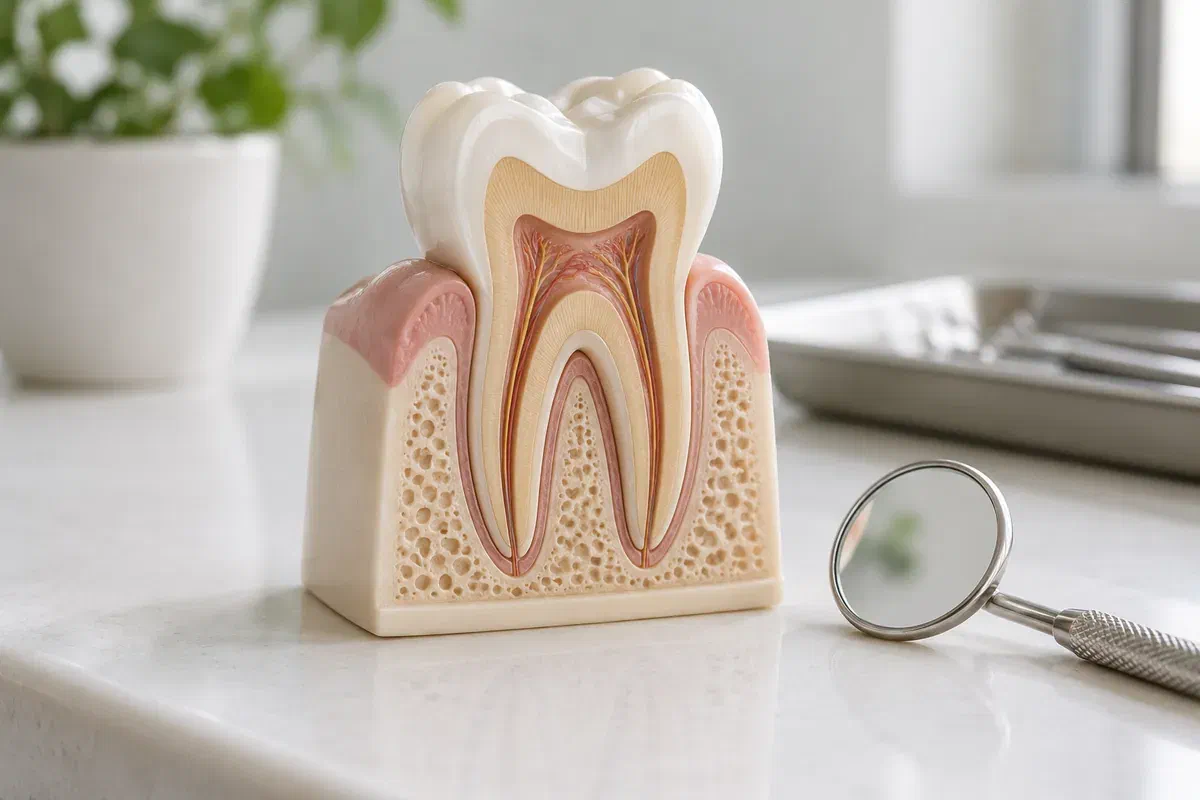
Illustrative physical model showing the inside of a tooth beside a dental mirror
Notes for caregivers

What to have ready, even if you are not the patient

Nobody expects you to diagnose the problem. A few clear observations, gathered before you dial, let the team judge how soon to see the patient and what to prepare.

What you can see and what they feel

Note which side is affected, whether there is visible swelling or a bump on the gum, and whether it looks bigger than yesterday. Ask the patient about pain on biting or a foul taste. Gently observe instead of pressing on the area to check.

Their health beyond the tooth

Report fever, unusual tiredness, poor appetite or swelling that reaches the cheek or jaw. For older relatives especially, list medical conditions and current medicines, and mention recent hospital or dental care. These facts can change how fast and where they should be seen.

Medicines and earlier advice

Write down any antibiotic or pain reliever they have taken and who suggested it, along with start dates. Bring the allergy list. If the problem eased before and has now come back, mention that history, because it tells the team more than assuming it had cleared.

Call 911 or head to hospital emergency care if the person has trouble breathing or swallowing, swelling around an eye or changes in vision, or swelling of the face or mouth that is large or spreading quickly. Do not wait for a callback from a dental office.

What a good visit gives the family

Everyone should leave understanding the plan

When you accompany someone to an urgent appointment, part of your role is making sure the explanation lands. Ask what was found, whether today’s care deals with the source, and whether it is the first of several stages. Relief for the patient is the priority, and clear next steps keep that relief from being temporary.

The recommendation should reflect the tooth’s condition and the patient’s wider health, which matters more for those managing other medical conditions. It is reasonable to ask why the tooth should be kept or removed, what each option cannot do and the likely order of visits.

Patient information: American Dental Association — antibiotics and definitive dental treatment

A source linked to the findings

The dentist brings together the history, what the examination shows and any X-rays or other checks the situation calls for. Ask which findings point to the cause. A person may feel pain in one spot while the real trouble sits beside it.

The reason behind any prescription

Antibiotics are not a substitute for necessary dental work. They may or may not be suitable, depending on the diagnosis, signs of spread or general illness, the patient’s medical history and when treatment can be done. Ask what any medicine is for.

Written instructions for home

Find out the date of the next appointment, who will provide it and what to watch for in the meantime. Request the estimate and referral details if relevant. A written summary is easier to share with others in the household.

The appointment, start to finish

What happens after you bring them in

The first visit varies with the findings and with what is possible on the day. Ask which steps happen then and which will need a further appointment or a referral.

  1. Health history and the story so far

    We ask about the start of symptoms, how they changed, past dental work and medicines taken. Allergies and conditions that could affect care are recorded. If the patient gets worse before their appointment, contact us again or seek another suitable provider promptly.

  2. A careful examination

    The dentist looks at the teeth and tissues involved and judges whether X-rays or other checks would help. You and the patient can ask what is certain and what is not. Symptoms are matched to a working diagnosis before treatment is decided.

  3. A shared decision on treatment

    The dentist explains the proposed procedure, how comfort will be managed, the alternatives, limits and fees. Depending on the source, it may involve drainage and treating the responsible tooth or tissue. Ask whether this completes care or begins a longer plan.

  4. Instructions everyone can follow

    Before leaving, confirm which changes are expected and which signs mean getting help again. Make sure you know how unfinished treatment will be arranged. If there is a referral, ask what goes to the specialist and who books it.

Looking after them at home

Match the care at home to the treatment given

Drainage, a root canal, an extraction and gum treatment each need different aftercare. Ask for directions specific to what was done, rather than reusing advice someone in the family received for another procedure.

Keep track of the next visit

Note the follow-up date somewhere the household can see it. If it no longer works, phone to change it. A patient who feels better has not necessarily reached the end of the dental plan.

Give medicine as instructed

Follow the directions on the prescription, and check with a pharmacist about other medicines the patient takes or any side effects. Never share antibiotics between family members or use old leftovers. If a medicine cannot be taken, tell the prescribing clinician.

Call when something seems off

Contact the team if pain, swelling or general illness is getting worse or not following the expected course. Mention when treatment happened and what changed. Discourage anyone from squeezing, poking or draining a swollen spot at home.

Treatment choices

What the dentist may suggest for the source

Ask what each option should achieve, what follows it and what delaying it could mean. Every suspected abscess is different, and no single procedure fits all of them.

If it can be restored

Keeping the tooth with root canal care

When infection starts inside a tooth that can be rebuilt, root canal treatment may come up. Ask about the stages and the restoration needed later. The whole tooth is weighed, including how much sound structure and support it has.

If keeping it would be unpredictable

Taking the tooth out

Extraction may be recommended when a tooth cannot be treated or rebuilt with confidence. Ask why keeping it is not advised and what removal involves on the day. Replacing the tooth, the timing and cost can be discussed separately.

If the cause or case is more involved

Gum care or a specialist

Infection from the gums, or a more complicated presentation, may call for different treatment or a referral. It is fair to ask what the specialist is expected to assess. The goal is an appropriate route to care for this particular person.

Family questions

Brampton households ask us these

Call us for anything urgent. These answers support planning, but only the examination can determine the diagnosis and treatment.

(905) 876-4488
Can I call to book an abscess visit on behalf of a relative?
Yes. It helps if they are with you to answer questions and give consent where needed. Have their medicine list, allergies and a description of the symptoms ready when you phone.
Should I come into the treatment room with my parent?
Many patients appreciate support, especially when they are anxious or find details hard to recall. Ask when you arrive. Bring a list of questions so nothing important is missed.
Can children get dental abscesses too?
They can, including in baby teeth. Swelling, a gum bump or a child refusing to chew on one side are reasons to call. Treatment depends on the tooth and what the dentist finds.
How do I describe symptoms well for someone who cannot explain them?
Note what you observe: swelling, fever, changes in eating or sleep, and when you first noticed. Photos taken at intervals can help. Share medical conditions and medicines so the team gets a full picture.
Do antibiotics alone fix a family member’s infected tooth?
Usually not on their own. Dental treatment is often central to dealing with the source. Ask why medicine is or is not suggested and what treatment the plan still includes.
What should we watch for at home after treatment?
Ask for written guidance specific to the procedure. Increasing pain or swelling, fever or feeling unwell are reasons to call. Difficulty breathing or swallowing needs 911 or hospital care.
Brampton to our clinic

Call with the details. We will help you plan.

Phone our Bronte Street practice about a family member’s possible tooth infection and when we can see them. Mention any change in swelling or general health. If immediate help is needed and we are unavailable, reach out to another emergency dental provider.

Online requests suit non-urgent messages. Diagnosis, treatment, medicines, referrals and fees depend on assessment, and urgent or same-day appointments cannot be promised.

Visit Milton Dental Clinic
Unit 1, 342 Bronte St. S, Milton, ON L9T 5B7
Get directions Clinic hours
Monday–Thursday
11am–7pm
Friday–Sunday
By appointment only

Areas we serve

  • Milton
  • Oakville
  • Mississauga
  • Georgetown
  • Halton Hills
  • Acton
  • Campbellville
  • Brampton
  • Burlington
  • Puslinch
  • Rockwood
  • Erin
  • Caledon
  • Etobicoke
  • Old Milton
  • Bronte Meadows
  • Timberlea
  • Dorset Park
  • Dempsey
  • Clarke
  • Beaty
  • Coates
  • Harrison
  • Scott
  • Willmott
  • Ford
  • Bowes
  • Cobden
  • Walker
  • Mountain View
  • Milton Heights
  • Hawthorne Village
  • Valley View
  • Fallingbrook
  • Nassagaweya
  • Trafalgar
  • Esquesing
  • Nelson
  • Brookville
  • Moffat
  • Glen Williams
  • Norval
  • Limehouse
  • Stewarttown
  • Ashgrove
  • Hornby
  • Silver Creek
  • Speyside
  • Scotch Block
  • North Oakville
  • River Oaks
  • Glen Abbey
  • West Oak Trails
  • Palermo
  • Bronte Creek
  • College Park
  • Joshua Creek
  • Uptown Core
  • Preserve
  • Iroquois Ridge
  • Lisgar
  • Meadowvale
  • Meadowvale Village
  • Churchill Meadows
  • Erin Mills
  • Central Erin Mills
  • Streetsville
  • East Credit
  • Creditview
  • Heartland
  • Sheridan
  • Mount Pleasant
  • Credit Valley
  • Huttonville
  • Churchville
  • Springbrook
  • Northwest Brampton
  • Bram West
  • Fletcher's Meadow
  • Fletcher's Creek South
  • Alton Village
  • Orchard
  • Millcroft
  • Headon Forest
  • Tansley
  • Brant Hills
  • Tyandaga
  • Kilbride
  • Lowville
  • Aberfoyle
  • Morriston
  • Arkell
  • Hillsburgh
  • Freelton
  • Carlisle
  • Waterdown
  • Flamborough
  • Mountsberg

How can we help?

Milton Dental Clinic

Have a question about your smile? Choose the option that works best for you.

For urgent dental concerns, please call.
Messages are reviewed during clinic hours.