

Illustrative patient discussing an urgent dental concern with a clinician
Specialized Care

Dental Abscess Treatment in Old Milton

A small bump on the gum beside an old crown, a filling that suddenly aches, a sour taste that keeps returning. In Old Milton, call us to describe the change and discuss how quickly an assessment should happen.

Old Milton · infection care

That bump on your gum has a story behind it

Plenty of people notice it while brushing: a little swelling on the gum, sometimes beside a tooth that was filled or crowned years ago, which seems to fade and then come back. That pattern can point to a dental abscess, a collection of pus tied to infection in a tooth or the tissue around it. It needs a dentist’s examination, because other conditions can look or feel much the same.

Once you call, the conversation sorts itself into two parts. One is timing: how soon you should be seen, and whether a dental chair is the right place. The other is cause. After the examination, treatment could mean draining the area, care inside the tooth, taking out a tooth that cannot be dependably kept, or treating the gum and supporting tissue.

From Milton’s historic downtown, our Bronte Street practice is a short way off, but please phone rather than walking in or sending a message. Say what has changed, when it began and whether you feel unwell. If we are unavailable and the symptoms are urgent, contact another emergency dental provider instead of waiting.

Book a look at that tooth
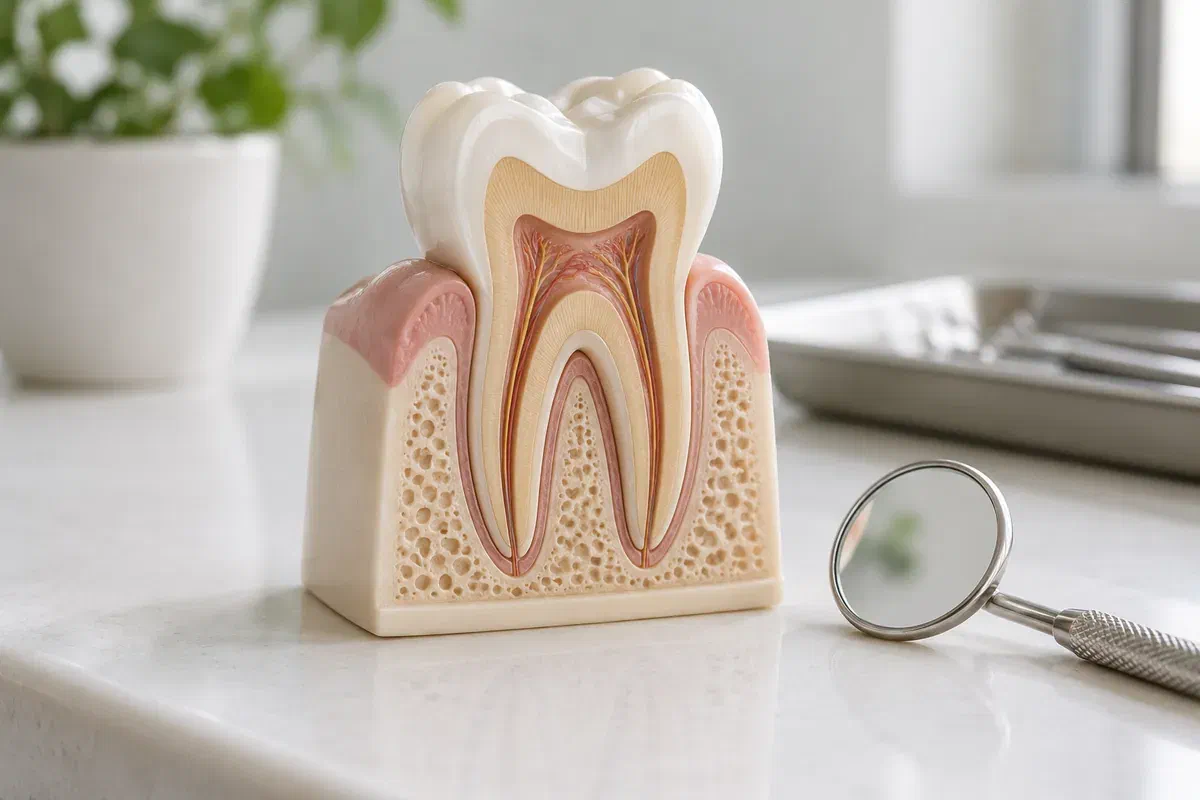
Illustrative physical model showing the inside of a tooth beside a dental mirror
Useful things to mention

Old dental work, new symptoms and how you feel overall

There is no need to diagnose yourself. A short, honest account of what you have seen and felt is enough for the team to judge urgency and plan the visit.

The tooth’s history

If the sore area sits near a crown, large filling or earlier root canal treatment, say so, along with roughly when that work was done. Describe any bump, odd taste or pain when chewing, and whether it has grown. Resist the urge to keep pressing on it.

Your general health right now

Fever, feeling run down or swelling that has moved past the gum line all matter. Mention ongoing health conditions, medicines you take and any recent medical or dental care. These facts can change how fast and where you should be seen, even if they feel unconnected.

What happened last time

If a dentist has already looked at this area or prescribed something, tell us when. Keep medicine names and allergies handy. A bump that drained, settled and then returned is an important detail, and it is more helpful than assuming the earlier episode was resolved.

Some signs cannot wait for a dental appointment: difficulty breathing or swallowing, swelling around the eye or changes to your sight, or a face or mouth swelling that is big or spreading fast. Call 911 or go to the nearest hospital emergency department.

A good assessment answers questions

Know what was found, what was done and what is left

Feeling better after an urgent visit is a relief, yet the more lasting benefit is understanding. You should know what the dentist saw, whether the treatment you received deals with the cause, and whether it was only a first stage. If any of that is unclear, ask before you leave the chair.

Older teeth with more dental work bring their own considerations. How much sound structure is left, how well the tooth is supported and your overall health all shape whether it makes sense to keep it. Ask about the reasons, the limits of each choice and the order things would happen in.

Patient information: American Dental Association — antibiotics and definitive dental treatment

Findings tied to a specific tooth or area

History, examination and any needed images or tests are weighed together. Ask which of them point to the source. Pain often feels like it is coming from one place when the trouble sits nearby, so the tooth you suspect may be only part of the picture.

A reason for any prescription

Antibiotics do not replace treatment that the tooth or gum actually needs. Whether one is suitable depends on the diagnosis, signs of spread or of illness through your body, your medical situation and how soon proper treatment is possible. Ask what it is meant to do.

Next steps you can follow

Confirm the date of the next appointment, who will provide it and what to do if symptoms change before then. Request the estimate and any referral details. A written outline is useful when a tense day makes the conversation hard to hold on to.

Step by step

What to expect once you are in the chair

How much happens at the first visit depends on what is found and what can safely be done that day. It is worth asking which parts are handled now and which need another appointment or a referral.

  1. A clear timeline

    We ask when it began, how it has changed, what work has been done on the tooth before and which medicines you have already taken. Allergies and health conditions come into it too. Should symptoms worsen before your booked time, reach out again or seek another suitable provider.

  2. Examination and explanation

    The dentist checks the tooth and the surrounding gum, then decides whether imaging or other tests are needed. You will hear what is known and what remains uncertain. A working diagnosis that fits your symptoms comes before any decision about treatment.

  3. Choosing treatment and giving consent

    You and the dentist review the suggested procedure, comfort options, alternatives, limitations and fees. Depending on the cause, that may involve drainage plus treatment of the tooth or tissue responsible. Ask whether this finishes the job or starts a longer plan.

  4. Instructions and follow-up

    Before you go, find out what changes are expected and what would mean you need help again. Make sure you know how any remaining treatment will be completed. With a referral, ask what records are being sent and whom to contact.

Recovering well

Advice should fit the treatment, not a past visit

Care after drainage differs from care after root canal treatment, an extraction or gum therapy. Ask for instructions that match what you had done, and set aside tips from an older, unrelated appointment.

Arrange the completion visit

Put the next step in your calendar now. If the time becomes hard to make, phone so another can be found. A tooth that feels fine is not evidence that the plan has been carried through to the end.

Follow medicine directions closely

Take medicines as the prescriber instructed, and check with a pharmacist or clinician about interactions, side effects or anything you are unsure of. Do not use leftover pills or a family member’s antibiotics. If you cannot take what was prescribed, let the prescriber know.

Speak up about changes

Contact the team if pain, swelling or feeling unwell is increasing, or simply not matching what you were told. Share the treatment date and what is different. Please do not try to burst, press or drain a swelling at home.

Possible treatment paths

Keep it, remove it, or look beyond the tooth?

With each option, ask what it should accomplish, what comes after and what delay might mean. There is no single procedure that suits every suspected abscess.

If the tooth is restorable

Root canal care to save the tooth

When the infection begins inside a tooth that can be rebuilt, root canal treatment may be offered. Ask about the stages and the restoration needed afterward. With heavily restored teeth, the remaining structure and support weigh as much as the infection itself.

Where keeping the tooth is not dependable

Extraction, with replacement discussed later

Removal may be the advice when a tooth cannot be treated or restored with confidence. Ask why keeping it is not recommended and what the appointment involves. Replacing it, when and at what cost, can be talked through as its own decision.

If the source lies elsewhere

Gum treatment or a specialist referral

Infection arising from the gums, or a situation that is more complicated, may need a different approach or a specialist. Ask what the referral is expected to clarify. The goal is the correct route to care for your particular findings.

Old Milton questions

What people ask about gum bumps and older teeth

For urgent symptoms, call rather than reading on. These answers help with planning, but your examination decides the diagnosis and treatment.

(905) 876-4488
Is a pimple-like bump on the gum always an abscess?
Not always. A bump can have several causes, though one that drains or tastes unpleasant is often linked to infection. The dentist needs to examine it, and may suggest imaging, to work out what it is and where it comes from.
Can a tooth that already had a root canal develop an abscess?
It can happen. Mention the earlier treatment and roughly when it was done. The dentist will assess the tooth, its restoration and the surrounding tissue before discussing whether retreatment, removal or another approach makes sense.
Why would an old crown or filling suddenly start to hurt?
There are several possible reasons, including decay at the edge of a restoration, a crack or a problem inside the tooth. An examination sorts these out. Note whether it hurts on biting, with temperature or on its own.
The bump drained by itself. Is it alright to cancel?
Please keep the visit. Drainage can ease pressure without removing the cause. Tell the dentist when it happened and whether anything else changed so the area can be checked properly.
Do I need antibiotics before anything else can be done?
Not necessarily. Dental treatment is often the main way the source is dealt with. Whether medicine helps depends on what the dentist finds and on your health. Ask what any prescription is for and what treatment is still needed.
How long should I expect the whole process to take?
That depends on the cause and treatment chosen. Some care is finished in one visit; other plans involve stages or a referral. Ask at the end of each appointment what is done, what remains and when to come back.
From Old Milton to Bronte Street

Tell us what changed on that tooth

Call our Bronte Street practice to talk about a possible infection and when we can see you. Describe any change in swelling or how you feel overall. If you need immediate help and cannot reach us, contact another emergency dental provider.

Online requests suit non-urgent questions. Diagnosis, treatment, prescriptions, referrals and fees depend on your assessment, and we cannot promise urgent or same-day availability.

Visit Milton Dental Clinic
Unit 1, 342 Bronte St. S, Milton, ON L9T 5B7
Get directions Clinic hours
Monday–Thursday
11am–7pm
Friday–Sunday
By appointment only

Areas we serve

  • Milton
  • Oakville
  • Mississauga
  • Georgetown
  • Halton Hills
  • Acton
  • Campbellville
  • Brampton
  • Burlington
  • Puslinch
  • Rockwood
  • Erin
  • Caledon
  • Etobicoke
  • Old Milton
  • Bronte Meadows
  • Timberlea
  • Dorset Park
  • Dempsey
  • Clarke
  • Beaty
  • Coates
  • Harrison
  • Scott
  • Willmott
  • Ford
  • Bowes
  • Cobden
  • Walker
  • Mountain View
  • Milton Heights
  • Hawthorne Village
  • Valley View
  • Fallingbrook
  • Nassagaweya
  • Trafalgar
  • Esquesing
  • Nelson
  • Brookville
  • Moffat
  • Glen Williams
  • Norval
  • Limehouse
  • Stewarttown
  • Ashgrove
  • Hornby
  • Silver Creek
  • Speyside
  • Scotch Block
  • North Oakville
  • River Oaks
  • Glen Abbey
  • West Oak Trails
  • Palermo
  • Bronte Creek
  • College Park
  • Joshua Creek
  • Uptown Core
  • Preserve
  • Iroquois Ridge
  • Lisgar
  • Meadowvale
  • Meadowvale Village
  • Churchill Meadows
  • Erin Mills
  • Central Erin Mills
  • Streetsville
  • East Credit
  • Creditview
  • Heartland
  • Sheridan
  • Mount Pleasant
  • Credit Valley
  • Huttonville
  • Churchville
  • Springbrook
  • Northwest Brampton
  • Bram West
  • Fletcher's Meadow
  • Fletcher's Creek South
  • Alton Village
  • Orchard
  • Millcroft
  • Headon Forest
  • Tansley
  • Brant Hills
  • Tyandaga
  • Kilbride
  • Lowville
  • Aberfoyle
  • Morriston
  • Arkell
  • Hillsburgh
  • Freelton
  • Carlisle
  • Waterdown
  • Flamborough
  • Mountsberg

How can we help?

Milton Dental Clinic

Have a question about your smile? Choose the option that works best for you.

For urgent dental concerns, please call.
Messages are reviewed during clinic hours.