

Illustrative patient discussing an implant concern with a clinician and dental model
Specialized Care

Dental Implant Emergencies

A loose implant crown, sudden pain, or swelling around an implant deserves a prompt call. Discuss dental implant emergencies in Milton so we can review what changed, appointment availability, and the records that may help your assessment.

A closer look at dental implant emergencies

Find out what has changed before assuming the whole implant has failed.

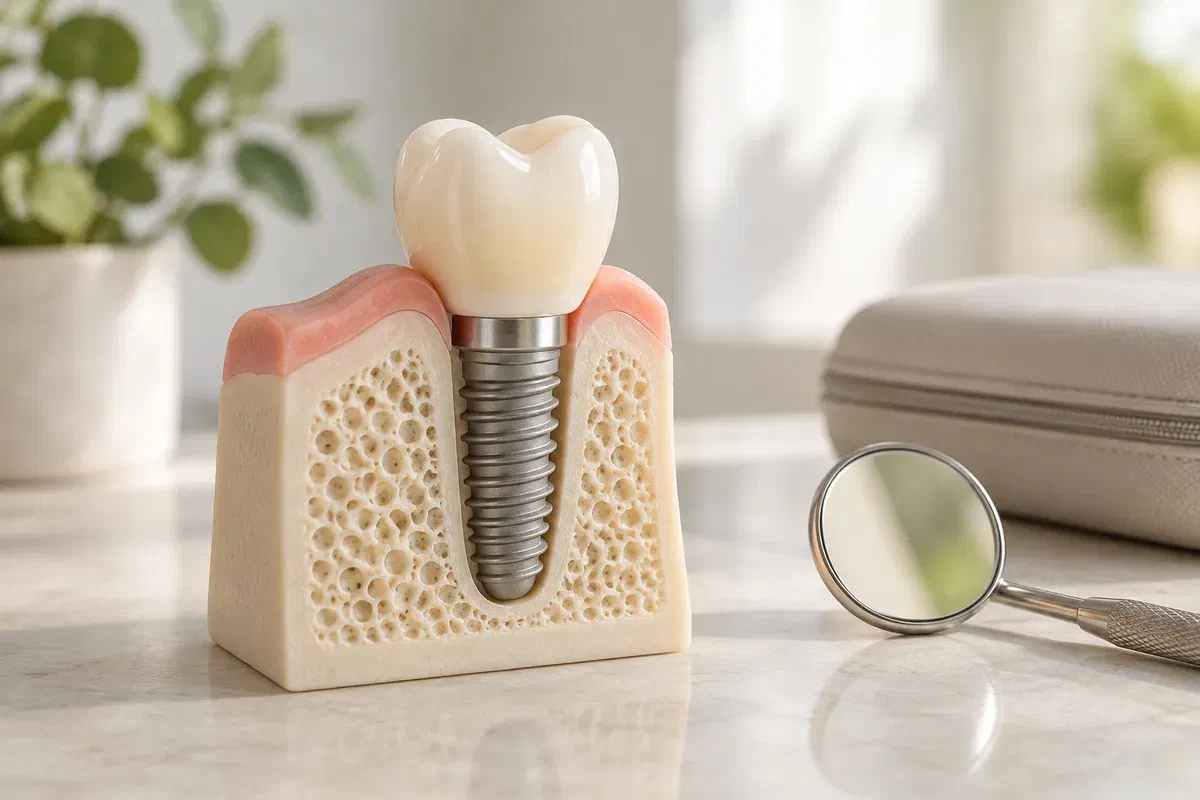
An implant restoration has several parts, and a problem with the visible tooth does not automatically identify a problem with the implant inside the bone. A loose crown, a damaged connection, inflammation, and an injury can call for different care. An examination is needed to determine which part is affected.

Tell the team whether you have a single implant crown, a bridge, or an implant-supported removable denture. Describe any movement, discomfort, swelling, or change in the way your teeth meet. You do not need to know the manufacturer's name before calling, although existing implant records can help with treatment planning.

Contact Milton Dental Clinic promptly about a sudden change and ask about assessment availability. If another clinician placed or restored the implant, explain that and bring any records you have. We can discuss the immediate concern and whether coordination with the original provider or a specialist is needed.

Request an implant assessment
Illustrative model of a dental implant and attached crown within a bone-and-gum cross-section
Changes that need an explanation

Describe what you notice without repeatedly testing the implant.

The location, timing, and type of change help guide the conversation. A photograph or description may be useful history, but it cannot establish the condition of the implant or its supporting tissues.

A crown or bridge that feels loose

Tell us whether movement began suddenly, followed biting, or has increased over time. Avoid wiggling the restoration to demonstrate it or chewing on it to see if it settles. The clinician needs to identify whether the movement involves the restoration, a connection, or the implant itself.

Bleeding, tenderness, or swelling nearby

Explain when the tissue change began and whether you have noticed discharge or an altered taste. Inflammation can affect tissues around implants, including their support. The examination considers the gums and relevant images rather than judging health from the appearance of the crown alone.

A detached part or a recent impact

If a component has already come out, keep it in a clean container and bring it with you. Explain any fall, impact, or recent procedure. Do not try to force a part back into place, tighten a screw, or attach it with household glue.

An implant cannot develop tooth decay, but the tissues around it can become diseased and its restoration can develop mechanical problems. Report new symptoms even if the implant has been comfortable for many years.

What prompt assessment can clarify

Separate the immediate concern from the longer repair decision.

A useful assessment identifies what needs attention now and what information is still needed before repair. Ask whether the area can be made safe or comfortable at the visit and whether the definitive solution depends on records, components, laboratory work, or referral. These stages should be explained separately.

There may be more than one reasonable option after the cause is understood. The plan should account for the implant, the restoration, surrounding tissues, and other teeth. A quick adjustment without an explanation of the problem may leave you unsure why it happened or what needs monitoring afterward.

A clearer understanding of the affected part

Ask the clinician to explain the distinction between the visible restoration, its connection, and the implant supporting it. Knowing which part is involved makes the proposed treatment easier to understand and avoids treating every loose crown as proof of complete implant loss.

Records that support appropriate treatment

Implant-system details, placement dates, earlier images, and restoration records may help the treating clinician. Ask how records can be requested with your consent. Missing paperwork should be mentioned when calling, but it is not a reason to ignore a new urgent symptom.

Coordination when another provider is needed

Some problems require particular components, technical information, or specialist assessment. Ask who will arrange the next step and what you should do while waiting. A clear handover is more useful than leaving with only an instruction to contact someone else.

From your call to the next stage

Assess the change, review the implant history, and explain the repair route.

The work possible at the first visit depends on the findings and access to suitable components and expertise. Do not assume that every implant emergency can be fully repaired during one appointment.

  1. Explain the change and the type of restoration

    Describe the symptoms, timing, and any recent impact or dental procedure. Tell us who provided the implant if you know, and mention any parts that have detached. Share relevant health conditions and medicines so the assessment can be planned appropriately.

  2. Examine the restoration and surrounding tissues

    The clinician checks the area and considers indicated images or other records. Ask which findings explain the symptoms and whether further information is needed. The examination should consider tissue health as well as the stability and condition of the visible restoration.

  3. Discuss immediate management and definitive options

    Review what can reasonably be done at the visit and any limitations. Ask about the proposed repair, alternative approaches, and estimated fees. If a component must be identified or ordered, clarify how the area should be managed in the meantime.

  4. Confirm the handover, review, or repair appointment

    Before leaving, establish who is responsible for the next stage and how to contact them. Ask which symptoms should prompt an earlier call. Keep copies of useful records so that future maintenance or another urgent visit can begin with accurate information.

Protect the area while the plan is completed

Follow instructions for your restoration and report further movement.

Advice differs for a loose crown, an inflamed site, a healing component, or an implant-supported denture. Ask for instructions that match the actual finding rather than treating every implant problem in the same way.

Avoid home repairs and repeated testing

Do not use tools, adhesives, or repeated biting to try to secure the restoration. Follow the clinician's advice about using the area and any removable appliance. If something loosens again after treatment, call and describe it rather than trying to reproduce the repair yourself.

Keep detached pieces and treatment information

Store a part that has already detached in a clean container, without putting it back in your mouth. Bring it and any available paperwork to the appointment. A description of when it separated may help explain the sequence even if the component cannot be reused.

Continue the agreed cleaning and review plan

Ask how to clean safely around the affected restoration or temporary arrangement. Report discomfort that prevents the recommended routine. After the immediate concern is addressed, confirm the maintenance plan and who will monitor the implant and its surrounding tissues.

Patient information: Guy's and St Thomas' — swallowed or inhaled dental objects

Choosing care for the finding

A restoration problem and a support problem need different decisions.

The assessment should explain what can be retained, what may need repair or replacement, and what remains uncertain. Ask about the implications before committing to a definitive plan.

When the issue involves the crown or connection

Repair or replacement of a restorative component

A damaged or loose restoration may need professional repair, component replacement, or a new restoration. The appropriate approach depends on its design and condition. Ask whether the cause of loosening has been identified and whether additional appointments or laboratory work are involved.

When inflammation or reduced support is identified

Treatment of tissues around the implant

Ask what the gum assessment and images show, which treatment is proposed, and how the response will be reviewed. The plan may require more than cleaning the visible crown. It should explain the extent of the problem without promising that every implant can be retained.

When the problem is complex or retention is uncertain

Specialist review or a broader replacement plan

Further assessment may be needed before deciding whether repair is appropriate. Ask what the referral will clarify and what interim care is recommended. If removal is discussed, replacement options and timing should be considered individually rather than assumed in advance.

Implant emergency questions

Ask which part is affected and what can safely happen next.

An unexpected change can be worrying, especially after a long period of comfortable use. These answers help prepare for the assessment without predicting the outcome before the implant is examined.

(905) 876-4488
Does a loose implant crown mean the implant in my jaw has failed?
Not necessarily. Movement can involve different parts of the restoration or implant system. Avoid testing it yourself and arrange a prompt assessment. The clinician needs to establish the source of movement before explaining whether repair, further treatment, or another approach is appropriate.
Should I bring a small implant screw or cap that has already come out?
Yes. Keep the detached part in a clean container and bring it with you. Do not attempt to screw or press it back into place. Tell the team when it came out and whether the area has become painful or swollen.
Can I have an urgent implant assessment if another clinic placed it?
Call to discuss the concern and availability. Explain where and when the implant was placed and bring any records you have. Treatment may need coordination with the original clinician or another provider, particularly when specific system information or components are required.
What if I do not know the brand of my dental implant?
Say so when calling. Placement records or information from the original provider may help identify it. Ask how those records can be obtained. Do not postpone seeking advice about an urgent change simply because you cannot find the implant paperwork.
Can swelling around an implant occur even though the replacement tooth cannot decay?
Yes. The surrounding tissues can develop inflammation and disease. Tell the clinician about bleeding, tenderness, discharge, or swelling and arrange assessment. The condition of the artificial crown alone does not establish that the gums and supporting bone are healthy.
Will an emergency visit guarantee that my implant crown is fixed that day?
No. The findings, implant system, available components, and complexity determine what is possible. Ask what can be done immediately and what needs another appointment, laboratory work, or referral. The plan should make those separate stages clear.
Dental implant emergencies in Milton

Call about the change before trying to repair it yourself.

Contact our Bronte Street practice about implant pain, movement, swelling, or a detached restoration. We can discuss appointment availability and useful records to bring. If immediate care is needed and we cannot be reached, seek another available emergency provider.

Online requests are non-urgent. Treatment availability, component compatibility, referral needs, fees, and the possibility of retaining an implant depend on assessment.

Visit Milton Dental Clinic
Unit 1, 342 Bronte St. S, Milton, ON L9T 5B7
Get directions Clinic hours
Monday–Thursday
11am–7pm
Friday–Sunday
By appointment only

How can we help?

Milton Dental Clinic

Have a question about your smile? Choose the option that works best for you.

For urgent dental concerns, please call.
Messages are reviewed during clinic hours.