

Illustrative patient discussing an implant concern with a clinician and dental model
Specialized Care

Dental Implant Emergencies in Georgetown

Gum that bleeds around an implant when you brush, a tender bump beside the crown, or a sour taste that keeps coming back can all signal trouble below the surface. From Georgetown, a phone call lets us gauge how quickly you should be seen and what to tell us.

Trouble below the crown

The crown can look perfect while the gum tells a different story.

People are often surprised that an implant can have gum problems at all. The porcelain tooth cannot decay, so it seems as if nothing can go wrong. But the soft tissue and bone that hold the post are living and can become inflamed, and the crown, abutment and screw can loosen or wear independently. Bleeding, swelling, a loose crown and an injury each need different care, and an examination is the way to tell which is happening.

It helps to start by naming the kind of implant work you have: a single crown, a bridge on implants, or a denture held by implants. Then describe the change. Is the gum bleeding, puffy or tender? Has the tooth started to move, or does your bite feel different? You do not need the manufacturer’s name, although records from the original treatment are welcome if you still have them.

Get in touch soon after you notice something and ask when an assessment can be booked. If your implant was placed or restored by another office, let us know and bring any records. We will look at the immediate concern and talk about whether the original provider or a periodontal specialist should be involved.

Have an implant gum concern checked
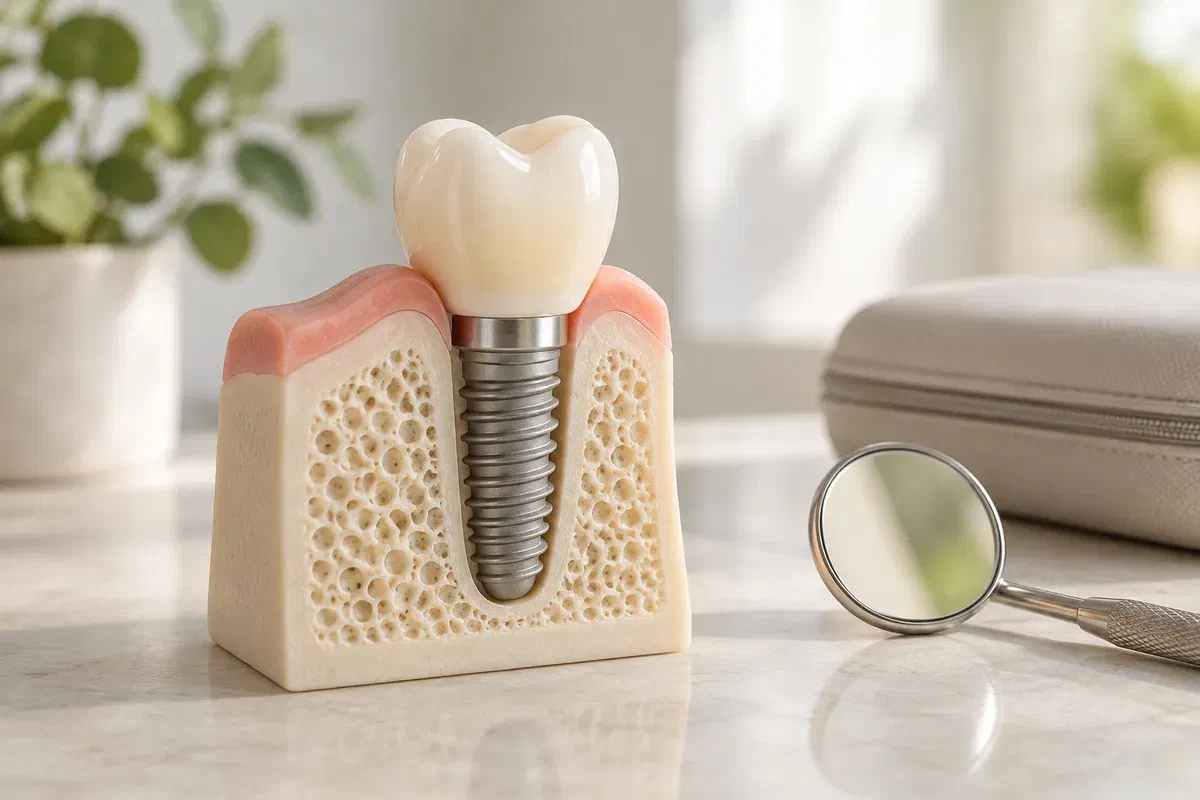
Illustrative model of a dental implant and attached crown within a bone-and-gum cross-section
Signs worth reporting

Bleeding, swelling, movement: each tells us something different.

How long the sign has been there, where it is, and whether it is getting worse all shape what happens next. A photo can be a helpful record, though it cannot show the bone around the post.

A crown or bridge with new give

Tell us whether the movement appeared suddenly, after biting down hard, or crept in over time. Leave it alone rather than rocking it to check. Movement can come from the restoration, its connection or the implant, and the source has to be confirmed.

Bleeding, puffy or weeping gum

Note when it began, how often it bleeds, and whether pus or a bad taste has appeared. Inflammation around implants can progress and affect their support, sometimes without much pain. That is why we look closely at the gum and, where indicated, take images.

A detached part or a recent knock

If something has already come off, keep it in a clean container and bring it in. Tell us about any impact or recent dental work. Please don’t press it back into place, tighten anything, or use household glue.

No cavity can form in an implant, but the surrounding gum and bone can still become diseased, and the parts on top can work loose. Bleeding around an implant is never something to ignore, however long it has been comfortable.

What an early check can reveal

Catching inflammation sooner leaves more choices open.

An early assessment shows what needs care now and what needs more information first. You might ask whether the gum can be treated or the area made comfortable during the visit, and whether a fuller plan depends on X-rays, records, specialist input or lab work. Those stages are easier to follow when they are explained one at a time.

Once the cause is understood, more than one reasonable approach may exist. The plan should consider the implant, the restoration, the gum and the rest of your mouth, including your home cleaning routine. A quick clean without an explanation can leave you unsure what caused the problem or how to keep it from returning.

Understanding whether it is gum or hardware

Ask the clinician to explain whether the symptoms come from the tissue around the implant, the crown and abutment, or both. That distinction shapes the treatment, and it keeps a gum problem from being dismissed as cosmetic or a loose crown from being mistaken for implant loss.

Records that fill in the history

Earlier X-rays, placement dates and system details can show how the bone around the implant has changed over time. Ask how these records can be requested with your consent. If none are available, mention it, and still call about an urgent symptom.

Coordination with a specialist when needed

Some cases benefit from a periodontist’s opinion or need specific parts. Ask who will arrange the referral and what to do while you wait. A clear handover helps far more than a name and a number.

Inside the appointment

What we look at, and in what order

How much happens at the first visit depends on the findings and on access to the right parts or expertise. Gum problems around implants often need a series of visits.

  1. Your symptoms and history

    Describe when the bleeding, swelling or movement began, and anything that might have set it off. Let us know who placed the implant, if you know, and about any piece that has come off. Your general health and medicines can affect gum healing, so share them too.

  2. A close look at gum, bone and crown

    The clinician checks the gum around the implant, how the restoration sits, and whether X-rays or earlier records are needed. Ask what the findings show and whether anything is still unclear. Gum health is given the same attention as the crown.

  3. Talking through immediate and longer-term care

    Go over what can be done during this visit and where the limits lie. Ask about the proposed treatment, other approaches and the likely fees. If a part needs to be traced or a referral made, agree on how to look after the area in between.

  4. Setting up the review

    Before you go, confirm who will follow up and how to reach them. Ask which changes should bring you back sooner. Keep copies of the records so future check-ups can compare against today’s findings.

Caring for the area at home

Gentle, thorough cleaning, and no home repairs

Advice for an inflamed gum is different from advice for a loose crown, a healing component, or an implant-supported denture. Ask for instructions that fit what was found.

Avoid DIY fixes and constant checking

Do not use tools, adhesives or repeated biting on the area. Follow the guidance on chewing and on wearing any removable appliance. If the restoration loosens or the gum flares up again, call and describe it instead of trying to manage it yourself.

Keep loose pieces and paperwork safe

Store a detached part in a clean container, never back in your mouth. Bring it and any records to your visit. Knowing when it separated can help piece together what happened, even if the part cannot be reused.

Follow the cleaning plan closely

Ask which brushes, floss or other aids suit the area around your implant, and how often to use them. Tell us if tenderness makes cleaning difficult. Once the immediate concern settles, confirm the maintenance schedule and who will monitor the gum and bone.

Patient information: Guy's and St Thomas' — swallowed or inhaled dental objects

Possible treatment paths

Gum care, hardware repair, or a wider review

The assessment should explain what can be kept, what might need repair or replacement, and what is still uncertain. Ask about the implications before agreeing to a definitive plan.

When the restoration or connection has loosened

Fixing the crown or a component

A loose or damaged restoration may be repaired, given a new component, or remade. What suits it will come down to how it was made and how it has held up. Ask whether a loose part might be contributing to the gum irritation and whether lab work is needed.

When inflammation or reduced support is found

Treating the gum and bone around the implant

Ask what the gum measurements and images show, what treatment is suggested, and how the response will be reviewed. It often involves more than polishing the crown. The plan should explain how far the problem has gone and stop short of promising that every implant can be retained.

When the problem is advanced or uncertain

Specialist assessment or a broader plan

Further assessment may be needed before deciding on treatment. Ask what the referral will clarify and what interim care is advised. If removal is mentioned, replacement options and timing should be planned for your situation.

Georgetown implant questions

About gums, bleeding and implant health

Changes in the gum around an implant can be easy to overlook or alarming to discover. These answers help you prepare for an assessment without predicting the outcome.

(905) 876-4488
Is it normal for my gum to bleed around an implant when I floss?
Occasional bleeding can happen, but repeated bleeding often points to inflammation. Mention it, especially if there is swelling, tenderness or a bad taste, and arrange an assessment.
Can gum problems around an implant happen without pain?
Yes. Inflammation can develop quietly. That is one reason regular check-ups matter, and why bleeding or swelling should be reported even if it does not hurt.
What is peri-implantitis?
It is a term for inflammation around an implant that has affected the supporting bone. Only an examination, often with X-rays, can tell whether it is present. Ask the clinician to explain any findings in plain language.
Does smoking or diabetes affect the gum around implants?
Both are recognised as factors that can affect gum health, including around implants. Mention them when you call so the assessment and any treatment can take them into account.
Will cleaning around the implant fix the inflammation?
Better cleaning may be part of the plan, but treatment depends on what the assessment finds. Some cases need more involved care or a specialist. Ask what is proposed and how progress will be checked.
Do I need to bring my old X-rays to the appointment?
They can help show how the bone has changed, so bring them or ask how they can be requested. Do not put off calling about an urgent symptom while you wait for them.
Implant gum care for Georgetown

Bleeding around an implant? Let’s take a look.

Call our Bronte Street practice about implant gum bleeding, swelling, tenderness, movement or a lost part. We will talk about when you can be seen and which records help. If you need care immediately and we cannot be reached, contact another available emergency provider.

Online requests are treated as non-urgent. Timing, parts, referral needs, fees and the outlook for an implant can only be confirmed after an examination.

Visit Milton Dental Clinic
Unit 1, 342 Bronte St. S, Milton, ON L9T 5B7
Get directions Clinic hours
Monday–Thursday
11am–7pm
Friday–Sunday
By appointment only

Areas we serve

  • Milton
  • Oakville
  • Mississauga
  • Georgetown
  • Halton Hills
  • Acton
  • Campbellville
  • Brampton
  • Burlington
  • Puslinch
  • Rockwood
  • Erin
  • Caledon
  • Etobicoke
  • Old Milton
  • Bronte Meadows
  • Timberlea
  • Dorset Park
  • Dempsey
  • Clarke
  • Beaty
  • Coates
  • Harrison
  • Scott
  • Willmott
  • Ford
  • Bowes
  • Cobden
  • Walker
  • Mountain View
  • Milton Heights
  • Hawthorne Village
  • Valley View
  • Fallingbrook
  • Nassagaweya
  • Trafalgar
  • Esquesing
  • Nelson
  • Brookville
  • Moffat
  • Glen Williams
  • Norval
  • Limehouse
  • Stewarttown
  • Ashgrove
  • Hornby
  • Silver Creek
  • Speyside
  • Scotch Block
  • North Oakville
  • River Oaks
  • Glen Abbey
  • West Oak Trails
  • Palermo
  • Bronte Creek
  • College Park
  • Joshua Creek
  • Uptown Core
  • Preserve
  • Iroquois Ridge
  • Lisgar
  • Meadowvale
  • Meadowvale Village
  • Churchill Meadows
  • Erin Mills
  • Central Erin Mills
  • Streetsville
  • East Credit
  • Creditview
  • Heartland
  • Sheridan
  • Mount Pleasant
  • Credit Valley
  • Huttonville
  • Churchville
  • Springbrook
  • Northwest Brampton
  • Bram West
  • Fletcher's Meadow
  • Fletcher's Creek South
  • Alton Village
  • Orchard
  • Millcroft
  • Headon Forest
  • Tansley
  • Brant Hills
  • Tyandaga
  • Kilbride
  • Lowville
  • Aberfoyle
  • Morriston
  • Arkell
  • Hillsburgh
  • Freelton
  • Carlisle
  • Waterdown
  • Flamborough
  • Mountsberg

How can we help?

Milton Dental Clinic

Have a question about your smile? Choose the option that works best for you.

For urgent dental concerns, please call.
Messages are reviewed during clinic hours.