

Illustrative patient discussing an implant concern with a clinician and dental model
Specialized Care

Dental Implant Emergencies in Oakville

Is it urgent tonight, or can it wait for a weekday visit? If an implant crown has shifted, a piece has broken off, or the gum around it is swelling, call first. From Oakville, a short conversation helps you decide how soon to come in and what to bring.

Urgent, or soon?

How fast you need to be seen depends on which part has changed.

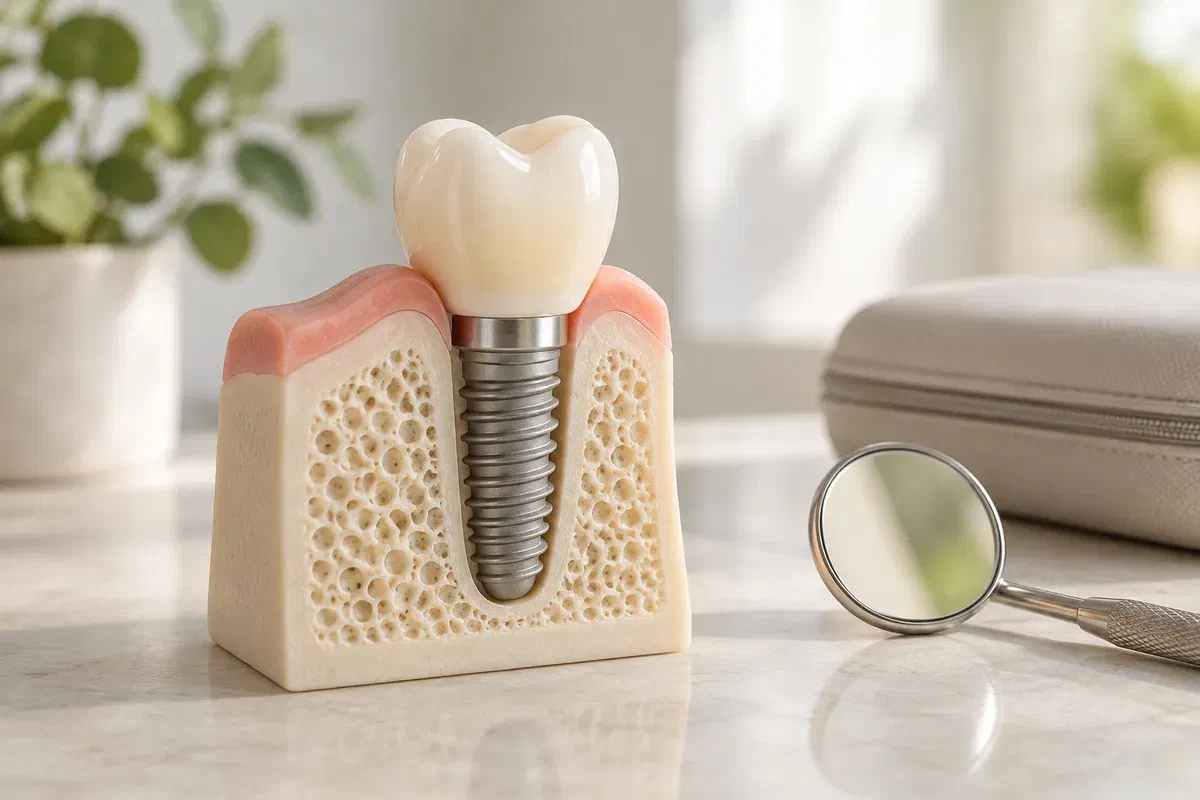
The first question most people ask is simple: do I need help today? That depends on what is going on. An implant tooth has a visible crown, a connector underneath, and a post anchored in bone. A crown that has worked loose, a cracked connector, inflamed gum, and damage from a fall are different problems with different timelines. A clinician has to examine the area to tell them apart.

When you call from Oakville, describe the restoration as best you can. One crown, a bridge on two or more implants, and a removable denture that clips onto posts are each handled a little differently. Then explain what changed: wobble, pain, swelling, or your bite feeling off. You do not need the manufacturer’s name, though a placement record or receipt is worth digging out.

Contact us promptly and ask how soon an assessment is possible. If the implant was placed or restored by another clinic, mention it and bring the records you have. We can address what is happening now and discuss whether the original provider or a specialist should help with the longer repair.

Ask how soon we can see you
Illustrative model of a dental implant and attached crown within a bone-and-gum cross-section
Clues that help us triage

Three kinds of change, and what each one tells us.

Timing, location and the nature of the change guide how quickly you should be seen. A photo can be useful background, yet it cannot confirm the state of the post or the tissue holding it.

A tooth that rocks or turns

Tell us if it began suddenly, after a hard bite, or slowly over time. Rocking it to show someone, or chewing on it to see whether it settles, can cause more harm. The source of the movement may be the crown, its connection, or the implant, and that needs to be checked.

Soreness or swelling at the gumline

Say when the gum started to change and whether you have noticed pus or a sour taste. Inflammation around an implant can affect the tissue that supports it. The assessment relies on a gum examination and any needed X-rays, not on how the crown looks from the outside.

A broken-off piece or a blow to the face

Put any piece that has come out into a clean container and bring it. Let us know about a fall, a sports injury, or recent dental treatment. Do not try to reseat it, tighten anything, or use glue from the kitchen drawer.

The implant cannot decay the way a natural tooth does. Even so, the surrounding gum and bone can become diseased and the attached parts can loosen or wear, so a new symptom deserves attention however long the implant has been comfortable.

The value of a prompt review

An urgent fix and a lasting fix aren’t always the same visit

A timely assessment separates what needs care straight away from what requires more information. Ask whether the area can be stabilised or made comfortable during the appointment and whether the permanent solution depends on records, components, lab time or a referral. Expect each stage to be explained on its own.

After the cause is clear, more than one sensible route may exist. A good plan takes in the post, the restoration, the gum and the nearby teeth. A rapid adjustment without any explanation can leave you unclear on why it happened and what you need to watch afterward.

A plain explanation of the affected part

Ask the clinician to walk you through the crown, its connector and the implant beneath. Understanding which one is involved makes treatment easier to follow and keeps a loose crown from being treated as though the whole implant has been lost.

History that informs the treatment

The implant system, placement date, previous X-rays and lab records can all help. Ask how these can be gathered with your permission. If you cannot locate them, say so on the phone, but never put off calling about an urgent change because of missing papers.

A smooth referral when one is needed

Some problems need particular parts, technical data or a specialist. Ask who arranges the next step and how to care for the area until then. Knowing exactly what happens next is worth far more than a bare suggestion to call elsewhere.

From the phone call onward

What to expect once you reach us

The amount of treatment possible at the first visit depends on what is found and whether the right components and expertise are on hand. Some implant emergencies take more than a single appointment.

  1. Tell us what happened

    Explain the symptoms, their timing, and any knock or recent procedure. If you know who provided the implant, include that, and mention any part that has come away. Share your health conditions and current medicines so the visit can be planned well.

  2. Assessment of the tooth and gum

    The clinician examines the site and considers whether images or older records are needed. Ask which findings account for your symptoms and whether more information is required. Gum health is assessed alongside the stability of the crown.

  3. Immediate care and long-term choices

    Find out what can reasonably be done now and what limits apply. Ask about the proposed repair, alternatives and estimated fees. If a part has to be identified or ordered, ask how to protect the area while you wait.

  4. A clear plan for the next stage

    Before you go, confirm who is responsible for follow-up and how to reach them. Ask which symptoms should prompt an earlier call. Keep copies of the records so later maintenance or another urgent visit starts with accurate history.

Protecting the site for now

Go easy on it, follow the plan, and call if it shifts.

Guidance differs for a loose crown, inflamed gum, a healing part, or an implant-retained denture. Ask for instructions that fit your finding instead of generic advice for all implants.

Hands off the repair

Avoid tools, glues, or biting down to push the restoration into place. Use the area and any removable appliance only as you were told. If something loosens again after treatment, phone and describe it rather than trying a home repair.

Bring the loose part and your records

Store a detached piece in a clean container and keep it out of your mouth. Bring it along with any paperwork. A note of when it separated can help explain what happened, even if the part itself cannot be reused.

Keep cleaning as instructed

Ask how to clean safely around the affected tooth or temporary setup. Let us know if pain is stopping you from following the routine. Once the urgent problem is handled, confirm your maintenance plan and who will monitor the implant and surrounding tissue.

Patient information: Guy's and St Thomas' — swallowed or inhaled dental objects

Treatment that fits the finding

Crown trouble and support trouble lead to different choices.

The assessment should spell out what can be kept, what may need repair or replacement, and what is still unknown. Ask about the consequences of each option before agreeing to a final plan.

Where the crown or connector is involved

Restoration repair or a new component

A damaged or loose restoration may be repaired, receive a new part, or be replaced. The best approach depends on its design and current state. Ask whether the cause of the loosening has been found and whether further visits or lab work will be needed.

Where inflammation or bone loss is found

Care for the tissue around the post

Ask what the gum check and X-rays show, which treatment is recommended, and how it will be reassessed. It can involve much more than cleaning the visible crown. The plan should describe how far the problem extends and avoid promising that every implant can be kept.

Where the outlook is complex or unclear

Specialist assessment or a wider plan

Additional assessment may be needed before deciding on repair. Ask what the referral should answer and what care to follow in the interim. If removal is mentioned, replacement options and timing should be considered for your situation, not decided in advance.

Implant emergency FAQs

Quick answers while you decide what to do

A sudden change in an implant can feel alarming. These answers are meant to help you get ready for an assessment, not to forecast the result before anyone has looked.

(905) 876-4488
How do I know whether my implant problem can wait until tomorrow?
Call and describe it. Swelling, severe pain or a piece that has come out usually warrant prompt attention, while a slight change may be booked soon after. Breathing difficulty or a part that may have been inhaled needs 911 or urgent medical care.
Part of the porcelain on my implant crown chipped. Is that urgent?
A chip is often less urgent than movement or swelling, but it is still worth reporting, especially if there is a sharp edge or the bite feels different. Avoid chewing on it and arrange a visit so the restoration can be checked.
I am coming from Oakville. Should I call before driving in?
Yes. Phoning first lets us hear what changed, check availability and tell you which records to bring, so the trip is as useful as possible.
Will I need an X-ray for a loose implant tooth?
Often, but it depends on the examination. Images can help show the bone around the post and the fit of the parts. The clinician will explain why any image is recommended and what it is meant to clarify.
Does wobbling mean the post itself is loose in the bone?
Not necessarily. The crown or connecting part may be what moves. Leave it alone and arrange an assessment so the source can be found before any repair is discussed.
What if my implant was placed in another country?
Mention it when you call and bring any documents you have, even if they are not in English. Identifying the system may take extra steps, but an urgent symptom should still be assessed promptly.
Implant concerns from Oakville

Talk to us first, then make the trip.

Call our Bronte Street practice about implant pain, movement, swelling or a detached piece. We can discuss timing and the records to bring. If you need care immediately and cannot reach us, contact another available emergency provider.

Online requests are for non-urgent matters. Availability, component compatibility, referrals, fees, and whether an implant can be kept depend on assessment.

Visit Milton Dental Clinic
Unit 1, 342 Bronte St. S, Milton, ON L9T 5B7
Get directions Clinic hours
Monday–Thursday
11am–7pm
Friday–Sunday
By appointment only

Areas we serve

  • Milton
  • Oakville
  • Mississauga
  • Georgetown
  • Halton Hills
  • Acton
  • Campbellville
  • Brampton
  • Burlington
  • Puslinch
  • Rockwood
  • Erin
  • Caledon
  • Etobicoke
  • Old Milton
  • Bronte Meadows
  • Timberlea
  • Dorset Park
  • Dempsey
  • Clarke
  • Beaty
  • Coates
  • Harrison
  • Scott
  • Willmott
  • Ford
  • Bowes
  • Cobden
  • Walker
  • Mountain View
  • Milton Heights
  • Hawthorne Village
  • Valley View
  • Fallingbrook
  • Nassagaweya
  • Trafalgar
  • Esquesing
  • Nelson
  • Brookville
  • Moffat
  • Glen Williams
  • Norval
  • Limehouse
  • Stewarttown
  • Ashgrove
  • Hornby
  • Silver Creek
  • Speyside
  • Scotch Block
  • North Oakville
  • River Oaks
  • Glen Abbey
  • West Oak Trails
  • Palermo
  • Bronte Creek
  • College Park
  • Joshua Creek
  • Uptown Core
  • Preserve
  • Iroquois Ridge
  • Lisgar
  • Meadowvale
  • Meadowvale Village
  • Churchill Meadows
  • Erin Mills
  • Central Erin Mills
  • Streetsville
  • East Credit
  • Creditview
  • Heartland
  • Sheridan
  • Mount Pleasant
  • Credit Valley
  • Huttonville
  • Churchville
  • Springbrook
  • Northwest Brampton
  • Bram West
  • Fletcher's Meadow
  • Fletcher's Creek South
  • Alton Village
  • Orchard
  • Millcroft
  • Headon Forest
  • Tansley
  • Brant Hills
  • Tyandaga
  • Kilbride
  • Lowville
  • Aberfoyle
  • Morriston
  • Arkell
  • Hillsburgh
  • Freelton
  • Carlisle
  • Waterdown
  • Flamborough
  • Mountsberg

How can we help?

Milton Dental Clinic

Have a question about your smile? Choose the option that works best for you.

For urgent dental concerns, please call.
Messages are reviewed during clinic hours.