

Illustrative patient discussing an implant concern with a clinician and dental model
Specialized Care

Dental Implant Emergencies in Old Milton

An implant that has been quiet for fifteen years can still loosen, ache or swell without warning. From Old Milton, a quick call to our nearby practice lets us hear what changed, suggest what to bring, and find a time to take a proper look.

Long-serving implants, new symptoms

Years of comfort don’t rule out a problem, and one problem doesn’t rule out the implant.

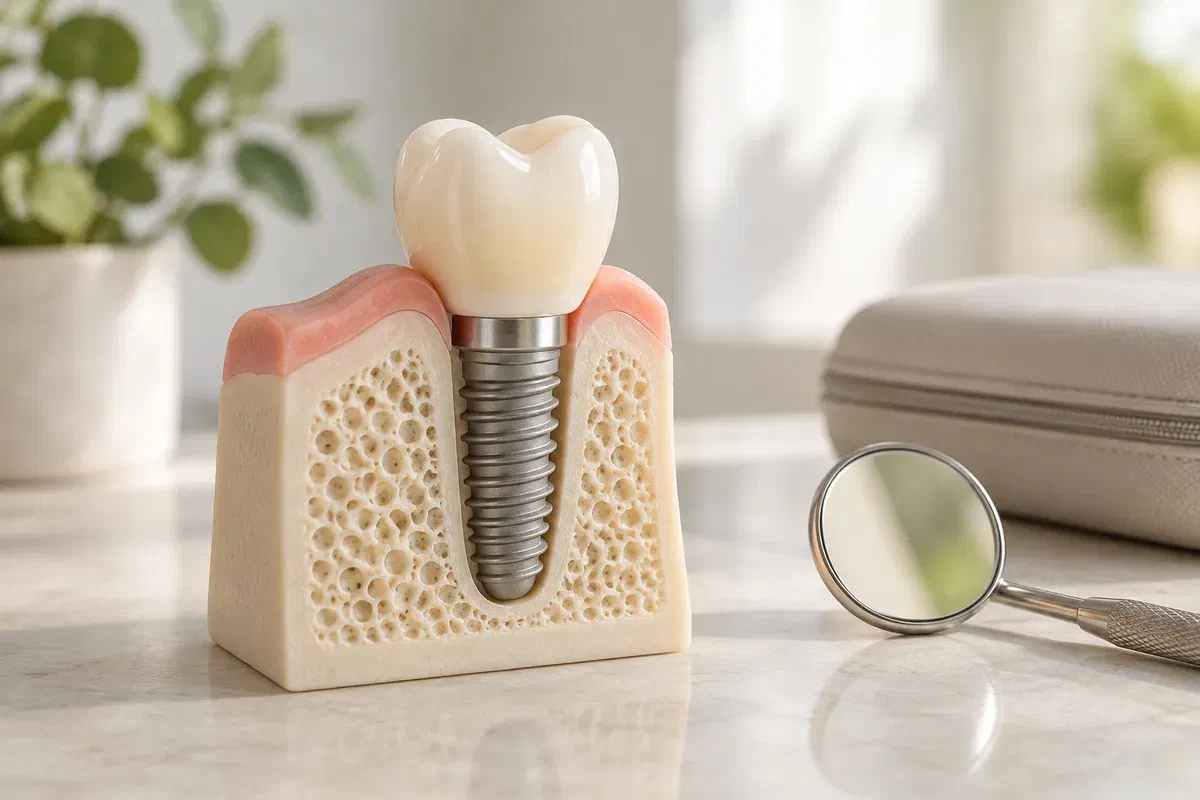
Many people in Milton’s historic downtown had implants placed long ago, sometimes by a dentist who has since retired. When one of those teeth starts to shift or throb, the first worry is often that the whole thing has given out. In practice, an implant tooth is built in layers: the crown, a connector, and a titanium post in the jaw. Trouble in one layer does not prove trouble in the others, and a crown that has loosened calls for different care than inflamed gum or a recent injury.

Before you phone, take a moment to recall what sort of work you have. Is it one implant crown, a bridge resting on two posts, or a denture that snaps onto implants? Then think about what feels different: movement, soreness, puffiness, or a bite that has changed. The implant’s brand name is not required, although an old treatment summary or invoice can be surprisingly helpful.

Call us soon after you notice the change and ask when an assessment can be arranged. If the implant came from another office, even one that no longer exists, say so and bring whatever paperwork you still have. We will look at the immediate issue and talk about whether a specialist or the original clinician should be part of the plan.

Arrange an implant check
Illustrative model of a dental implant and attached crown within a bone-and-gum cross-section
Signs to mention on the phone

Notice it, describe it, and resist the urge to keep checking.

Which tooth, how long, and what kind of change are the details that steer the call. A picture can add context, though it cannot reveal the condition of the post or the bone and gum around it.

An implant tooth that shifts

Let us know if the movement started abruptly, after crunching something hard, or bit by bit over months. Pressing on it repeatedly can make matters worse, so leave it be. The examination has to establish whether the crown, the connector, or the post is what is moving.

Gum that bleeds, aches or swells

Mention when the gum first looked or felt different and whether there has been a bad taste or any pus. The soft tissue around an implant can become inflamed and, over time, that can weaken its support. A healthy-looking crown tells us little about the gum and bone beneath it.

A loose piece in your hand, or a recent bump

If part of the restoration has already come out, tuck it into a small clean container and bring it in. Tell us about any trip, fall or dental work in the past few weeks. Avoid pushing it back, twisting a screw, or using a drugstore adhesive.

Decay does not affect the implant itself, but gum disease around it and wear in the parts above it are both possible. That is true even for an implant you have barely thought about in years.

What an early look can sort out

First, settle the urgent part. Then plan the repair properly.

An early visit is about drawing a line between what must be handled now and what can wait for more information. You might ask whether the tooth can be steadied or the soreness eased at the appointment, and whether the lasting fix relies on old records, matching parts, a dental lab, or a specialist. Those are separate questions with separate answers.

When the reason is understood, you may have a few reasonable choices. A sound plan considers the post, the crown, the gum and the teeth on either side. A quick tightening with no explanation can leave you wondering what went wrong and what to watch for next time.

Clarity about which layer failed

Ask to have the crown, the connector and the post explained in plain terms, and which of them is involved. With that picture, the treatment suggested makes more sense, and a loose cap is not mistaken for an implant that has to come out.

Old records put to good use

The system name, the date of placement, earlier X-rays and lab notes can all inform treatment. Ask how these can be requested with your consent, even from a practice that has changed hands. If nothing can be found, tell us, and still call about an urgent symptom.

Support when a referral is required

Certain repairs need specific components, manufacturer data or a specialist’s view. Ask who will make the arrangements and how to protect the area while you wait. Leaving with a clear next step is far better than leaving with a name to look up.

How a visit usually unfolds

Listen, examine, explain, then hand over clearly.

What can be completed at the first appointment depends on the findings and on access to the right parts and skills. Some implant emergencies need more than one visit to resolve.

  1. Share the history and the type of work

    Tell us the symptoms, when they began, and about any recent knock or treatment. If you remember who placed the implant, mention it, along with any piece that has come loose. Let us know your medical conditions and medications so the visit is planned with care.

  2. Check the tooth, the gum and the bone

    The clinician assesses the area and decides whether X-rays or older records are needed. Ask what the findings mean for your symptoms and whether anything is still unclear. Healthy tissue is as important to the assessment as a firm crown.

  3. Weigh short-term relief against final repair

    Discuss what is realistic at this appointment and what is not. Ask about the suggested repair, any alternatives, and an estimate of fees. If a part must be traced or ordered, ask how to look after the area until it arrives.

  4. Settle the follow-up before leaving

    Confirm who takes responsibility for the next step and how to get in touch. Ask which warning signs should prompt an earlier call. File copies of the records so that future checkups or another urgent visit begin with the right history.

Until the plan is complete

Treat the area gently and let us know if anything moves.

Instructions vary for a loose crown, irritated gum, a healing component, or a denture held by implants. Ask for advice that suits what was actually found, not a one-size answer for every implant.

Leave repairs to the clinic

Tools, glues and repeated biting are not safe ways to steady a restoration. Use the area, and any removable denture, only as advised. If the tooth loosens again after treatment, ring us and explain what happened instead of trying to fix it yourself.

Save loose parts and any old paperwork

Keep a detached piece in a clean container and do not put it back in your mouth. Bring it, along with any records, to your visit. Knowing when it came out can help explain the sequence of events, even if the part cannot be used again.

Keep up the agreed cleaning routine

Ask how to clean around the affected tooth or any temporary arrangement without disturbing it. Mention discomfort that gets in the way of the routine. Once the urgent concern is handled, confirm the maintenance schedule and who will keep watch on the implant and its gum.

Patient information: Guy's and St Thomas' — swallowed or inhaled dental objects

Deciding what comes next

Repairing a crown and treating support loss are different paths.

A clear assessment explains what can stay, what may need repair or replacement, and what remains uncertain. Take time to understand the trade-offs before agreeing to a final plan.

If the crown or connector is at fault

Repairing or renewing the restoration

A worn or loose restoration might be repaired, have a component replaced, or be remade entirely. Which option fits depends on its design and condition. Ask whether the cause of the loosening is known and whether lab work or extra appointments are part of it.

If inflammation or reduced support is found

Treating the gum and bone around the post

Ask what the examination and images reveal, what is proposed, and how progress will be checked. Treatment may go well beyond polishing the visible tooth. Any plan should be honest about the extent of the problem and not promise that every implant can stay.

If the situation is complex or uncertain

A specialist opinion or a broader plan

Further assessment may come before any decision about repair. Ask what the referral should clarify and what to do in the meantime. If removal is raised, replacement choices and timing should be worked out for you specifically rather than taken for granted.

Old Milton implant questions

What people ask when an older implant acts up

A problem after many uneventful years can be unnerving. These answers aim to help you prepare, without predicting the result before the implant has been examined.

(905) 876-4488
My implant was placed over ten years ago. Can it still be repaired?
Often there are options, but it depends on what has changed and whether suitable parts can be identified. An examination comes first. Bring any records you can find, and ask what the findings mean for repair before deciding on a plan.
The dentist who placed my implant has retired. Where do I find my records?
Records are usually kept after a practice closes or changes owners. Ask us how a request can be made with your consent. If nothing turns up, say so when you call, and do not delay care for an urgent symptom while you search.
Is a loose implant-supported denture an emergency?
It can be worth a prompt call, especially if it has suddenly become loose, sore or difficult to wear. Avoid adjusting the attachments yourself. Tell us what changed and bring the denture to the visit.
Does an implant that moves always have to come out?
No. Movement may come from the crown or connector rather than the post itself. Avoid testing it and arrange an assessment so the source can be found before any treatment is discussed.
Can gum disease affect an implant even with no natural tooth there?
Yes. The gum and bone around an implant can become inflamed and diseased. Report bleeding, tenderness, swelling or discharge. A crown that looks fine on the outside is not proof that the support beneath it is healthy.
Could the visit end with a temporary fix rather than a final repair?
Yes, that is common. The findings, the implant system and the parts available shape what can be done that day. Ask which steps are temporary and when the definitive work would take place.
Implant concerns in Old Milton

One call, close to home, before anything else.

Phone our Bronte Street practice if an implant is painful, moving, swollen or has lost a piece. We can tell you about availability and which documents to bring. If you need care right away and cannot reach us, contact another emergency provider.

Online requests are for non-urgent matters only. Availability, component compatibility, referrals, fees, and whether an implant can be kept all depend on assessment.

Visit Milton Dental Clinic
Unit 1, 342 Bronte St. S, Milton, ON L9T 5B7
Get directions Clinic hours
Monday–Thursday
11am–7pm
Friday–Sunday
By appointment only

Areas we serve

  • Milton
  • Oakville
  • Mississauga
  • Georgetown
  • Halton Hills
  • Acton
  • Campbellville
  • Brampton
  • Burlington
  • Puslinch
  • Rockwood
  • Erin
  • Caledon
  • Etobicoke
  • Old Milton
  • Bronte Meadows
  • Timberlea
  • Dorset Park
  • Dempsey
  • Clarke
  • Beaty
  • Coates
  • Harrison
  • Scott
  • Willmott
  • Ford
  • Bowes
  • Cobden
  • Walker
  • Mountain View
  • Milton Heights
  • Hawthorne Village
  • Valley View
  • Fallingbrook
  • Nassagaweya
  • Trafalgar
  • Esquesing
  • Nelson
  • Brookville
  • Moffat
  • Glen Williams
  • Norval
  • Limehouse
  • Stewarttown
  • Ashgrove
  • Hornby
  • Silver Creek
  • Speyside
  • Scotch Block
  • North Oakville
  • River Oaks
  • Glen Abbey
  • West Oak Trails
  • Palermo
  • Bronte Creek
  • College Park
  • Joshua Creek
  • Uptown Core
  • Preserve
  • Iroquois Ridge
  • Lisgar
  • Meadowvale
  • Meadowvale Village
  • Churchill Meadows
  • Erin Mills
  • Central Erin Mills
  • Streetsville
  • East Credit
  • Creditview
  • Heartland
  • Sheridan
  • Mount Pleasant
  • Credit Valley
  • Huttonville
  • Churchville
  • Springbrook
  • Northwest Brampton
  • Bram West
  • Fletcher's Meadow
  • Fletcher's Creek South
  • Alton Village
  • Orchard
  • Millcroft
  • Headon Forest
  • Tansley
  • Brant Hills
  • Tyandaga
  • Kilbride
  • Lowville
  • Aberfoyle
  • Morriston
  • Arkell
  • Hillsburgh
  • Freelton
  • Carlisle
  • Waterdown
  • Flamborough
  • Mountsberg

How can we help?

Milton Dental Clinic

Have a question about your smile? Choose the option that works best for you.

For urgent dental concerns, please call.
Messages are reviewed during clinic hours.