

Illustrative patient describing a dental injury during a consultation
Specialized Care

Dental Trauma Treatment

A knocked, broken, or displaced tooth needs timely advice. Call about dental trauma treatment in Milton, explain when and how the injury happened, and ask about immediate assessment. A knocked-out permanent tooth requires emergency dental care.

A closer look at dental trauma treatment

Act on the injury now. Plan for the tooth's recovery over time.

Dental trauma can involve a chipped edge, a tooth that has moved, a root injury, or a tooth knocked completely out of its socket. The lips, gums, and surrounding structures may also be affected. What is visible in the mirror does not always show the full extent of an injury.

Call promptly and explain what happened, when it happened, and whether the injured tooth is a baby or permanent tooth if you know. Tell the team about other injuries as well as the mouth. A serious head, face, or jaw injury may need hospital assessment before dental treatment can be planned.

At Milton Dental Clinic, the first conversation helps establish the appropriate next step and appointment availability. Do not wait for an online reply after a time-sensitive injury. If we cannot be reached or cannot provide immediate care, seek another available emergency dental provider, especially for a knocked-out permanent tooth.

Request an injury assessment
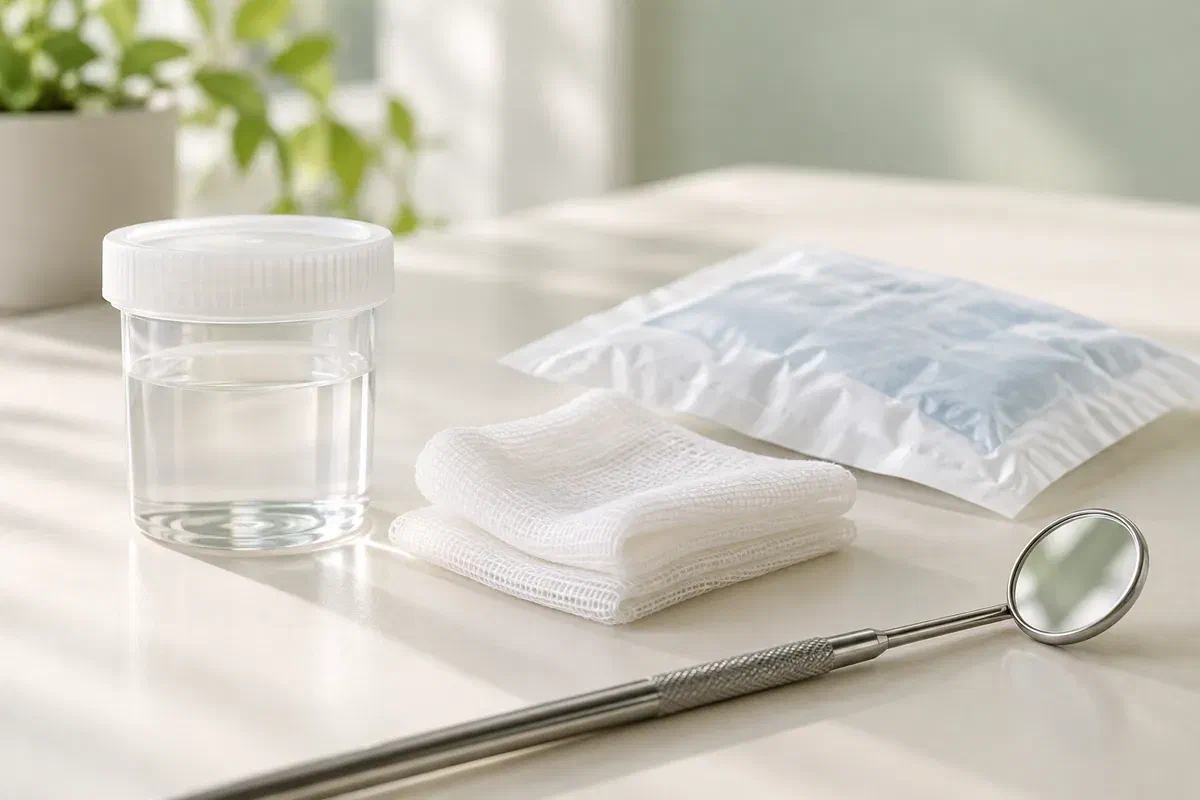
Illustrative dental first-aid supplies with a closed container, gauze, and cold compress
The first decisions after an injury

Check the person first, then explain what happened to the teeth.

Give the timing and any first aid already provided. If a tooth or fragment is missing, say so; do not assume that every missing piece has simply fallen onto the ground.

A permanent tooth knocked completely out

Get emergency dental help immediately. Hold the tooth by its crown, not its root. If dirty, rinse it gently with milk or saline without scrubbing. If it is definitely permanent and safe to do so, gently replace it without force and bite on clean gauze; otherwise keep it in milk and bring it immediately.

A baby tooth, or uncertainty about tooth type

Never replant a knocked-out baby tooth. If you are unsure which kind of tooth it is, keep it in a container of milk and seek immediate professional advice. Do not place a loose tooth in a child's mouth for storage, where it could be swallowed or inhaled.

A broken, loose, or displaced tooth

Call promptly and describe any change in position, biting, or comfort. Avoid repeatedly testing movement or forcing a displaced tooth. Bring any recovered fragment with you, kept moist in milk. Ask where the injury should be assessed and explain any additional symptoms.

Call 911 or seek hospital emergency care for breathing difficulty, uncontrolled heavy bleeding, a serious facial or jaw injury, or head-injury symptoms such as loss of consciousness, vomiting, or double vision.

What the assessment should establish

Understand the immediate injury and what still needs monitoring.

The first visit should clarify the injury as far as the findings allow and identify care that cannot reasonably wait. Ask which teeth and tissues are involved and what is being done to protect them. The response may be different for a small fracture and a tooth that has moved or been replanted.

A useful plan also explains uncertainty. Some effects become clearer at later reviews, so a comfortable tooth after the initial appointment is not the whole outcome. You should understand why follow-up is recommended and whom to contact if symptoms change between visits.

Patient information: American Association of Endodontists — updated trauma guidance and ongoing monitoring

An account of the injury that follows your care

The timing, mechanism, tooth position, and first aid can help guide decisions. Share what you know without guessing at missing details. If another provider has already examined the injury, bring their records or explain where the assessment took place.

Treatment matched to the tooth and its stage

A child's developing permanent tooth, a baby tooth, and a fully developed adult tooth can need different approaches. Ask how tooth type affects the recommendation. The same visible chip or movement does not automatically lead to the same treatment in every patient.

A review plan with a clear purpose

Ask what the clinician will check at later appointments and whether the plan may change. Follow-up can assess healing and identify complications that were not established at the first visit. It should be part of the discussion before attention shifts entirely to the appearance of the repair.

From the injury history to a care plan

Assess the damage, address immediate needs, and schedule the next review.

The first appointment may involve assessment, stabilization, treatment, or referral depending on the injury. Ask which steps are urgent and which decisions can be made after more information is available.

  1. Record what happened and what has been done

    Explain the time of injury, the impact, and any first aid or earlier treatment. Mention missing teeth or fragments, relevant health conditions, medicines, and allergies. Tell the clinician about any medical assessment already received for other injuries.

  2. Examine the teeth and surrounding structures

    The dentist checks the affected area and considers indicated images and tests. Ask which teeth need monitoring, including nearby teeth that do not look broken. If the injury requires another setting or specialist input, the reason for that recommendation should be explained.

  3. Agree on immediate treatment and its limitations

    Discuss the proposed care, comfort measures, alternatives, and fees. Depending on the findings, treatment may include protecting a fracture, repositioning or stabilizing a tooth, or arranging further care. Ask whether the initial result is temporary and what additional treatment might become necessary.

  4. Leave with instructions and a follow-up schedule

    Confirm cleaning, eating, activity, and review advice for the injury and treatment received. Ask how to contact the treating team if the plan needs attention. Keep the appointment details somewhere accessible, particularly if care is shared between more than one provider.

The days and visits after dental trauma

Protect the injured area and keep the planned checks.

Your instructions depend on the injury, tooth type, and treatment performed. A splinted tooth, a repaired chip, and an injured baby tooth do not necessarily need the same home-care routine or review schedule.

Follow the specific eating and cleaning advice

Ask how to clean around the injured tooth or any splint and what foods or activities to avoid. Do not test recovery by biting hard objects or repeatedly moving the tooth. Contact the team if you cannot follow the instructions comfortably or something feels loose.

Describe new symptoms rather than waiting silently

Report increasing pain, swelling, drainage, a changed bite, or another concern that develops after the visit. Explain the injury date and treatment received. The team can advise whether the planned review remains appropriate or the area needs earlier assessment.

Keep records and attend follow-up after comfort returns

Save the initial treatment information and bring it if another clinician provides later care. Ask about any forms you need for school, sport, work, or insurance. Practical paperwork should support continuity, while the clinical reviews remain focused on the tooth's healing.

Choosing care after the examination

Repair, stabilization, and further treatment answer different needs.

Ask what the recommended step is intended to protect or restore. The plan should reflect the injury and the tooth's condition, with an honest discussion of what cannot yet be predicted.

When a fracture can be managed restoratively

Protecting or restoring a damaged surface

A fractured area may need protection or repair, depending on its depth and the remaining tooth. Ask whether a recovered fragment is useful and whether the restoration is temporary or definitive. Appearance matters, but the assessment also needs to consider the tissues inside and around the tooth.

When the tooth or its supporting tissues are injured

Repositioning, stabilization, and monitoring

Some injuries require professional repositioning or a splint, followed by scheduled review. Ask what the stabilization is intended to achieve and how long the particular plan is expected to continue. Do not adjust or remove a splint at home if it feels uncomfortable.

When the injury needs another stage of treatment

Further pulp care, specialist review, or replacement planning

Depending on the diagnosis and healing, additional treatment may be discussed, including care inside the tooth. Some teeth cannot be retained. Ask what findings support the next recommendation and how alternatives fit your age, dental development, and longer-term needs.

Dental trauma questions

Know what to bring, what needs immediate attention, and why reviews matter.

Use the phone for a recent injury and seek emergency care when required. These answers address common planning questions without replacing an examination of the injured person and teeth.

(905) 876-4488
Should I still seek emergency help if a permanent tooth has been out for a while?
Yes. Seek immediate dental assessment and bring the tooth, keeping it moist rather than letting it dry out. Tell the clinician how long it has been out and how it was stored. Do not discard it or assume assessment is pointless because time has passed.
Can a knocked-out baby tooth be put back like a permanent tooth?
No. Do not replant a baby tooth. Contact a dentist promptly so the injury can be assessed and follow-up explained. If you are unsure whether the tooth is baby or permanent, keep it safely in milk and obtain immediate professional advice.
Should I bring a broken piece even if the tooth is still in place?
Yes, if you can recover it safely. Keep the fragment moist in milk and bring it to the appointment. Explain where it was found and when the injury occurred. The dentist will assess whether it is useful; bringing it does not guarantee it can be reattached.
Does an injured tooth need review if it stops hurting the next day?
Yes. Follow the recommended assessment and review plan. Pain relief alone does not establish how the tooth and supporting tissues are healing. Tell the clinician about the improvement, but do not use it as the only reason to cancel follow-up.
Will every tooth that is hit need root canal treatment?
No. The injury, tooth development, tests, and later findings determine whether treatment inside the tooth is appropriate. Ask what is known at the first visit and what will be reassessed. A treatment decision should follow the evidence for that tooth.
What should I ask before returning to sport after a dental injury?
Ask the treating clinician about the timing, restrictions, and protection appropriate to your injury and any splint or restoration. Explain the sport and level of contact involved. Feeling ready to play does not by itself establish that the injured area is ready for another impact.
Dental trauma treatment in Milton

Explain the injury promptly and keep the next steps connected.

Call our Bronte Street practice about a recent dental injury and current assessment availability. Tell us when it happened and what has changed. If immediate help is needed and we cannot be reached, seek another available emergency dental provider.

Online forms are for non-urgent enquiries. Injury management, referral, follow-up, fees, and the possibility of retaining a tooth depend on assessment; no treatment outcome or immediate appointment is guaranteed.

Visit Milton Dental Clinic
Unit 1, 342 Bronte St. S, Milton, ON L9T 5B7
Get directions Clinic hours
Monday–Thursday
11am–7pm
Friday–Sunday
By appointment only

How can we help?

Milton Dental Clinic

Have a question about your smile? Choose the option that works best for you.

For urgent dental concerns, please call.
Messages are reviewed during clinic hours.