

Illustrative patient describing a dental injury during a consultation
Specialized Care

Dental Trauma Treatment in Brampton

Was that a baby tooth or an adult one? After a child’s fall, the answer changes what you should do next. Call us from Brampton, describe the injury and its timing, and ask about assessment. A knocked-out permanent tooth always needs emergency dental care right away.

Children’s injuries and mixed sets of teeth

Baby or adult? It’s the first thing to work out.

Between early childhood and the preteen years, a mouth holds a mix of baby and permanent teeth, and after a tumble it can be hard to tell which one was hit. The damage itself varies: a chipped edge, a tooth shoved out of line, an injury to the root, or a tooth gone from its socket. Lips and gums often get cut, and the visible part is rarely the whole picture.

Call as soon as things are calm. Say what happened, roughly when, and which tooth you think it is. Mention bumps or cuts elsewhere too. If a child has hit their head hard, seems confused or has a badly injured jaw, hospital care may be needed before dental planning starts.

On the phone, the team can help you settle the next step and check availability. Please don’t send a web form for a fresh injury. If you can’t reach us or we can’t provide care promptly, find another emergency dental provider, without waiting, when a permanent tooth is out.

Call about your child’s tooth
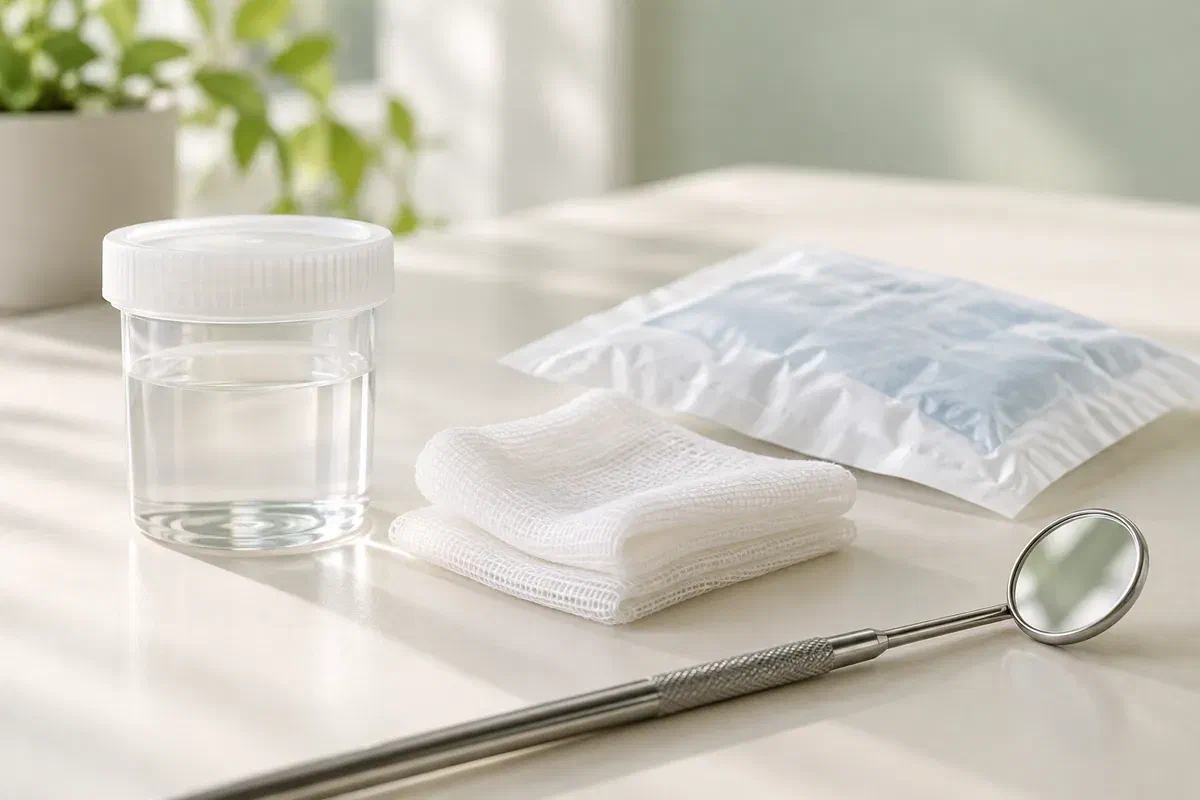
Illustrative dental first-aid supplies with a closed container, gauze, and cold compress
First aid that depends on the tooth

Calm the child. Then look closely.

Check for injuries beyond the mouth first. Note when it happened and what you’ve already done. If a tooth or chip can’t be found, tell the team instead of assuming it dropped on the ground.

A permanent tooth that is completely out

Go for emergency dental care immediately. Lift it by the crown and keep away from the root. A quick rinse in milk or saline is fine if it’s dirty; no scrubbing. Only when you’re sure it is permanent and it’s safe, nudge it gently back and have your child bite on clean gauze. Otherwise, place it in milk and bring it straight in.

A baby tooth, or one you can’t identify

Never put a baby tooth back in. If you honestly can’t tell, drop the tooth into a small cup of milk and seek professional advice at once. Don’t ask your child to hold it in their mouth on the way, as it could be swallowed or inhaled.

A tooth that’s chipped, wobbly or pushed in

Phone promptly and describe any change in where it sits, how the teeth meet and how your child feels. Discourage poking at it, and don’t force it back. Keep broken pieces moist in milk to bring with you. Ask where it should be assessed and mention anything else you notice.

Call 911 or go to a hospital emergency department for breathing difficulty, heavy bleeding that doesn’t settle, a serious jaw or facial injury, or signs of a head injury such as fainting, vomiting or double vision.

What parents should leave knowing

Which teeth were hurt, and what happens over the next months.

The first visit should make the injury as clear as the findings allow and flag any care that can’t be put off. Ask which teeth, gums and other tissues are involved, and how each is being protected. A child’s small chip and a permanent tooth that was knocked out and replanted will be handled very differently.

Good advice is also honest about the unknown. Some effects of trauma show up only at later checks, and in children a baby-tooth injury may need watching while the adult tooth underneath grows in. Understand why each review is booked and who to call between visits.

Patient information: American Association of Endodontists — updated trauma guidance and ongoing monitoring

An injury history the whole family can share

When, how, the tooth’s position and the first aid given can all guide care. If a babysitter, coach or grandparent was there, gather what they saw. If a hospital or another dentist saw your child first, bring those notes along.

Plans that reflect a growing mouth

Baby teeth, permanent teeth still forming their roots and fully developed adult teeth may each need a different approach. Ask how your child’s age and stage shape the advice. Similar-looking damage doesn’t automatically mean similar treatment.

Follow-up that makes sense to you

Ask what each review will check and whether plans might change. Reviews look at healing and can catch complications that weren’t visible at first. Talk about them early, not only once the repair looks good.

A child’s injury visit, start to finish

Listen, examine, treat what can’t wait, plan the checks.

Depending on the injury, the first visit might mean assessment, stabilizing a tooth, treatment or a referral. Ask what must happen today and which decisions are better made later.

  1. Explain what happened, in your child’s words too

    Share the time, the cause and any first aid or treatment so far. Mention lost teeth or pieces, health conditions, medicines and allergies. If your child has already been checked for other injuries, pass on what the doctor said.

  2. A gentle, thorough examination

    The dentist looks at the injury and decides which images or tests are appropriate for a child. Ask which teeth will be watched, including ones nearby that look unharmed. If a paediatric specialist or another setting is advised, ask why.

  3. Agree on what to do now

    Discuss the proposed care, how your child’s comfort will be managed, alternatives and costs. Treatment may involve protecting a fracture, repositioning or splinting a tooth, or arranging further care. Ask whether today’s result is temporary.

  4. Go home with a plan for the household

    Confirm the cleaning, food, play and review advice for this injury. Ask how to contact the team if anything comes up. Put appointment dates where every caregiver can see them, particularly if several adults share school runs and pickups.

Recovery at home and at school

Soft foods, careful brushing, and every review on the calendar.

Aftercare depends on the injury, whether it was a baby or permanent tooth, and the treatment given. A splinted tooth, a repaired chip and an injured baby tooth can each come with different home routines and review dates.

Stick to the advice for this injury

Ask how to brush around the tooth or splint, and which foods and games to avoid for a while. Discourage your child from biting hard things or wiggling the tooth to test it. Call if the routine is hard to manage or something seems loose.

Watch for changes, and call

Contact the team about worsening pain, swelling, a pimple-like bump or discharge on the gum, a bite that seems off, or anything else that worries you. Have the injury date ready. They’ll tell you whether the next review still suits.

File the paperwork, and keep going after it stops hurting

Keep a record of the first treatment and bring it if another clinician sees your child. Ask about notes for school, sport or insurance. Paperwork helps continuity, but reviews are about how the tooth is healing.

Treatment options for young and adult teeth

Different injuries, different routes forward.

Ask what the recommended care is meant to protect or restore. It should reflect the injury and the condition of the tooth, and be candid about what isn’t yet known.

When the fracture can be restored

Fixing a chipped or broken surface

A break may be protected or rebuilt, depending on its depth and how much tooth remains. Ask whether the piece you saved can be used and whether the repair is temporary or long-lasting. Appearance matters to children too, but the dentist also has to look after the nerve and root.

When a tooth has shifted or loosened

Moving a tooth back and holding it steady

Some injuries need professional repositioning or a splint, then planned reviews. Ask what the splint does and how long it will be needed. If your child finds it uncomfortable, call; don’t try to adjust or remove it.

When the injury needs more stages

Root care, a specialist, or planning for a missing tooth

Depending on how things develop, further care may come up, such as treatment inside the tooth. Occasionally a tooth can’t be saved. Ask what findings support the next step and how options suit your child’s age, development and future needs.

Parents’ questions in Brampton

What families ask after a fall, a game or a playground knock.

Call about a recent injury and use emergency services when needed. These answers help with planning; they can’t replace examining your child and their teeth.

(905) 876-4488
How can I tell whether my child’s knocked-out tooth was a baby tooth?
Age gives a clue, but mixed sets of teeth make it tricky. If you aren’t certain, don’t put it back. Keep it in milk and call for immediate advice. The team can help you work it out over the phone or at assessment.
My child’s baby tooth was pushed up into the gum. Will it come back down?
Call promptly. A tooth pushed into the gum needs assessment, and the dentist will check it and the developing adult tooth beneath. Don’t try to pull it down. The plan and follow-up depend on what the examination shows.
Should I worry about the adult tooth when a baby tooth is injured?
It’s a fair question to ask. An injured baby tooth can sometimes affect the permanent tooth forming underneath, which is one reason follow-up is suggested. The dentist will explain what to look for as your child grows.
Is it safe to replant a front tooth if my child is ten?
Only if you’re sure it’s a permanent tooth and it’s safe to try. At that age a mouth can hold both kinds. When in doubt, store it in milk and get emergency dental advice straight away.
Does a hurt tooth still need review once my child says it’s fine?
Yes. Children often stop mentioning discomfort quickly, and comfort doesn’t show how the tooth and its supports are healing. Keep the planned reviews and share any improvements at the visit.
With several kids in the house, how do we fit trips in from Brampton?
Ask at the first visit how many reviews are expected, and try booking them at times that suit school and work. Bring a list of questions each time so nothing is missed, and call if symptoms change in between.
Children’s dental injuries, Brampton

Sort out the tooth type, then let us help with the rest.

Ring our Bronte Street clinic about a recent injury to your child’s teeth and ask what assessment is available. Tell us when it happened and what you’ve noticed since. If urgent help is needed and you can’t reach us, contact another available emergency dental provider.

Online forms are for non-urgent enquiries only. Injury care, referral, follow-up, costs and whether a tooth can be retained all depend on assessment; we can’t guarantee an outcome or an immediate appointment.

Visit Milton Dental Clinic
Unit 1, 342 Bronte St. S, Milton, ON L9T 5B7
Get directions Clinic hours
Monday–Thursday
11am–7pm
Friday–Sunday
By appointment only

Areas we serve

  • Milton
  • Oakville
  • Mississauga
  • Georgetown
  • Halton Hills
  • Acton
  • Campbellville
  • Brampton
  • Burlington
  • Puslinch
  • Rockwood
  • Erin
  • Caledon
  • Etobicoke
  • Old Milton
  • Bronte Meadows
  • Timberlea
  • Dorset Park
  • Dempsey
  • Clarke
  • Beaty
  • Coates
  • Harrison
  • Scott
  • Willmott
  • Ford
  • Bowes
  • Cobden
  • Walker
  • Mountain View
  • Milton Heights
  • Hawthorne Village
  • Valley View
  • Fallingbrook
  • Nassagaweya
  • Trafalgar
  • Esquesing
  • Nelson
  • Brookville
  • Moffat
  • Glen Williams
  • Norval
  • Limehouse
  • Stewarttown
  • Ashgrove
  • Hornby
  • Silver Creek
  • Speyside
  • Scotch Block
  • North Oakville
  • River Oaks
  • Glen Abbey
  • West Oak Trails
  • Palermo
  • Bronte Creek
  • College Park
  • Joshua Creek
  • Uptown Core
  • Preserve
  • Iroquois Ridge
  • Lisgar
  • Meadowvale
  • Meadowvale Village
  • Churchill Meadows
  • Erin Mills
  • Central Erin Mills
  • Streetsville
  • East Credit
  • Creditview
  • Heartland
  • Sheridan
  • Mount Pleasant
  • Credit Valley
  • Huttonville
  • Churchville
  • Springbrook
  • Northwest Brampton
  • Bram West
  • Fletcher's Meadow
  • Fletcher's Creek South
  • Alton Village
  • Orchard
  • Millcroft
  • Headon Forest
  • Tansley
  • Brant Hills
  • Tyandaga
  • Kilbride
  • Lowville
  • Aberfoyle
  • Morriston
  • Arkell
  • Hillsburgh
  • Freelton
  • Carlisle
  • Waterdown
  • Flamborough
  • Mountsberg

How can we help?

Milton Dental Clinic

Have a question about your smile? Choose the option that works best for you.

For urgent dental concerns, please call.
Messages are reviewed during clinic hours.