

Illustrative patient describing a dental injury during a consultation
Specialized Care

Dental Trauma Treatment in Caledon

Once the urgent part of a dental injury is handled, the next questions are about choices: repair, splint, further treatment, or planning for a tooth that can’t be kept. Households in Caledon can call us to describe an injury and its timing. Emergency dental care is needed now for a knocked-out adult tooth.

Decisions after an injury

First aid buys time. Good choices use it well.

Dental trauma covers a wide range: a corner broken off, a tooth tipped out of line, a crack hidden in the root, or a tooth lost from the socket. Lips, gums and the surrounding bone may be injured at the same time. Because what shows is often only part of it, each injury needs examining before any treatment choice makes sense.

Phone us when it happens. Explain the cause, the approximate time, and whether it’s a baby or adult tooth, if you’re able to tell. Report any other injuries. Anyone with a significant head, face or jaw injury may need hospital assessment before dental decisions are made.

That first conversation clarifies the next step and our availability. An online form isn’t the right channel for an injury that has just happened. When we can’t be reached or can’t see you promptly, go to another emergency dental provider, and make a knocked-out permanent tooth the first priority.

Call to discuss an injury
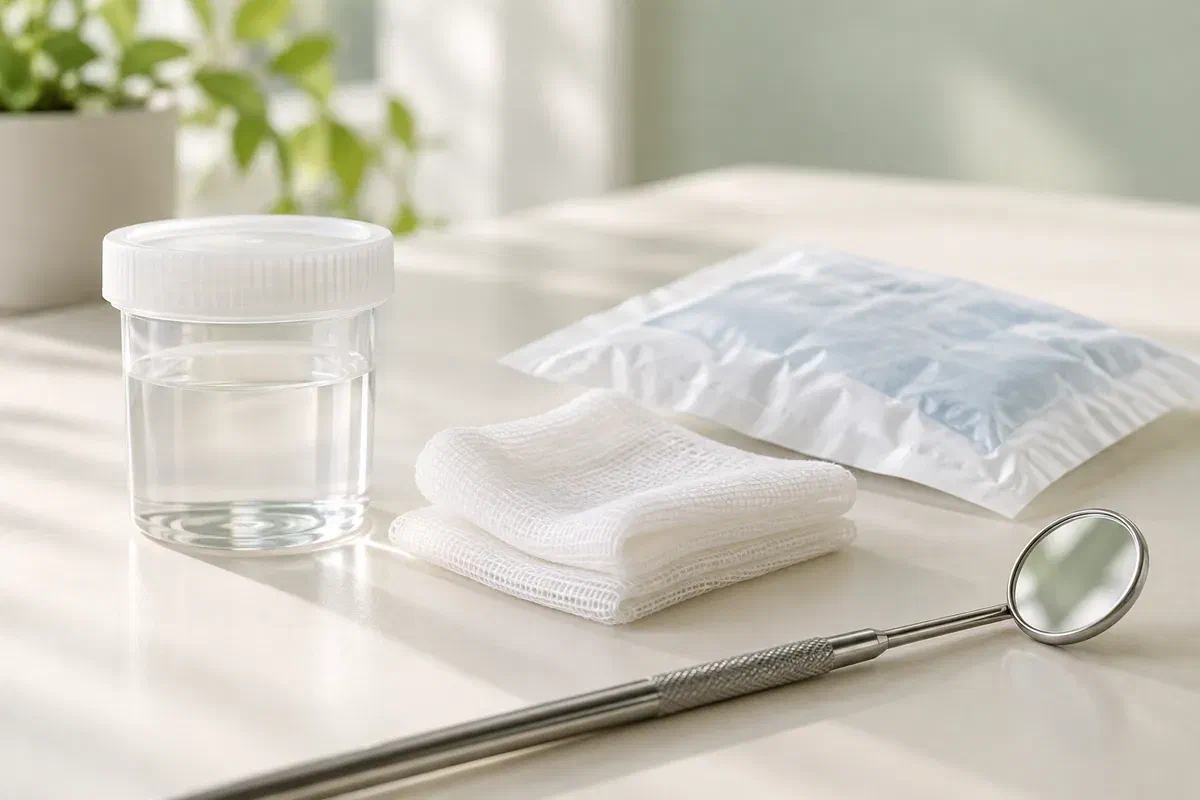
Illustrative dental first-aid supplies with a closed container, gauze, and cold compress
What can’t wait

The first hour decides some options. Protect them.

After making sure the person is safe, remember the time and what first aid you used. If a tooth or fragment is missing, say so; it isn’t safe to assume it was dropped somewhere.

When a permanent tooth is knocked out

Get emergency dental care immediately. Handle only the crown, never the root. Rinse briefly in milk or saline if dirty, without scrubbing. If you’re sure it is permanent and it is safe to do so, return it gently to its socket and bite on clean gauze. If not, keep it submerged in milk and come straight in.

When it might be a baby tooth

Do not replant baby teeth. If you can’t tell the type, keep the tooth in milk and get professional advice right away. Children shouldn’t hold a tooth in their mouths for safekeeping; it could be swallowed or inhaled.

When a tooth breaks, loosens or shifts

Phone soon and describe any change in position, bite or comfort. Avoid poking at it and don’t force it back. Keep pieces in milk to bring. Ask where it should be assessed, and mention other symptoms you’ve noticed.

Call 911 or seek hospital emergency care for breathing difficulty, uncontrolled heavy bleeding, major facial or jaw trauma, or head-injury signs such as loss of consciousness, vomiting or double vision.

Information you need to choose

A decision is only as good as the explanation behind it.

Before any treatment choice, the first assessment should describe the injury as clearly as the findings allow and deal with care that can’t wait. Ask which teeth and tissues are affected and how they’re being protected. Options for a small fracture are not the same as those for a displaced or replanted tooth.

Choices also depend on what isn’t known yet. Certain effects of trauma become clear only at later reviews, so a plan may change as healing is observed. Ask which decisions are being made now, which are deferred, and who to contact if something changes.

Patient information: American Association of Endodontists — updated trauma guidance and ongoing monitoring

A full account to base choices on

When it happened, what caused it, where the tooth ended up and what first aid was given all bear on the options. Share what you know and admit what you don’t. If another dentist or a hospital saw the injury first, bring their notes or tell us where.

Options shaped by the tooth’s development

Choices for a baby tooth, a child’s still-maturing permanent tooth and a fully developed adult tooth can differ considerably. Ask how age and development affect what’s offered. Look-alike injuries may not lead to the same recommendation.

Reviews that inform the next decision

Ask what later checks will assess and which results might change the plan. Reviews follow healing and can reveal complications not visible at the start, which may open or close options. Discuss them before focusing on appearance.

How choices are made at the first visit

Gather the facts, examine, choose what’s urgent, plan the rest.

Depending on what the dentist finds, the appointment may include an assessment, stabilizing the tooth, treatment or a referral. Ask which choices must be made today and which can wait.

  1. Set out the history

    Explain when and how the injury happened, along with any first aid or treatment since. Mention missing teeth or fragments, medical conditions, medicines and allergies. Pass on any findings from a medical assessment of other injuries.

  2. Examine and gather information

    The dentist examines the injured area and decides on the images and tests that are indicated. Ask which teeth will be monitored, including neighbours that look normal. If a specialist opinion is suggested, ask what it would add.

  3. Weigh the immediate options

    Discuss the recommended care, comfort, alternatives and fees. Treatment might protect a fracture, reposition and splint a tooth, or arrange further care. Ask which parts are temporary and which choices you’ll face later.

  4. Leave with instructions and a decision timeline

    Confirm cleaning, eating, activity and review instructions. Note how to reach the team if something needs attention. Keep appointment and treatment details together, especially when a specialist or another provider is involved.

While decisions are pending

Protect the tooth so options stay open.

Home care depends on the injury, tooth type and treatment. A splinted tooth, a restored fracture and an injured baby tooth can each have distinct routines and review schedules.

Follow the instructions for your treatment

Ask how to clean around the injured tooth or splint and what foods or activities to avoid for now. Don’t test it with hard food or by moving it. Call if the instructions are difficult or something feels loose.

Report anything that changes

Contact the team about worsening pain, swelling, drainage, an altered bite or anything else that worries you, with the date of injury and treatment to hand. They can advise whether to keep the next review or come in sooner.

Keep records for every provider

Keep every treatment summary together and pass copies to any specialist or other clinician who joins your care. Request forms for a school, team, employer or insurer as needed. Records help continuity, while reviews remain about healing.

Weighing the options

Each route answers a different problem.

For every option, find out what it protects or restores, what it would mean for later choices, and what it asks of you in visits and home care. The plan should fit the injury and the tooth, and say honestly what can’t be predicted.

When the break can be repaired

Restoring a fractured tooth

A fracture may be protected or rebuilt, depending on depth and how much tooth is left. Ask whether a fragment can be used and whether the repair is a first step or meant to be lasting. The nerve and root are assessed as well as appearance.

When the tooth has moved or loosened

Repositioning, splinting and watching

Some injuries need the tooth professionally repositioned or splinted, with planned reviews. Ask what the splint is meant to do and how long it should stay. If it’s uncomfortable, call rather than adjusting or removing it.

If the tooth needs more, or can’t be kept

Nerve treatment, referral or replacement planning

Depending on diagnosis and healing, further care may be discussed, including treatment of the nerve. Sometimes a tooth can’t be saved, and replacement planning becomes part of the conversation. Ask how alternatives fit your age, dental development and future needs.

Caledon questions about treatment choices

Understanding the options before you decide.

Call us about any recent injury, and use emergency services where they’re needed. These answers support decision-making and don’t replace an examination.

(905) 876-4488
Can I take time to decide on treatment after the emergency care?
Often some decisions can wait while healing is observed, but others can’t. Ask the dentist which choices are time-sensitive and which can be made after a review, and why. It can help to write your questions down between visits so the next conversation covers everything that matters to you.
What happens if an injured tooth can’t be saved?
The dentist will explain why and discuss options for the space, which depend on your age, dental development and other factors. Before deciding, ask about timing, the number of visits each option involves, its fees, and what it would mean for the neighbouring teeth.
Should I get a second opinion or see a specialist?
You can ask. If a specialist is recommended, the dentist should explain why. If you seek another opinion yourself, bring your records so the new clinician has the full history.
Is there any use bringing a permanent tooth that’s been out for a long time?
Yes. Seek immediate dental assessment and bring it, stored moist. Explain how long it was out and what it was kept in. Don’t discard it or decide alone that it’s too late.
How do children’s growing teeth affect the choices?
A child’s teeth and jaws are still developing, so some options are timed around growth. Ask how your child’s stage affects what is recommended now and what might be revisited later.
From Caledon, how can we keep specialist and review visits organised?
Ask for a written summary of the plan, including who is responsible for each step. Keep records together, and book reviews ahead. Call before travelling if symptoms change.
Dental trauma care for Caledon

Make the call. Then make informed choices.

Ring our Bronte Street clinic soon after a tooth is hurt and we’ll talk through what assessment we can offer. Share the time of injury and anything that’s shifted since. Should you need care right away and get no answer, a different emergency dental provider is the right call.

Online forms are for non-urgent questions only. Injury management, referral, follow-up, costs and whether a tooth can be kept depend on assessment; no outcome or immediate appointment is guaranteed.

Visit Milton Dental Clinic
Unit 1, 342 Bronte St. S, Milton, ON L9T 5B7
Get directions Clinic hours
Monday–Thursday
11am–7pm
Friday–Sunday
By appointment only

Areas we serve

  • Milton
  • Oakville
  • Mississauga
  • Georgetown
  • Halton Hills
  • Acton
  • Campbellville
  • Brampton
  • Burlington
  • Puslinch
  • Rockwood
  • Erin
  • Caledon
  • Etobicoke
  • Old Milton
  • Bronte Meadows
  • Timberlea
  • Dorset Park
  • Dempsey
  • Clarke
  • Beaty
  • Coates
  • Harrison
  • Scott
  • Willmott
  • Ford
  • Bowes
  • Cobden
  • Walker
  • Mountain View
  • Milton Heights
  • Hawthorne Village
  • Valley View
  • Fallingbrook
  • Nassagaweya
  • Trafalgar
  • Esquesing
  • Nelson
  • Brookville
  • Moffat
  • Glen Williams
  • Norval
  • Limehouse
  • Stewarttown
  • Ashgrove
  • Hornby
  • Silver Creek
  • Speyside
  • Scotch Block
  • North Oakville
  • River Oaks
  • Glen Abbey
  • West Oak Trails
  • Palermo
  • Bronte Creek
  • College Park
  • Joshua Creek
  • Uptown Core
  • Preserve
  • Iroquois Ridge
  • Lisgar
  • Meadowvale
  • Meadowvale Village
  • Churchill Meadows
  • Erin Mills
  • Central Erin Mills
  • Streetsville
  • East Credit
  • Creditview
  • Heartland
  • Sheridan
  • Mount Pleasant
  • Credit Valley
  • Huttonville
  • Churchville
  • Springbrook
  • Northwest Brampton
  • Bram West
  • Fletcher's Meadow
  • Fletcher's Creek South
  • Alton Village
  • Orchard
  • Millcroft
  • Headon Forest
  • Tansley
  • Brant Hills
  • Tyandaga
  • Kilbride
  • Lowville
  • Aberfoyle
  • Morriston
  • Arkell
  • Hillsburgh
  • Freelton
  • Carlisle
  • Waterdown
  • Flamborough
  • Mountsberg

How can we help?

Milton Dental Clinic

Have a question about your smile? Choose the option that works best for you.

For urgent dental concerns, please call.
Messages are reviewed during clinic hours.