

Illustrative patient describing a dental injury during a consultation
Specialized Care

Dental Trauma Treatment in Campbellville

A fall from a bike, a ladder or a horse can injure teeth far from the nearest clinic. In Campbellville, a little preparation helps: know the first aid, keep supplies handy, and phone us to describe the injury and its timing. A knocked-out adult tooth needs emergency dental care right away.

Rural life and dental injuries

Ready before it happens.

Outdoor work and play bring their share of knocks. A tooth may chip on a fence rail, loosen after a tumble on uneven ground, fracture out of sight below the gum, or be lost entirely. Lips and gums often take damage too. Because some of this hides from view, a careful dental assessment is worthwhile even when things look minor.

As soon as first aid is in hand, call. Explain what happened and when, and say whether it was a baby or permanent tooth if you know. Tell us about other injuries. A hard blow to the head, face or jaw may need hospital care before anyone thinks about the teeth.

Speaking with the team gives you the next step and a sense of when you can be seen. Email or an online request is too slow for an injury. If we can’t be reached or can’t provide care promptly, seek another emergency dental provider, and treat a knocked-out permanent tooth as the priority.

Call about a tooth injury
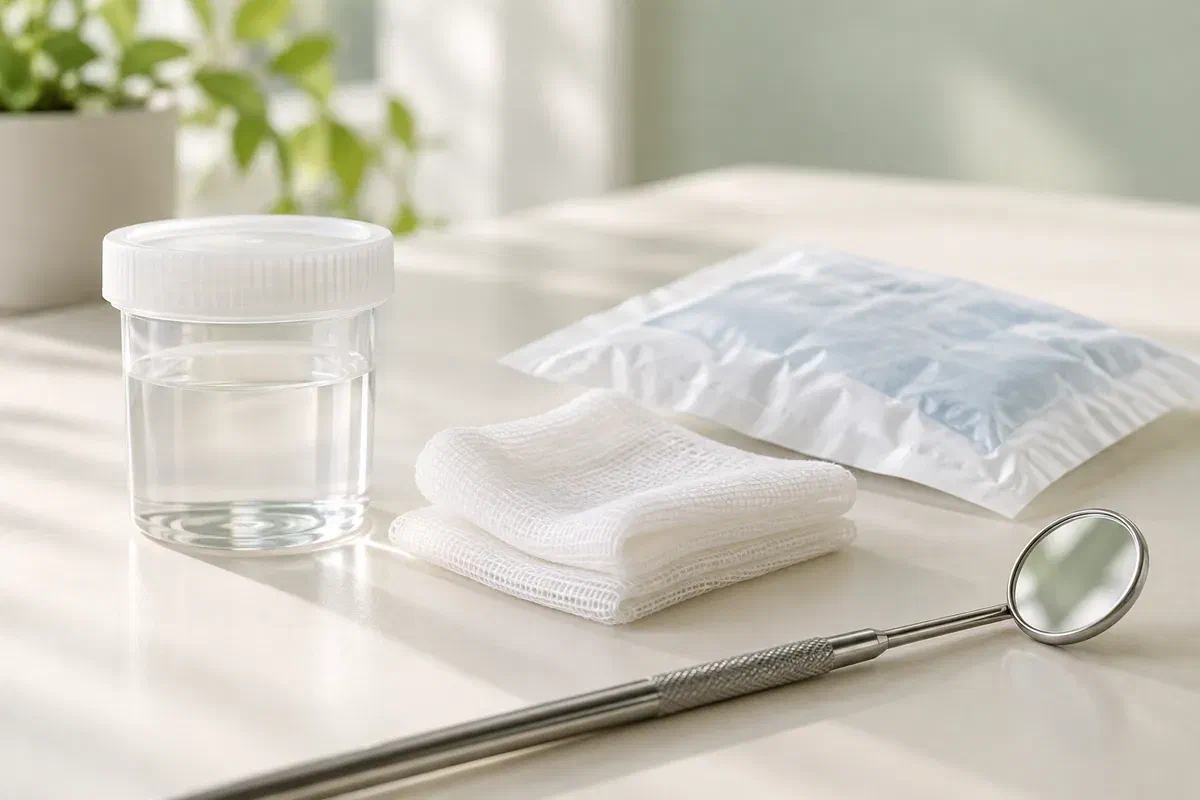
Illustrative dental first-aid supplies with a closed container, gauze, and cold compress
Field first aid for teeth

Check the whole person before the smile.

Then make a mental note of the time and whatever first aid you’ve managed. If a tooth or piece can’t be found in grass or gravel, mention that when you call rather than assuming it’s simply lost.

An adult tooth knocked clean out

Head for emergency dental care immediately. Pick it up by the crown and don’t handle the root. If there’s soil on it, rinse briefly with milk or saline, never scrubbing. When you’re certain it’s permanent and it’s safe, ease it back into the socket and bite on clean gauze. If not, keep it in milk for the trip.

A baby tooth, or you can’t tell

Don’t try to replant a baby tooth. If the type is uncertain, keep the tooth in a lidded container of milk and get professional advice at once. Never let a child hold it in their mouth on the way, where it could be swallowed or inhaled.

Chipped, loosened or bent out of line

Phone soon and describe any change in position, bite or comfort. Avoid wiggling the tooth or forcing it back. Collect any pieces into milk. Ask where the injury should be assessed, and mention other symptoms before setting out.

Call 911 for difficulty breathing, heavy bleeding that won’t stop, a serious facial or jaw injury, or head-injury signs such as being knocked out, vomiting or double vision, or get to hospital emergency care.

Getting the most from each trip

Answers today, and a clear plan for the visits ahead.

The first appointment should explain the injury as completely as the findings allow and take care of anything that shouldn’t wait. Ask which teeth and gum areas are affected and what’s protecting them. A small chip and a tooth that has moved or been replanted call for very different responses.

The plan should be honest about what isn’t known yet. Certain effects of trauma become clear only at later checks, so a comfortable tooth after the first visit hasn’t necessarily finished healing. Ask why each review is booked and who to call if something changes between trips.

Patient information: American Association of Endodontists — updated trauma guidance and ongoing monitoring

A clear history from the scene

The time, how it happened, the tooth’s position and the first aid used can shape the plan. Share what you know and say where you’re unsure. If another provider saw the injury first, bring their records.

Treatment tied to the tooth’s stage

Baby teeth, children’s permanent teeth with roots still forming, and adult teeth that are fully developed can each need their own approach. Ask how the tooth type affects your options. Look-alike injuries won’t always be treated alike.

Reviews scheduled with your household in mind

Ask what later visits will check, whether the plan may change, and how reviews can be booked to suit farm, work or school routines. These checks follow healing and can catch complications not seen at first.

At your appointment

A careful history, a close look, the urgent care, a schedule.

The first visit could include assessment, stabilization, treatment or referral, depending on the injury. Ask which parts are urgent and which decisions can wait for more information.

  1. Explain the accident and the first aid

    Describe when and how the injury happened and what was done afterwards. Mention any lost teeth or pieces, health conditions, medicines and allergies. If you were assessed elsewhere for other injuries, tell the dentist.

  2. Examine the teeth and soft tissue

    The dentist checks the area and decides which images and tests are appropriate. Ask which teeth should be monitored, including neighbouring teeth that look intact. If another setting or a specialist is suggested, ask why.

  3. Agree on immediate care

    Discuss what’s proposed, how comfort will be managed, the alternatives and the fees. Treatment may protect a fracture, reposition and splint a tooth, or arrange more care. Ask whether today’s result is temporary and what could come later.

  4. Go home with a plan that fits the calendar

    Confirm cleaning, eating, activity and review instructions. Ask how to contact the team if something needs attention, and whether reviews can be grouped with other family appointments. Keep the details where the whole household can find them.

Healing at home

Gentle with the tooth, quick on the phone.

Aftercare depends on the injury, whether the tooth is a baby or adult one, and what was done. A splinted tooth, a bonded fracture and an injured baby tooth can need different routines and review dates.

Follow your own cleaning and food instructions

Ask how to clean near the injured tooth or splint, and which foods or chores might put it at risk for now. Don’t test it on tough food or by moving it. Call if the routine is difficult or something feels loose.

Phone before deciding to drive in

Report worsening pain, swelling, drainage, a bite that feels different, or any new concern. Give the injury date and treatment. The team will advise whether to keep the next review, come earlier, or seek closer urgent help.

Keep a record and stick with the reviews

Save the first treatment summary and pass it on if another clinician becomes involved. Request any forms needed for school, sport, an employer or insurance. Records keep care continuous; the reviews are about healing.

What treatment may look like

Fix it, hold it, or plan the next stage.

Ask what each proposed step protects or restores. The recommendation should reflect the injury and the tooth’s condition, and be candid about what can’t be predicted.

When a fracture can be restored

Repairing a broken tooth

A fracture may be covered or rebuilt, depending on its depth and what remains of the tooth. Ask if a recovered fragment can be used and whether the repair is temporary or lasting. The nerve and root are considered alongside the look of the tooth.

When the tooth’s position or support is affected

Splinting a moved or loosened tooth

Some injuries need a tooth repositioned or held by a splint, with planned reviews. Ask what the splint is for and how long it should stay. If it bothers you, call; don’t adjust or remove it at home.

When more stages of care are needed

Root treatment, referral or replacement

Depending on diagnosis and healing, further treatment may be discussed, such as care of the nerve. Some teeth can’t be saved. Ask what findings support the next step and how alternatives fit your age, dental development and long-term needs.

Campbellville questions about tooth injuries

Preparing a rural household for the unexpected.

Call about any recent injury, and use 911 or hospital care when needed. These answers help with planning but can’t replace examining the injured person.

(905) 876-4488
What belongs in a home dental first-aid kit?
A small container with a lid, clean gauze, a cold pack, single-use saline, and the clinic’s number. Milk from the fridge works for storing a knocked-out tooth. Keep the kit somewhere everyone in the house knows about.
The tooth landed in dirt. Can I clean it properly before replanting?
Only rinse briefly with milk or saline. Don’t scrub, use soap or wipe the root. Hold it by the crown. If it’s permanent and safe to replant, do so gently; otherwise store it in milk and seek emergency dental care.
A cold pack helps the swelling. Is that enough until the review?
A cold compress may help comfort, but it doesn’t replace assessment. Call about the injury, and keep any recommended reviews. Report swelling that increases or doesn’t settle.
Is a tooth that’s been out for a couple of hours still worth bringing in?
Yes. Get a dental assessment right away and bring it, kept moist. Say how long it was out and how it was stored. Don’t discard it on the assumption that it’s too late.
Does every injured tooth need a root canal in the end?
No. The injury, how developed the tooth is, test results and later findings decide whether treatment inside the tooth is appropriate. Ask what is known now and what will be reassessed at reviews.
How can we keep follow-up trips manageable from Campbellville?
Ask for the review schedule at the first visit and book ahead around chores, work and school. Bring questions and records each time. If symptoms change, phone before driving in so the team can advise.
Dental injury care for Campbellville

First aid at home, a call to us, a plan from there.

Phone our Bronte Street office as soon as a tooth has been injured and ask about assessment availability. Tell us when it happened and how things have changed. If immediate help is needed and you can’t reach us, contact another emergency dental provider.

Please keep online forms for questions that can wait. Injury management, referral, review visits, cost and the possibility of keeping a tooth depend on assessment; no outcome or immediate appointment is guaranteed.

Visit Milton Dental Clinic
Unit 1, 342 Bronte St. S, Milton, ON L9T 5B7
Get directions Clinic hours
Monday–Thursday
11am–7pm
Friday–Sunday
By appointment only

Areas we serve

  • Milton
  • Oakville
  • Mississauga
  • Georgetown
  • Halton Hills
  • Acton
  • Campbellville
  • Brampton
  • Burlington
  • Puslinch
  • Rockwood
  • Erin
  • Caledon
  • Etobicoke
  • Old Milton
  • Bronte Meadows
  • Timberlea
  • Dorset Park
  • Dempsey
  • Clarke
  • Beaty
  • Coates
  • Harrison
  • Scott
  • Willmott
  • Ford
  • Bowes
  • Cobden
  • Walker
  • Mountain View
  • Milton Heights
  • Hawthorne Village
  • Valley View
  • Fallingbrook
  • Nassagaweya
  • Trafalgar
  • Esquesing
  • Nelson
  • Brookville
  • Moffat
  • Glen Williams
  • Norval
  • Limehouse
  • Stewarttown
  • Ashgrove
  • Hornby
  • Silver Creek
  • Speyside
  • Scotch Block
  • North Oakville
  • River Oaks
  • Glen Abbey
  • West Oak Trails
  • Palermo
  • Bronte Creek
  • College Park
  • Joshua Creek
  • Uptown Core
  • Preserve
  • Iroquois Ridge
  • Lisgar
  • Meadowvale
  • Meadowvale Village
  • Churchill Meadows
  • Erin Mills
  • Central Erin Mills
  • Streetsville
  • East Credit
  • Creditview
  • Heartland
  • Sheridan
  • Mount Pleasant
  • Credit Valley
  • Huttonville
  • Churchville
  • Springbrook
  • Northwest Brampton
  • Bram West
  • Fletcher's Meadow
  • Fletcher's Creek South
  • Alton Village
  • Orchard
  • Millcroft
  • Headon Forest
  • Tansley
  • Brant Hills
  • Tyandaga
  • Kilbride
  • Lowville
  • Aberfoyle
  • Morriston
  • Arkell
  • Hillsburgh
  • Freelton
  • Carlisle
  • Waterdown
  • Flamborough
  • Mountsberg

How can we help?

Milton Dental Clinic

Have a question about your smile? Choose the option that works best for you.

For urgent dental concerns, please call.
Messages are reviewed during clinic hours.