

Illustrative patient describing a dental injury during a consultation
Specialized Care

Dental Trauma Treatment in Etobicoke

When a tooth is knocked out, minutes count, and the nearest available emergency dentist may be the right first stop. From Etobicoke, call us to talk through the injury and timing, ask about assessment, and plan follow-up visits that keep the trips worthwhile.

Urgent care, distance and follow-up

Get help fast. Organise the longer journey afterwards.

Tooth injuries range from a broken corner to a tooth driven out of position, a root fracture no one can see, or a tooth lost from its socket completely. Gums and lips may be torn, and bone can be involved. Because a lot of this isn’t visible, every injury deserves a proper look, and some need one immediately.

Phone right away and tell us what happened, when, and whether it’s a baby or adult tooth if you know. Include any other injuries. A hard hit to the head or jaw may mean the hospital comes first. Coming from Etobicoke, the call also helps you judge whether to travel or find help nearer to home.

We’ll use that conversation to work out the next step and our availability. Don’t wait for a reply to an online form. If we can’t be reached, or the trip would delay care, go to another emergency dental provider straight away, particularly for a knocked-out permanent tooth. We can often help with follow-up afterwards.

Call to plan your next step
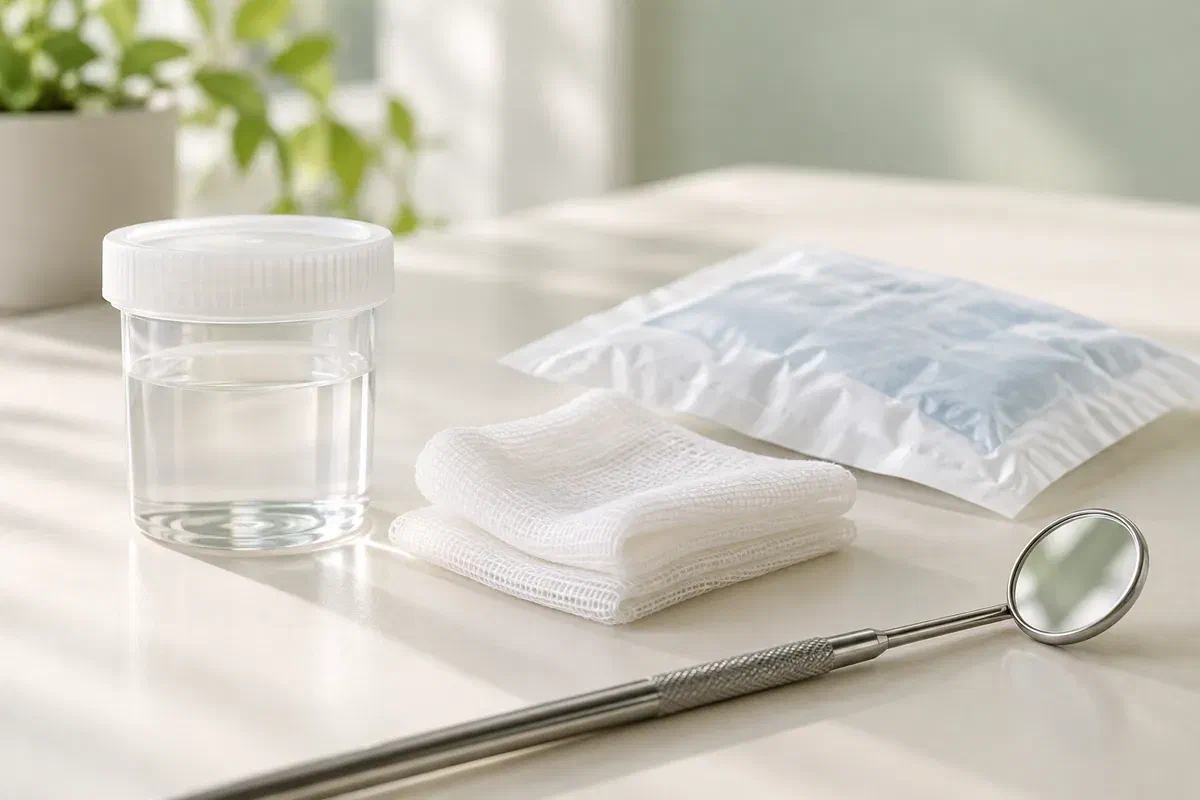
Illustrative dental first-aid supplies with a closed container, gauze, and cold compress
Before anyone gets in the car

Is this a hospital problem, a dental emergency, or a call-today injury?

Make sure the injured person is safe, then note the time and any first aid given. If a tooth or chip is missing, mention it; don’t presume it simply fell somewhere.

A knocked-out adult tooth: don’t delay for distance

Seek the nearest available emergency dental care. Hold the tooth by the crown, not the root. If it’s dirty, rinse it briefly in milk or saline without scrubbing. If it is certainly permanent and safe to do, replace it gently without force and bite on clean gauze; if not, keep it in milk on the way.

A baby tooth, or one you can’t place

Baby teeth must not be replanted. If you’re unsure of the type, store it in milk and get professional advice immediately, from whichever provider you can reach soonest. Don’t let a child carry the tooth in their mouth, since it could be swallowed or inhaled.

A broken, loose or displaced tooth

Call soon and describe any change in position, bite or comfort; the answers help decide whether to travel now or be seen closer by. Avoid testing it and don’t push it into place. Bring any recovered fragment kept moist in milk, and mention other symptoms.

Call 911 or get hospital emergency care for difficulty breathing, heavy bleeding that won’t stop, a serious face or jaw injury, or head-injury warning signs such as passing out, vomiting or double vision.

Making each visit count

Clarity at the first appointment saves trips later.

Whoever sees you first, the aim is to understand the injury as far as findings allow and to deal with care that can’t reasonably wait. Ask which teeth and tissues were involved and how they’re being protected. A minor fracture and a displaced or replanted tooth lead to quite different plans.

Ask too about what remains uncertain. Some effects of trauma only become clear at later reviews, so a settled tooth after the first visit isn’t the full outcome. Knowing why each check is scheduled, and who to call between them, helps you plan travel around what matters.

Patient information: American Association of Endodontists — updated trauma guidance and ongoing monitoring

Records that move with you between clinics

If you were treated near home first, ask for notes and images to be shared or bring a copy. Timing, cause, tooth position and first aid all inform the next decisions. Share what you know, and leave guesses out.

Care suited to the tooth involved

Baby teeth, young permanent teeth still forming and mature adult teeth can need different management. Ask how the type of tooth shapes the plan. A similar chip or shift doesn’t automatically mean the same treatment.

Reviews grouped with purpose

Ask what later visits will assess, whether the plan may change, and whether any checks can be combined with other appointments. Reviews track healing and can find complications not visible at first. Plan them before the focus shifts to appearance.

From first visit to follow-up

One well-prepared appointment, then a plan you can travel around.

Depending on the injury, the first visit may involve assessment, stabilization, treatment or referral. Ask which steps are urgent and which can be scheduled once more information is in.

  1. Bring the history, and any earlier notes

    Explain when and how the injury happened and what first aid or treatment followed. Note any missing teeth or pieces, medical conditions, medicines and allergies. If another dentist or hospital has already seen you, bring their records or the clinic’s contact details.

  2. Examine the area properly

    The dentist checks the injured teeth and surroundings and considers which images and tests are indicated. Ask which teeth need monitoring, including neighbours that look intact. If a specialist or another setting is advised, ask why and where.

  3. Settle immediate treatment and next stages

    Discuss the proposed care, comfort, alternatives and fees. Treatment may protect a fracture, reposition or splint a tooth, or arrange further care. Ask whether the first result is temporary and how many visits the plan is likely to involve.

  4. Leave with instructions and a booked schedule

    Confirm cleaning, eating, activity and review advice for your injury. Ask how to reach us if something needs attention, and when a closer provider would be more appropriate. Keep appointment details together, especially if more than one clinic is involved.

Between appointments

Know what to watch for, and when not to wait for the drive.

Home care depends on the injury, type of tooth and treatment given. A splint, a bonded chip and an injured baby tooth can each carry their own routine and review timing.

Follow the cleaning and diet advice you were given

Ask how to clean around the tooth or splint and what to avoid eating or doing for now. Don’t bite hard objects or move the tooth to test it. Call if the advice is hard to follow or something feels loose.

Phone about changes, rather than saving them for the review

Report increasing pain, swelling, drainage, a changed bite or any new concern. Give the injury date and treatment details. The team can advise whether the planned review still fits, whether to come earlier, or whether nearer urgent care makes more sense.

Keep copies, and keep the reviews

Save treatment summaries and share them if another clinician gets involved. Ask about forms for school, sport, work or insurance. Paperwork helps continuity; the checks themselves remain about how the tooth is healing.

Once the injury is assessed

Restore, stabilize, or plan the next stage.

Every treatment has a job, so find out what this one protects or restores. The plan should reflect your injury and the tooth’s condition, with an honest account of what can’t be predicted yet.

When the break can be repaired

Covering or rebuilding a fracture

Depending on its depth and the tooth that remains, a fracture may be protected or restored. Ask whether a saved fragment helps and whether the repair is temporary or definitive, since that affects how many visits you’ll need. The nerve and root are assessed alongside appearance.

If the tooth has moved or its support is hurt

Repositioning or splinting, then reviews

Some injuries need a tooth guided back or splinted, followed by scheduled checks. Ask what the splint does and how long it’s likely to stay. If it’s uncomfortable, phone for advice rather than adjusting or removing it yourself.

When more treatment is needed

Further care, referral or replacement

Based on diagnosis and healing, additional care may be discussed, including treatment of the nerve. Not every tooth can be kept. Ask what findings support the recommendation and how alternatives suit your age, dental development and longer-term needs.

Planning dental injury care from Etobicoke

Questions about distance, timing and shared care.

Phone about any recent injury, and use emergency services when they’re needed. These answers support planning but can’t substitute for an examination.

(905) 876-4488
Should I travel to you or find a dentist nearer home for a knocked-out tooth?
Go to whichever emergency dental provider can see you soonest. With a knocked-out permanent tooth, speed matters more than which clinic you choose. We can discuss follow-up later if that suits you.
Can you take over follow-up if another dentist treated the injury first?
Often that can be discussed. Bring or send the treatment records, images if available and details of any splint. The dentist will review them, examine the tooth and explain what further checks are recommended.
Can review appointments be combined with other dental visits?
Ask when booking. Sometimes reviews can be paired with other care, but timing is set by the injury, not convenience. The team can help you plan around work or school while keeping the recommended schedule.
If a tooth was out for a long while before we reached a dentist, is it still worth bringing?
Yes. Get immediate assessment and bring the tooth, kept moist. Tell the clinician how long it was out and how it was stored. Don’t throw it away because time has passed.
What if a splint feels loose while we’re far from the clinic?
Phone for advice first. Don’t remove or adjust it. Depending on what you describe, the team may suggest coming in or seeing a nearer provider. Avoid chewing on that side until you’ve had advice.
Do all injured teeth eventually need root canal treatment?
No. Whether treatment inside the tooth is needed depends on the injury, how developed the tooth is, test results and how healing progresses. Ask what is known now and what will be reassessed.
Dental injury planning for Etobicoke

Urgent care first, connected follow-up after.

Call our Bronte Street office to describe a recent dental injury and ask about assessment availability. Tell us when it happened and what has changed. If immediate help is needed and we can’t be reached, go to another available emergency dental provider.

Online forms suit non-urgent enquiries only. Management, referral, follow-up, costs and the chance of keeping the tooth all depend on assessment; we can’t guarantee outcomes or an immediate appointment.

Visit Milton Dental Clinic
Unit 1, 342 Bronte St. S, Milton, ON L9T 5B7
Get directions Clinic hours
Monday–Thursday
11am–7pm
Friday–Sunday
By appointment only

Areas we serve

  • Milton
  • Oakville
  • Mississauga
  • Georgetown
  • Halton Hills
  • Acton
  • Campbellville
  • Brampton
  • Burlington
  • Puslinch
  • Rockwood
  • Erin
  • Caledon
  • Etobicoke
  • Old Milton
  • Bronte Meadows
  • Timberlea
  • Dorset Park
  • Dempsey
  • Clarke
  • Beaty
  • Coates
  • Harrison
  • Scott
  • Willmott
  • Ford
  • Bowes
  • Cobden
  • Walker
  • Mountain View
  • Milton Heights
  • Hawthorne Village
  • Valley View
  • Fallingbrook
  • Nassagaweya
  • Trafalgar
  • Esquesing
  • Nelson
  • Brookville
  • Moffat
  • Glen Williams
  • Norval
  • Limehouse
  • Stewarttown
  • Ashgrove
  • Hornby
  • Silver Creek
  • Speyside
  • Scotch Block
  • North Oakville
  • River Oaks
  • Glen Abbey
  • West Oak Trails
  • Palermo
  • Bronte Creek
  • College Park
  • Joshua Creek
  • Uptown Core
  • Preserve
  • Iroquois Ridge
  • Lisgar
  • Meadowvale
  • Meadowvale Village
  • Churchill Meadows
  • Erin Mills
  • Central Erin Mills
  • Streetsville
  • East Credit
  • Creditview
  • Heartland
  • Sheridan
  • Mount Pleasant
  • Credit Valley
  • Huttonville
  • Churchville
  • Springbrook
  • Northwest Brampton
  • Bram West
  • Fletcher's Meadow
  • Fletcher's Creek South
  • Alton Village
  • Orchard
  • Millcroft
  • Headon Forest
  • Tansley
  • Brant Hills
  • Tyandaga
  • Kilbride
  • Lowville
  • Aberfoyle
  • Morriston
  • Arkell
  • Hillsburgh
  • Freelton
  • Carlisle
  • Waterdown
  • Flamborough
  • Mountsberg

How can we help?

Milton Dental Clinic

Have a question about your smile? Choose the option that works best for you.

For urgent dental concerns, please call.
Messages are reviewed during clinic hours.