

Illustrative patient describing a dental injury during a consultation
Specialized Care

Dental Trauma Treatment in Georgetown

After a tooth injury, a short, clear phone call does more than any online search. From Georgetown, tell us what happened, when, and which tooth is affected, then ask about assessment. If a permanent tooth has been knocked out, emergency dental care is needed now.

Preparing for the first call

What happened, when, and which tooth?

Those three questions frame almost every dental injury call. The answers help separate a chipped edge from a tooth that has been pushed sideways, a fracture hidden at the root, or a tooth that has left its socket altogether. Injuries to lips and gums often come with them, and what you see may only be part of the damage.

Make the call quickly, even if you don’t have every detail. Tell us how the injury happened, what time it was, and, if you can tell, whether it’s one of the first set of teeth or a permanent one. Add any other injuries. A serious knock to the head, face or jaw may need hospital assessment first.

That conversation sets your next step and tells you whether we can see you. A fresh injury shouldn’t wait for an email reply. If we can’t pick up or can’t help promptly, contact another emergency dental provider, especially when a permanent tooth has come out.

Call to describe an injury
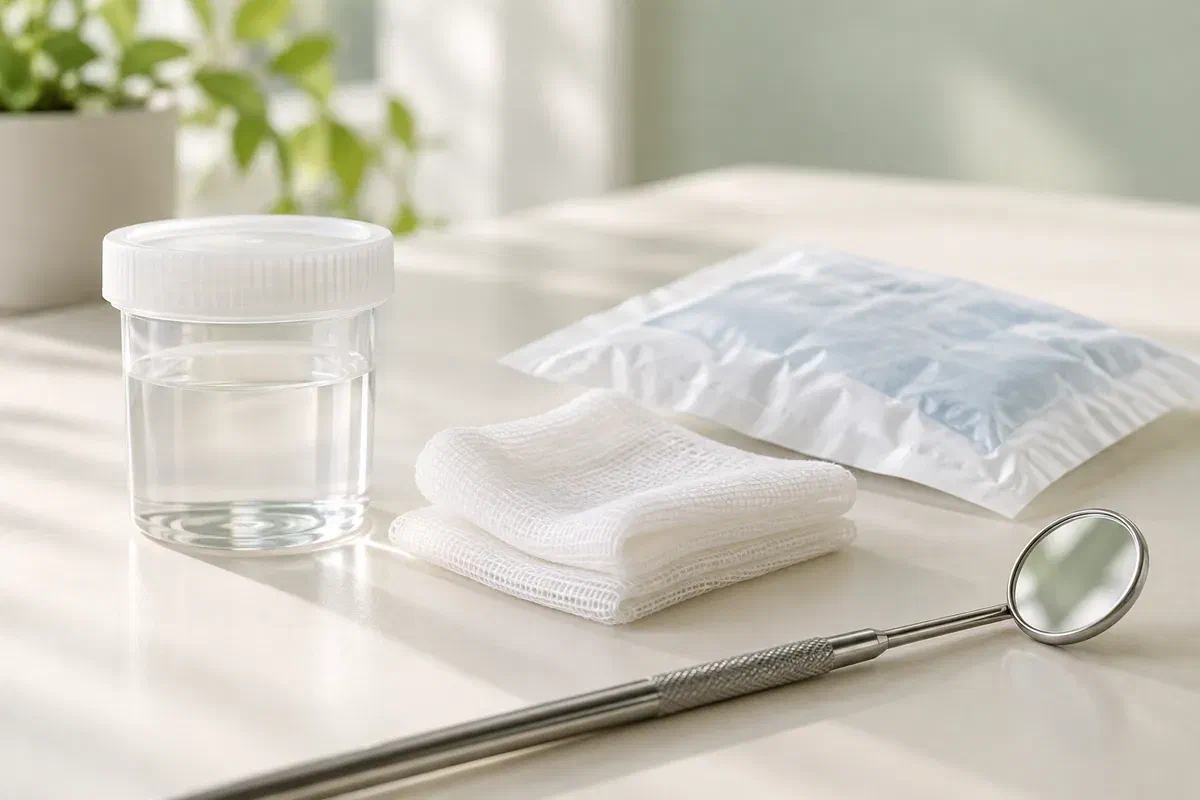
Illustrative dental first-aid supplies with a closed container, gauze, and cold compress
The first answers to have ready

Is the person safe? Is the tooth in or out?

Have the time of injury and any first aid in mind when you call. If a tooth or piece is missing, tell the team, since it might not have landed on the ground.

Out: a permanent tooth no longer in its socket

This needs emergency dental care at once. Handle the crown only and keep clear of the root. If it’s dirty, rinse it quickly in milk or saline; don’t scrub. If you know it’s permanent and it’s safe, press it gently back and bite on clean gauze. Otherwise, keep it in milk and come right away.

Out: a baby tooth, or you’re not sure

Baby teeth stay out; never replant one. When unsure, put the tooth in milk and get professional advice straight away. Don’t let a child keep it in their mouth, as it could be swallowed or inhaled.

In, but broken, loose or out of line

Call soon and tell us whether it has moved, whether your bite feels different, and how it feels. Avoid wiggling it and don’t force it into place. Keep any piece moist in milk to bring. Ask where it should be assessed and describe any other symptoms.

Phone 911 or head to hospital emergency care for trouble breathing, heavy bleeding that doesn’t ease, a serious facial or jaw injury, or head-injury signs like losing consciousness, vomiting or double vision.

How those details are used

Your answers guide today’s care and the reviews that follow.

The assessment builds on what you tell us, aiming to define the injury as clearly as findings allow and to deal with any care that can’t wait. Find out which teeth, gums and other structures were hurt and what is shielding them now. A small fracture is managed differently from a tooth that has moved or been replanted.

Even with good information, some things aren’t knowable yet. Some consequences surface weeks later, which means a tooth that feels settled after the first appointment hasn’t given its final answer. Leave knowing why follow-up is planned and who to contact if anything changes.

Patient information: American Association of Endodontists — updated trauma guidance and ongoing monitoring

Facts, not guesses

The timing, the cause, where the tooth sits and the first aid used can each influence decisions. If you don’t know something, say so; a guess can mislead. If you were seen somewhere else first, pass on their paperwork or the clinic’s name.

The tooth’s age and stage matter

Baby teeth, permanent teeth whose roots are still growing, and fully mature adult teeth are not always managed alike. Ask what your tooth’s stage means for the plan. Similar damage doesn’t guarantee similar treatment.

Reviews you can explain to someone else

Ask what each later visit will check and whether the plan might change. Those visits are how healing is tracked and how late-appearing problems get caught. Talk about them before the focus becomes only cosmetic.

From your call to the chair

The conversation continues when you arrive.

Based on the injury, the first visit may involve assessment, stabilization, treatment or referral. Ask what has to happen today and which decisions can follow once more is known.

  1. Fill in what the call didn’t cover

    Go over the timing, cause and any first aid or treatment since. Mention missing teeth or pieces, medical conditions, medicines and allergies. If another clinician has assessed other injuries, let the dentist know what they found.

  2. Examine the teeth, gums and jaw area

    The dentist checks the injured area and considers any images or tests that are indicated. Ask which teeth will be monitored, including neighbours that look fine. If another setting or specialist is recommended, ask for the reasoning.

  3. Agree on immediate treatment

    Discuss the recommended care, comfort, other options and fees. Findings decide whether that means sealing a fracture, guiding a tooth back and holding it with a splint, or setting up further treatment. Check whether today’s work is a holding measure and what might come next.

  4. Write down the instructions and review dates

    Confirm cleaning, eating, activity and follow-up advice. Ask how to reach the team if the plan needs attention. Keep appointment details somewhere easy to find, particularly if care is shared between providers.

Back home in Georgetown

Easy on the tooth, quick to call.

Home care is shaped by the type of injury, which tooth it was and what was done in the chair. A splint, a repaired fracture and a child’s injured baby tooth can come with different care routines and review dates.

Follow the advice written for you

Get clear guidance on brushing near the injury or splint, and on the foods or activities to pause. Don’t test it by biting hard foods or rocking it. Call if the instructions are hard to follow or something feels loose.

Call with new symptoms, using the same checklist

Report worsening pain, swelling, drainage, a changed bite or any other new concern. Tell the team the injury date and treatment received. They can advise whether the planned review is still right or the area needs an earlier look.

Keep your notes, and keep your reviews

Save the initial treatment details and share them if a different clinician sees you later. Request any forms for school, sport, work or insurance. Paperwork keeps care connected, while the reviews focus on healing.

Possible treatment routes

Three options, explained plainly.

Before agreeing, ask what the step is for. A sound plan is built around this injury and this tooth, and is open about the parts no one can predict yet.

When a fracture can be repaired

Restoring a chipped or broken tooth

Depending on how deep the break goes and how much tooth is left, it may be covered or rebuilt. Ask whether your saved piece is useful and whether the repair is temporary or permanent. The dentist considers the nerve and root as well as appearance.

When the tooth has moved or loosened

Repositioning and stabilizing

Some injuries require a tooth to be professionally moved back or splinted, followed by scheduled reviews. Ask what the splint is for and how long it will be needed. Never adjust or remove it at home; call if it’s uncomfortable.

When another stage of care is needed

Nerve treatment, referral or replacement

Based on diagnosis and healing, further treatment may be discussed, including care for the nerve inside the tooth. Some teeth can’t be saved. Ask which findings support the advice and how the alternatives line up with your age, stage of dental growth and plans for the years ahead.

Questions about calling and preparing

What to say, what to bring, and when to dial 911.

A recent injury calls for a phone call, and an emergency calls for 911. What follows is preparation, not a substitute for being examined.

(905) 876-4488
What if I can’t remember exactly when the injury happened?
Give your best estimate and say it’s approximate. The team would rather know there’s uncertainty than hear a guess presented as fact. Mention anything that helps narrow it down, like when a game or activity ended.
Should I take photos of the injury before calling?
Only if it doesn’t delay care. A photo can help show how a tooth looked right after the injury, but first aid and the phone call come first. Never delay replanting or storing a knocked-out tooth to take pictures.
What should I bring to a dental injury appointment?
Pack the tooth or any fragments in milk, and bring a list of medicines and allergies, any notes from other providers, and details of what first aid was given. For a child, bring their health card and someone who saw the injury if possible.
If an adult tooth has been out for several hours, is there any point calling?
Yes. Get immediate dental assessment and bring the tooth, kept moist rather than dry. Tell the team the timing and how the tooth was stored. Don’t throw it away or assume it’s too late.
Can a front tooth that was hit need treatment later, even if it looks fine now?
It can. Some effects of trauma only become clear at later reviews. That’s why follow-up is recommended even when a tooth looks and feels normal. Keep the reviews and report changes in between.
The injury happened on a Saturday in Georgetown. Who do we call?
Call first, since Fridays to Sundays are by appointment only. If we can’t be reached or can’t see you promptly, contact another available emergency dental provider, particularly for a knocked-out permanent tooth.
Dental trauma assessment for Georgetown

Three answers ready, one call to make.

Phone our Bronte Street clinic about a recent dental injury and ask about assessment availability. Have your three answers ready: what happened, when, and which tooth. If you need help immediately and can’t reach us, seek another available emergency dental provider.

Online forms are for questions that aren’t urgent. Treatment, any referral, review visits, cost and the chance of saving the tooth all hinge on assessment; no particular outcome or immediate appointment can be promised.

Visit Milton Dental Clinic
Unit 1, 342 Bronte St. S, Milton, ON L9T 5B7
Get directions Clinic hours
Monday–Thursday
11am–7pm
Friday–Sunday
By appointment only

Areas we serve

  • Milton
  • Oakville
  • Mississauga
  • Georgetown
  • Halton Hills
  • Acton
  • Campbellville
  • Brampton
  • Burlington
  • Puslinch
  • Rockwood
  • Erin
  • Caledon
  • Etobicoke
  • Old Milton
  • Bronte Meadows
  • Timberlea
  • Dorset Park
  • Dempsey
  • Clarke
  • Beaty
  • Coates
  • Harrison
  • Scott
  • Willmott
  • Ford
  • Bowes
  • Cobden
  • Walker
  • Mountain View
  • Milton Heights
  • Hawthorne Village
  • Valley View
  • Fallingbrook
  • Nassagaweya
  • Trafalgar
  • Esquesing
  • Nelson
  • Brookville
  • Moffat
  • Glen Williams
  • Norval
  • Limehouse
  • Stewarttown
  • Ashgrove
  • Hornby
  • Silver Creek
  • Speyside
  • Scotch Block
  • North Oakville
  • River Oaks
  • Glen Abbey
  • West Oak Trails
  • Palermo
  • Bronte Creek
  • College Park
  • Joshua Creek
  • Uptown Core
  • Preserve
  • Iroquois Ridge
  • Lisgar
  • Meadowvale
  • Meadowvale Village
  • Churchill Meadows
  • Erin Mills
  • Central Erin Mills
  • Streetsville
  • East Credit
  • Creditview
  • Heartland
  • Sheridan
  • Mount Pleasant
  • Credit Valley
  • Huttonville
  • Churchville
  • Springbrook
  • Northwest Brampton
  • Bram West
  • Fletcher's Meadow
  • Fletcher's Creek South
  • Alton Village
  • Orchard
  • Millcroft
  • Headon Forest
  • Tansley
  • Brant Hills
  • Tyandaga
  • Kilbride
  • Lowville
  • Aberfoyle
  • Morriston
  • Arkell
  • Hillsburgh
  • Freelton
  • Carlisle
  • Waterdown
  • Flamborough
  • Mountsberg

How can we help?

Milton Dental Clinic

Have a question about your smile? Choose the option that works best for you.

For urgent dental concerns, please call.
Messages are reviewed during clinic hours.