

Illustrative patient describing a dental injury during a consultation
Specialized Care

Dental Trauma Treatment in Oakville

After a blow to the mouth, the first question is often where to go: hospital, dentist, or both. If you’re in Oakville, call us, describe the injury and when it happened, and ask about assessment. A permanent tooth that has been knocked out needs emergency dental care immediately.

Choosing the right first stop

Hospital, dentist, or both?

The answer starts with the whole person. Someone who blacked out, keeps vomiting, sees double or has a badly injured jaw needs hospital care first, and dental decisions come afterward. When the injury is limited to the mouth, the range is still wide: a chipped edge, a tooth pushed sideways, a hidden root fracture, or a tooth knocked out of its socket, often with cut lips or gums.

For a dental injury from Oakville, phone us as soon as you can. Explain what happened and roughly when, and say whether the tooth is a baby or adult tooth if you know. Let us know about any other injuries too, so the team can judge what should happen first.

That call is how we work out the next step and whether we can see you. Don’t rely on a web form or email for a fresh injury. If we can’t be reached, or can’t offer immediate care, go to another available emergency dental provider without delay, especially for a knocked-out permanent tooth.

Call about an injured tooth
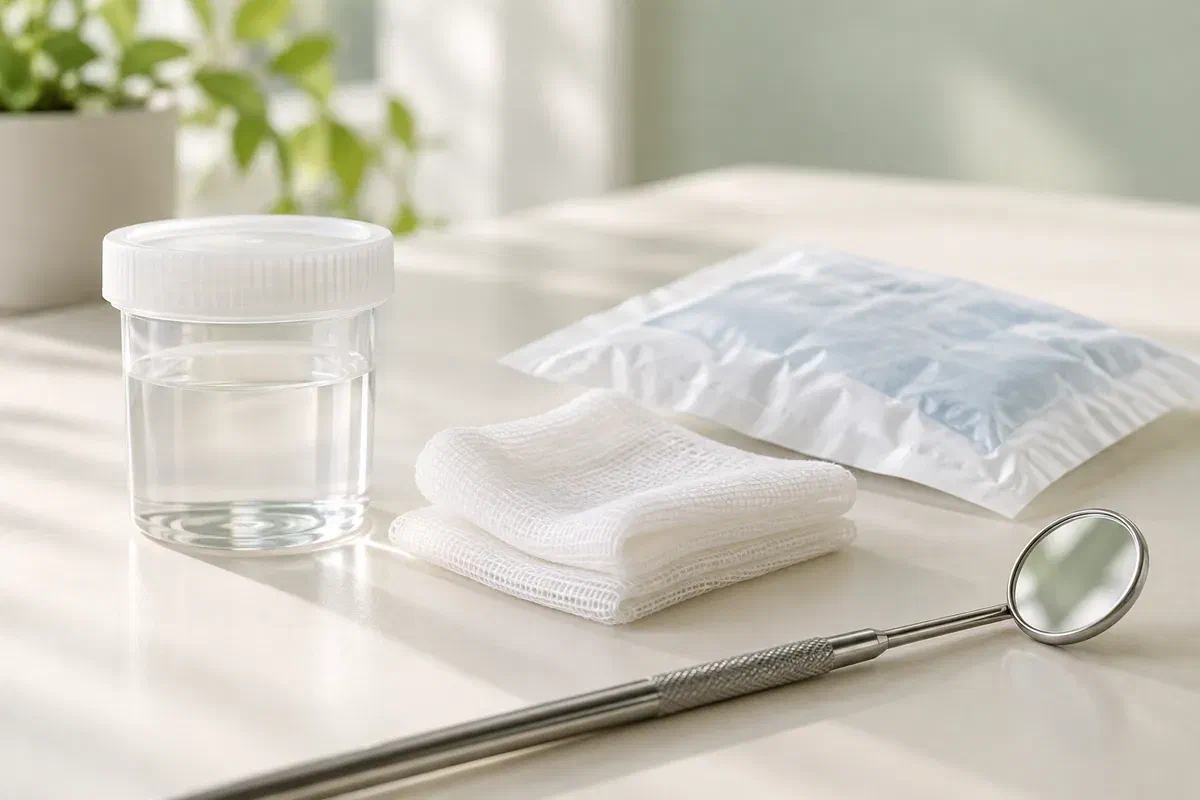
Illustrative dental first-aid supplies with a closed container, gauze, and cold compress
Triage at home

Breathing and bleeding before teeth.

Once the person is safe, note the time and any first aid you’ve given. Tell us if a tooth or fragment is missing. It may not be on the ground, and that possibility is worth mentioning.

A permanent tooth is out of its socket

This is a dental emergency. Touch the crown only, leaving the root untouched. Rinse a dirty tooth briefly with milk or saline and never scrub it. Where you are certain it is permanent and it is safe to try, press it gently home and have the person bite on clean gauze; if not, keep it in milk and get to emergency dental care.

It may be a baby tooth

A knocked-out baby tooth is not replanted. If there’s doubt about which type it is, store it in a container of milk and seek professional advice at once. A child shouldn’t carry a loose tooth in their mouth, since it can be swallowed or inhaled.

The tooth is broken, loose or sitting differently

Call soon and describe any shift in position, change in bite or discomfort. Avoid poking at it to see whether it moves, and don’t force a displaced tooth. Save recovered fragments in milk and bring them. Ask where assessment should happen and list other symptoms.

Call 911 or head to a hospital emergency department for breathing problems, heavy bleeding you can’t control, a serious face or jaw injury, or head-injury symptoms like loss of consciousness, vomiting or double vision.

What a dental trauma assessment sorts out

Today’s priorities, and a list of what to keep watching.

The examination should pin down the injury as precisely as the findings permit and separate what must be treated now from what can wait. Ask which teeth and tissues are involved and how each is being protected. A shallow chip calls for a different response than a tooth that has shifted or been replanted.

Expect some uncertainty and ask about it. Certain effects of trauma only become apparent at later reviews, so comfort after the first visit isn’t the end of the story. You should know why follow-up is scheduled and who to call if anything changes between appointments.

Patient information: American Association of Endodontists — updated trauma guidance and ongoing monitoring

One clear record, wherever you were seen first

Timing, cause, the tooth’s position and first aid all feed into decisions. Share what you know without filling gaps with guesses. If a hospital or another dentist examined the injury first, bring their notes or tell us where you went.

Recommendations that depend on the tooth

A baby tooth, a still-developing permanent tooth in a child and a mature adult tooth can need different care. Ask how the tooth type shapes the advice. Identical-looking damage won’t necessarily lead to identical treatment.

Follow-up with a stated purpose

Ask what each review is designed to check and whether the plan may change. Reviews follow healing and can reveal complications that weren’t clear at the outset. Raise them early, before the focus turns only to how the repair looks.

What happens once you arrive

Four steps from the first question to the review date.

The first visit could involve assessment, stabilization, treatment or referral, depending on the injury. Ask which steps are urgent now and which decisions can be made later with more information.

  1. Go over the injury and any earlier care

    Describe the time and cause of the injury and any first aid or treatment already given. Mention missing teeth or fragments, health conditions, medicines and allergies. If you went to hospital first, tell the dentist what was assessed there.

  2. A careful look at teeth and tissues

    The dentist examines the area and considers which images and tests are appropriate. Ask which teeth need watching, including neighbours that seem unbroken. If another setting or specialist input is advised, you should understand why.

  3. Agree on what to do today

    Talk over the recommended care, how discomfort will be managed, other options and the cost. Depending on findings, this might mean protecting a fracture, repositioning or splinting a tooth, or arranging further treatment. Ask whether the result is temporary and what further care may follow.

  4. Leave knowing what to do and when to return

    Confirm the cleaning, eating, activity and review advice for your injury and treatment. Ask how to contact the team if something needs attention. Store appointment details somewhere easy to find, especially when hospital and dental care are both involved.

Recovery between appointments

Protect it, watch it, and come back as planned.

The routine you follow depends on the injury, the tooth and the treatment provided. A splinted tooth, a repaired fracture and an injured baby tooth won’t always share the same home care or review timing.

Use the cleaning and food advice for your injury

Ask how to keep the area clean around the tooth or splint and what foods or activities to put on hold. Avoid checking progress by biting on something firm or wiggling the tooth. Call if the advice is hard to follow or anything seems loose.

Report changes as they appear

Let the team know about worsening pain, swelling, drainage, a bite that has changed or any other concern after the visit. Mention the injury date and treatment. They can advise whether the next review still suits or an earlier look is needed.

Keep the paperwork and the review dates

Save the first treatment details and share them if another clinician becomes involved. Ask about any forms needed for school, sport, work or insurance. Forms help continuity, but the reviews remain about the tooth’s healing.

After the examination

Matching the treatment to the injury.

Find out what the proposed step protects or restores. The plan should reflect the injury and the tooth’s condition, with honesty about what can’t yet be predicted.

When the break can be restored

Sealing or rebuilding a fracture

A fracture may need covering or repair, depending on depth and how much tooth remains. Ask whether a saved fragment is helpful and whether the restoration is provisional or permanent. Looks count, but so do the tissues inside and around the tooth.

When the tooth or its support is injured

Putting the tooth back in line and holding it

Some injuries call for professional repositioning or a splint, then planned reviews. Ask what the splint is meant to achieve and roughly how long the plan will run. If it feels uncomfortable, phone rather than adjusting or removing it yourself.

When a later stage of care is needed

Further treatment, referral or replacement

Based on diagnosis and healing, additional care may be raised, including treatment inside the tooth. Not every tooth can be retained. Ask what evidence supports the next recommendation and how alternatives fit your age, dental development and future needs.

Common questions after a mouth injury

Where to go, what to bring, and why the follow-up counts.

Phone us about a recent injury and use emergency services when needed. These answers help you plan but don’t replace an examination of the injured person and their teeth.

(905) 876-4488
Who should we see first if there’s a head bump as well as a broken tooth?
If there are head-injury signs such as fainting, vomiting, confusion or double vision, go to hospital emergency care or call 911 first. Dental treatment can be planned once the person has been medically assessed. Keep any tooth or fragment in milk and take it with you.
Will the hospital fix a damaged tooth?
Hospital teams focus on wider injuries and may give initial advice, but ongoing dental care is usually arranged with a dentist. Ask the hospital for a summary of what was found and done, and bring it to the dental assessment.
Is a broken fragment worth saving if the rest of the tooth is still there?
Yes, when it can be picked up safely. Keep it moist in milk and bring it. Tell the dentist where and when it was found. Whether it can be used is decided at assessment; saving it doesn’t mean it can be reattached.
Do injured front teeth always end up needing a root canal?
No. That depends on the injury, how developed the tooth is, test results and how things look at later reviews. Ask what is known now and what will be reassessed, so the decision follows evidence for that particular tooth.
Should an X-ray be taken even if nothing looks broken?
The dentist decides which images are indicated after examining the area. Injuries to roots and bone aren’t always visible in the mouth, so ask what the images are meant to show and whether more may be needed at reviews.
How should we plan the trip from Oakville once an appointment is confirmed?
Bring the tooth or fragments in milk, any hospital notes, a list of medicines, and someone to drive if the injured person is shaken. Call before leaving if symptoms change, so the team can advise whether the plan still suits.
Dental injury care for Oakville

Make the first call, then follow the plan.

Phone our Bronte Street practice about a recent dental injury and current assessment availability. Explain when it happened and what has changed. If you need immediate care and we can’t be reached, find another available emergency dental provider.

Online forms are only for non-urgent enquiries. Injury management, referral, follow-up, fees and whether a tooth can be kept all depend on assessment; neither an outcome nor an immediate appointment can be guaranteed.

Visit Milton Dental Clinic
Unit 1, 342 Bronte St. S, Milton, ON L9T 5B7
Get directions Clinic hours
Monday–Thursday
11am–7pm
Friday–Sunday
By appointment only

Areas we serve

  • Milton
  • Oakville
  • Mississauga
  • Georgetown
  • Halton Hills
  • Acton
  • Campbellville
  • Brampton
  • Burlington
  • Puslinch
  • Rockwood
  • Erin
  • Caledon
  • Etobicoke
  • Old Milton
  • Bronte Meadows
  • Timberlea
  • Dorset Park
  • Dempsey
  • Clarke
  • Beaty
  • Coates
  • Harrison
  • Scott
  • Willmott
  • Ford
  • Bowes
  • Cobden
  • Walker
  • Mountain View
  • Milton Heights
  • Hawthorne Village
  • Valley View
  • Fallingbrook
  • Nassagaweya
  • Trafalgar
  • Esquesing
  • Nelson
  • Brookville
  • Moffat
  • Glen Williams
  • Norval
  • Limehouse
  • Stewarttown
  • Ashgrove
  • Hornby
  • Silver Creek
  • Speyside
  • Scotch Block
  • North Oakville
  • River Oaks
  • Glen Abbey
  • West Oak Trails
  • Palermo
  • Bronte Creek
  • College Park
  • Joshua Creek
  • Uptown Core
  • Preserve
  • Iroquois Ridge
  • Lisgar
  • Meadowvale
  • Meadowvale Village
  • Churchill Meadows
  • Erin Mills
  • Central Erin Mills
  • Streetsville
  • East Credit
  • Creditview
  • Heartland
  • Sheridan
  • Mount Pleasant
  • Credit Valley
  • Huttonville
  • Churchville
  • Springbrook
  • Northwest Brampton
  • Bram West
  • Fletcher's Meadow
  • Fletcher's Creek South
  • Alton Village
  • Orchard
  • Millcroft
  • Headon Forest
  • Tansley
  • Brant Hills
  • Tyandaga
  • Kilbride
  • Lowville
  • Aberfoyle
  • Morriston
  • Arkell
  • Hillsburgh
  • Freelton
  • Carlisle
  • Waterdown
  • Flamborough
  • Mountsberg

How can we help?

Milton Dental Clinic

Have a question about your smile? Choose the option that works best for you.

For urgent dental concerns, please call.
Messages are reviewed during clinic hours.