

Illustrative patient discussing recovery after a dental extraction with a clinician
Specialized Care

Dry Socket Treatment in Etobicoke

A worsening extraction site is not something to sit on, especially when the trip is a longer one. Call first from Etobicoke so we can talk through your symptoms, plan an efficient review of the socket, and help you know when closer urgent care makes more sense.

Planning care from further away

Make each trip count, and know when not to make it.

Coming from the west end of Toronto means you probably want as few separate visits as possible. That is a reasonable goal, and a phone call is the best place to start. Dry socket, in which the blood clot over the bone in an extraction site fails to form, is dislodged, or breaks down too early, tends to show up as pain that intensifies a few days after the tooth is removed. Confirming it requires an examination.

Before you set out, think about the shape of the pain. Mild, slowly fading tenderness is part of healing. A sharp turn for the worse, discomfort that the agreed plan cannot control, or symptoms that do not match your aftercare sheet are reasons to be seen. The dentist will also check the nearby gum and teeth, because other problems can cause a painful socket.

When you call our Bronte Street practice from Etobicoke, tell us the extraction date, which tooth, and how things have changed. If a different office removed it, let us know and bring their paperwork. Some symptoms are better handled by an urgent provider or emergency department closer to home, and we can help you think that through on the phone.

Plan a post-extraction review by phone
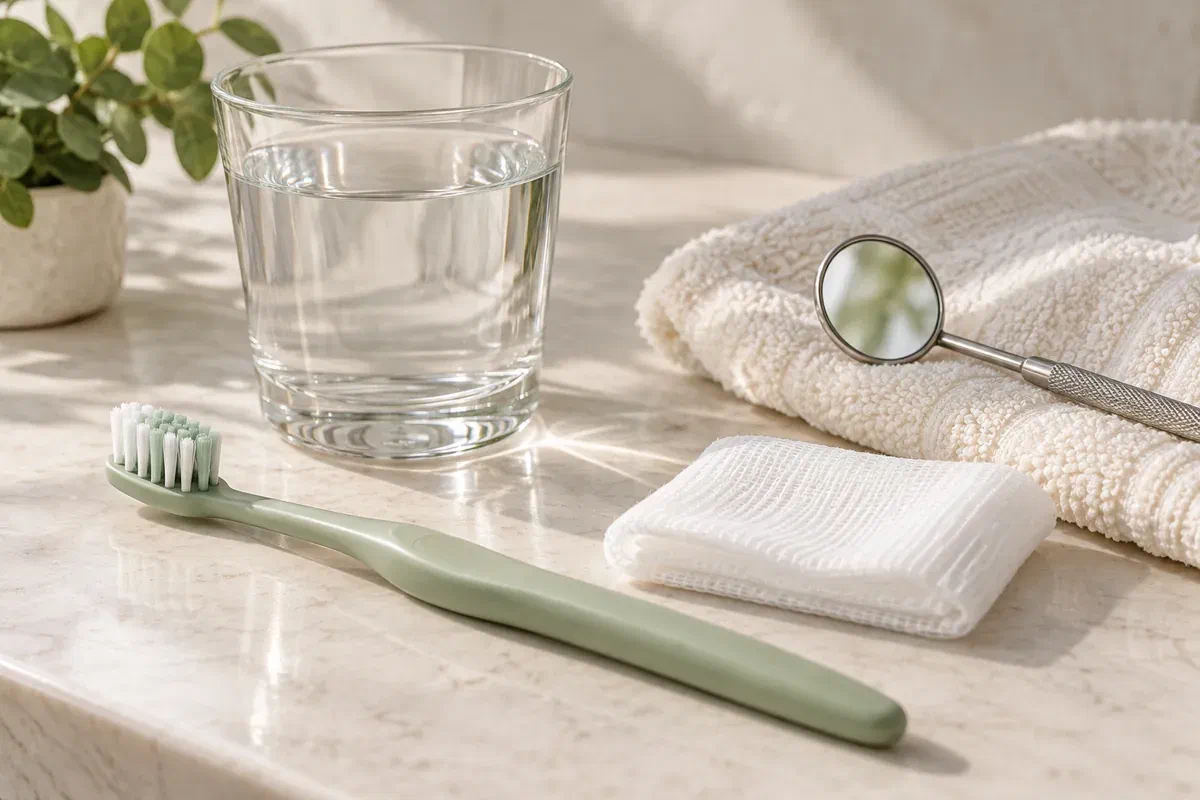
Illustrative gentle oral-care supplies with a toothbrush, water glass, gauze, and dental mirror
Sort it out before you travel

Which symptoms can wait for a planned visit, and which cannot?

Have your timeline ready: the first days after the extraction, the point where things changed, the instructions you were given, and every medicine used since. That helps us judge urgency and prepare.

A steady rise in socket pain

This is the classic reason to book a review. Tell us when it began to build and whether it affects sleep, eating, or work. Describe where it hurts without poking around. Even if the site looks ordinary, a recovery that has reversed is worth a planned appointment.

An odd taste or breath change

Mention it alongside the pain and the extraction details. It can add useful information, but it does not establish the cause. Leave the socket undisturbed instead of trying to clear it with a finger or cotton swab.

Signs that should not wait for the drive

Facial swelling that is growing, a fever, feeling quite unwell, or bleeding that will not stop may need care sooner and closer to you. These should not be assumed to be dry socket. Share your medical conditions and medicines so the advice is accurate.

Dry socket is a disruption to normal healing, and it is not automatically an infection. The examination shows whether that diagnosis applies or whether another complication needs attention.

Getting more from one visit

One well-prepared appointment can answer a lot.

Arriving with your history and medicine list lets the dentist spend the time on what matters: examining the socket and explaining what is found. If it is dry socket, local care aims to ease symptoms while healing continues. Ask how quickly you should notice relief, what to do if it does not come, and whether a return visit is likely, so you can plan around it.

You also go home with instructions that fit this point in your recovery, which matters when popping back in is not simple. The right care depends on how many days have passed and what was done today. Ask any lingering questions before you leave rather than piecing answers together from websites later.

Patient information: Guy's and St Thomas' — dry socket care after dental surgery

A diagnosis you understand

Ask whether the findings fit dry socket, another healing concern, or a different source of pain. Knowing the cause helps you follow the plan at home. If it remains uncertain, ask what further review or information would help.

Treatment done at the visit

Local care may involve gently cleaning the socket and placing a dressing. Ask what was used and whether it must be checked or removed, and whether that can be timed to reduce trips. A dressing supports comfort; it does not mean the site has healed.

A pain plan you can manage at home

Discuss relief that suits your health, medicines, and allergies. Ask who to contact if it is not enough, including after hours. Avoid raising doses or combining products on your own without checking labels and getting professional advice.

How a review is organised

Prepared history, careful examination, practical plan

What is done depends on the findings. Bring your original aftercare sheet if you have it, and mention any instructions that have been difficult to follow.

  1. Bring the details with you

    Share the extraction date and location and whether it involved surgery, if you know. Explain when the pain changed, which medicines you have taken, and whether another clinician has already examined the area.

  2. Examination of the socket and surroundings

    The dentist looks at the socket and nearby tissues and may suggest further investigation if indicated. Ask what they find. A home photo might help describe your concern, though it cannot replace an in-person assessment.

  3. Care and comfort advice, if needed

    For a confirmed dry socket, the dentist describes the local treatment and pain advice. Ask about any dressing, how to care for it, and what would make a second trip necessary. Antibiotics are not automatic; any medicine depends on the findings.

  4. A follow-up plan that fits the distance

    Find out whether a return visit is needed and when it makes sense to call before travelling. Ask how to brush and eat around the site. Keep our number and the details of a closer urgent provider handy in case symptoms change.

Once you are home

Protect the site so a second trip is less likely.

Ask for specific advice on rinsing, brushing, food, and any dressing before you leave. It should reflect your healing stage and the treatment received, not a general rule.

Let the socket and any dressing be

Picking or packing the area yourself can make things worse. If a dressing is in place, ask what is normal and what to do if it dislodges. Call before deciding to travel back, and never add your own material.

Clean the rest of your mouth gently

Brush using the approach shown at the visit and ask how to manage teeth near the site. If rinsing is advised, follow the timing and method given. Avoid vigorous swishing or improvised tools around the healing area.

Raise smoking and practical problems

Smoking can raise the risk of dry socket and complicate recovery. If stopping is difficult, tell the dentist so support can be discussed. Mention trouble eating, drinking, or following the plan; advice works best when it fits your circumstances.

Possible outcomes

Normal healing, dry socket care, or a different path

Ask what the recommendation is based on and how you will know it is working, especially if follow-up is by phone. Each painful socket deserves its own assessment.

When recovery is on course

Updated guidance for normal healing

The dentist may explain that healing looks as expected and refine your aftercare or pain advice. Ask which symptoms are normal and which mean you should call. Knowing that before you head home saves an unnecessary return trip.

When the socket needs comfort treatment

Local care for dry socket

Gentle cleaning and a suitable dressing may be offered. Ask whether more visits are likely and whether any follow-up can be done by phone first. The aim is comfort during healing, without any promise that the socket closes right away.

When the findings point elsewhere

Investigation for another issue

Other findings may require more tests, different treatment, or coordination with the original dentist or surgeon, who may be closer to you. Ask what remains to be clarified and how the next step will be arranged. Medicines are chosen for a diagnosis, not just because a tooth was removed.

Etobicoke planning questions

Common questions when the clinic is a longer trip

Call about a difficult recovery rather than trying to judge the clot yourself. Your history and the examination decide the plan.

(905) 876-4488
When should I go to a closer urgent provider instead of driving to Milton?
If you have rapidly increasing swelling, fever, bleeding that will not stop, or severe pain you cannot wait with, seek care close to home. Trouble breathing or swallowing needs 911 or a hospital emergency department.
Can follow-up questions be handled by phone after the first review?
Many questions can be answered by phone, and the dentist will say when a return visit is truly needed. Ask about this at your appointment so you know how follow-up will work.
Is one appointment usually enough to treat dry socket?
Sometimes, but not always. Some people need the socket rechecked or the dressing changed. Ask during the first visit how likely that is in your case and what each visit would involve.
Do I need to have the dressing removed here, or could another dentist do it?
Ask what type was placed and whether it needs removal at all. If it does, discuss whether returning here or seeing another dentist makes more sense, and bring the treatment details to any other provider.
Can you assess a socket from an extraction done in Toronto?
Yes, call to discuss availability and tell us where the extraction was done. Bring the treatment details and instructions if you have them. Depending on the findings, care may include coordination with the original office.
Could my pain be from a nearby tooth rather than the socket?
It is possible. Pain around an extraction site can come from neighbouring teeth or gum. The dentist examines the wider area for that reason, so mention any sensitivity to temperature or biting.
Dry socket care for Etobicoke

Call before you travel, and we will plan the visit together.

Phone our Bronte Street practice about worsening extraction pain and ask about current openings. Have the extraction date and your instructions ready. If you need help right away and cannot reach us, seek an urgent dental provider closer to home.

Online requests are not monitored for urgent needs. Diagnosis, treatment, medicine, follow-up arrangements, and fees depend on the examination. Dry socket treatment does not promise immediate healing.

Visit Milton Dental Clinic
Unit 1, 342 Bronte St. S, Milton, ON L9T 5B7
Get directions Clinic hours
Monday–Thursday
11am–7pm
Friday–Sunday
By appointment only

Areas we serve

  • Milton
  • Oakville
  • Mississauga
  • Georgetown
  • Halton Hills
  • Acton
  • Campbellville
  • Brampton
  • Burlington
  • Puslinch
  • Rockwood
  • Erin
  • Caledon
  • Etobicoke
  • Old Milton
  • Bronte Meadows
  • Timberlea
  • Dorset Park
  • Dempsey
  • Clarke
  • Beaty
  • Coates
  • Harrison
  • Scott
  • Willmott
  • Ford
  • Bowes
  • Cobden
  • Walker
  • Mountain View
  • Milton Heights
  • Hawthorne Village
  • Valley View
  • Fallingbrook
  • Nassagaweya
  • Trafalgar
  • Esquesing
  • Nelson
  • Brookville
  • Moffat
  • Glen Williams
  • Norval
  • Limehouse
  • Stewarttown
  • Ashgrove
  • Hornby
  • Silver Creek
  • Speyside
  • Scotch Block
  • North Oakville
  • River Oaks
  • Glen Abbey
  • West Oak Trails
  • Palermo
  • Bronte Creek
  • College Park
  • Joshua Creek
  • Uptown Core
  • Preserve
  • Iroquois Ridge
  • Lisgar
  • Meadowvale
  • Meadowvale Village
  • Churchill Meadows
  • Erin Mills
  • Central Erin Mills
  • Streetsville
  • East Credit
  • Creditview
  • Heartland
  • Sheridan
  • Mount Pleasant
  • Credit Valley
  • Huttonville
  • Churchville
  • Springbrook
  • Northwest Brampton
  • Bram West
  • Fletcher's Meadow
  • Fletcher's Creek South
  • Alton Village
  • Orchard
  • Millcroft
  • Headon Forest
  • Tansley
  • Brant Hills
  • Tyandaga
  • Kilbride
  • Lowville
  • Aberfoyle
  • Morriston
  • Arkell
  • Hillsburgh
  • Freelton
  • Carlisle
  • Waterdown
  • Flamborough
  • Mountsberg

How can we help?

Milton Dental Clinic

Have a question about your smile? Choose the option that works best for you.

For urgent dental concerns, please call.
Messages are reviewed during clinic hours.