

Illustrative patient explaining a dental concern before an examination
Specialized Care

Emergency Dental Examination in Campbellville

A crack you felt on a hard bite, or teeth that suddenly don't close the way they used to, is hard to ignore. From Campbellville, call before you drive in to describe the change, and we can talk about urgency, availability and the examination.

Urgent dental visits from Campbellville

A bite that suddenly doesn't line up

It might be a crunch on an olive pit, a sharp twinge every time you chew on one side, or the odd sense that your teeth meet in a new place. Changes in the bite are easy to notice and hard to interpret. An emergency dental examination puts that change in context, combining what you report, your medical and dental history and a clinical check to identify the cause and its urgency.

Many other things prompt a call too: a toothache, gum swelling, a lost filling or crown, an injury, or discomfort after recent treatment. Whatever the reason, the dentist asks about your general health and medicines. A tooth that feels high or sore when you bite isn't necessarily the one at fault, and the examination is where that gets worked out.

Out in the rural northwest of Milton, a trip into town is often combined with other errands, so plan it with a phone call first. Describe what has changed, and the team can discuss availability and whether coming in is the right step. If your symptoms need care immediately and we can't be reached, contact a different emergency dental provider; an emailed request won't get you seen quickly.

Plan an urgent dental visit
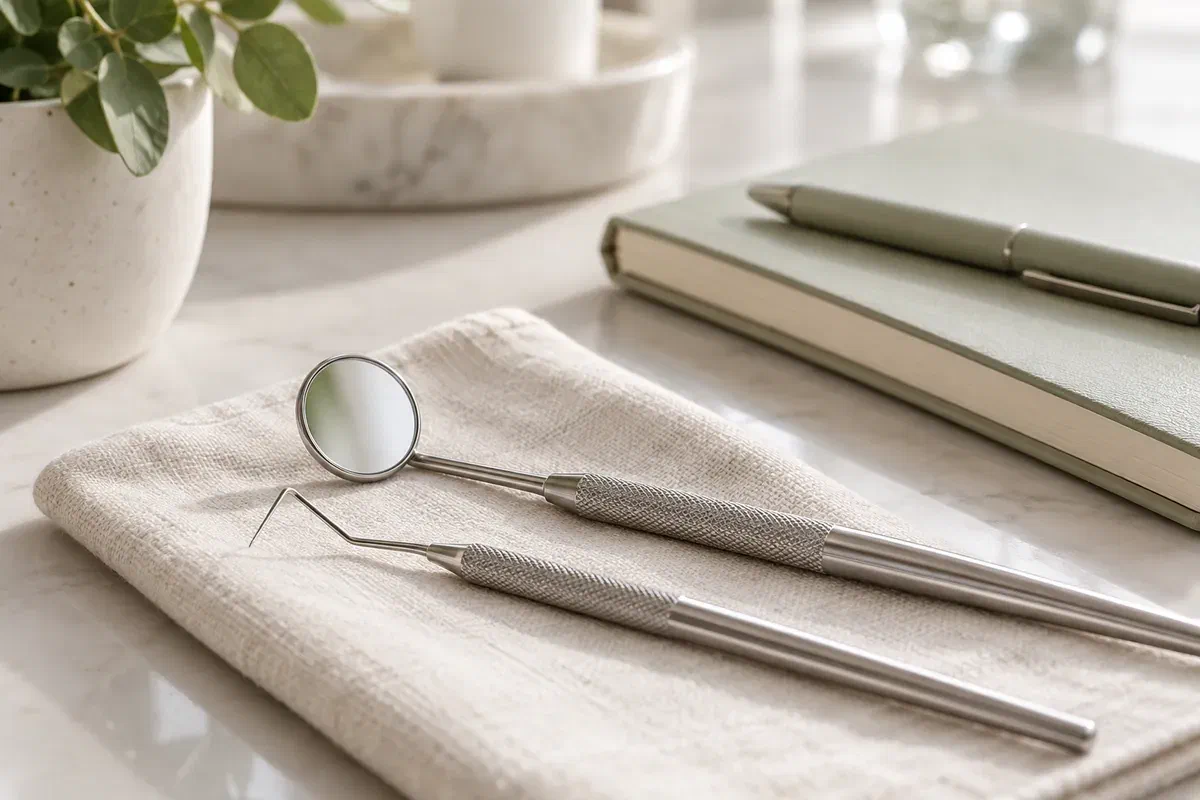
Illustrative dental examination instruments beside a notebook on a clean cloth
When you phone

Describe the bite, the pain and what came before.

Use your own words. A clear description of what you feel and anything that happened beforehand helps the team decide whether to examine you here or suggest another, more suitable option.

Pain when chewing, or pain that won't quit

Say which side and roughly where, when it started and whether it hits only when you bite or arrives on its own. Mention cold or heat sensitivity, poor sleep and any pain relief taken. Don't keep biting on the area to check; your account is enough to begin.

Breakage, swelling or teeth meeting differently

Explain whether something broke, whether there was a blow or fall and whether your teeth now meet differently. Note any missing piece and keep it if found. Tell us when it happened, even if the pain has settled.

A high or uncomfortable bite after new dental work

If a recent filling or crown feels too tall, or recovery is different from what you were told, share the date and type of treatment. Bring any instructions given. That helps separate a simple adjustment from a new problem that needs a full look.

Severe swelling or swelling that spreads quickly, trouble breathing or swallowing, bleeding that won't stop, or a serious head or face injury are medical emergencies. Phone 911 or get to a hospital emergency department rather than waiting for a dentist.

The value of looking first

Cracks, high spots and hidden causes, sorted out

A cracked tooth can range from a minor surface line to a split that affects the inside of the tooth, and a changed bite can come from the teeth, a restoration or the jaw. The examination is how the dentist tells these apart. Ask them to link what they found with their recommendation and to say honestly what they can't yet confirm.

For a household outside town, practical planning matters as much as the diagnosis. Could care happen during this visit? Will you need to return, and could further steps be scheduled together? Should someone else assess it? Ask which part is most urgent so you can plan the next trip.

Patient information: American Dental Association — individualized selection of dental imaging

Findings in everyday terms

Ask what the dentist sees, what the tests showed and what that means for the tooth, the bite and the tissues around them. Requesting plain language before procedure names come up makes the choices easier to weigh.

X-rays with a stated purpose

Some cracks and causes don't show on a visual check, and imaging may help. It should follow your history and the examination, taking recent images into account. Ask what an X-ray is intended to reveal before it is taken.

Temporary or definitive: know which

Check whether today's step is final treatment, a temporary measure such as smoothing or protecting a crack, more investigation or a review. Each has a different job, and knowing which helps you plan return visits.

How the appointment runs

History, examination, explanation and a decision

The dentist picks tests based on your symptoms and what they find. Speak up if anything worries you, and ask for an explanation or a pause.

  1. Describe the change and your health background

    Explain when the problem started, how it behaves, any recent dental work and what you've taken. Share allergies, conditions and current medicines, plus pregnancy, dental anxiety or other circumstances that could affect planning.

  2. Check the teeth, the bite and the tissues

    The dentist examines the teeth and gums, checks how your teeth come together and may use clinical tests such as biting on a specific instrument. Nearby teeth may be assessed too. Ask what each test is checking.

  3. Review images if needed and explain the findings

    Existing records may be looked at, and new X-rays taken only when they'd add something. The dentist then tells you what they've found and their working diagnosis. If anything is still unclear, ask what remains to be answered.

  4. Agree on treatment and on the next trip

    Go over the proposed care, alternatives, limits, timing and fees before deciding. Confirm what the examination covers. Leave with a clear plan for any return visit, and know which changes should bring you in sooner.

On the way home

Protect the tooth and keep the next step in view.

Care might happen at the examination or at a separate appointment. Before you leave, know which applies and how to look after the area until then.

Take the diagnosis home in writing

Ask for the key findings in a format you can refer to later. Note the tooth involved and the reason for any next visit. If a different clinician will treat it, confirm which records should be shared, with your consent.

Follow the advice for this tooth

You may be asked to avoid chewing hard food on that side or to protect a cracked tooth until it's treated. Ask which pain relief suits your health. Don't rely on someone else's prescription or an old dental problem as a guide.

Call if the crack, pain or swelling changes

If the tooth breaks further, pain increases or swelling appears, let the team know. The plan reflected what was seen at the time, and a different situation may need a different response.

What comes next

Different findings, different routes

Ask why a particular option is recommended, and how the alternatives would affect comfort, the tooth, your bite and the timing of care.

If the findings support a procedure

Treatment for a confirmed problem

This may involve adjusting a high spot, repairing or protecting a cracked tooth, root canal treatment, extraction or another suitable approach. Ask what it should achieve and whether it completes the plan.

If more information or another provider is needed

Further tests or a specialist

Certain cracks and bite problems need extra investigation or a referral before treatment is chosen. Ask what the next assessment is meant to answer, who arranges it and what to do if symptoms worsen.

If immediate treatment isn't indicated

Monitoring and review

Sometimes the best approach is to watch the area and review it. Ask what will be monitored, how long until the review and which signs mean coming back earlier. Monitoring should be a reasoned plan with a date.

Campbellville questions

Cracks, bites and planning a visit

General information about urgent assessment. To discuss your symptoms, please call; requests through the website are not checked as emergencies.

(905) 876-4488
I felt something crack while eating. Should I call right away?
Call to describe it, especially if there’s pain, a sharp edge or a missing piece. The team can suggest how soon to be seen. Avoid chewing on that side and keep any fragment you find.
Why does my tooth only hurt when I bite down and let go?
Pain on biting or releasing can have several causes, including a crack or an issue with a filling. The examination and bite tests help narrow it down. Describe the pattern when you call.
My new filling feels too high. Is that urgent?
A filling that feels high can make chewing uncomfortable and may need adjusting. Call to describe it; the team can discuss whether you should see the dentist who placed it or come in for an examination.
Can a cracked tooth always be saved?
Not always. It depends on where the crack runs and how deep it goes, which the examination helps determine. Ask the dentist to explain the options and what each would mean for the tooth.
How can I avoid several trips into town for one problem?
Call ahead, ask about availability and, at the examination, ask whether steps can be grouped. That depends on the diagnosis and what’s clinically appropriate, but it’s always worth discussing.
Do I need X-rays for a suspected crack?
Not automatically. Fine cracks often don’t show clearly on X-rays, while other causes do. The dentist decides after the history and examination. Ask what an image would add.
Plan your trip from Campbellville

Something cracked or shifted? Start with a call.

Before heading into town, phone our Bronte Street practice about a crack, a changed bite, pain, swelling or a concern after treatment, and ask what times are available for an assessment. When the symptoms can't wait and we're not reachable, seek care from another provider.

The online form handles non-urgent bookings only. Scope, imaging, any treatment or referral, availability and fees depend on the findings. Being examined doesn't guarantee a procedure on the day.

Visit Milton Dental Clinic
Unit 1, 342 Bronte St. S, Milton, ON L9T 5B7
Get directions Clinic hours
Monday–Thursday
11am–7pm
Friday–Sunday
By appointment only

Areas we serve

  • Milton
  • Oakville
  • Mississauga
  • Georgetown
  • Halton Hills
  • Acton
  • Campbellville
  • Brampton
  • Burlington
  • Puslinch
  • Rockwood
  • Erin
  • Caledon
  • Etobicoke
  • Old Milton
  • Bronte Meadows
  • Timberlea
  • Dorset Park
  • Dempsey
  • Clarke
  • Beaty
  • Coates
  • Harrison
  • Scott
  • Willmott
  • Ford
  • Bowes
  • Cobden
  • Walker
  • Mountain View
  • Milton Heights
  • Hawthorne Village
  • Valley View
  • Fallingbrook
  • Nassagaweya
  • Trafalgar
  • Esquesing
  • Nelson
  • Brookville
  • Moffat
  • Glen Williams
  • Norval
  • Limehouse
  • Stewarttown
  • Ashgrove
  • Hornby
  • Silver Creek
  • Speyside
  • Scotch Block
  • North Oakville
  • River Oaks
  • Glen Abbey
  • West Oak Trails
  • Palermo
  • Bronte Creek
  • College Park
  • Joshua Creek
  • Uptown Core
  • Preserve
  • Iroquois Ridge
  • Lisgar
  • Meadowvale
  • Meadowvale Village
  • Churchill Meadows
  • Erin Mills
  • Central Erin Mills
  • Streetsville
  • East Credit
  • Creditview
  • Heartland
  • Sheridan
  • Mount Pleasant
  • Credit Valley
  • Huttonville
  • Churchville
  • Springbrook
  • Northwest Brampton
  • Bram West
  • Fletcher's Meadow
  • Fletcher's Creek South
  • Alton Village
  • Orchard
  • Millcroft
  • Headon Forest
  • Tansley
  • Brant Hills
  • Tyandaga
  • Kilbride
  • Lowville
  • Aberfoyle
  • Morriston
  • Arkell
  • Hillsburgh
  • Freelton
  • Carlisle
  • Waterdown
  • Flamborough
  • Mountsberg

How can we help?

Milton Dental Clinic

Have a question about your smile? Choose the option that works best for you.

For urgent dental concerns, please call.
Messages are reviewed during clinic hours.