

Illustrative patient listening as a clinician explains a dental treatment plan
Specialized Care

Emergency Dental Treatment in Burlington

Your usual dentist is booked up, or the problem began after hours. From Burlington, call about pain, swelling, or a broken tooth to talk through availability and an assessment, and how urgent care can connect back to your regular dental team.

Urgent care between regular visits

A one-time visit that still fits your bigger dental picture

Emergencies rarely wait for your usual dentist’s schedule. Emergency dental treatment is the care chosen when pain, swelling, damage, or an injury needs timely attention, and it is a category rather than one procedure. Depending on what is found, it might involve a repair, treatment of the tooth or the tissues around it, removal, stabilization, or referral.

Think of the urgent appointment as one chapter. It may settle the most pressing problem while leaving a final restoration, a review, or specialist care for later, possibly with the dentist you already see. Knowing what is finished and what is still open protects the work and keeps your records joined up.

Calling from Burlington before you leave lets us hear what has happened and talk about timing. Both new and returning patients can ask about current availability. If we are unreachable and you need care immediately, find another emergency dental provider. Worsening symptoms should never wait on an online request.

Call about an urgent problem
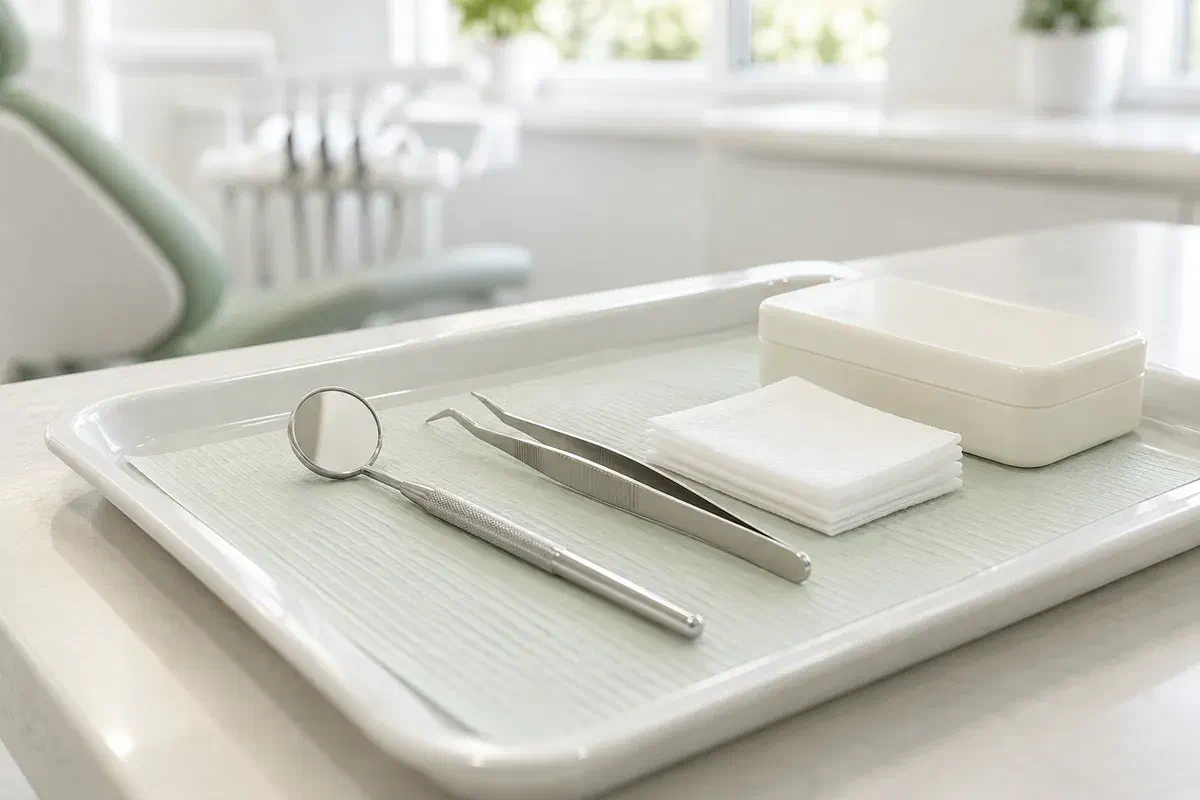
Illustrative prepared dental tray with a mirror, tweezers, and clean gauze
Reasons to phone sooner

Name the problem, then describe how it is behaving

Beyond how strong the pain is, we need to know when it began, exactly where it is, what it is disrupting, what you can see, and what treatment you have had recently, including from another office.

Pain that has taken over your day

Mention whether eating, sleep, or concentration has suffered and what relief you have already tried. Say if the pain is constant, shows up when you bite, or follows something hot or cold. Stronger tablets alone will not correct what is causing it.

Swelling that is spreading or comes with feeling unwell

Point out where the swelling began and how quickly it has changed. A fever or difficulty opening your mouth matters too. Share these early, before a regular appointment is set, because they affect where care should take place.

A cracked tooth, missing filling, or blow to the face

Tell us if a tooth has fractured, if a filling or crown has come out, or if an injury has shifted a tooth. Keep any broken piece safe to bring along. A permanent tooth that has been knocked out needs emergency dental care without delay.

When breathing or swallowing becomes difficult, swelling spreads fast, bleeding is heavy and will not stop, or there is a serious head or facial injury, call 911 or head to a hospital emergency department instead of waiting for a reply.

Clarity before consent

Today’s purpose, tomorrow’s options

Every recommendation should come with its reason. Ask which finding the treatment addresses, what it should change, and how anyone will know it has helped. An explanation tied to what was found in your mouth is far more useful than a general promise.

Then look further ahead. Can this tooth realistically be kept? What does a temporary step protect, and when does it stop being enough? Would your regular dentist or a specialist be better placed for the next stage? Fees, the number of appointments, and uncertainty all belong in that discussion.

Patient information: American Dental Association — medicines as temporary support for acute dental pain · American Dental Association — appropriate antibiotic use for dental pain and swelling

Care aimed at what is actually wrong

A fractured edge, an inflamed pulp, an infection, and injured supporting tissues each need their own approach. Ask which one is being treated. Relieving the symptom without addressing the cause can leave important work incomplete.

A defined role for medicine

Pain relief may keep you comfortable until treatment is in place, but it is not a substitute for that treatment. Antibiotics suit only some situations. Ask what a prescription is for and what procedure or review still lies ahead.

Follow-up that someone owns

If treatment must continue, ask when, roughly how much, and which office will provide it. Explain any barriers, including scheduling or cost, so the alternatives are clear. Ask for the details your own dentist will need to pick up where this visit leaves off.

Step by step

From the phone call to a clean handover

The scope of one visit depends on the diagnosis, how complex it is, the appointment time available, and whether referral is required. Those limits should be explained before you commit.

  1. Call and give the background

    Describe when it started, how it has changed, and any recent dental work or injury, including treatment from another office. Share medicines, allergies, and health conditions when asked, and mention anxiety or communication needs.

  2. Examination and diagnosis

    The dentist reviews your history, examines the area, and uses indicated tests or images. Ask how the results support the proposed care. If the problem needs a specialist or another setting, find out why and what the first step should be.

  3. Consent, comfort, and what the procedure covers

    Review the benefits, limits, alternatives, and fees. Agree on how you will ask for a pause. Clarify whether the procedure is complete treatment, the first stage, or a temporary measure.

  4. Aftercare and the next appointment

    Before leaving, go over what was done and what remains, with advice on eating, cleaning, medicine, and symptoms to watch. Confirm who will complete the work, whether that is a return visit here, your own dentist, or a referral.

Home again

Protect the work and keep the next stage on track.

What you should do afterward depends on what was done. Advice after a temporary filling, an extraction, or root canal treatment differs, so ask if any part of it is unclear.

Look after the treated spot

Ask when you can eat, brush, and use the tooth or appliance again. If local anaesthetic was used, avoid chewing and very hot drinks until the numbness wears off. Do not put the repair to the test with hard foods because the pain is gone.

Take medicines exactly as directed

Follow the label and your clinician’s advice, and talk to a pharmacist about interactions or doubts. Never apply aspirin directly to a painful tooth or gum. If you cannot tolerate a medicine, call the prescriber rather than improvising.

Complete the planned visits

Attend the appointment that finishes the restoration or checks healing, here or with your regular dentist. If you need to reschedule, call. A quiet tooth may feel finished, yet comfort is not proof that treatment is complete.

Patient information: ADA MouthHealthy — avoiding harmful home remedies during dental emergencies

Which treatment, and why

Choosing between saving, removing, and stabilizing

Ask how the suggested approach fits the diagnosis and what an alternative would mean. The immediate issue and the tooth’s long-term future both deserve weight.

When a restorative or root canal option is suitable

Treatment designed to keep the tooth

A restoration or treatment inside the tooth may be discussed, depending on the findings. Ask about the remaining structure, the expected stages, and the final protection the tooth will need. Retention is worth considering with its prospects and limits set out plainly.

When keeping the tooth is not the right plan

Removing the tooth or addressing the infected area

Sometimes removal, or care directed at the surrounding tissue, is recommended. Ask why and what recovery will involve. Replacing a removed tooth can be planned later, perhaps with your usual dentist, rather than being assumed as part of the urgent visit.

When the definitive treatment needs another visit or provider

Interim care and onward referral

A temporary measure can play an important part when its limits are understood. Ask what it protects, how long it should hold, and whom to contact. A referral should include a realistic path to the treatment still required.

Burlington questions

Getting urgent care when you already have a dentist

Phone to discuss the problem and current options. These answers explain common situations; the examination decides the treatment and its urgency.

(905) 876-4488
I have a regular dentist. Can I still come to you for an emergency?
Yes. You can call, describe the problem, and ask about availability even if another office looks after your routine care. Tell us who your dentist is so the treatment and any follow-up can be coordinated with them where appropriate.
Will my own dentist get a record of what was done?
You can ask for a summary of the findings and treatment, and records can be shared with your consent. That helps your regular dentist understand what happened and plan the remaining work without repeating steps unnecessarily.
Can I get a second opinion before an urgent procedure?
You can. If the situation allows time, ask what the risks of waiting might be and how soon a decision is needed. For warning signs such as spreading swelling, delaying care for an opinion may not be safe, so ask directly.
If a tooth is causing the pain, does it have to come out?
Not always. Depending on the diagnosis and the condition of the tooth, repair or treatment aimed at keeping it may be reasonable. Ask why removal is on the table and how each choice affects the full plan.
Should I cancel my follow-up if the pain has stopped?
Not without talking to us first. Pain can ease while the underlying problem remains, particularly with medication. Ask what is still outstanding before deciding, and remember the follow-up may be what finishes the treatment.
Are you open late at night for emergencies?
Overnight and round-the-clock care is not offered. Regular hours run Monday to Thursday, with Friday to Sunday by appointment only. If you need dental care right away and cannot reach us, find another emergency provider; the hospital warning signs above require emergency care.
Emergency dental treatment for Burlington

Start with a call, and we will sort out what today needs.

Phone our Bronte Street practice about pain, swelling, a broken tooth, or an injury. Explain the symptoms and any recent dental work. We can go over current availability and the assessment, and whether another provider should take on part of the care.

Online requests are best for questions that can wait. The treatment chosen, when you can be seen, the fees, and any referral all depend on assessment, so none of it can be promised in advance.

Visit Milton Dental Clinic
Unit 1, 342 Bronte St. S, Milton, ON L9T 5B7
Get directions Clinic hours
Monday–Thursday
11am–7pm
Friday–Sunday
By appointment only

Areas we serve

  • Milton
  • Oakville
  • Mississauga
  • Georgetown
  • Halton Hills
  • Acton
  • Campbellville
  • Brampton
  • Burlington
  • Puslinch
  • Rockwood
  • Erin
  • Caledon
  • Etobicoke
  • Old Milton
  • Bronte Meadows
  • Timberlea
  • Dorset Park
  • Dempsey
  • Clarke
  • Beaty
  • Coates
  • Harrison
  • Scott
  • Willmott
  • Ford
  • Bowes
  • Cobden
  • Walker
  • Mountain View
  • Milton Heights
  • Hawthorne Village
  • Valley View
  • Fallingbrook
  • Nassagaweya
  • Trafalgar
  • Esquesing
  • Nelson
  • Brookville
  • Moffat
  • Glen Williams
  • Norval
  • Limehouse
  • Stewarttown
  • Ashgrove
  • Hornby
  • Silver Creek
  • Speyside
  • Scotch Block
  • North Oakville
  • River Oaks
  • Glen Abbey
  • West Oak Trails
  • Palermo
  • Bronte Creek
  • College Park
  • Joshua Creek
  • Uptown Core
  • Preserve
  • Iroquois Ridge
  • Lisgar
  • Meadowvale
  • Meadowvale Village
  • Churchill Meadows
  • Erin Mills
  • Central Erin Mills
  • Streetsville
  • East Credit
  • Creditview
  • Heartland
  • Sheridan
  • Mount Pleasant
  • Credit Valley
  • Huttonville
  • Churchville
  • Springbrook
  • Northwest Brampton
  • Bram West
  • Fletcher's Meadow
  • Fletcher's Creek South
  • Alton Village
  • Orchard
  • Millcroft
  • Headon Forest
  • Tansley
  • Brant Hills
  • Tyandaga
  • Kilbride
  • Lowville
  • Aberfoyle
  • Morriston
  • Arkell
  • Hillsburgh
  • Freelton
  • Carlisle
  • Waterdown
  • Flamborough
  • Mountsberg

How can we help?

Milton Dental Clinic

Have a question about your smile? Choose the option that works best for you.

For urgent dental concerns, please call.
Messages are reviewed during clinic hours.