

Illustrative patient listening as a clinician explains a dental treatment plan
Specialized Care

Emergency Dental Treatment in Old Milton

An old crown that lifts away, a filling that finally cracks, or a tooth that suddenly aches: from Old Milton, call before you come over. We can discuss availability, look at the problem, and explain what can be handled at once and what may follow.

When older dental work gives way

Long-standing fillings and crowns sometimes fail all at once.

Many mouths in a long-established neighbourhood like Old Milton carry decades of dental history: large fillings, crowns, root-treated teeth, bridges. When one of them breaks, loosens, or starts to hurt, the visit that follows is emergency dental treatment. The term covers a range of care, and the examination decides whether repair, treatment of the tooth or gums, removal, stabilization, or referral makes sense.

Expect the first appointment to focus on what cannot wait. Rebuilding an old restoration properly, reviewing healing, or seeing a specialist may belong to later visits. Keeping those two layers separate makes it easier to agree to today’s care and to protect it until the rest is done.

Our Bronte Street practice is close by, but please phone before heading over and explain what has happened. New and returning patients are both welcome to ask about openings. When we cannot be reached and care is needed now, use another emergency dental provider; an online message will not be seen quickly enough for worsening symptoms.

Reach out about an urgent concern
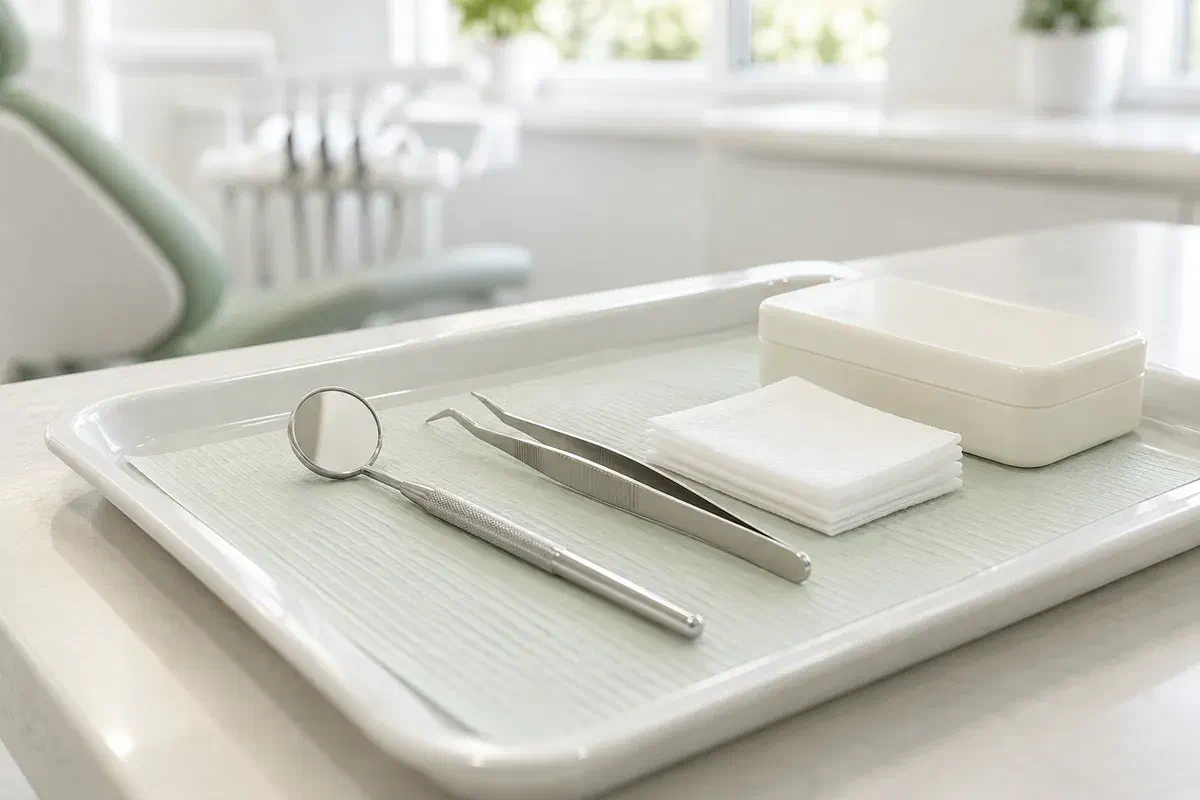
Illustrative prepared dental tray with a mirror, tweezers, and clean gauze
Signs that should not be left for later

What exactly changed, and when did it start?

Severity matters, but so does context. Mention how long the problem has been building, where it is, what it interferes with, and which older or recent dental work is nearby.

An ache that disrupts meals or sleep

Describe whether the ache is steady, sharp on biting, or set off by temperature, and what you have taken for it. An old filled tooth that suddenly hurts can have several causes, so the pattern helps. Simply increasing pain medicine will not deal with the source.

Puffiness in the gum, cheek, or jaw

Tell us where the swelling sits, whether it is spreading, and if you have a fever, feel unwell, or struggle to open your mouth. Those details decide where you should be seen first, so share them before any routine booking is made.

A crown, bridge, or filling that has failed

Explain whether a restoration has come loose, cracked, or fallen out, or whether a fall or knock has moved a tooth. Store any piece carefully and bring it. A permanent tooth knocked out entirely cannot wait and needs emergency dental attention immediately.

Go to a hospital emergency department or call 911 for breathing or swallowing difficulty, swelling that spreads fast, heavy bleeding that will not stop, or a serious head or face injury. These cannot wait for an online reply.

Making sense of the recommendation

What is this treatment for, and what comes after it?

Start by asking which problem the dentist found and how the proposed care answers it. You might also ask how success will be judged in a week or a month. Emergencies differ, so the explanation should be specific to your tooth rather than a general reassurance.

With older dental work, the longer view matters. Is the tooth still a good candidate to keep? What can a temporary cover hold together, and for how long? Would a specialist be the better fit for part of it? Fees, staging, and honest uncertainty deserve space in that discussion too.

Patient information: American Dental Association — medicines as temporary support for acute dental pain · American Dental Association — appropriate antibiotic use for dental pain and swelling

Aimed at the source, not just the symptom

Decay under an old crown, an irritated nerve, infection, and injured gum or bone can all cause pain, yet each calls for different care. Ask which one you are being treated for, and what happens if the cause is left.

Medicines with a limited job

Pain relief can carry you comfortably until treatment, but it is not the treatment. Antibiotics help only in particular situations. If something is prescribed, ask what it should do, how long to take it, and which dental step still lies ahead.

A plan you can actually follow through

Ask how soon the next stage should happen, roughly what it will cost, and who provides it. Tell us about mobility, transport, caregiving duties, or budget limits so alternatives can be weighed together.

What the appointment involves

Call, examine, agree, follow up

The amount of treatment possible in one sitting depends on what is found, how complex it is, how much appointment time there is, and whether a referral is involved. You should hear about those limits before deciding.

  1. Share the history over the phone

    Tell us when the problem began, what has changed since, and about any recent treatment or fall. Have your medication list, allergies, and medical conditions handy. If hearing, mobility, or nerves make appointments harder, mention that too.

  2. Assessment in the chair

    The dentist goes over your history, checks the area, and takes images or tests that are indicated. Ask how the results point to the recommendation. When another setting or a specialist is more suitable, you should understand why and what to do in the meantime.

  3. Talk through consent and comfort

    Hear the benefits, limits, alternatives, and costs before agreeing. Settle on a way to ask for a pause. Make sure you know whether this procedure completes the work, begins it, or simply holds things steady.

  4. Leave knowing the next steps

    Ask for a recap of what was done and what remains, plus guidance on food, cleaning, medicines, and warning signs. Book the follow-up or confirm the referral before you go instead of assuming the tooth will behave.

The days after urgent care

Keep the repair protected while the rest of the plan unfolds.

Instructions vary with the procedure. Caring for a temporary crown is different from caring for an extraction site or a tooth treated on the inside, so ask which advice applies to you.

Treat the area gently

Check when normal eating, brushing, and wearing a denture or appliance can resume. While numb, avoid hot drinks and chewing, since cheeks and lips are easy to injure. Hold off on hard or sticky foods even if the tooth now feels fine.

Be careful with medicines

Take medicines as labelled and as advised, and ask a pharmacist about interactions with what you already take. Aspirin should never be held against the gum or tooth. If a medicine disagrees with you, call the prescriber rather than swapping to something else.

Keep the follow-up appointment

The visit that finishes a restoration or checks healing is part of the treatment. If the date no longer suits you, phone to move it. A tooth that feels comfortable is not necessarily a tooth that is fully repaired.

Patient information: ADA MouthHealthy — avoiding harmful home remedies during dental emergencies

Weighing the possibilities

Three directions the treatment might take

Ask why the suggested option suits what was found and what the alternatives involve. Today’s problem and the tooth’s future both belong in the decision.

When the tooth can reasonably be restored

Keeping the tooth with restorative or root canal care

A new filling, a rebuilt core, or treatment inside the tooth may be possible. Ask how much strong structure is left under the old work, how many visits are likely, and what lasting protection will be needed. Saving the tooth is worth discussing with its prospects stated plainly.

When keeping it would not be wise

Removing the tooth or treating the affected tissue

Sometimes extraction or treatment of the surrounding tissue is the better course. Ask why and what healing involves. If the tooth is removed, ways to replace it can be discussed later instead of being bundled into the urgent visit.

When the lasting treatment needs more time or a specialist

Holding measures and referral

A temporary solution can be the right call if its limits are clear. Ask what it is protecting, how long it should last, and who to contact. A referral should leave you with a workable route to the care still outstanding.

Questions we hear in Milton’s historic core

Answers for urgent visits from Old Milton

A call is the quickest way to discuss the problem and the openings available. These answers cover typical decisions, though the examination sets the treatment and its urgency.

(905) 876-4488
My old crown came off in one piece. Can it be put back?
Sometimes, depending on the tooth underneath and the crown itself. Keep it clean in a small container and bring it. Avoid household glue. The dentist will check whether recementing is reasonable or whether the tooth needs other care first.
Should I stop my blood thinner before an emergency extraction?
No, not on your own. Tell the team which medicines you take, including blood thinners, and let the dentist coordinate with your physician or pharmacist if a change is being considered. Stopping a prescribed medicine without advice carries its own risks.
Can a family member call on my behalf?
Yes. A relative or caregiver can phone to describe the problem and ask about availability, ideally with you nearby to answer questions. Treatment decisions at the appointment still involve you or your authorized substitute decision-maker.
Can the tooth be saved, or will it have to come out?
That depends on what the examination shows. Repair or treatment inside the tooth may be reasonable, while some teeth cannot be kept. Ask what each option involves now and later so the decision is not made on pain alone.
Is the urgent visit the end of the treatment once the pain goes away?
Often not. Pain can settle while the cause remains, especially if medicine is masking it. Ask what is still outstanding and keep the next appointment, even when the tooth has gone quiet.
What if the temporary cover falls out before my next visit?
Call the team who placed it and describe what happened. You will be told how to protect the tooth and when to come in. Do not glue it back yourself or treat a comfortable tooth as one that can wait indefinitely.
Old Milton emergency dental care

Tell us what happened, and we will help you decide what comes next.

Reach our Bronte Street practice by phone about pain, swelling, broken work, or an injury. Describe the symptoms and any recent dental visits. We can talk through current availability, the assessment, and whether another provider should handle part of the care.

Online forms are for non-urgent questions. Treatment, timing, fees, follow-up visits, and referrals are decided after assessment and cannot be promised beforehand.

Visit Milton Dental Clinic
Unit 1, 342 Bronte St. S, Milton, ON L9T 5B7
Get directions Clinic hours
Monday–Thursday
11am–7pm
Friday–Sunday
By appointment only

Areas we serve

  • Milton
  • Oakville
  • Mississauga
  • Georgetown
  • Halton Hills
  • Acton
  • Campbellville
  • Brampton
  • Burlington
  • Puslinch
  • Rockwood
  • Erin
  • Caledon
  • Etobicoke
  • Old Milton
  • Bronte Meadows
  • Timberlea
  • Dorset Park
  • Dempsey
  • Clarke
  • Beaty
  • Coates
  • Harrison
  • Scott
  • Willmott
  • Ford
  • Bowes
  • Cobden
  • Walker
  • Mountain View
  • Milton Heights
  • Hawthorne Village
  • Valley View
  • Fallingbrook
  • Nassagaweya
  • Trafalgar
  • Esquesing
  • Nelson
  • Brookville
  • Moffat
  • Glen Williams
  • Norval
  • Limehouse
  • Stewarttown
  • Ashgrove
  • Hornby
  • Silver Creek
  • Speyside
  • Scotch Block
  • North Oakville
  • River Oaks
  • Glen Abbey
  • West Oak Trails
  • Palermo
  • Bronte Creek
  • College Park
  • Joshua Creek
  • Uptown Core
  • Preserve
  • Iroquois Ridge
  • Lisgar
  • Meadowvale
  • Meadowvale Village
  • Churchill Meadows
  • Erin Mills
  • Central Erin Mills
  • Streetsville
  • East Credit
  • Creditview
  • Heartland
  • Sheridan
  • Mount Pleasant
  • Credit Valley
  • Huttonville
  • Churchville
  • Springbrook
  • Northwest Brampton
  • Bram West
  • Fletcher's Meadow
  • Fletcher's Creek South
  • Alton Village
  • Orchard
  • Millcroft
  • Headon Forest
  • Tansley
  • Brant Hills
  • Tyandaga
  • Kilbride
  • Lowville
  • Aberfoyle
  • Morriston
  • Arkell
  • Hillsburgh
  • Freelton
  • Carlisle
  • Waterdown
  • Flamborough
  • Mountsberg

How can we help?

Milton Dental Clinic

Have a question about your smile? Choose the option that works best for you.

For urgent dental concerns, please call.
Messages are reviewed during clinic hours.