

Illustrative patient and clinician discussing a tooth model before endodontic care
Specialized Care

Emergency Root Canal Treatment

A severely painful tooth needs a diagnosis before treatment is chosen. Ask about emergency root canal assessment in Milton to discuss the source of pain, whether the tooth can be retained, and the stages needed to complete and protect it.

A closer look at emergency root canal treatment

Understand the painful tooth and the full plan for keeping it.

Emergency root canal care may be considered when the assessment identifies a problem with the pulp, the soft tissue inside a tooth, and retaining that tooth is a reasonable option. Severe pain alone does not establish the diagnosis. The dentist needs to examine the tooth, consider relevant tests and images, and assess whether it can be restored.

Root canal treatment involves managing the affected tissue inside the tooth, cleaning and shaping the canals, and filling and sealing them. An urgent appointment may provide an initial stage rather than completing the entire procedure. A suitable final restoration is also part of the plan for protecting and using the tooth afterward.

Call Milton Dental Clinic about the symptoms and current assessment availability. Tell us about previous fillings, crowns, injuries, or root canal work on that tooth. We can discuss the next step and whether treatment or referral is appropriate, without assuming that every painful tooth needs the same procedure.

Request assessment of a painful tooth
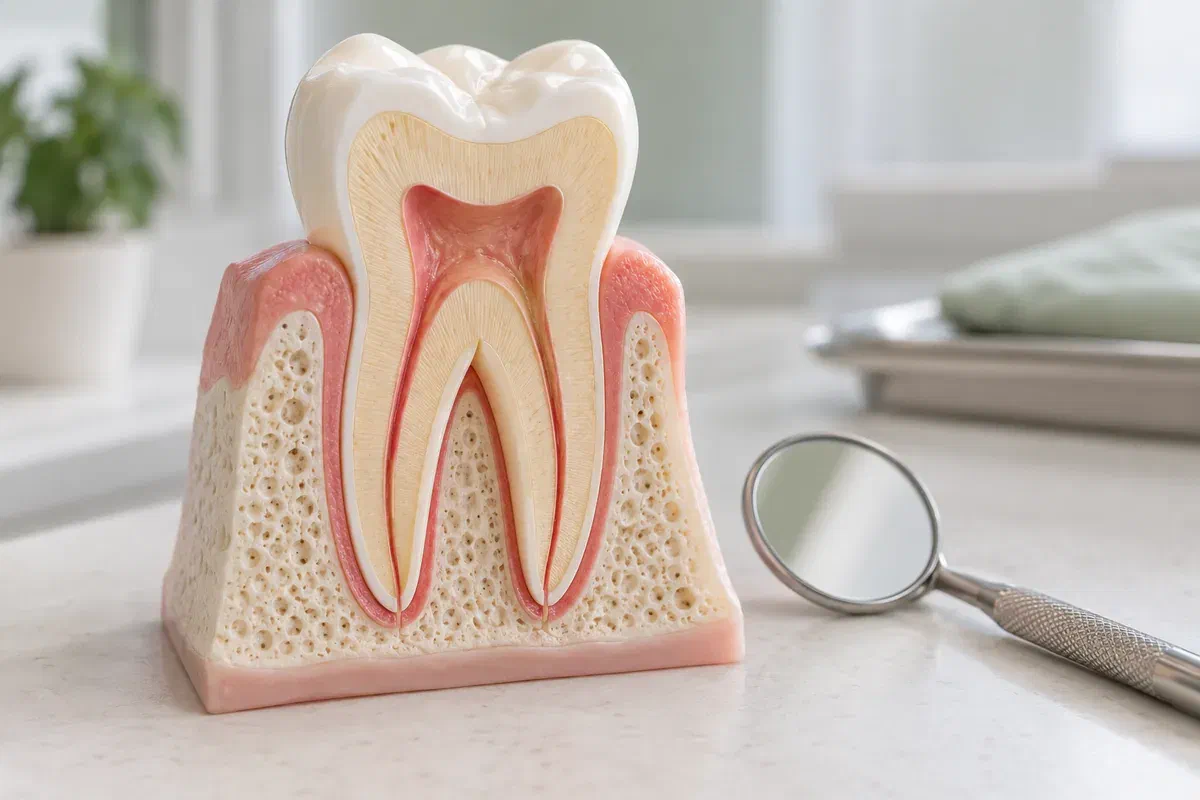
Illustrative physical molar cross-section showing the pulp chamber and root canals
Symptoms and history to discuss

The way the pain behaves helps guide the examination.

Describe what you have noticed without repeatedly testing the tooth. Your account is considered alongside the clinical findings; it does not need to provide the diagnosis on its own.

Pain that lingers or occurs without a clear trigger

Explain whether discomfort continues after hot or cold drinks, wakes you, or begins on its own. Mention when the pattern changed and whether pain medicine has helped. These details help the clinician decide which tests are appropriate and how urgently care is needed.

Biting discomfort, swelling, or a nearby gum change

Tell the team if the tooth feels different when you close your mouth or if you notice swelling or drainage. Describe fever or feeling unwell as well. The assessment needs to consider the tooth and surrounding tissues rather than relying on a single symptom.

An existing restoration or earlier injury

Explain previous work and any recent breakage, even if it did not hurt at the time. If root canal treatment was started or completed elsewhere, bring the details. A previously treated tooth may need a different assessment from a tooth receiving its first endodontic treatment.

Call promptly about a painful or swollen tooth. Difficulty breathing or swallowing, substantial spreading swelling, or eye involvement requires immediate hospital emergency care; call 911 when emergency assistance is needed.

What the urgent plan should establish

Treat the identified problem and explain what the tooth still needs.

The goal is an appropriate response to the diagnosis, with a realistic discussion of retaining the natural tooth. Ask how the findings support root canal care and whether cracks, remaining structure, or support affect its prospects. The recommendation should consider the tooth as a whole rather than only the painful tissue inside it.

A clear plan also separates the urgent stage from completion and restoration. You should know who will provide each part, when to return, and what the estimate includes. Relief after the first appointment is valuable, but it should not leave you uncertain about whether further canal treatment or a final restoration is outstanding.

Patient information: American Association of Endodontists — management of endodontic emergencies

A reasoned decision about retaining the tooth

Ask why the tooth is considered suitable for treatment and what could limit the outcome. The dentist can explain whether further assessment is needed before making a definitive recommendation. Keeping a tooth is a decision to evaluate, not a result that can be guaranteed in advance.

Comfort measures discussed before starting

Explain previous difficulty with numbing, anxiety, or medical concerns. Ask how local anaesthetic and other appropriate measures will be used and how to signal if you need a pause. You should be able to speak up during treatment rather than assume discomfort must be tolerated.

An honest explanation of the first stage

Urgent care may involve treatment of part or all of the pulp space, depending on the diagnosis and circumstances. Ask exactly what is planned and what will remain afterward. An initial procedure should be connected to a defined completion or review arrangement.

From diagnosis to completion

Assess suitability, begin the agreed care, and protect the tooth between stages.

The number and length of appointments depend on the tooth, the findings, and any specialist involvement. Ask for the whole sequence rather than assuming an urgent booking includes every stage.

  1. Review the symptoms and assess the tooth

    The dentist considers your history, examines the area, and uses appropriate tests and images. Ask whether the diagnosis is established and whether the tooth can support a final restoration. Discuss any uncertainty before choosing between retention and other options.

  2. Agree on treatment, comfort, and isolation

    Review the procedure, alternatives, limitations, and estimate. Local anaesthetic and a dental dam are used as appropriate for endodontic care; the dam isolates the working tooth. Tell the clinician about concerns so the setup and communication can be explained before work begins.

  3. Carry out the indicated endodontic stage

    The clinician accesses and treats the indicated pulp space. Depending on the plan, further cleaning, shaping, and filling may be completed now or at another appointment. Ask what has been done and whether a temporary seal or other interim arrangement is in place.

  4. Arrange completion and the final restoration

    Confirm who will finish any remaining canal treatment and restore the tooth. Ask what protection is needed afterward and how soon to arrange it. If care is shared with an endodontist, clarify the transfer of records and the order of appointments.

Between urgent care and the finished restoration

Protect the temporary seal and return for the outstanding work.

Follow the instructions for the treatment stage you received. Ask what sensations are expected and what changes should prompt a call rather than waiting for the next booked visit.

Be careful with the treated tooth

Follow advice about eating while numb and avoid heavy biting on a tooth that has not yet been fully restored. Ask how to brush and clean around the area. Do not use a comfortable day as a reason to test the temporary restoration with hard or sticky foods.

Report changes in the seal, bite, or symptoms

Contact the treating clinician if a temporary filling comes out, the bite feels uneven, swelling appears, or significant pain persists or returns. Explain which stage was completed and when. These changes can require review even if another appointment is already scheduled.

Keep the completion and restorative appointments

Confirm the recommended timing and arrange the visits needed to finish the plan. Ask whether the estimate includes the final restoration or whether it is separate. The care inside the tooth and the restoration above it work together, so neither stage should be left unclear.

Patient information: American Association of Endodontists — care after treatment and reasons to call · American Dental Association — antibiotic decisions for pulpal and periapical pain

Choosing care for the diagnosed tooth

Root canal treatment is one option within a complete tooth assessment.

Ask what each reasonable option would mean for the tooth, the visits, and the final restoration. An urgent symptom should lead to a prompt explanation, not an automatic treatment choice.

When retaining the tooth is suitable

Endodontic treatment followed by restoration

The plan may include an urgent stage, completion of canal treatment, and a crown or another appropriate restoration. Ask why that sequence is recommended and what could affect the outcome. The final restoration is selected for the tooth's condition rather than by a universal rule.

When the diagnosis or complexity needs further consideration

Specialist assessment or another tooth-preserving approach

A difficult diagnosis, previous treatment, unusual anatomy, or other findings may justify referral. Ask what the specialist is being asked to assess and what care is needed meanwhile. The referral should clarify the options rather than imply that one result has already been decided.

When the tooth cannot reasonably be retained

Extraction with a separate replacement discussion

If the tooth is unsuitable for restoration or another factor makes retention inappropriate, removal may be discussed. Ask for the reasons and alternatives. Replacement planning, if appropriate, can then consider your wider mouth, healing, timing, and preferences.

Emergency root canal questions

Understand the first visit, the temporary filling, and the final restoration.

Bring questions about why treatment is recommended and which stages are included. The assessment should establish the diagnosis and explain the route from urgent care to a completed plan.

(905) 876-4488
Does severe toothache automatically mean I need an emergency root canal?
No. Several problems can cause significant pain. The dentist uses the history, examination, and indicated tests to identify the cause and decide whether root canal care is appropriate. Ask how the findings support the recommendation for your tooth.
Can an urgent appointment treat the pulp without completing the whole root canal?
Yes, depending on the diagnosis and circumstances. Ask which stage is being performed and what further treatment remains. A temporary seal and reduced pain do not by themselves confirm that the canals have been fully treated and the tooth permanently restored.
Why would I need another restoration after the root canal work is finished?
The tooth still needs a suitable seal and protection for normal use. A crown or another restoration may be recommended based on its remaining structure and function. Ask who will provide it, when it should be arranged, and whether its cost is included.
Should I keep my completion appointment if the emergency treatment stops the pain?
Yes. Keep the agreed appointment unless the treating clinician changes the plan. Symptom relief is not proof that all necessary treatment is complete. Ask what remains inside the tooth and what restoration is needed before considering the course of care finished.
Can a tooth that already had root canal treatment need another urgent assessment?
Yes. New pain or swelling around a previously treated tooth should be assessed. The cause and possible options may differ from a first root canal procedure. Bring earlier records if available and ask whether specialist review would help clarify the next step.
What if the temporary filling comes out between root canal appointments?
Contact the treating team promptly for advice and review. Avoid chewing on the area and do not put household materials into the opening. Explain when the filling came out and whether pain, swelling, or other symptoms have changed.
Emergency root canal treatment in Milton

Discuss the painful tooth and the steps needed to complete its care.

Call our Bronte Street practice about urgent tooth pain and current assessment availability. We can review the concern, explain suitable options, and discuss whether treatment or referral is needed. Seek another available emergency provider if immediate care is required and we cannot be reached.

Online requests are non-urgent. Diagnosis, tooth suitability, treatment stages, restoration, referral, fees, and appointment availability require assessment. Retaining the tooth or finishing care in one visit cannot be guaranteed.

Visit Milton Dental Clinic
Unit 1, 342 Bronte St. S, Milton, ON L9T 5B7
Get directions Clinic hours
Monday–Thursday
11am–7pm
Friday–Sunday
By appointment only

How can we help?

Milton Dental Clinic

Have a question about your smile? Choose the option that works best for you.

For urgent dental concerns, please call.
Messages are reviewed during clinic hours.