

Illustrative patient and clinician discussing a tooth model before endodontic care
Specialized Care

Emergency Root Canal Treatment in Halton Hills

A swollen gum or a small bump beside an aching tooth is a sign to call, not to wait. From anywhere in Halton Hills, we can assess whether infection inside the tooth is involved, explain when root canal care could save it, and outline the stages that complete it.

When the gum starts to swell

A bump on the gum is a message from the tooth.

Some urgent root canal cases begin quietly. The tooth may barely hurt, yet a pimple-like spot appears on the gum, or the cheek looks fuller in the morning. Signs like these can mean an infection has developed from the pulp, the tissue at the centre of the tooth. Other times the swelling comes from the gum itself, which is why an examination matters.

The dentist looks at the tooth and surrounding tissue, uses the tests and images your situation calls for, and considers whether the tooth could be restored. When keeping it is reasonable, root canal treatment removes the infected or inflamed tissue and then disinfects, shapes and seals the canal system. The urgent visit may start that work, with completion and a final restoration still to come.

From Georgetown, Acton, Glen Williams or one of the smaller hamlets, call us to describe the swelling and the tooth's history: fillings, crowns, injuries or past root canal care. We'll suggest the next step and whether care here or a referral fits better. Swelling is never treated as a one-size problem.

Call about swelling or tooth pain
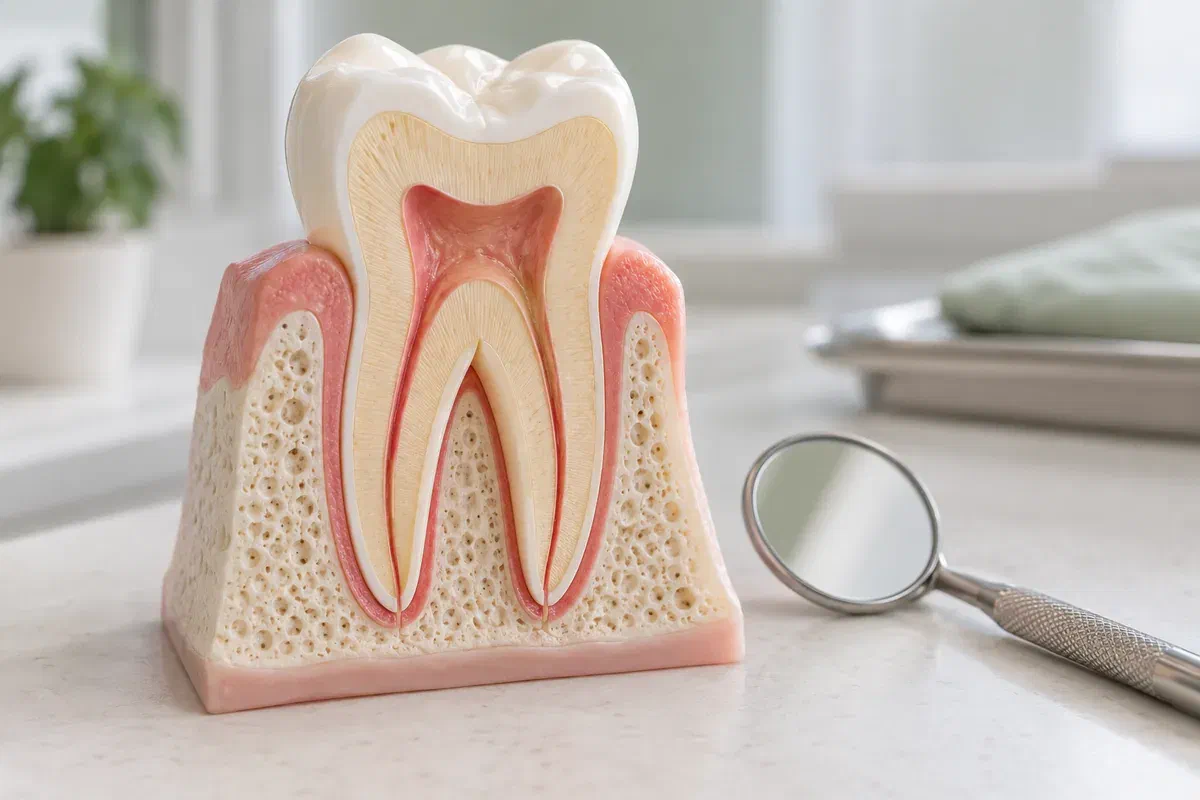
Illustrative physical molar cross-section showing the pulp chamber and root canals
Signs to report clearly

Where is the swelling, and is it changing?

Avoid pressing on the swollen area to see if it drains. Describe what you see and feel instead. The dentist uses your report alongside the examination, so it doesn't need to identify the cause by itself.

Aching that lingers or arrives unprompted

Explain whether discomfort outlasts a hot or cold drink, begins on its own, or keeps you up. Say when it began and whether medicine has dulled it. This shapes which tests are chosen and how soon the tooth should be seen.

Swelling, drainage or a tender bite

Note where the swelling sits, whether it is growing, and whether a gum spot leaks or tastes unpleasant. Mention biting pain, fever or feeling generally unwell. The dentist weighs the tooth, the gum and the bone around it together.

A history of fillings, crowns or past treatment

Describe earlier restorations and any chip, even if it was painless. Infection can return around a tooth that had root canal work years ago, so bring records if you have them. A previously treated tooth is assessed differently.

Call promptly about swelling or pain. Swelling that spreads quickly or substantially, difficulty breathing or swallowing, or swelling that reaches the eye needs hospital emergency care immediately; call 911 for emergency assistance.

What treating the source achieves

Address where the infection starts, not just how it looks

When infection begins inside the tooth, the lasting answer is usually to deal with that source. Ask the dentist how the findings link the swelling to the pulp, and whether a crack, remaining tooth structure or the bone and gum around it affect the chance of saving the tooth. The recommendation should consider all of it.

Then pin down the order of care. Will the canals be drained and partly treated today, or completed? Who finishes them and restores the tooth, and when? What does the estimate include? A calmer gum after the first visit is good news, but the remaining stages still need to happen.

Patient information: American Association of Endodontists — management of endodontic emergencies

A reasoned view on saving the tooth

Ask what favours treatment and what might limit the result, especially if bone around the root looks affected. The dentist may want more information before a firm recommendation. Keeping a tooth is judged with care and can't be promised.

Comfort planned before work starts

Inflamed areas can be harder to numb, so mention any past trouble with freezing, anxiety or health conditions. Ask how comfort will be managed and how to signal a pause. You can speak up at any time.

A clear explanation of the urgent step

Depending on the diagnosis and circumstances, urgent treatment may relieve pressure and treat some or all of the pulp space. Ask what is being done and what remains. The first stage should lead into a defined completion or review.

How swelling is handled

Find it, treat the source, seal it, restore it.

Visit numbers depend on the tooth, how much infection is present and whether a specialist is involved. Ask for the complete sequence rather than assuming the urgent appointment includes every stage.

  1. Assess the tooth and the swelling

    The dentist takes your history, examines the area and uses suitable tests and images. Ask whether the source is confirmed and whether the tooth can hold a final restoration. Discuss any uncertainty before choosing to keep it.

  2. Explain the plan and prepare

    You'll hear about the procedure, alternatives, limitations and estimate. The area is numbed as appropriate, and a dental dam keeps the tooth isolated during treatment. Concerns are discussed so the setup is clear before starting.

  3. Treat the infected pulp space

    The clinician opens the tooth and treats the canals as indicated, which may also allow drainage. Further cleaning and filling can happen now or at another visit. Ask what was done and whether a temporary seal is in place.

  4. Complete the canals and restore

    Confirm who will finish remaining work and place the restoration, and when. Ask how to protect the tooth meanwhile. If an endodontist is sharing care, clarify how records move and which appointment comes next.

Halton Hills · the days after

Watching the swelling settle

Your instructions will fit the stage you had done. Ask how quickly swelling usually eases, what you might feel, and which changes mean calling right away.

Care for the treated area

Wait for numbness to fade before eating, and keep heavy chewing off a tooth that isn't fully restored. Ask how to keep the area clean. Avoid hard or sticky foods on the temporary filling, even if things feel much better.

Call if the swelling or bite changes

Contact the treating clinician if swelling grows or returns, the temporary filling comes out, the bite feels uneven, or significant pain persists. Mention which stage was done and when. These changes may need review before your next appointment.

Return to finish the tooth

Confirm the recommended timing and book the remaining visits. Ask whether the final restoration is included in the estimate. Sealing the canals and restoring the tooth protect each other, so both need to be arranged.

Patient information: American Association of Endodontists — care after treatment and reasons to call · American Dental Association — antibiotic decisions for pulpal and periapical pain

Deciding what happens to the tooth

Several reasonable paths can follow a diagnosis of infection.

Ask how each option affects the tooth, the visits and the restoration. Swelling calls for prompt action and explanation, but the choice of treatment should still be yours to understand.

When the tooth can be retained

Endodontic treatment followed by restoration

This route can involve urgent treatment, completing the canals, and finally a crown or other restoration suited to what remains. Ask why that sequence is recommended and what could affect healing. The restoration is chosen for the tooth, not by habit.

When the findings are complex

Specialist assessment or another preserving approach

Persistent infection, earlier treatment or unusual anatomy can justify referral. Ask what the specialist is asked to assess and how to manage symptoms meanwhile. Referral should broaden understanding rather than fix the outcome.

When keeping the tooth isn't reasonable

Extraction, with replacement discussed separately

If the tooth can't be restored or retaining it would be unwise, removal may be discussed. Ask for the reasons and alternatives. Replacement, if wanted, can be planned around healing, your other teeth, timing and preference.

Questions from Halton Hills

Swelling, infection and what comes next

Ask why a treatment is recommended and which stages it covers. The assessment should confirm the diagnosis and explain the route from urgent care to a finished tooth.

(905) 876-4488
Can a tooth be infected even if it doesn't hurt much?
Yes. Some infections cause little pain, especially if they drain through a gum spot. Swelling, a bad taste or a bump on the gum should still be assessed promptly.
Will the gum bump go away after treatment?
It often settles once the source inside the tooth is treated, though timing varies. Ask what to expect for your tooth and call if it persists or returns.
Should I put heat or ice on a swollen face?
Ask the team for advice when you call, and avoid trying to burst or drain the swelling yourself. Spreading swelling, fever or difficulty swallowing needs urgent medical care.
Why didn't I get antibiotics for my toothache?
Antibiotics don’t treat pain from an inflamed pulp and aren’t needed in every case. The dentist decides based on the diagnosis, such as signs of spreading infection. Ask why they were or weren’t prescribed.
Is one visit enough to clear the infection?
Not always. The first stage may relieve pressure and treat part of the pulp space, with further treatment to complete the canals. Ask what was done and what still remains.
My root-filled tooth is swollen again. What now?
A previously treated tooth can develop new problems and should be assessed. Options may differ from a first root canal. Bring earlier records and ask whether a specialist opinion would help.
Urgent root canal assessment for Halton Hills

Swelling or pain? Call before it builds.

Phone our Bronte Street practice, tell us what's happening with the tooth and ask about assessment availability. We can review the concern, explain the options and talk about whether treatment or referral suits you best. If immediate care is required and we're unreachable, contact another available emergency provider.

Online forms are for non-urgent requests. Diagnosis, suitability of the tooth, treatment stages, restoration, referral, fees and timing all depend on assessment. We cannot guarantee keeping the tooth or completing care in one appointment.

Visit Milton Dental Clinic
Unit 1, 342 Bronte St. S, Milton, ON L9T 5B7
Get directions Clinic hours
Monday–Thursday
11am–7pm
Friday–Sunday
By appointment only

Areas we serve

  • Milton
  • Oakville
  • Mississauga
  • Georgetown
  • Halton Hills
  • Acton
  • Campbellville
  • Brampton
  • Burlington
  • Puslinch
  • Rockwood
  • Erin
  • Caledon
  • Etobicoke
  • Old Milton
  • Bronte Meadows
  • Timberlea
  • Dorset Park
  • Dempsey
  • Clarke
  • Beaty
  • Coates
  • Harrison
  • Scott
  • Willmott
  • Ford
  • Bowes
  • Cobden
  • Walker
  • Mountain View
  • Milton Heights
  • Hawthorne Village
  • Valley View
  • Fallingbrook
  • Nassagaweya
  • Trafalgar
  • Esquesing
  • Nelson
  • Brookville
  • Moffat
  • Glen Williams
  • Norval
  • Limehouse
  • Stewarttown
  • Ashgrove
  • Hornby
  • Silver Creek
  • Speyside
  • Scotch Block
  • North Oakville
  • River Oaks
  • Glen Abbey
  • West Oak Trails
  • Palermo
  • Bronte Creek
  • College Park
  • Joshua Creek
  • Uptown Core
  • Preserve
  • Iroquois Ridge
  • Lisgar
  • Meadowvale
  • Meadowvale Village
  • Churchill Meadows
  • Erin Mills
  • Central Erin Mills
  • Streetsville
  • East Credit
  • Creditview
  • Heartland
  • Sheridan
  • Mount Pleasant
  • Credit Valley
  • Huttonville
  • Churchville
  • Springbrook
  • Northwest Brampton
  • Bram West
  • Fletcher's Meadow
  • Fletcher's Creek South
  • Alton Village
  • Orchard
  • Millcroft
  • Headon Forest
  • Tansley
  • Brant Hills
  • Tyandaga
  • Kilbride
  • Lowville
  • Aberfoyle
  • Morriston
  • Arkell
  • Hillsburgh
  • Freelton
  • Carlisle
  • Waterdown
  • Flamborough
  • Mountsberg

How can we help?

Milton Dental Clinic

Have a question about your smile? Choose the option that works best for you.

For urgent dental concerns, please call.
Messages are reviewed during clinic hours.