

Illustrative patient and clinician discussing a tooth model before endodontic care
Specialized Care

Emergency Root Canal Treatment in Old Milton

An old filling or crown that suddenly starts to ache can hide a problem deep inside the tooth. If you are in Old Milton, we can examine the tooth, explain whether a root canal is the right fit, and outline the stages that would see it restored and protected.

Old Milton · teeth with a history

Years of dental work can change what a new ache means.

Many people living around Milton's historic downtown carry fillings and crowns placed decades ago. When one of those teeth begins to throb, the question is what has changed underneath. Root canal care is considered once the examination finds a problem in the pulp, the living tissue inside the tooth, and there is enough healthy structure left to make keeping it sensible.

That decision rests on more than the ache. The dentist looks closely, chooses tests and images that suit the situation, and asks whether the tooth could take a sound restoration afterward. If treatment goes ahead, affected tissue is managed and the canals are cleaned, shaped, filled and sealed. An urgent appointment may only start that process, with a final restoration to follow.

Before you come in, gather what you know about the tooth: when it was filled or crowned, any break or blow, and whether a root canal was ever started on it. We can then talk through the next step, including a referral where that helps. An older tooth is judged on its own facts.

Book an assessment for the aching tooth
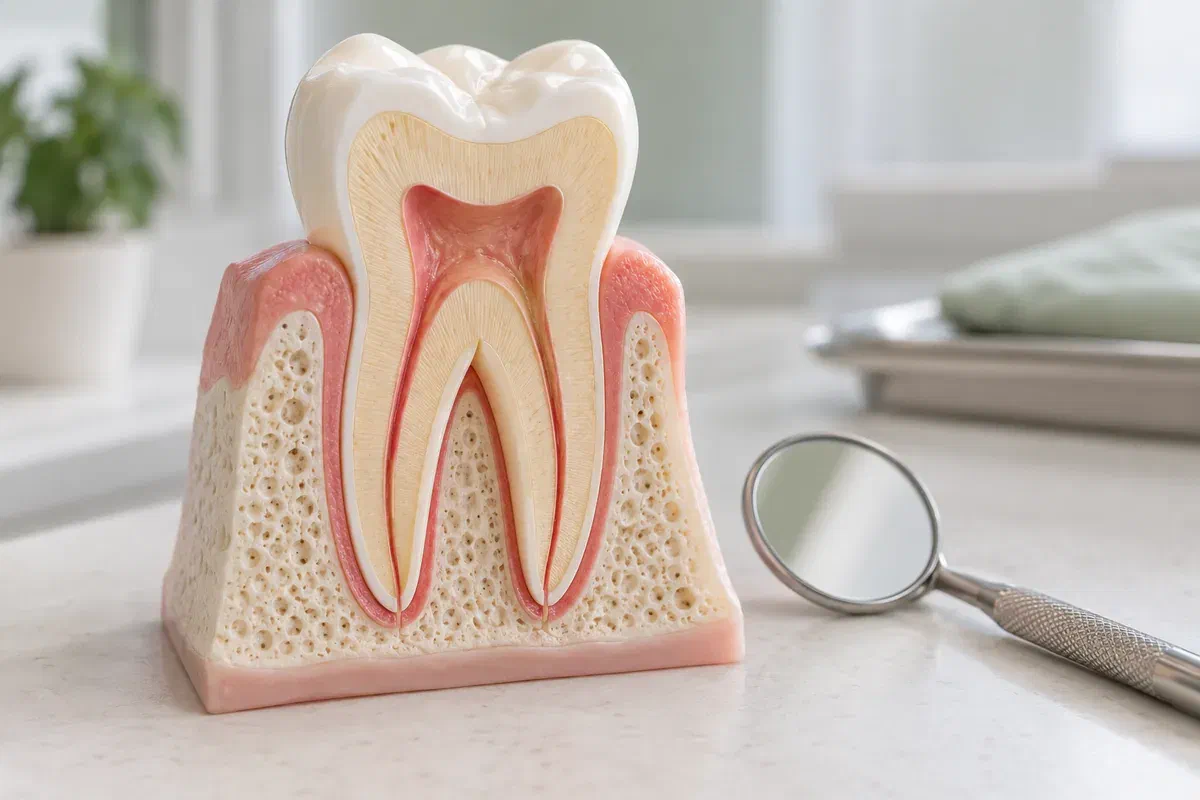
Illustrative physical molar cross-section showing the pulp chamber and root canals
Clues the dentist will ask about

How does the pain start, and how long does it stay?

Keep a short record of what happens instead of testing the tooth over and over. What you describe is combined with what the dentist finds; it is one piece of the picture rather than the answer.

Lingering or unprovoked aching

Explain whether a cup of tea or a cold drink sets off pain that lasts, or whether it appears with no trigger at all, perhaps at night. Mention when this began and whether pain relievers have taken the edge off. Those patterns guide which tests are chosen and how quickly you need to be seen.

Pressure pain, swelling or a sore spot on the gum

A tooth that feels tall or tender when you bite, a swollen cheek, or a pimple-like spot that drains are all worth reporting. So is a temperature or general unwellness. The surrounding tissue matters as much as the tooth, and no single sign is read on its own.

Crowns, large fillings and earlier root canals

Older restorations can leak or crack without much warning, so describe them and any recent chip. If the tooth already had root canal work, here or elsewhere, bring records if you can. Retreatment questions are assessed differently from a tooth that has never been treated inside.

Call without delay about a painful or swollen tooth. Difficulty swallowing or breathing, swelling that spreads substantially, or swelling around the eye needs immediate hospital emergency care; dial 911 when you need emergency assistance.

Outcomes to look for

Relief now, and an honest picture of what the tooth needs next

With a heavily restored tooth, the deciding factors are often the walls that remain, hidden cracks and the health of the bone and gum around it. Ask the dentist how each of these affects the chance of keeping the tooth, and how the findings point toward root canal care rather than another option. The advice should cover the whole tooth.

It also helps to separate the emergency visit from everything that follows. Find out which stage happens first, who will complete the canals and the restoration, how soon you should return, and what the estimate includes. Feeling better is a good start, but you should never be left wondering what is still outstanding.

Patient information: American Association of Endodontists — management of endodontic emergencies

Clarity about whether the tooth can be saved

Ask what supports treating this tooth and what might shorten its future. Sometimes more information is needed before a firm recommendation can be given, and the dentist can explain why. Saving the tooth is a judgement made with you, not a promise made in advance.

Your comfort planned before treatment starts

If freezing has worn off quickly in the past, if you feel nervous, or if you take medicines or have health conditions, say so early. Ask how local anaesthetic and other suitable measures will be used, and agree on a signal for stopping. You never have to grit your teeth and wait.

A straight answer about the first appointment

Urgent treatment may address part of the pulp space or all of it, depending on the diagnosis and the circumstances. Ask what will be done today and what is left for later. A first stage should always come with a defined plan to finish or review.

Four stages, from first look to final crown

What happens at each step

Visit numbers and lengths vary with the tooth, the findings and whether a specialist is involved. Asking for the complete sequence up front avoids the assumption that one emergency booking does it all.

  1. Looking closely at the tooth and its past

    The dentist reviews your history and existing restorations, examines the area, and takes the tests and images that suit it. Ask whether the cause is clear and whether enough tooth remains for a final restoration. Any doubt should be discussed before a decision is made.

  2. Deciding together and preparing

    You hear about the procedure, alternatives, limitations and costs. Local anaesthetic is used as appropriate, along with a dental dam, a small sheet that keeps the tooth isolated during endodontic work. Share any concerns so the setup is explained before anything starts.

  3. Treating inside the tooth

    The pulp space that needs care is accessed and treated. In some cases cleaning, shaping and filling all happen now; in others they continue at a later visit. Ask what was completed and whether a temporary filling or other interim seal is protecting the tooth.

  4. Finishing and rebuilding

    Check who will complete any remaining canal work and place the new restoration, and how soon. Ask how to protect the tooth until then. If an endodontist is sharing your care, confirm how records will be passed along and which visit comes next.

Living with a temporary filling

Treat the tooth as unfinished until it is.

The instructions you receive will match the stage completed. Ask what is normal to feel over the next few days, and what should make you pick up the phone instead of waiting.

Chew carefully and keep the area clean

Avoid eating until the freezing has gone, and keep heavy biting off a tooth that is only temporarily sealed. Ask how best to brush and floss nearby. Even on a good day, sticky or very hard foods can loosen or crack the temporary material.

Watch for a lost seal or returning pain

Call the treating clinician if the temporary comes out, the bite feels off, swelling appears, or strong pain persists or comes back. Mention which stage was done and the date. A review may be needed even if your next appointment is already booked.

Complete the plan you agreed

Confirm how soon the remaining visits should happen and book them. Ask whether the final crown or filling is included in your estimate. The inner treatment and the outer restoration only work as a pair, so make sure both are arranged.

Patient information: American Association of Endodontists — care after treatment and reasons to call · American Dental Association — antibiotic decisions for pulpal and periapical pain

Possible paths

Keep, refer or remove: each choice depends on the tooth.

Ask how every realistic option would affect the tooth, the number of visits and the restoration at the end. Pain calls for a prompt explanation, but it should not push you into a choice you don't understand.

If the tooth is a good candidate for keeping

Endodontic treatment followed by restoration

Care may involve an urgent stage, completion of the canals, and then a crown or a different suitable restoration. Ask why this order is suggested and what might limit the result. The final restoration should suit the remaining tooth, not follow a one-size rule.

If the case is complex or unclear

Specialist review or another tooth-saving approach

Earlier root canal work, a hard-to-read diagnosis or unusual anatomy can make a referral sensible. Ask what the specialist will be assessing and what you should do in the meantime. Referral is about clarifying choices, not announcing a foregone conclusion.

When keeping it no longer makes sense

Extraction with replacement considered on its own

When the tooth can't be restored, or keeping it would be unwise for another reason, removal may be discussed. Ask for the reasoning and the alternatives. Replacement, if wanted, can then be planned around healing, your other teeth, timing and your wishes.

Asked around Old Milton

Older teeth, newer pain: answers that help you decide

Ask why a particular treatment is suggested and which stages it includes. The visit should establish the diagnosis and explain how the tooth gets from urgent care to a finished result.

(905) 876-4488
My crown is twenty years old. Can the tooth under it still need a root canal?
It can. Decay at the edge of a crown, a crack or changes in the pulp can develop under older work. The dentist examines the tooth and uses suitable tests and images to find the cause before recommending any treatment.
Will my existing crown have to come off for treatment?
Sometimes access is made through the crown and it is then repaired; sometimes replacement makes more sense. It depends on the crown’s condition and fit. Ask what is likely for your tooth and how it affects the restoration plan.
A root canal was done on this tooth years ago. Why does it hurt now?
A previously treated tooth can develop new problems, such as a leak, a crack or persistent infection. It should be assessed, and the options may differ from a first treatment. Bring earlier records if you have them and ask whether a specialist opinion would help.
Does an emergency appointment always finish the root canal?
Not always. Depending on the diagnosis, the first visit may treat part of the pulp space and place a temporary seal. Ask which stage was done and what still remains before the tooth can be considered complete.
Is it safe to take my usual medicines before the appointment?
Generally, keep taking prescribed medicines unless your doctor or dentist advises otherwise, and bring a full list to the visit. Mention blood thinners or recent health changes. The team can then plan treatment with your medical picture in mind.
What should I avoid if the temporary filling feels loose?
Don’t chew on that side, and don’t try to patch the hole with anything from home. Call the team for advice and a review. Let them know when it loosened and whether pain or swelling has changed.
Urgent root canal care near Old Milton

Tell us about the tooth, and we'll help you plan the next step.

Call our Bronte Street practice to describe your symptoms and ask when an assessment could happen. We'll go over what you're noticing, explain suitable choices and discuss whether treatment here or a referral fits best. If you need care immediately and cannot reach us, please contact another available emergency provider.

Online requests are non-urgent. Diagnosis, tooth suitability, treatment stages, the restoration, referral, fees and availability all depend on assessment. We cannot guarantee that the tooth will be kept or that care can be finished in one visit.

Visit Milton Dental Clinic
Unit 1, 342 Bronte St. S, Milton, ON L9T 5B7
Get directions Clinic hours
Monday–Thursday
11am–7pm
Friday–Sunday
By appointment only

Areas we serve

  • Milton
  • Oakville
  • Mississauga
  • Georgetown
  • Halton Hills
  • Acton
  • Campbellville
  • Brampton
  • Burlington
  • Puslinch
  • Rockwood
  • Erin
  • Caledon
  • Etobicoke
  • Old Milton
  • Bronte Meadows
  • Timberlea
  • Dorset Park
  • Dempsey
  • Clarke
  • Beaty
  • Coates
  • Harrison
  • Scott
  • Willmott
  • Ford
  • Bowes
  • Cobden
  • Walker
  • Mountain View
  • Milton Heights
  • Hawthorne Village
  • Valley View
  • Fallingbrook
  • Nassagaweya
  • Trafalgar
  • Esquesing
  • Nelson
  • Brookville
  • Moffat
  • Glen Williams
  • Norval
  • Limehouse
  • Stewarttown
  • Ashgrove
  • Hornby
  • Silver Creek
  • Speyside
  • Scotch Block
  • North Oakville
  • River Oaks
  • Glen Abbey
  • West Oak Trails
  • Palermo
  • Bronte Creek
  • College Park
  • Joshua Creek
  • Uptown Core
  • Preserve
  • Iroquois Ridge
  • Lisgar
  • Meadowvale
  • Meadowvale Village
  • Churchill Meadows
  • Erin Mills
  • Central Erin Mills
  • Streetsville
  • East Credit
  • Creditview
  • Heartland
  • Sheridan
  • Mount Pleasant
  • Credit Valley
  • Huttonville
  • Churchville
  • Springbrook
  • Northwest Brampton
  • Bram West
  • Fletcher's Meadow
  • Fletcher's Creek South
  • Alton Village
  • Orchard
  • Millcroft
  • Headon Forest
  • Tansley
  • Brant Hills
  • Tyandaga
  • Kilbride
  • Lowville
  • Aberfoyle
  • Morriston
  • Arkell
  • Hillsburgh
  • Freelton
  • Carlisle
  • Waterdown
  • Flamborough
  • Mountsberg

How can we help?

Milton Dental Clinic

Have a question about your smile? Choose the option that works best for you.

For urgent dental concerns, please call.
Messages are reviewed during clinic hours.